



Search  for anything...

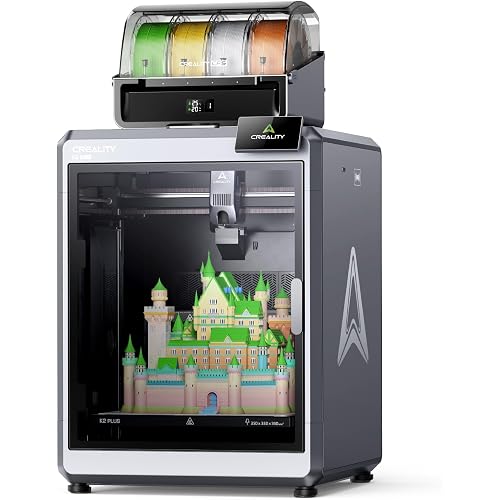
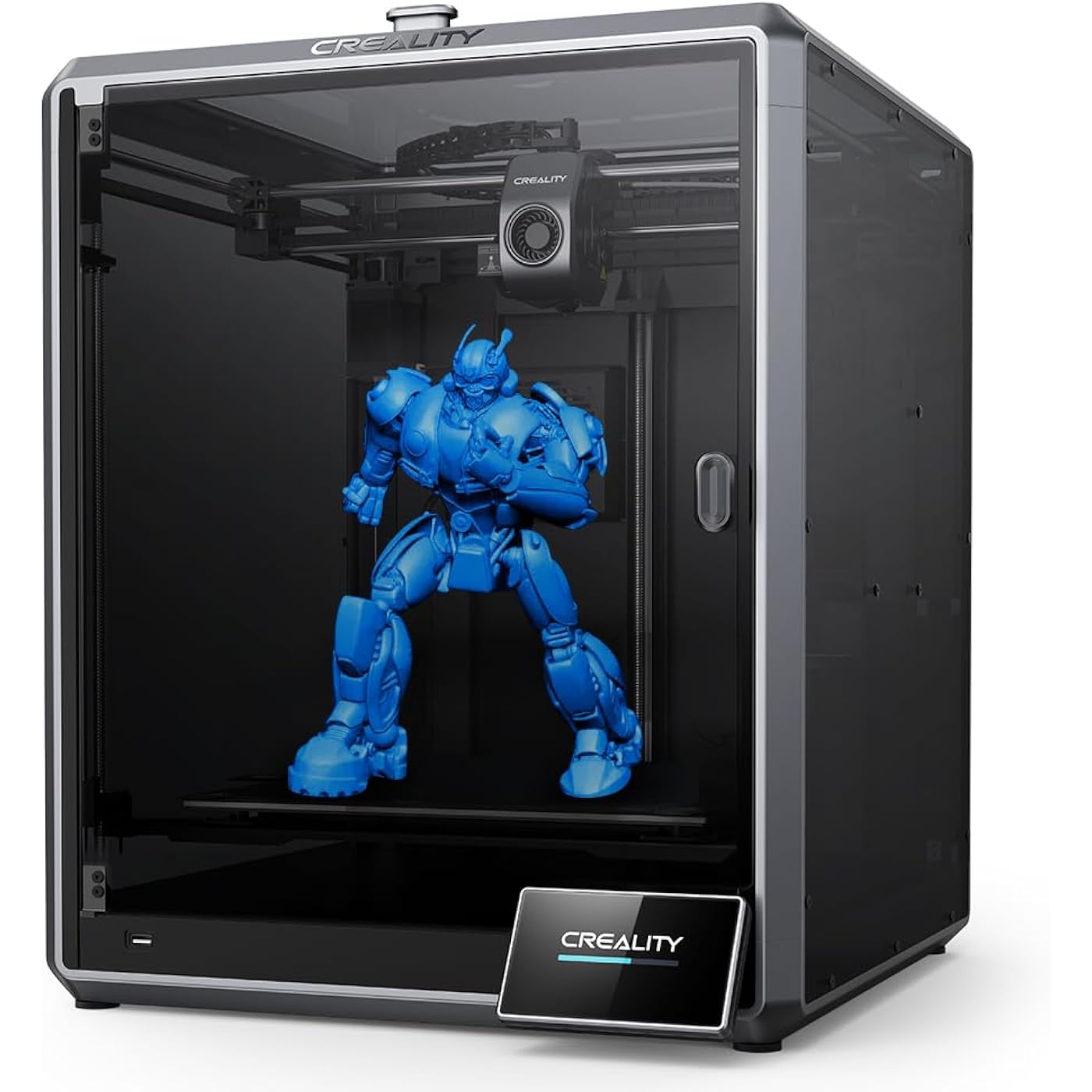
Creality K1 Max 3D Printer with Smart AI Function Auto Leveling

  • Based on 9,984 reviews
Condition: New
Checking for the best price...
$548.99 Why this price?
Save $170.01 was $719.00

Buy Now, Pay Later


As low as / mo
  • – Up to 36-month term if approved
  • – No impact on credit to apply
  • – Instant approval decision
  • – Secure and straightforward checkout

Ready to go? Add this product to your cart and select a plan during checkout.

Payment plans are offered through our trusted finance partners Klarna, Affirm, Afterpay, Zip, Apple Pay, and Google Pay. No-credit-needed leasing options through Acima may also be available at checkout.

Learn more about financing & leasing here.

Selected Option

Free shipping on this product

30-day refund / replacement

To qualify for a full refund, items must be returned in their original, unused condition. If an item is returned in a used, damaged, or materially different state, you may be granted a partial refund.

To initiate a return, please visit our Returns Center.

View our full returns policy here.


Availability: In Stock.
Fulfilled by Amazon

Arrives Monday, Aug 31
Order within 14 hours and 20 minutes
Available payment plans shown during checkout

Protection Plan Protect Your Purchase
Checking for protection plans...

Set name: K1Max


Features

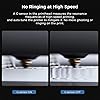
  • Smart AI Function: Creality K1 Max equips 1 Micrometer Resolution AI Lidar, which scans the first layer, if there is any problem, it will stop the printing job giving you quality models. Observant AI Camera can recognize spaghetti failure, foreign matter, debris, etc. and support real-time monitoring and time-lapse filming
  • 12 Faster and More Efficient: Creality K1 Max 3d printer, equips printing speed 600 millimeter per second and acceleration 20000 millimeters per square second, it is12 times faster than the other normal 3d printer. Give good printing experience to customers and get a good model in short time
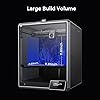
  • Size-efficient with Max Capacity: K1 Max offers a 11.81x11.81x11.81 inch large build volume, which meets more requirement of larger printing model, or you can get a print farm on this printer
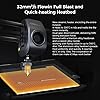
  • Dual Hands-free Auto Leveling: Creality K1 Max 3d printer, its strain sensors in the heatbed for more precise auto leveling without any operation or attention
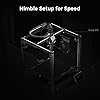
  • More Efficient Function: Core XY Structure of K1 Max makes the printing more stable. Prompt model cooling by a fan on the printhead with directional air ducts and also an auxiliary fan in the build chamber.

Description

Comgrow is the first seller of Creality 3D on Amazon. We own 20+ technical staff to provide professional support to all customers. Comgrow is devoted to provide high quality and economical 3d printers, 3d printer accessories, 3d printer filament and excellent after-sales service to all customers.

Brand: Comgrow


Material: Glass and Metal


Color: K1Max


Product Dimensions: 17.12"D x 18.18"W x 20.7"H


Item Weight: 39.7 pounds


Product Dimensions: 17.12 x 18.18 x 20.7 inches


Item Weight: 39.7 pounds


Item model number: K1 Max


Date First Available: August 31, 2023


Manufacturer: Creality 3D


Frequently asked questions

If you place your order now, the estimated arrival date for this product is: Monday, Aug 31

Yes, absolutely! You may return this product for a full refund within 30 days of receiving it.

To initiate a return, please visit our Returns Center.

View our full returns policy here.

  • Klarna Financing
  • Affirm Pay in 4
  • Affirm Financing
  • Afterpay Financing
  • Zip Pay in 4
  • Financing through Apple Pay
  • Financing through Google Pay
Leasing options through Acima may also be available during checkout.

Learn more about financing & leasing here.

Top Amazon Reviews


  • Fantastic first-time machine
I am very impressed by my first 3D printer - I got it for prototyping cast metal parts, and I knew it would be a rabbit hole of learning a whole new technology. But this printer has made it fun rather than difficult. Assembly took less than an hour, and within 24 hours, I had my first finished prototype, using bronze PLA. It's been running almost constantly in the 2 months I've had it. After reading reviews, I had painter's tape and hairspray at the ready, but I haven't needed them once. The magnetic bed is great, although it is getting chewed up, they're only $10 to replace. I have to relevel it using a test file once in a while, but usually I just watch the brim print when I start a file, and make any tiny adjustments to the leveling screws while it's running. I will note that the bed on mine has a slight flex upward in the middle - enough that the first layer is fully solid at the edges and nonexistant in the middle. This isn't a problem for me, as I use .6-1mm bottoms on prints, and I don't care how the bottom looks. But when I have to stop a file early on, scraping this area clean is a pain. Often a half-layer remains and is pulled off with the next successful print. Quality has met my expectations, though I've never tried printing below .1mm resolution. I just replaced the nozzle for the first time, and it had definitely degraded (pushing bronze PLA through a brass nozzle, I expected it would wear out fast). But it's back to normal now, and replacing the nozzle was simple, following instructions in a YouTube video. I did print a filament guide arm as my test file, and it seems to help as I've never had a tangle or stuck filament. I'm very impressed that my test print is now a permanent part of the printer - honestly I did not expect my first attempt hitting "print" would actually work. I'm planning a few upgrades - a Raspberry Pi with Octoprint and a webcam to enable a network interface, an auto-bed leveler. I'll probably try to get an acrylic case for it and print ABS before long - I've been working in PLA so far. This price point is incredible and allowed me to rapidly build a product line as I started my business - for the cost of Sketchup and this printer, I was able to produce perfect CAD files to send to production - prototypes that I had held in my hands and played with that cost about $1 each in PLA. That blows me away and reduced my startup time by months and thousands of dollars. My one gripe is that if I leave it on for a long time, including just having it's computer powered by USB, it'll start "hanging" when printing. It starts to print but will just stop running midway through, and instead starts this weird behavior of making a hex pattern of burnt plastic drips. So far I can't identify a cause - my STL files are clean - but I've noticed it goes away if I power it totally off for 20 minutes before starting a new print. I'm guessing there's a memory problem going on, but I haven't had time to troubleshoot it with the mfgr yet. Overall it's a major win - with the added bonus that it prints neat little toys, and replacement parts for household objects. I have a technologically-minded nephew who's 11, and he'll probably be getting one of these for Christmas. I would say that if a kid is smart enough to know what "this part is very hot" means, they could use one of these with very little support/supervision - but you might want to assist with things like assembly and replacing the nozzle, which involve small screws and a bit of experience. ... show more
Reviewed in the United States on June 26, 2019 by Paul W.

  • Ender 3 Pro is both Professional with a few upgrades and Beginner as is NICE
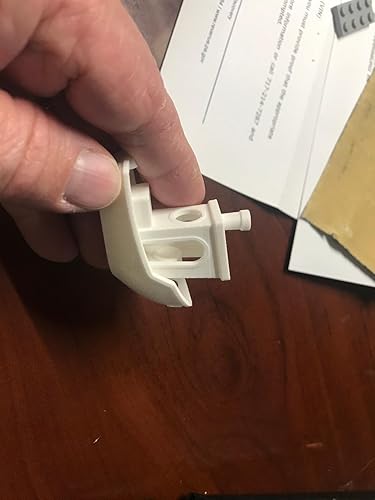
I was really surprised at what this printer can do. I have 5 of them now and use them for production parts in my valve and machine. I even print sprockets using a chain drive and PC carbon fiber PETG carbon fiber. I have upgraded all of them a bit. All have direct drive extruder and the all metal hot ends, as I print at 248C and the Teflon tube cannot take that temperature very long and will cause a blockage in the hot end. The hottest I have had to print so far is 255 and it works great. You can buy a cheap “heat break” that makes the Creality hot end “all metal”. Three have the dual Z axis kit on them, and the other two still single and print fine. But the single Z's need leveling more often. I put all aluminum extruders on and have no issues with feed. I have never had to adjust the E steps, nor have I upgraded the firmware, as they all work and print parts within .02 mm. The only issue I had was three of them had .4 mm nozzles were not .4 mm, from the factory, and that caused some funny prints with the walls separating. I used a digital caliper and measure the filament coming out of the nozzles at under .3 mm. Now with every nozzle install I run some filament out and see if it, shows 0.4 exactly on all the replacements. All the walls print strong now. I think that Creality got some .3 mm nozzles with .4 marking. To get perfect prints requires some testing and working on the printers. I print almost exclusively PETG and many different brands depending on he price. I noticed that some I bought direct from China were “wet” and so I bought dryers. All the PETG I dry before using and get no “blistering” where the moisture expands under heat. I just don't have time to keep reprinting because of moisture. I also print some TPU and at on time printed over 500 of these “rubber” grommets that our supplier stopped making during the COVID shortages. The main thing is to assemble it correctly so that the X bar is level and the wheels (with the pom tires) can actually spin with some friction. You can measure with a metric tape or rule and get it within .5 mm. I actually drilled a 5 mm hole in the vertical to be able to get the X axis perfect. The hole allows the Allen wrench to loosen the X cross member so you can level it without having to keep removing and adjusting the whole X axis bar. The verticals need to be square to the base and they are very close. On two I put the triangle rods to get it perfect. I used a machinist square to get it perfect. Smooth is the keyword. You don't want any "jump" from the Z axis (rising axis). Parallel and 90 deg to the bottom frames. After about 6 months I installed the dual Z axis and that was simple enough. This one change made it so I can print the same part over and over up to 100 times without having to tram the bed. Also called leveling. `After some time I learned that he Z limit switch will get out of calibration and that spraying it with canned air removes the dirt or whatever is changing the stop point. I think an LED version would be better. On the beds, every one of them has had loose axles on the wheels. The 5 mm screws with 8 mm nuts needed to be tightened. To do this you need to loosen the offset wheels so you can get them vertically stable. There should be absolutely NO wobble in the bed. If you feel any, stop and tighten the rollers. I have had to replace three rollers where the bearings were bad and the wheels wiggled on the shafts. Always adjust the cam 10mm so the wheels can move with slight friction. Over tight causes problems and too loose is also bad. Just so they spin with friction. No wobble side to side or when you lift the corners of the bed. Every screw on the printer needs to be checked for tightness. EVERY screw. Loose screws are a nightmare. Even on my $1000 big printers, all of them needed to have the screws tightened, even the screws under the bed. No wobble and you will have “happy printing”. I have not put the auto bed leveling on as it actually takes longer to print with it (on my other printers). I use only glass on the beds (I scrapped off the magnetic sheet and cleaned with alcohol) and still use the doubled standard printer paper to set the level. I just got “good” at it. Then when the print starts sometimes, but rarely, I will tweak the adjustments. I usually print a skirt with three lines so I can “feel” the thickness of the first layer. I did put the stronger bed springs on also, this gives more stability. I use the Ultimaker Cura (updated)and it has more adjustments than most beginners can use. But as you learn you can make slight adjustments and try them out and see things improve. One of the good things is this printer is so popular you can find lots of YouTube videos to help you. And parts can be found on Aliexpress for the same parts way less. The all come from China, anyway. I have five of these Ender 3 Pro's now, bought two from Comgrow Amazon, came with the glass bed plates. I print almost exclusively PETG at 248c Nozzle and 85C bed temp, (this makes for very good layer welding) and bought the Creality glass plates and the Bed Weld, water based adhesive so the PETG will let go. The higher temp is to insure both a good layer weld and that the cooling will cause the parts to just come of very easy. Once printed they just come off very easy. If I dry the filament I get almost NO stringing. I can't stress how important dry filament is for nice prints. The metal flex plates and the ones that come with the printers magnetic plastic do not work with PETG at all. They are ruined after two prints. Glass is the best with the Layerneer Bed Weld and I have no problems with adhesion and removal. Just have to wait for cooling. The prints come off as if nothing was holding them when it cools. The parts in the photo are actually functional parts that we can't get from a supplier.. So, naturally I made a CAD drawing and made them. The trick with functional parts is to make the plastic about 1/3 thicker than on injection molded, because of the tiny gaps caused by the space between the "lines" of print. It is not 100% solid even if it looks like it is. And most of my prints use 100% infill because hey are parts getting some heavy use. Overall, it is a good choice and a workhorse printer. For the money it still can't be beaten, That is why the 5 stars. But for those who are “technically challenged”, you may get frustrated with the learning curve. After a few hundred prints you will be a pro. Watch the videos as there are tons of them. There may be equally good or better printers for the price, but the availability of parts, upgrade parts and help resources for these printers is amazing. ... show more
Reviewed in the United States on September 1, 2021 by James Arjuna Sr

  • Excellent starter (and beyond) 3D printer
I am completely pleased with this printer and don't see spending more money would add any value or improve prints, all around excellent. Product arrived perfectly, excellent packaging, all parts included, no hardware issues. This is my first 3D printer so I want anyone new to 3D printing to have a realistic perspective. I have been printing jigs and parts useful in my woodshop and a few things for the printer itself. I had early success then lots of issues getting prints to stick then reached a plateau of excellent success with limited issues. Bad prints early on can just be stopped and restarted with the main screen. What to expect: • A steep learning curve, documentation is ok but doesn't address everything, lots of mistakes and plenty of solutions you gain quickly from just doing it. • Take the time to assemble the printer, square up the frame parts and review a couple assembly videos on youtube. They help to ensure early success in printing. • Remove and clean the magnetic sheet with warm soapy water to remove any grease or dirt. Then carefully dab to dry and don't touch the surface to avoid finger oils. • If the magnetic sheet lays flat but is crooked, that is ok and affects nothing. I had to trim each side of the sheet by 1/8-1/4" to avoid it touching the Z rails but it lays dead flat. • Bed leveling and a clean bed are two of the most valuable checklist points to make in printing. Early on I was cleaning the bed with acetone and isopropyl alcohol but since I just now use soap and water to clean it, I have had so many successful prints and have not removed the magnetic sheet at all, just use the spatula. No finger oils, no need to clean, and all the plastic comes off. • Use a feeler gauge 0.004" (1.0mm) and level the bed all around so the tip just touches the gauge but doesn't press hard because you can actually push the bed down and then it can spring back and be too close to the tip. Stay with 0.2 or 0.3mm layers in Cura slicing software early on (upgrade the software to current version). I think a feeler gauge is better than paper since paper can be compressed, fractions of a paper thickness can be the make or break it in successful prints. Home the head, set the bed just below it, disable the stepper motors from the Ender screen, then move the head around and begin to level the bed with the gauge. you can do the 4 corners only about an inch in or you can also check many other spots on the bed to ensure the bed is flat too with no cupping. • Prints can take a very long time so correct setup and first layer adhesion are so critical to success. • Cura defaults sometimes work and sometimes don't, but custom settings make for a much higher success rate of prints adhering to the bed. *** The first layer is absolutely the most important layer. *** If it is not perfect or near perfect then prints will most likely fail in many ways, lifting up at corners, shrinking, popping off, skipping, spaghetti mess etc. • Default print speed needs to be slowed down for the first layer. I am using as low as 15-20mm/s instead of the 30mm/s default. Go into preferences/settings/setting visibility and make some settings viewable in the custom window. 50mm/s is a decent normal print speed after initial layer. Top/bottom shell thicknesses can help add strength to many needed prints. • Experiment with infill. 20-50% is common unless 100% fill is needed for a solid. Higher than 50% doesn't really help much unless going full solid. • Supports do help but are not necessary for every part with small hangovers unless you require a flawless print versus a shop needed print. • Add a few extra lines for skirts to 5 which can aid in seeing any priming issues and early leveling issues. Brims are good for narrow and tall prints. Rafts can help with unique shaped prints for early layer adhesion and build. • Cura will remember the settings from the previous print so you don't have to start from scratch every time with settings. • When a print is done, Cura puts in the gcode that the steppers are disabled so you can move the head or bed, but don't move then around fast if they are not disabled. Print an extension for the spool filament from thingiverse, it will help to keep the filament at a better arc and out of the Z lead screw. Changing colors is simple, heat the tip up, then remove the filament and push in another color. The skirt/brim etc will prime the color so the part will be solid to the new color. A solid table surface is good, nothing flimsy or wobbly. Included spatula is excellent, sharp and removes prints very well. Buy some full 1kg spools of colors you like and also try some test colors which come in small loose spools about 50g. I printed a small spool to hold the test colors which helps while printing so filament can spin smoother. I am running the printer near non stop. I have many more dozens of things I want to print and just waiting to get through them all, at which point I'm sure to have added many more. Have fun and create. Plenty of free files for printing, millions are out there. Yeggi.com is a great 3D print file search engine, along with myminifactory.com and thingiverse.com ... show more
Reviewed in the United States on December 30, 2018 by photonashville

  • Good for the price, but keep some things in mind
Set name: K1C
Good precision and capability for a mid-range printer, comes with most things people will need. Could be bigger, but it is a smaller model, so that's not too surprising. Prints fairly quick with PLA and often ahead of schedule with PETG, haven't tried ABS/ASA or fancier plastics yet. As my first printer, I found it surprisingly easy to use once I got the hang of it. BIG CAVEAT: This thing is a clog-aholic. When using the lid to fully enclose the printer, the risk of heat creep causing a catastrophic clog skyrockets to nearly 100%, especially with PLA. It just likes to overheat and cause the plastic to prematurely melt (heat creep) when open or even just printing tall things or heaven forbid, printing TPU. It can be mitigated by manually increasing cooling, briefly pausing mid-way through to let it cool down, or not using the lid to enclose it. All of which, I say at least, shouldn't be problems to begin with. Am I not supposed to enclose the printer that's supposed to be fully enclosed? What if I'm printing ABS/ASA or another type of filament that releases carcinogenic fumes? What if I'm printing something that needs the chamber to be hot to prevent warping? I'm sure there's a way to tweak cooling or speed settings to fully prevent this from happening without having to let it rest midway through or just not use the lid that the printer is literally supposed to have on for most filaments, but I really don't believe it should be something that should fall onto the consumer. I'm not even printing specialty plastics, just PLA and PETG, from Creality, no less. Perhaps some of it is my fault for not doing my research or using the wrong slicer settings, but still, this is something to potentially keep in mind. Always keep an eye on your print and be prepared to pause and unclog before the print is completely ruined. ... show more
Reviewed in the United States on July 6, 2026 by Justin Frattallone

  • Amazing value, NOT for "plug and play" people
I will say this first: I am absolutely shocked at the quality of print from this thing for $275 -- it's genuinely the greatest bang for your buck that you're going to find in the 3D printer world. HOWEVER: I want to make it very clear this is NOT for the impatient beginner who just wants to open the package and start printing stuff. This is a PROJECT that you assemble and tinker with. If you're someone who likes working with your hands and tinkering with Arduino/RPi projects, then this is 100% the printer for you. If you don't like working with your hands and don't have patience to square up the frame, adjust the belt tensions, level the bed, etc., DO NOT waste your money because you will get garbage prints and end up frustrated. I am a complete beginner so this took me a good while to get my first print done. I didn't time it but essentially construction took around 2 hours (basically watched a YouTube video and followed along -- look up "just vlad ender 3 pro setup" his video is absolutely perfect). I took some more time familiarizing myself with the controls and UI, leveling the bed, etc (probably around a half hour). I also realized by Y belt tension was really loose and the wheel bearings were slightly rocky so that took some extra tweaking to fix as well. I also used a level test from Thingiverse (2987803) -- glad I did this because it caught some issues with one of the corners of my bed. After running this test twice and messing with the bed level (probably another 30 minutes), I printed the dog that came on the card (took around 3 hours). I cannot impress on you enough how thankful I am that I double and triple checked all the moving parts to get this stuff right the first time. Clearly there is some stringing in the print (attached, see top left ear and front paws, there was also some by the tail) so it's not perfect. But all in all for $275 I am more than happy with that quality. The magnetic surface on the bed is also fantastic, the print just popped right off no residue or anything stuck. Now for the negative: The instructions are complete garbage. Like less than 0/10. I don't care how much content is on YouTube -- Creality needs to provide a better assembly manual. There are countless things that need to be explained -- for example: check the wheel bearings on the Y axis before doing anything -- you need to flip the printer over to reach the eccentric nut on the bearings, and this is a lot easier to do before assembling the printer. Also, check the bottom support beams for level and squareness -- out of the box these are likely uneven and not parallel and it will affect the entire construction of the printer if you don't fix that before building. Or to leave the vertical beams loose while building the printer and only tighten them when you get the X axis attached to the Z axis, and roll it to the bottom-most position to allow for flex on the supports. And there's many more things (luckily Vlad covers these in the video) that 12 pictures just can't cover. Assembly aside, they do absolutely nothing to familiarize you with the interface or to get started for your first print. Again, they do the absolute bare minimum of "slice the model with the software, then print it" -- like I guess technically that counts as instructions? It would honestly be less insulting if they just said hey there's no instructions search reddit and YouTube, you'll figure it out (seriously -- this would be more acceptable to me). Luckily this printer is a bit of a cult classic in the 3D printing community. There are tons of resources available from beginner's guides, upgrades, slicer settings, etc. All you have to do is look for them. All said and done, this is an absolute steal from a cost to value perspective. If you want to get into 3D printing and have the patience to tinker with it, this is a phenomenal printer. ... show more
Reviewed in the United States on June 28, 2020 by Bobby Page

  • Why people refer to Creality products as "disposable"; Creality refuses to honor warranty
Set name: K1Max
Anybody purchasing a Creality printer - this K1 Max or otherwise - should read this first. Our reseller was Comgrow, which is an authorized reseller of Creality products and services Creality's warranty... but very badly. 1. The printers work decently out of the box. The problem is not IF but WHEN they need replacement parts. 2. The printers come with a 12 month warranty of sorts but it's not really worth the paper it's written on. The support is overnight email from China. 3. In our case, Comgrow sent three different parts for us to replace but the issue was never resolved. We are 2 months and counting since our printer stopped working while under warranty 4. Creality refuses to honor its warranty even though they know Comgrow can't fix the issue. 5. Comgrow refuses to offer a resolution. So be warned: There is a reason why reddit posters commonly refer to Creality printers as "disposable". Do NOT expect this printer to last. They are not easy to fix when they stop working -- Comgrow's own tech and warranty support could not correctly diagnose the issue. We replaced the hot end, the extruder gear assembly, the extruder motor and the nozzle. Prints still failing immediately. Our printer is worthless while under Creality's warranty. ... show more
Reviewed in the United States on June 14, 2026 by indiana

  • Excellent Printer (What you need to know from an experienced Additive Manufacturing user)
About myself: I'm a doing my M.S. in mechanical engineering and I purchased this 3D Printer for research projects and personal use. I got my first 3D printer about 5 years ago (TwoUp 3D Printer) which is terrible btw and with the hardware from that I designed my own 3D printer as well, since the first one had axis misalignments, those errors were inherited to my design, that's why I decided to get a reliable printer, But I've learn so much and I've also been certified in other AM technologies. My Experience with Ender 3 Pro so far: Most complains I've seen with Ender 3 Pro are that is hard to level and that the print bed is not flat. The printer I got is perfect. I tested the quality of the bed by printing on multiple parts and long parts, the lines seemed consistent. There is no auto level, you have to do it manually (which I honestly prefer), and if done right, you only have to do it once. If you assembled it right (everything squared) and bed well leveled, you shouldn't have problems printing. I got successful prints since first attempt. I used Simplify 3D for the slicer and the only thing I had to modify was retraction settings since I was getting a lot of stringing at first (this is a bowden extruder). Assembling tolerances are also great, which I've compared to the Lulzbot Taz 6 I have at work. Components fit great without compensating for tolerances in the CAD, for the Taz (with its Cura slicer) I do have to compensate a little. But for dimension accuracy printing a cube of 100mm, I obtained a difference in less than half a millimeter (0.5mm) measured with calipers. I saw multiple upgrades to do to this printer, many of them are not longer necessary with the version I got (about two weeks from this review). The only modification I had to do was an alignment of the Z axis rod. It's not square to the frame, it was about 1mm closer at the bottom part than the top part of the rod, unscrewing the bracket that holds the Z stepper and putting a piece of paper to separate it form the frame did the trick (of course I measured with calipers the difference at top and bottom of the rod while screwing back the Z stepper, till I got it squared to the frame), after that, the Gantry felt pretty smooth to move all the way up and down. Tips and Advice: This is a machine really easy and simple to use, great for beginners as well.... but you still need some basic knowledge of how things work and what things matter when it comes to getting successful prints. So if you are a beginner I highly recommend this printer, just before you use it, learn the basics. Not only a basic idea of how it mechanically works, but specially how changing parameters in your slicer will affect your print. When assembling, have at hand tools like calipers and a square that you can rely on to measure 90 degree angles. That is useful to make your frame perfectly squared before you completely tighten the screws. To level the bed (my method), you are going to need a sheet of a material which thickness you know (I used the metal square I had which was exactly 1mm thick). Using the control panel (printer already on), Auto-Home, then raise your printer to 1mm (or the thickness of your material) in the Z direction of course, your system should be at X0 Y0 Z1.00. Then slide the square under the nozzle, and adjust the bed level on that corner till it barely touches the nozzle, repeat to the right corner (X235 Y0 Z1.00)... the thing to consider here is that once you modify one corner, then the other corners will be slightly modified too, so go back and forth till both corners are equal, and actually do the same with the other two, compare them moving in the X direction but also in the Y direction. It took me about 5 min to do, and I only had to do it once. ... show more
Reviewed in the United States on March 9, 2020 by Angela

  • An awesome machine with great potential
(Attached are unboxing, partial assembly, and print quality pics) After much research and many YouTube videos over the past two years, I've finally decided to get into 3D printing by purchasing an Ender 3 Pro. And yes, while you can find it a little cheaper from other sellers, Comgrow had the best ratings and reviews on their Ender 3 Pro, so I felt spending a little more was a fair tradeoff in getting one from a trustworthy source. Do your research, watch assembly videos multiple times, watch them again, watch more videos on good and bad results, then put this together. I'm a tinkerer who doesn't back down from a DIY or self fix, but opening the box and seeing all the loose parts (mostly fasteners) even with the machine shipping partially assembled was still intimidating. I took my time and over the course of two hours made sure I had this machine assembled properly. Some people say they can assemble an Ender 3 in 40 mins. Hah, sure, if they've assembled one before. Take your time, lay out the parts packets, and only open them as needed while assembling, or you will end up hopelessly confused. Common Lego assembly rules apply. * edit* And DO NOT FORGET, those of you living in North America, to switch the red slider on the power supply from 240V to 120V (it comes 240 out of the box). If you don't do this: machine won't turn on (me, oops); machine turns on but takes forever to heat up; blown circuits constantly; hate, fear, suffering, and the Dark Side ruling your life. This is so easy to miss or forget to change, or even not know about.*edit* Out of the box, I installed an all metal extruder and Capricorn tube upgrades. I had also installed a spring upgrade for the bed, but failed to check the length of the "upgrade" bed springs, which I later found were way too long after trying to fix a bed leveling issue after a catastrophic failure mid print threw the bed way out of level. I've determined the too-long springs were the culprit after having gotten proper-length upgrade springs and getting consistent bed leveling results. I would definitely get the yellow "upgraded" springs as the stock springs are just way too soft/mushy in my opinion and will result in bed leveling issues on their own. As far as a glass bed upgrade out of the box, I advise using the stock magnetic bed for your first few prints, then get an upgraded glass bed to see the difference in results. It can go either way, both have their pros and cons. Using this machine is certainly a learning process, and _do not_ expect to get a perfect print on your first try; you might get lucky or you may have bed adhesion issues. There can be alot of trial and error, and endless calibration, before you start to see consistent results. And then WHAM, you get an unexpected failure and have to figure out how/why. Print failures _will_ happen for various reasons. Sometimes it's as simple as bad filament (read reviews!), sometimes it's a bed leveling issue or a temperature issue. This is part of the learning process with FDM printers, even the expensive ones. That said, at 0.2mm layer height and 200°C/50°C with PLA I have been getting excellent print quality more often than I've gotten failures (all failures due to bad bed adhesion). The key is getting a good first layer and bed adhesion. If either of those fail, your print is doomed. These all lead back to getting the bed level with the extruder nozzle and finding the sweet spot for nozzle/bed temperature combination, and different brands of PLA have their own/different sweet spots, hence you see 3D printer users pick a brand and stay with it. I recommend Comgrow PLA, I've had consistent results in print quality, bed adhesion issues not withstanding (remember, bed adhesion issues usually stem from an unlevel bed). So far, I'm absolutely loving this machine. Keep the above in mind, and don't get in a hurry--good quality prints, even of tiny objects, can take hours or days to complete. Have patience, and check that your bed is level at least every other print and you'll be fine. ... show more
Reviewed in the United States on November 16, 2019 by Anthony M.

Can't find a product?

Find it on Amazon first, then paste the link below.
Checking for best price...