
Search  for anything...

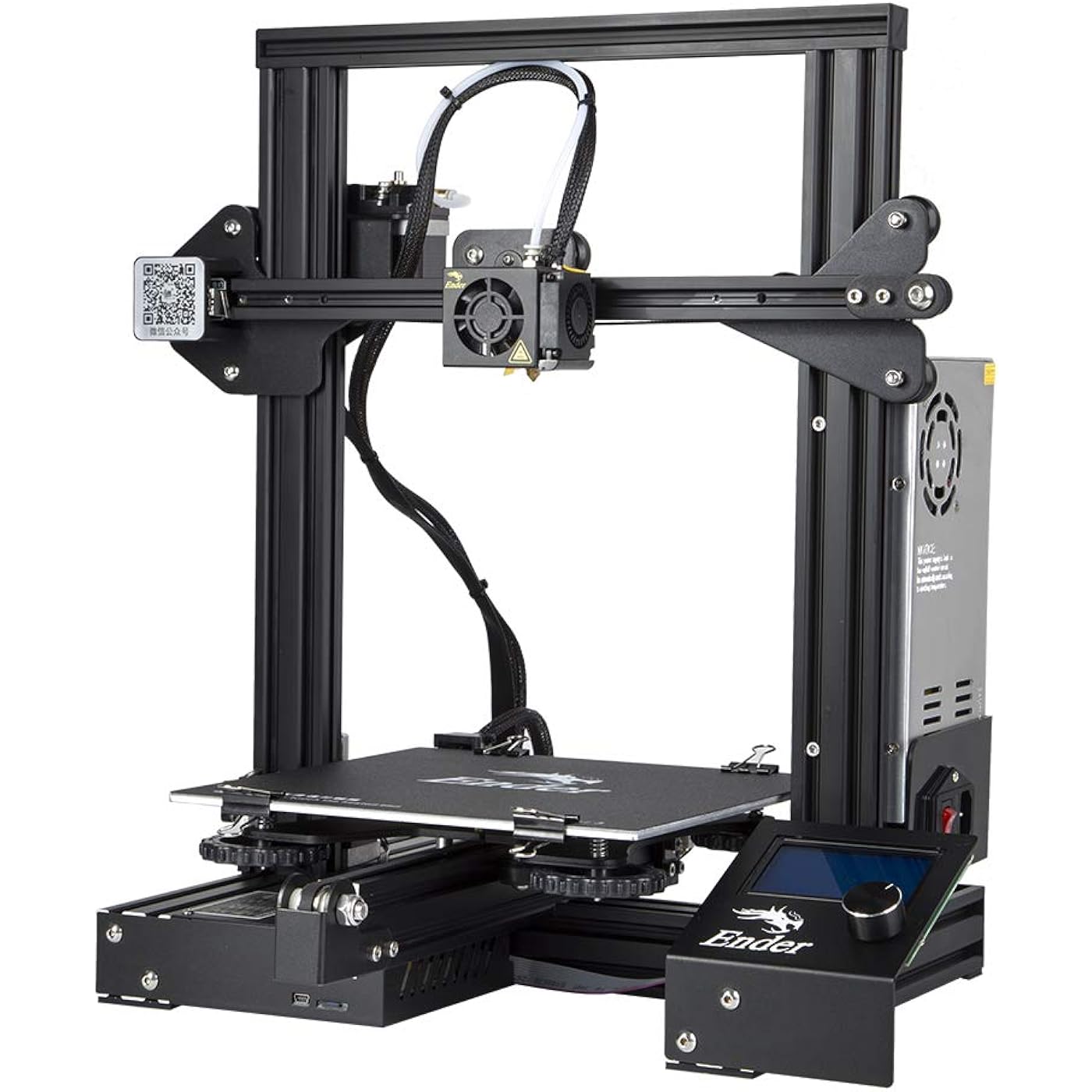
Official Creality Ender 3 3D Printer Fully Open Source with Resume Printing Function DIY Printers Build Volulme 8.66x8.66x9.84 inch
  • Based on 25,783 reviews
Condition: New
Checking for the best price...
$175.99 Why this price?
Save $323.01 was $499.00

Buy Now, Pay Later


As low as $29.33 / mo
  • – 6-month term
  • – No impact on credit to apply
  • – Instant approval decision
  • – Secure and straightforward checkout

Ready to go? Add this product to your cart and select a plan during checkout.

Payment plans are offered through our trusted finance partners Klarna, Affirm, Afterpay, Apple Pay, and PayTomorrow. No-credit-needed leasing options through Acima may also be available at checkout.

Learn more about financing & leasing here.

Selected Option

Free shipping on this product

This item is eligible for return within 30 days of receipt

To qualify for a full refund, items must be returned in their original, unused condition. If an item is returned in a used, damaged, or materially different state, you may be granted a partial refund.

To initiate a return, please visit our Returns Center.

View our full returns policy here.


Availability: Only 10 left in stock, order soon!
Fulfilled by Amazon

Arrives Sunday, Jun 21
Order within 5 hours and 32 minutes
Available payment plans shown during checkout

Protection Plan Protect Your Purchase
Checking for protection plans...

Set name: Ender 3


Features

  • Resume Printing Function: no worry to the immediate power outage or electric circuit error, Ender 3 has the ability to resume printing even after a power outage or lapse occurs, you can continue to print
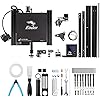
  • Creality Ender 3 3d printer, it is the most basic 3d printer model, more students and beginners can learn the 3d printer by this model, it can help to excercise your hands-on skills. It comes with several assembled parts, you need about 2 hours to assemble
  • Advanced Extruder Technology: Ender 3 upgraded extruder greatly reduces plugging risk and bad extrustion; V-shape with POM wheels make it move noiseless, smoothly and durable
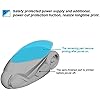
  • Safety Protected Power Supply: Only needs 5 minutes for hot bed to reach 100 degree. Note: This Ender 3 3d printer just can print via sd card, or connect with the computer, it cant print via connecting with your phone
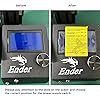
  • Strict Test: Strict testing for key components before delivery and supports available. Kindly remind, to make sure the printer can power on normally without power off automatically, please check the side of the power supply and see whether the power supply voltage is 115V? You can have a look at the side of the power supply to confirm this point

Specs & Other Info

Specification Details
Brand Comgrow
Build Material High-quality Aluminum
Measurements 16.14"L x 16.54"W x 18.31"H
Weight Approximately 14.6 lbs
Compatible Devices Primarily Laptops and PCs
Current Manufacturing Status Still in Production
Model Number Ender 3
Product Release Date March 27, 2018
Manufacturer Creality 3D
Place of Manufacture China
Product Rankings #1,597 in Industrial & Scientific, #2 in 3D Printers
Customer Satisfaction Ratings Averaging 4.3 out of 5 stars from 14,341 reviews

Frequently asked questions

Fully Open Source means that all of the Ender 3's design files and software are publicly accessible. This allows for easy modifications and customizations of the printer. It also cultivates a community where users can share their improvements and learnings.

The Resume Printing Function allows the Ender 3 3D Printer to recover from power outages, disruptions or pauses without losing progress on the current print. It resumes the print from where it left off, saving time and reducing wasted materials.

The Ender 3 3D printer has a print size of 8.66x8.66x9.84 inches. This refers to the maximum dimensions of an object that the printer can print.

Yes, the Ender 3 3D Printer is designed for DIY. It comes as a kit that you assemble yourself, which gives you a great understanding and control of the mechanics of your 3D printer. It's a great choice for enthusiasts and makers who want to learn more about 3D printing.

Top Amazon Reviews

šŸš€ Abunda's Overview

This is our summary and key points to consider based on customer reviews.


The product is a 3D printer that is highly valued for its price and offers good quality prints. However, it seems to require significant adjustment and maintenance time, with some users suggesting multiple upgrades. Despite minor issues and a steep learning curve, reviewers found that the printer will yield great results once properly calibrated and adjusted.

Pros

  • šŸ’° Good value for money.
  • šŸ‘ Everything bolts up and works as expected.
  • šŸ”§ Comes with spare parts.
  • šŸ’» Offers a good selection of software for handling STL files.
  • 😊 Results in high-quality prints.

Cons

  • šŸ“š Poor assembly instructions.
  • šŸ’³ Uses a micro SD card, which is inconvenient to use frequently.
  • šŸ‘Ž Some stock parts may need to be replaced.
  • šŸ“ Requires extra time for adjustments and calibrations.

Should I Buy It?

Yes, especially if you're a bit tech-savvy and don't mind putting in some time to fine-tune the setup. While it requires patience to learn its quirks, the end product seems to be worth the effort. Expect to spend some time on setup and adjustments, but once that’s complete it's a strong and reliable 3D printer.


  • Works well and easy printing Works well and easy printing
Set name: Ender 3
I've only printed a few things so far but it's enough to give some good feedback. At this price point don't expect any frills. That said this bare bones printer performs great. First off from my pictures you'll notice I upgraded the print bed to glass. It's only an extra $12 at the time I purchased. I read some other info online that lead me to believe this would be more likely to be level and perform better. i don't regret it. It works great. My advice would be to take your time assembling this printer. Expect it to take about 4 hours, perhaps more. Make sure everything is tight and aligned properly in terms of the rollers, belts etc. Do not rely on the quick start guide or included instructions. Go out to Youtube and follow the assembly video. Pause it for each step. When you are done stay on Youtube. There is a "Complete beginner's guide" on there from an Australian creator that demonstrates using this exact model. I noticed his menus are a little different due to software changes but his leveling guide and calibration files work great. For being one of the cheapest printers you can get the performance is surprising. I'm very happy with the print quality. I love that I can use tools on Linux or Windows. You don't need to be plugged in as you can simply print from G code on the included micro SD card. The videos online can get you up and running quickly. Every tool needed to build and run the printer are in the box. Nice touch. There is a small amount of PLA material but you will want to order more right away. The included spool is small and really only enough for a couple test prints. If you are a beginner why spend more? This is the perfect first printer. Update: I thought I would add to my review now that I have had some time working with this printer. I've made a lot of improvements to the device I first received. The nice thing is most of the improvements are cheap or you can print them. First thing to note: I was having a lot of problems with printing anything large that took a bit of time. After a lot of digging I found the hotend shipped with the printer was (in my opinion) put together wrong. They either built it cold or inserted the nozzle before the heat break. Either way there was a gap that could not be fixed in the hotend. I bought a Creality spider hotend which is all metal. Way better and it works great. Add to that a BL Touch sensor for autoleveling the bed. Best addition ever. You still need to start with a level bed but it fixes all the little problems with uneven bed surfaces and stopped my extruder problems. While on the extruder. Calibrate your machine! Take the time to measure the output from your extruder. They use a generic setting from the factory. You NEED to set up this machine. Calibrate the extruder, the retraction distance, the nozzle temp for the filiment etc. Pay attention to the details and you will get great results. Really happy with this printer. It takes work but it's a fun project that leads to other projects, and for a beginner it's hard to beat. Some say you should buy higher end and avoid all the minor issues. I disagree. I think this has been a learning experience that prompted me to understand the machine. I think that basic knowledge of the process is important. Your mileage may vary. ... show more
Reviewed in the United States on April 18, 2024 Reviewed in the United States on April 18, 2024 by Doug R

  • Amazing printer!
Set name: Ender 3
The Ender 3 marked my entry into the 3D-printing world, and I love it! The 3D printer has been a godsend! If you're also newbie and searching for advice, here's my brief take on the Ender 3. It's awesome! The Ender 3 arrives in pieces that you must assemble. Since it is essentially a robot, assembly can seem overwhelming at first, but if you take it one step at a time, you'll be printing in no time. I found the printed instructions accompanying the unit to be more sizzle than steak, but, fortunately there are several videos on YouTube that make assembly a breeze. Believe it or not, assembling the unit yourself is beneficial because it familiarizes you with the device. It will allow you to easily make the minor adjustments that 3D printers often require. My wife and I have found that 3D printing comes with somewhat of a steep learning curve, but it's fun. YouTube and websites such as "all3DP dot com" have proven themselves to be life savers. The most common adjustments you'll make while 3D printing is "bed leveling." In truth, though, you're not actually "leveling" the print bed, but rather you're ensuring that the print nozzle is uniformly distanced from the bed (the print surface) on all its 4 corners. The nozzle needs to be super close, too. ...not about an inch or two away from the print bed, but rather it needs to be no further than the thickness of a piece of paper. Crazy, huh? When my wife and I printed a test file provided by Creality (the manufacturer), we frankly sat mesmerized at the unit's precision. It was like staring into a campfire and getting lost in the flames. The nozzle just zipped back and forth across the print bed leaving tiny bits of corn-based "plastic" one layer at a time, and eventually (over time) created a cat/dog thingy. In search of more things to print, we settled on two websites with tons of 3D-printable files that are very often free to download. The websites are "thingiverse dot com" and "cults3d dot com". The latter site takes longer to load, but seems to have more options. Creality has one too, but I haven't really checked it out yet. It's important to note that the files you download from such websites are *.stl files, whereas the Ender 3 needs *.gcode files. To make the file conversion, we downloaded a piece of software called Cura. It appears to be the best (free) software on the market for "slicing" 3D files into *.gcode files. That too has a steep learning curve, complete with complicated settings. But fortunately there are lots of tutorials online along with settings you can copy from experts. I mostly rely on "all3DP dot com" for that. After a while, we decided to invent our own designs and then print them into existence. In my opinion, the cat's meow -- the best and easiest 3D design application -- is Fusion360. It has a limited free version for students and schools, but otherwise it's quite pricey. My wife then found free, open-sourced design software called FreeCAD. We love it, and haven't turned back since. The filament we prefer is PLA. In our experience, PLA produces little to no fumes and it's guilt-free because it's corn-based and biodegradable. It should be noted, though, that not all PLA is created equally. This is primarily because (according to what I've read) pigments affect the PLA in different ways. So, when I order PLA from Amazon, I always look for the PLA with the most and highest reviews. Then, I refer upon their temperature recommendations. Overall, we absolutely love the Ender 3. At under $200, it's extremely affordable, and the process of printing things into existence can be (in my experience) somehow transformative. And if you find yourself confused about something, take my advice by not wasting time by trying to figure it out for yourself. Just refer to the experts on any of the websites I mentioned so, later on, you can focus on things that really matter...like design. Note: the bearing on a little fan went out. So, I reached out to Comgrow, they got back to me immediately, and now a new fan is on the way. No fuss no muss. Finally, at the risk of getting to personal, I'm a disabled veteran who benefits from focusing on tangible things. The process of 3D printing has proven itself to be such a godsend in that regard, that I think the VA should seriously explore ways of getting more vets 3D printing. I hope this helped newbies like me. Happy printing! ... show more
Reviewed in the United States on December 11, 2022 by Louie Cruz

  • Wow. Almost perfect!
Set name: Ender 3
Looked at several printers and decided this was the best bang for buck printer, here in mid 2019. Also popular and a large support community. The assembly was moderate. An internet videos is a MUST as no one could easily assemble or understand the brief picture instruction sheet it comes with. Took me two hours to do things meticulously. Leveling the bed was not so bad. Took me a lot of fine tuning but I wanted it perfect for that first print. Leveling is also a task that is best done after watching several youtube videos. Seriously, no matter how smart you think you are, there is no replacement for real life people who have done this stuff and learned some lessons. First print was underway. I was confused for about 10 minutes the head/nozzle was down on the build mat doing all its motions and the filament was going in but I was not seeing anything being built. Strangely nothing was coming out. In hind site, I think maybe it was putting down a very thin base to build on. So thin it was hard to see. Because eventually it got into the actual feet of the dog and you could see it come together. Its amazing how that nozzle of goop can make such a fine print. Truly amazing. The two bad things: The First bad thing was, the demo dog you print, as a test, would have taken about 2 and a half hours, But they are not even nice enough to give you enough filament to complete it. It printed up to the dogs neck and then ran out. This was disappointing, but I would get over it. The second bad thing and the reason I took a star off was this. When the print was "done". (with no head) I decided to pull it and get ti ready for the next day when I would have more filament. The dog was stuck to the mat like Iron. People on the internet say "oh just give it a little twist, or a hard pull", or "get a putty knife" or some crap like that. Some even say put it in the freezer and the temp diff will just pop it loose. Let me tell you, I tried it ALL. I was even beating the object against the leg of my coffee table like a hammer, and it would not let go of the build mat. It could not have been more attached to that build plate if I had super glued the thing down. The ONLY thing that finally worked was to get a heat gun and seriously heat the mat up, almost to the point where I was melting the printed object, then after some force, it peeled off. IF it had printed it to completion, and I wanted to keep it, I would have had a crazy skirt of plastic around the bottom to trim off. I love the printer, it does some amazing work, but I need to find a way to get my finished projects off the mat without damaging them. ... show more
Reviewed in the United States on June 4, 2019 by Kelli L. Springer

  • Great 3D printer.
Set name: Ender 3 V2
For being a novice 3D printer person, this device can do a lot of things. A friend of mine has this same printer and with his help and previous knowledge from using the same printer, I have really learned a lot and his expertise has helped me with a lot of questions that I would have had to ask others about. I ordered this 3D printer on 28 Jan 2021 and it was delivered on 04 Feb 2021. Creality really does a great job packing all of the parts and pieces. It took a little bit of setting up, but watching several YouTube videoes on how to unbox and setup this printer really was a big help. The most critical thing with this printer, is making sure that the bed is level. If your bed is not level, then the filament will not stick to the surface of the bed. It will take 30-45 minutes to level your bed. There are several videos on YouTube on "How to level your Ender 3 v2 printer". Also, depending on what type of filament you are going to use, you need to know what is the best nozzle temperature to set. I found that the GEEETECH, MILKA and HATCHBOX PLA filaments are the best, but that is my own opinion. I found that 185 Celsius for the nozzle temp and the bed temp of 50 degree Celsius was the best settings. But, most manufacturers will have printed on the side of the spool what temps to use and also when you use the "slicer program" for the things you want to print it will already be programmed into the "gcode". But, still set the temps to 185C and 50C for the PLA filaments and see how that works. I also ordered the "Ender 3 Springs, Creality Upgraded 4PCS Hot Bed Die Springs with 4PCS Aluminium Hand Twist Leveling Nut for Ender 3/3 Pro/3 V2, Ender 5/5 Pro/5 Plus, CR-10, CR10S/10S Pro, CR 20 3D Printer" kit. This replaces the springs that come with the Ender 3 printer and is a more sturdier spring (hot die spring) instead of the less sturdier spring that comes standard on this printer. It will keep your bed level after several prints. Also, make sure that you check the belts for the X and Y axis after several prints. All you have to do is to tighten the knobs just a fraction of a turn, but make sure not to overtighten. My friend printed me some additions, which we found on "Thingiverse.com", to add onto my printer which really helps, one is a pulley wheel that attaches to the side of the printer to help streamline the filament from the spooler to the extrueder so that it doesn't crimp when printing. Also, I have printed several items that I downloaded from THINGIVERSE.COM and all of them turned out great. I found out from my friend that using blue painters tape and the Elmer's Purple glue stick really helps the different filaments to stick to the surface. Put the blue painters tape down and then level your bed and once leveled, then use the purple glue stick on the painters tape and smooth with your finger. I also downloaded the slicer software "CURA" (the "slicer software") to create the "gcode" that this 3D printer uses to print your items that you download from "THINGIVERSE.com". There is a "slicer" program that comes with the printer on the SD Card and it looks just like "CURA" but Creality just added a few other things to make it look a little different. Either "slicer program" will work. I have also purchased about $200 worth of PLA (harder) and PETG (softer) filaments. Should not be running out of that anytime soon. Overall, Creality does make a great printer and so far, I have not had any issues to be really concerned about. Overall, I give this printer a 5 out of 5 stars. Just do your research on what you and your friends are likely to use. I am very pleased and recommend this printer to everyone. Those people that are giving this device bad reviews are ones that have no idea on what they are doing and have not done the reasearch in order to make this thing enjoyable. You just can not setup this printer and expect it to automatically print. There is some work involved and once you do the research and learn from those that have gone thru these situations, i guarantee that this device will be the next fun thing that you will ever own and have fun using day-in and day-out. I am glad i had the expertise from my friend or I might be giving some critical reviews also. Do your homework. I think this is the future toy that everyone will have in their household. Happy 3D printing! 19 April 2021 I have had this printer for almost 3 months now, and i can say that I have had no really big problems with this 3D printer from Ender. Yes, there is a few twikking that needs to be done from time-to-time, but if you have the patience, this thing can really be fun for you and the family. Once again, the biggest thing is getting the bed level but usually you don't have to worry with that until after 8-10 prints. Again, i use the Blue Painter's tape for the filament to adhere to and i also used the Purple Glue Sticker. For smaller and more detailed prints, using these 2 things can make for removing your print a little difficult. I use a little rubbing alcohol and it will come loose. For finer prints where things are more detailed, you might also want to slow the speed of the print from 100% to about 50-70%. I have printed some pedals or flowers for the hummingbird feeder that i made and the print speed needed to be adjusted and really did a fine job. Using the faster speed (100%), the detailed flowers were messed up. I would still recommend this to everyone. I enjoy my Ender 3D printer everytime i print something. Good luck. ... show more
Reviewed in the United States on February 25, 2021 by Chewy

  • Ender-3 - A Year of Pain Ender-3 - A Year of Pain
Set name: Ender 3
TL;DR: If you want to print, avoid it. If you want to spend endless nights tweaking, welcome aboard. After a year: constant stringing, clogs, ugly seams, random failures after 8-12 hours of printing. The "first print" is fine. Everything after that is a circus. By the way, Creality ships this "starter printer" with a cheap plastic sticker bed held on with binder clips. You end up scraping parts off like it’s 2016. A proper $10 PEI flex plate would solve adhesion and removal, but apparently that was too much to include. So you WILL start upgrading from day one. And calling it a "suitable gift for kids"? That’s marketing comedy. This is a machine where you need to clean a 240 °C hotend, calibrate extrusion steps with 100 mm tests, and constantly tweak retraction/temperature. That’s not a toy - that’s a frustration kit. What I Printed Utility stuff: organizers, boxes, lids, rings, toys etc. PLA, PETG, TPU, CF - sometimes a 0.8 nozzle for bigger parts. Cura (latest versions). Out of the Box The first couple of simple models were tolerable. As soon as you go beyond the default settings, chaos begins. Seams turn into ugly zits. Too many retractions = clog city. You leave it overnight, burn 12 hours of power and filament, and wake up to a printer happily "printing in the air" because the hotend is jammed with a solid plug of plastic. Look at the photos: spiderwebs, blobs at seams, tears at layer changes, chunks of plastic from supports. That’s normal for this machine, not an exception. Upgrades I Tried: - Metal extruder arm instead of plastic - Capricorn PTFE tube - Bi-metallic heatbreak - Stronger bed springs - PEI build plate (this one is actually good) - Different nozzles (0.2, 0.4, 0.6, 0.8) - Tons of Cura profiles I did the full calibration dance: e-steps, flow 85-105%, temp towers (PLA 195-215, PETG 225-250), retractions from 0.8 to 7mm (Bowden life), speed 30-70mm/s, z-hop on/off, coasting/wipe/pressure advance where possible. Cooling fan anywhere from 0-100%. Always the same outcome: either strings and blobs, or under-extrusion, or a clog after a long run. Zero consistency. Why This Happens (Technical Reality) - Bowden with PTFE insert in the hotend. Frequent retractions pull the melt zone upwards - plastic plug forms - extrusion stops. Classic. - Rollers and V-slot mechanics. After a couple weeks, you’re back to chasing loose or overtightened wheels. The bed drifts, no auto-leveling, constant manual fixing. - Weak hotend and cooling. PETG in particular is a balancing act: no cooling = melted mess, too much cooling = layer adhesion dies and strings everywhere. - Software band-aids can’t fix hardware lottery. You can tweak overlap/coast/comb/linear advance forever, but if the core thermal/mechanical design is inconsistent, no profile saves you. "It’s Your Fault"? No I did the standard rookie-to-veteran upgrade path: extruder, tube, heatbreak, springs, plate, endless tuning. The result? Yes, the clogs went down, but the print quality problems went up. Same model, same filament - each print is a new lottery ticket. Side-by-Side Reality After a year of fighting, my wife got sick of watching me suffer and just bought me a $1000 printer. With the same filament and same models, I print instead of troubleshoot. That’s the whole difference. Pros - Cheap entry ticket - Huge community (good if you enjoy endless tinkering) - PEI plate really is great Cons - Totally inconsistent print quality - Thermal clogs on long jobs (especially with retractions) - Stringing, blobs, ugly seams, messy supports - V-rollers need constant adjustment - "Upgrades will fix it" is a myth: they only delay the pain Verdict Ender-3 is not "affordable printing," it’s "affordable endless tweaking." If your hobby is upgrading printers for the sake of it - fine. If you need a tool that consistently makes parts - don’t waste your time. I wasted mine. Never again. ... show more
Reviewed in the United States on September 15, 2025 Reviewed in the United States on September 15, 2025 by Buyer

  • LOVE IT!! I've been printing like a madman!
Set name: Ender 3
**** Update 3/27 - So after a few days of printing, one of my belts started slipping. That caused my larger prints to slip off to side at certain points during the print. And it's getting progressively worse. I've contacted the manufacturer to see what they can do to get me replacement parts, but as of now, my printer is no longer functional. When it was working correctly, it worked well. But now it's just a very large $200 paperweight. See below for my review before the issues. So there is definitely a bit of a learning curve, but with the Creality Ender 3 and the included Creality Slicer program, learning is both fun and easy. I'm on my 3rd day straight of printing various things. I started Thursday with some small ship models, the Friday I tried some different small models, putting several models onto the same print job. I also did 2 tank models for my second print job Friday night. Today I printed an X Wing Tie Fighter combo and am now working on Klingon battle cruiser measuring 105 mm by 144 mm by 27 mm, my biggest print job yet. And most of my results have been very good. I've had some misses too, but thats mostly in the print settings or because I've scaled on objects print size too small. When you use the slicer program, make sure you choose to set the advance printer options. There you can choose nozzle temp, bed temp, print speed, and fill density, and other parameters that can make or break your model builds. To get started printing, go to some place like Thingverse and choose a model you like. I recommend trying smaller models first, with varying degrees of model complexity and detail. Then play with the settings in Slicer to generate the best gcode file for the model you are trying to print. The assembly of the Ender 3 was fairly straightforward and easy but at a relaxed pace will take about an hour to complete. Be careful during assembly that you don't get the cables tangled in the structure as you will need to have slack when plugging the various cables in. You are provided all the hardware you need plus the tools to complete the assembly. You are also provide a scraper for removing models from the print surface, and wire cutters if you choose to use the zip ties to anchor your cables to each other or the frame. Use the enclosed USB to TF card device to install the Creality Slicer software and the manual for the software. You will also use this to load your gcode print files onto. It's easiest to put your models onto the TF card then print off that directly from the printer. I've had this sitting in my cart for quite some time now, and now that I have it I am sorry I waited so long to buy it and get started. It's an amazing deal for a printer that works so well. ... show more
Reviewed in the United States on March 20, 2022 by James Houghton

  • Overall, the Ender 3 V2 is a great entry-level printer
Set name: Ender 3 V2
The Ender 3 V2 has been one of the most reliable and beginner-friendly 3D printers I’ve used. Out of the box, it offers a solid balance of print quality, ease of use, and upgrade potential, making it a great choice for both newcomers and hobbyists who like to tinker.
Reviewed in the United States on May 15, 2026 by MarlĆØne Urbain

  • I absolutely love this thing. 1st time printers, read below!
Set name: Ender 3 V2
This is my first 3D printer. I've had it about 3 weeks, and I'm already getting comfortable with it. The machine has great stability, and as I imagine with all 3D printers, a learning curve, but once you get familiar with it, it will feel like an extension of your body. As I've stated, I'm new to this skillset, so I won't pretend to be able to compare it with others, but for all you people thinking about getting into 3D printing, I'll lay out what you're looking at getting into... Upon receiving it, you'll have to do a bit of assembly. Nothing too complicated, and there are many walk-throughs on YouTube, that can guide you through the entire process. Its not a must, but having some experience with tools and a bit of problem solving skills will help you out a lot. By the time you're done, you'll have a grasp on how your printer works, which is important when it comes to using and maintaining it. Once you've got it set up, the next thing you'll want to do is look up installing filament and leveling the bed. Again, search for YouTube videos, especially with leveling the bed, because you'll want to pick up a good strategy on this, as it's critical to having success with your prints. The best strategy that I've found is the one using the sheet of paper. At first, it might feel a bit overwhelming trying to get everything just right, but as you use this skill, and lay down some plastic on the bed, you'll get a feel for it, and within a couple weeks you'll be able to do it blindfolded, and you'll understand why it's so important, and what areas you need to pay the most attention with each print. I strongly recommend getting the yellow spring upgrades that you can find on Amazon. Honestly the difference is so drastic, and the cost so cheap, I dont understand why it doesn't come that way. Once you've gotten bed leveling down and the filament installed, you can print an example that's included on the SD card, and give your printer a test run. From here, there are 2 ways you can go about creating things. You can search the web for creations already set up for you to print, or you can create your own. Im not a very creative person, but it made no sense to me to limit myself with other people's creations. So I'll just briefly get you pointed in that direction. To create designs you're going to need CAD software. I found Fusion 360, it's free for hobbyist, and I think it's amazing. Its got a bit of a learning curve, but once you get comfortable with it, you feel the world is yours to create. Using geometry, planes, and extrude tools, you'll be able to model anything you want in real life, or anything you could possibly think of... I have no affiliation with this person, but their tutorials have helped me so much with the software, that in about 10 days I am now designing my own creations like an experienced user. Seriously, search for Product Design Online on youtube...you'll know it's him because he mentions his name in the videos and it's Kevin. He teaches so many helpful techniques. Just be aware that his tutorials span 2 different versions of fusion 360, so the interface looks a little different in some, but you'll get the hang of it easily. One if the best teachers I've found on the internet, period. The next thing you'll need is a splicer software. This software takes your design and slices it into layers. This is where you'll set up the parameters for how your printer will behave during the print too. Such as temperatures, speed, layer thickness, etc...the amount of terms you'll have to learn seems overwhelming, but at first you can just use presets, and learn them as you go. As I've said, I've been doing this for 3 weeks, and I'd say I understand about 80% of this terminology simply by trying to solve errors in my print, and reading the tool tips. By far, the best free slicer I've found is cura. I've tried a few others, but nothing comes close to it. However, I've been told Simify3D makes cura looks like a junky slicer, comparatively. The issue for me is that it costs $150, and I dont have that cash flow. If I did,bid definitely want to try it out, and apparently you can purchase it and get a full refund after 1 or 2 weeks if you preferred cura. So, it's a lot if stuff to learn and get used to...You'll be best served if you have a mechanical & technical know-how, but if you dont, you'll definitely acquire those skills using your printer. There are upgrades for these printers. Not just creality, but all the hobby 3d printers, and you'll learn them over time, but as I stated earlier, the bed springs are a must have, and they're cheap. I wish you the best of luck on your journey, and if you're like me, this will probably become your most favorite that you've ever owned. Happy printing & #PrintOn ... show more
Reviewed in the United States on January 17, 2021 by Chuck

Can't find a product?

Find it on Amazon first, then paste the link below.
Checking for best price...