
Search  for anything...

OVERTURE Nylon Filament 1.75mm 3D Printer Filament, Polyamide (PA) 1kg Spool (2.2lbs), Dimensional Accuracy +/- 0.02 mm, Fit Most FDM Printer (Gray)

  • Based on 677 reviews
Condition: New
Checking for the best price...

Buy Now, Pay Later


As low as $8 / mo
  • – 4-month term
  • – No impact on credit to apply
  • – Instant approval decision
  • – Secure and straightforward checkout

Ready to go? Add this product to your cart and select a plan during checkout.

Payment plans are offered through our trusted finance partners Klarna, Affirm, Afterpay, Apple Pay, and PayTomorrow. No-credit-needed leasing options through Acima may also be available at checkout.

Learn more about financing & leasing here.

Selected Option

Free shipping on this product

FREE 30-day refund/replacement

To qualify for a full refund, items must be returned in their original, unused condition. If an item is returned in a used, damaged, or materially different state, you may be granted a partial refund.

To initiate a return, please visit our Returns Center.

View our full returns policy here.


Availability: In Stock.
Fulfilled by Amazon

Arrives Thursday, Jul 9
Order within 12 hours and 42 minutes
Available payment plans shown during checkout

Protection Plan Protect Your Purchase
Checking for protection plans...

Color: Gray


Features

  • Odorless & Zero Warping This CoPA filament combines excellent strength, toughness, and heat resistance up to 180 C. It delivers excellent printing quality with no Odor or warpage during printing. As the Nylon material is sensitive to moisture, please remember to put it back into a transparent bag
  • High Stability and Durability OVERTURE filament is based on a copolymer of Nylon 6 and Nylon 6.6, a strong and tough thermoplastic polymer. Great for creating parts which needs to be strong and durable. These Nylon filaments are excellent choice for engineering production or prototyping. PVA glue is always required for better adhesion
  • More Humanized Design & Easy to Use Grid layout on the surface for easy resizing; with length/ weight gauge and viewing hole on the reel so that you can easily figure out the remaining filaments; more filaments clip holes for fixing purpose on the reel; Larger spool inner diameter design makes feeding smoother
  • Dimensional Accuracy & Consistency Advanced CCD diameter measuring and self-adaptive control system in the manufacturing guarantee these Nylon filaments of 1.75 mm diameter, Accuracy +/- 0.02 mm; 1 kg spool (2.2lbs)
  • Supported & Smooth Printing Print with confidence. Overture filament comes with dedicated support and a 1-year shelf life for unopened spools (proper storage required). We're committed to timely solutions for a seamless printing experience. Your reliable 3D printing partner

Brand: OVERTURE


Material: Nylon


Color: Gray


Item Weight: 1 Kilograms


Item Diameter: 1.75 Millimeters


Brand Name: OVERTURE


Additional Features: Excellent Layer Adhesion, Low Shrinkage, Impact Resistance, High Strength and Durability


UPC: 810031292240


Manufacturer Part Number: OVA175


Unit Count: 35.274 Ounce


Manufacturer: OVERTURE


Number of Items: 1


Warranty Description: 2 year


Material Type: Nylon


Color: Gray


EU Spare Part Availability Duration: 1 Years


Item Weight: 1 Kilograms


Item Diameter: 1.75 Millimeters


Frequently asked questions

If you place your order now, the estimated arrival date for this product is: Thursday, Jul 9

Yes, absolutely! You may return this product for a full refund within 30 days of receiving it.

To initiate a return, please visit our Returns Center.

View our full returns policy here.

  • Klarna Financing
  • Affirm Pay in 4
  • Affirm Financing
  • Afterpay Financing
  • PayTomorrow Financing
  • Financing through Apple Pay
Leasing options through Acima may also be available during checkout.

Learn more about financing & leasing here.

Top Amazon Reviews


  • For thirty dollars I though why not, and was pleasantly surprised (after a bit of tuning) For thirty dollars I though why not, and was pleasantly surprised (after a bit of tuning)
Color: Black
I have a CoreXY machine that I've been using to experiment with higher temp thermoplastics lately and nylon is completely new to me, and after seeing this at around 30 dollars I thought it would be easily worth it to give it a try and have some fun, and fun I had. Don't get me wrong, this filament isn't completely easy, or as easy as others say it is, you'll have problems unless you have a really expensive printer that's already tuned for nylon, that's just how this kind of plastic works, but once you get it to print, you get an incredibly strong and good looking part, that's well worth the effort. Let's go through some of the problems I experienced and how I fixed them. The first problem I had was that the filament was way too stringy, and popping sounds came from when it was being extruded. Any experienced printer nerd can tell you that my filament was moist and needed to be dried, which I did, by setting it on a glass plate and a cookie sheet in the oven at 180f overnight, go lower if you want to be safer. Next was when printing, on top of both a pie sheet and an ultrabase style bed at 80c, the parts would always warp off mid-print. This was solved through two fixes, first, in order to get the parts to stick better, I went over to McMasters and ordered a 12x12 1/16 sheet of blue garrolite (link below), and adding that on with a matching size 3m high temp adhesive sheet (linked below) dramatically increased the adhesion of the parts. Also, it's worth noting that McMaster has these sheets for really cheap and they ship very fast, such an amazing tidbit I found through my journey. That fixed the problems of the parts coming off the sheet, but not the warping issue, which happens when the part is heated to the temp of the build plate which is past the glass transition temperature of the plastic, making it soft and easily susceptible to warping. Luckily, garrolite is an incredible bed material for nylon prints because it's nearly as sticky cold as it is hot. This is good because the first layer of the print with all the fine details and lines needs to be printed well, at higher temps (60-80c) but after that, you can drop the temperature down to below the glass transition temperature of nylon (I set my consecutive layers temp to around 45-55c), and after that, the part remains hard and resists its own warping. Yes, I'm aware that the real solution to this is a heated chamber and I'm only generating internal stresses, but a heated chamber was out of the question for me and a corporeal part was better than one that wasn't. Next was just the stringiness of the filament, mainly because its a softer filament compared to pla and petg and what have you, so even though I had a direct drive I did have to kick up the retract length and speed a bit, and make sure your combing/wipe settings are on properly. Also, in some of the pictures, you can see the top surface of the parts doesn't look all that great, that's because nylon is not the best when it comes to bridging (which is what the ceiling layers of a print have to do over the infill) so the gaps in the infill show up clearly on the top surface. This is easily fixable by either increasing your top layer count, or your infill percentage. After those fixes, this filament started printing some very nice parts, and I'm very happy with their surface finishes now (benefits of corexy w/ linear rails). Also the filament kind of reminds me of a carbon fiber filled filament with how it looks, it's kind of matte a bit with a little sparkle, which does show up nice on the parts. On another note, you should definitely use this with an all-metal hotend, hardened steel tip, and preferably a geared extruder. I'm using a bmg extruder connected to an e3d v6 all metal hotend. Here are my current printer settings: Line width: 0.4mm outer walls 0.5mm everywhere else on a standard 0.4mm nozzle Speeds: 25mm/s outer walls 70 mm/s everywhere else Infill: 40% (for roof quality) Nozzle temp: 260c Heatbed temp: 80c first layer, 50c rest layers Retracts: 3mm at 40mm/s (on bmg direct drive with e3d v6 hotend, should be 7-8mm at 45mm/s for bowden) Cooling fan: None, with a 20s minimum layer time Layer height: 0.2 mm Z hop: none Any other settings could be left stock Here is the garrolite sheet selection on McMasters: https://www.mcmaster.com/garolite/multipurpose-flame-retardant-garolite-g-10-fr4-sheets-and-bars/ Here is the adhesive sheet: https://www.amazon.com/Adhesive-Transfer-Double-Printer-Weupe/dp/B07BK8PHZK/ref=sr_1_12?crid=3M87LNGA7A3KR&dchild=1&keywords=adhesive%2Btransfer%2Btape&qid=1603090828&sprefix=adhesive%2Btrans%2Caps%2C208&sr=8-12&th=1 Have fun printing! ... show more
Reviewed in the United States on October 19, 2020 Reviewed in the United States on October 19, 2020 by Bryan Jones

  • Yet another great filament from Overture 3D Yet another great filament from Overture 3D
Color: Black
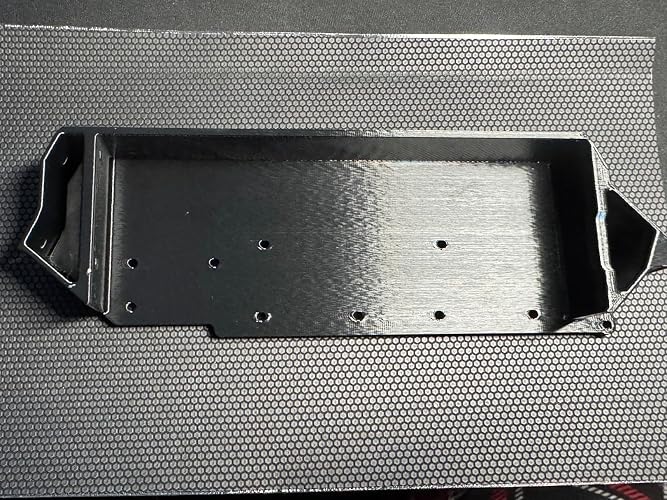
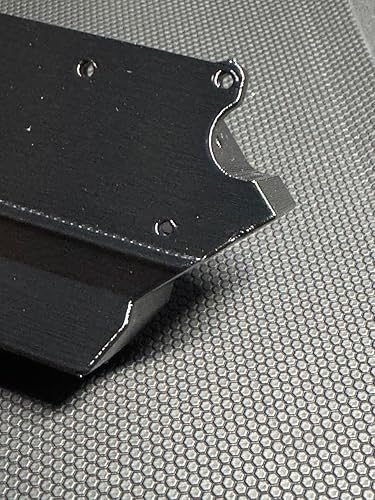
This is my first time printing with Nylon since I started with 3D printing. I usually print with Overture's PLA, PLA Pro and PETG, also great products. First thing I noticed is the new spool with 4x90deg holes on the sides to secure the filament while not in use. The original Overture spool had 3x120deg holes. The package is the standard Overture style: resealable bag, 200x200 print surface and a small ruler. After a few failed attempts, I finally managed to get a nice print, although I believe there is still room for further improvements. I did a lot of research on the web prior to start printing with Nylon and I got all sorts of directions, tips and tricks. However, this Overture Easy Nylon filament turns out to be very easy like the name says and requires little to none extra knowledge to print with if you are already familiar with PETG. However, whether you have a textured or smooth print surface, you will need to add water based glue (glue stick) to get proper adhesion. Interesting fact is that the first time I printed with Nylon, I did not use glue and the filament adhered to my textured bed quite nicely but after I removed the print, there was no way to get it to stick without applying a layer of glue on the bed surface. So save yourself sometime and apply the glue right from the get go. My printers are in the coldest room in the house (66F - 68F), so instead of setting the bed temperature to 50C as described in the spool, I set it to 65C and it worked just fine. Hotend temperature was set to 250C for all layers to make sure layer to layer bonding. For this review, I used this cooling duct as it turns to be a good test print (small parts, thin walls , overhangs and bridging). I started printing with my part cooling fan OFF as indicated in the spool but, I was not able to print small parts with overhangs nicely. Because of the combination of a high printing temperature (250C) and a short layer time, the overhangs were getting a droopy and deformed since there was not enough time to cool down a bit from layer to layer causing it to droop and look bad. Then I decided to go against the odds and I turned my fan ON at 50%. I use Prusa Slicer with my printers and its auto cooling feature is quite nice. All you need to do is to define the fan lower / upper limits and the slicer does the rest based on the layer printing time. I set them all to 50% after the first 3 layers (settings snapshot in the pics) and the part still came out still incredibly strong. I tried to snap the string test to check for layer bonding and I was surprised by the fact that the piece kind of bent a little but did not snap. Nylon can be sticky very sticky at 250C, so keep your nozzle clean always clean before printing (the same applies to every filament). Although some people here mentioned the smell, I leave in an apartment and I did not smell anything at all. It was like I was printing PLA. But, again, I only printed small parts. Perhaps it will start smelling when I start printing larger pieces. For this print, here are my basic settings: Printer: CR-10S modified to DD with a Prusa Bear X axis and extruder (basically a larger Prusa MK3S) Slicer: Prusa Slicer 2.3.0 Hot end: 250C Bed: 65C with a layer of glue (water based. Once the print is done, you just need to brush the part and bed surface off with warm water or IPA) Cooling fan: 50% Retraction: 1.4mm @ 38 mm/s Print speed: 45mm/s Bridge speed: 40mm/s Bridge flow: 80% Other settings: Stock Prusa Slicer 2.3.0 MK3S profile Overall, the results were very satisfying and I highly recommend this filament. Don't be afraid of making mistakes. Give it a try and always pay attention to what your printer is doing so you can tweak and adjust your settings. UPDATE: I still need to tweak the overhang settings to avoid drooping. I tried to print a Benchy and the bow overhang was still coming out not too good with these settings. ... show more
Reviewed in the United States on January 27, 2021 Reviewed in the United States on January 27, 2021 by Mauricio Moraes

  • Excellent easy to use nylon filament
Color: Gray
Excellent easy to use nylon filament. I print on an Elegoo Neptune 4 Pro with standard nozzle. This filament is not reinforced but is extremely strong. It has great adhesion using a glue stick on a PEI bed. I printed a gear of approximately 8 inches in diameter with no warping, no stringing and no adhesion problems. This is a great filament for those that need to print functional parts but don't want to become an expert in all the nuance of printing exotic materials. Great value. ... show more
Reviewed in the United States on January 16, 2026 by Jay F.

  • Hardly odorless, but still quite easy to work with once you get the hang of it
Color: Gray
First, I wouldn't say even "easy" nylon is for beginners - working with a PA-CF filament is going to be easier still because the carbon fiber mitigates a lot of issues nylon has on its own. That said, this is certainly easier than most, especially for pure nylon without any additional components. It's definitely not odorless (took off a star for this claim), but in my Bambu Lab X1C a very low chamber fan setting keeps the nasty stuff from going into the room. Don't try to print this quite as fast as PLA or anything, but you can get reliable results with excellent strength. The lack of CF also makes it tough to print with overhangs - part cooling can help but increases warping, and since most people who print nylon are quite concerned with dimensional accuracy, this can easily be a problem. Not the fault of this filament at all though. And as always, make sure it's dry - printing from a heated drybox is always a good idea and very necessary even in normal humidity, all nylon absorbs enough moisture to degrade your print within hours. ... show more
Reviewed in the United States on July 31, 2023 by A.J. Chodan

  • Interesting material to work with once you get it dialed in.
Color: Black
It's "easy" relative to other nylons, but not necessarily easy. I would say it's no more difficult than PETG, which has its own quirks. If you and your printer know how to print PETG, you can print this. The good: This makes extremely robust prints with excellent strength and layer adhesion. It does have a decent temp resistance, but there's some serious caveats with that. The print quality is quite lovely, with rich glossy black prints and a very nice surface feel. Doesn't need exceptionally high nozzle or bed temps, and doesn't produce an profound stank or odor. The mid: Finicky prints. Tolerances will vary because the material is rather hygroscopic. It absorbs moisture profoundly quick, and you'll absolutely need to dry it in an oven at about 95C for a few hours before you even think of printing it. A bone stock cheapo dryer that maxes out at 65C could do it, but it will take 3-4 days to dry out. I did 8 hrs in a convection oven at 95C. That temp tolerance thing mentioned on this, yeah, that's not the whole truth. This stuff gets increasingly softer and softer as cool as 50C. It doesn't fail, doesn't melt, but it gets kind of rubbery. It is not at all something I would want for anything hotter than about 60C. The bad: You can get closish with the generic PA profile, but this isn't generic PA. It's a CoPA. The print profiles on the Overture website are absolutely trash. This is my biggest gripe. The print speed is 3.6mm3/sec, the cooling is all wonked up, bunch of other things are just totally out of whack for modern DDE printers. Maybe if you have some 10 year old printer. These aren't even conservative profiles, they're simply not appropriate and it's disappointing they are not better dialed in. I wonder how many people bought this filament, used the Overture profile, and gave up figuring it must be broken. Overall, good price on this for what you get. Prints well, good layer adhesion, can work just fine on a PEI plate with some glue. Doesn't need any exotic printers or special handling (aside from total drying and printing from a drybox). Not an everyday material, but nice to have on the shelf. ... show more
Reviewed in the United States on January 4, 2026 by Diabeetus

  • Very nice Nylon and prints well when following min requirements
Color: Black
First I printed some parts using a CR-10S in a custom enclosure. Stock hot-end and bed. I can tell that the hot-end has a hard time printing this with the amount of blobs, deformities and sometimes layer separation. However, surprisingly I was able to get functional parts that cleaned up nicely. Without a modded hot end on the CR-10 you are right on the edge of the machines capability when printing this material. I did notice that the first layer has a tendency to separate if printing under 260C on this machine. I had the bed set to 65C to help keep the warping to a minimum. After the prints are finished I found the best way to minimize warping is to cover them with a metal container and allow them to completely cool before removing them. I then printed the same parts on a Raise3d Pro2. I had good results with a 250C nozzle temp and 50C bed temp. Had to increase retraction to around 4.2mm and use a layer of PVA glue. Parts came out super nice with very minimal surface irregularities and zero delamination's. I could likely make them near perfect if I play around more with the settings but otherwise this material has been pretty easy to work with so far. I also annealed them as recommended but my oven can only go down to 170F. They did not warp at this temp. I submerged them in salt to help distribute even heat. Overall this material has been pretty easy to work with and I will definitely buy more. ... show more
Reviewed in the United States on October 15, 2020 by Taco

  • Prints well from a dryer, run limited fan settings if printing hot. Prints well from a dryer, run limited fan settings if printing hot.
Color: Black
Necessities: Filament dryer, PVA Glue (glue stick or elmers school glue), enclosure (for larger flat parts especially with sharp corners on the bed) Things to know: Does seem to ever so slightly shrink a bit (<1-2%) the further you get from the bed, I did notice one of my long rectangular parts had a slight taper to it as it got further from the heated bed. Wasn't worth doing anything about in my instance, but it would have to be accounted for in the design. I don't know of any slicer settings that would compensate the size of the part several millimeters of Z-height into the print. Printed well on a nearly bone stock MK3S. I am running a 0.6mm Bondtech CHT, which does put more heat into the filament, so you may want to run 5-10C cooler on the hotend temps. I modified the Ultrafuse PA profile a bit to have a starting point. Just threw some gluestick down on the bed and stuck my small Creality dryer in a simple foam mat square enclosure to prevent warping, I did try printing without an enclosure and it did come out warped the first go around. They say not to use a print fan, but I did turn mine on to prevent some overhangs that were curling. Dried it for 8 hours at 50C and it printed well right from the dryer. Zero stringing whatsoever. Color seems to be a nice true black, some other filaments I've printed have a green tint to them. I paid $32/kg for it and its still a decent deal at $37. Seems to have good mechanical properties, time will tell. I mostly print Overture PETG (my go-to filament). Seems pretty similar in mechanical characteristics. Changing your top and bottom infill pattern to Hilbert's curve also seemed to help. Only thing I might do is turn the fan up a bit more, it still ever so slightly curled on one overhang. Overall good experience with nylon and will be using it for more projects in the future. ... show more
Reviewed in the United States on March 20, 2025 Reviewed in the United States on March 20, 2025 by Evan

  • FAR from easy, doesn't behave like normal PA. Takes some serious profile calibration.
Color: Black
Let me preface this review with my background. I've been 3D printing for about 8 years, have owned about 10 different printers, run a small side business doing prints, and I regularly push the envelope on prints. I'm about halfway through a master's degree in Additive Manufacturing Engineering. I like to think I kinda know what I'm up to.... Usually I've got a filament tuned within 2-3 prints, but I'm 5 benchies into this and nowhere near satisfied with my print results. This nylon is not like any other nylon I've used. The good: Zero warping of any kind. Whatsoever. The bad: I can't get a clean print to save my life. I've got a modified X1C with a chamber heater and insulation, printing this directly from an AMS-HT (with an internal humidity of 4% after my drying cycle). I thought that this would all help - but this nylon likes to be printed COLD. I dropped hotend temperatures to 240C and upped cooling fans to about 3/4 across the board. Can't get a clean benchy for anything. Next I'll try printing with door open and top off, maybe with the AC blowing right in, because I can't get this cold enough to effectively print for anything. If that doesn't work, I'll try printing on my A1 or A1 mini... and if that doesn't work, I'm getting a new spool from someone else. Honestly, I don't think I'll buy this again even if it does work on my A1 or A1 mini - it's just not like other nylons, and I'd rather have consistent results across brands. This just doesn't do it for me. Overture, I love your PLA, your PETG is as good as PETG can get... but I'm not loving this nylon. I've been using Sunlu more and more and will probably try their nylon next. Will update the review if I can get a print profile that works well enough. ... show more
Reviewed in the United States on May 29, 2025 by DominSpectre

Can't find a product?

Find it on Amazon first, then paste the link below.
Checking for best price...