
Search  for anything...

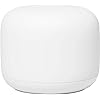
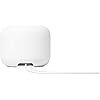
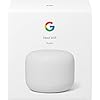
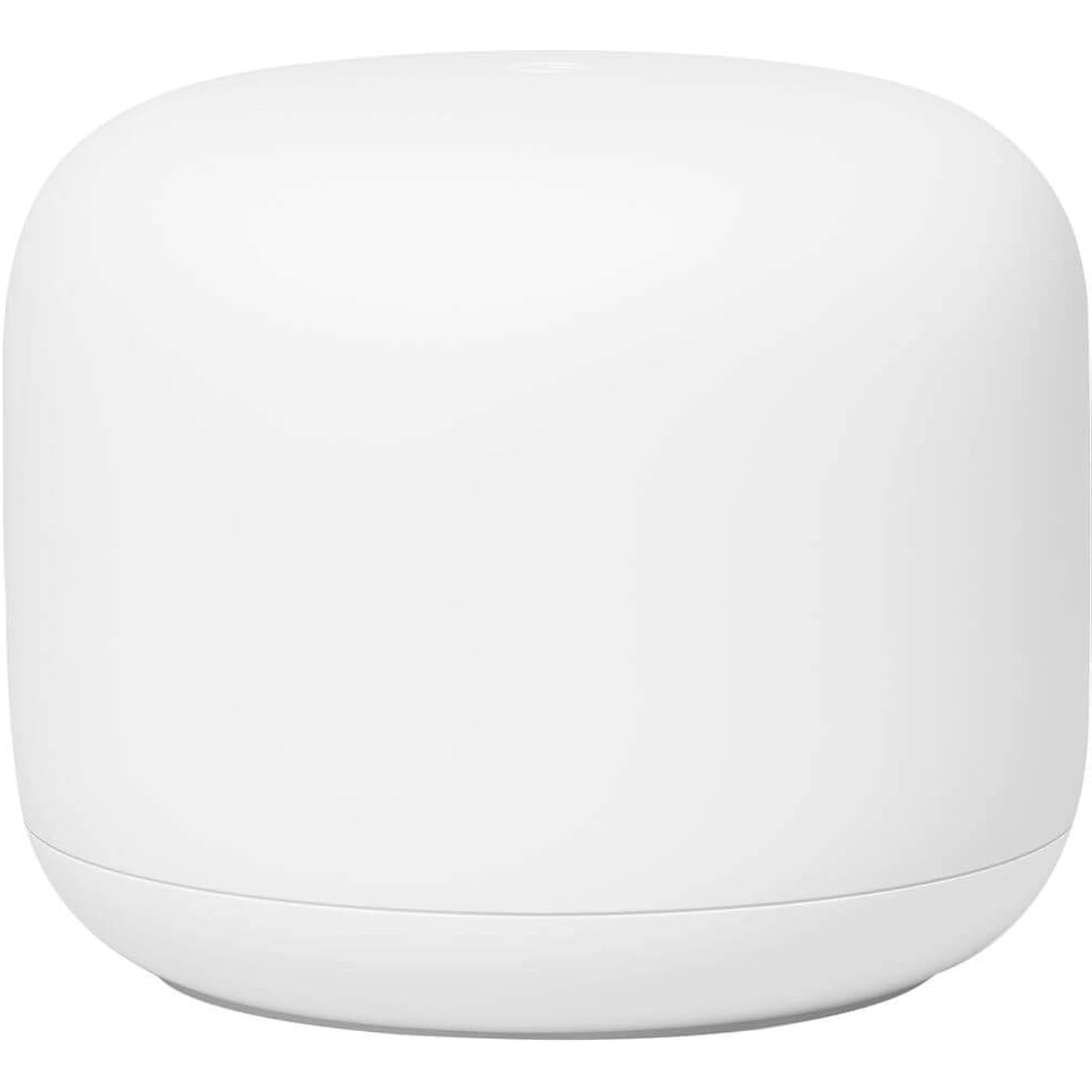
Google Nest Wifi - AC2200 - Mesh WiFi System - Wifi Router - 2200 Sq Ft Coverage - 1 pack
Based on 12,499 reviews
Condition: New
Checking for the best price...
$54.99
Holiday Deal · 8% off was $59.99

Buy Now, Pay Later


As low as $9.17 / mo
  • – 6-month term
  • – No impact on credit to apply
  • – Instant approval decision
  • – Secure and straightforward checkout

Ready to go? Add this product to your cart and select a plan during checkout.

Payment plans are offered through our trusted finance partners Klarna, Affirm, Afterpay, Zip, Apple Pay, and Google Pay. No-credit-needed leasing options through Acima may also be available at checkout.

Learn more about financing & leasing here.

Selected Option

Free shipping on this product

FREE 30-day refund/replacement

To qualify for a full refund, items must be returned in their original, unused condition. If an item is returned in a used, damaged, or materially different state, you may be granted a partial refund.

To initiate a return, please visit our Returns Center.

View our full returns policy here.


Availability: In Stock.
Fulfilled by Amazon

Arrives Tuesday, Nov 17
Order within 15 hours and 28 minutes

Available payment plans shown during checkout

Protect Your Purchase

Easy claims online, fast replacements, no fees

Checking for protection plans...

At a glance

Condition
New
Style
Router Only
Size
One Pack
Model
GA00595-US
Dimensions
4.33"L x 4.33"W x 3.56"H
Weight
16 oz
Color
white
In the box
AC Power AdapterEthernet CableQuick Start Guide
Warranty
1 year
Works with
Laptop, Personal Computer, Smartphone, Tablet

Features 1

  • Each nest Wi Fi router provides up to 2200 square feet of fast, reliable Wi Fi coverage for your home. [1]

Description

Google Nest Wifi 1 Pack packaged with a Google Seal for Online Marketplace Google Nest Wifi is the easy to set up whole-home mesh Wi-Fi system. Nest Wifi routers work together to blanket your whole home in fast, reliable Wi-Fi and eliminate buffering in every room, on every device – with coverage up to 4400 square feet.[1] This is Wi-Fi the way it should be. [1] Home size, materials, and layout can affect how Wi-Fi signal travels. Larger homes or homes with thicker walls or long, narrow layouts may need extra Nest Wifi devices for full coverage. [2] This is based on only using connected devices at a maximum data rate of 1Mbps. Requires sufficient broadband internet connection and connected devices must be located within Wi-Fi coverage area. [3] Strength and speed of signal will depend on your internet provider.

Specs 38

Brand Google
Model Name Nest Wifi
Special Feature Dual-Band 2.4 GHz/5 GHz Frequencies; Whole Home Coverage; Security; Built with Sustainable Materials
Frequency Band Class Dual-Band
Wireless Communication Standard 802.11ac
Recommended Uses For Product Home
Connectivity Technology Bluetooth
Color white

Frequently asked questions

If you place your order now, the estimated arrival date for this product is: Tuesday, Nov 17

Yes, absolutely! You may return this product for a full refund within 30 days of receiving it.

To initiate a return, please visit our Returns Center.

View our full returns policy here.

  • Klarna Financing
  • Affirm Pay in 4
  • Affirm Financing
  • Afterpay Financing
  • Zip Pay in 4
  • Financing through Apple Pay
  • Financing through Google Pay
Leasing options through Acima may also be available during checkout.

Learn more about financing & leasing here.

Top Amazon Reviews


The improvement is not where you think it is. Totally worth, so simple!
Style: Router Only Size: Two Pack
Tips: 1- Do not be affraid of installation, it was very simple. The routers and the points -or 2 routers in this case- create a mesh by themselves wihtout any user intervention. The app guides you through the process. As a tech guy, this was so easy I feel guilty :p 2- This mesh will improve your WiFi speed across the house for any internet service up to about 600-700 Mbps, I daresay. WiFi has its limitations, anything above that is wishfull thinking due to the harware constraints of our current phones and devices. But... the real improvement is not the "speed" itself (read below). 3- This is the 2 router pack, not the classsic "router" and "point/Google assistant" pack. I chose this one expressly since the routers have ethernet LAN RJ45 jacks (ports), which the "points" lack, because my house is already wired with LAN ethernet cable and I already have plenty of "hey google" things around =) Note: you will need proper harware to get anything above 50 Mbps, e.g.: Cat. 5e or Cat. 6 cable , and if you use an ethernet switch make sure it is Gigabit compliant, otherwise stick to the standasrd WiFi mesh, you'll be surprised: this WiFi mesh will be faster than a 10/100 cable or a "Fast Ethernet" switch. 4- It is fast, indeed, but take note: since the mesh talks in both directions, there will be a natural minimal speed loss when connected to a "point" (or the secondary "router" in this case). E.g.: when the mesh is connected wirelessly (pure WiFi mesh), I get 100 Mbps near the router and 50-70 Mbps near the "point"; but when wired (ethernet backhaul between the 2 routers) I get 80-100 Mbps near the "point". I think this is expected, completely normal due to the 2-way wireless communication between both mesh devices. 5- My ISP installed a coaxial Modem/Router combo unit in my house, I was affraid of the dared double-NAT menace, but to my relief they got allong surprisingly well. Actually, I kept my original WiFi network and the new nest mesh network up simultaneously for a couple days, while migrating everything (the easy and recommended way would have been to disable the old WiFi network and use the same SSID name and password on the new one, but I wanted to experiment a little). Anyhow, although they seemed to work fine together, I decided to turn off the ISP Modem/Router's WiFi radios to avoid any possible interference. WiFi can be grumpy when crowded. 6- I chose the newest "Nest" WiFi mesh routers over the previous "Google" WiFi mesh or the Nest points because they have: a) faster WiFi conection (AC2200 vs AC1200), b) bigger area coverage (205 m2 vs 140 m2), c) more antennas (4x4 vs 2x2) and d) the capability of transmitting data to multiple devices simultaneously (MU-MIMO vs no-nothing). THIS is paramount. The improvement is noticeable when the kids are watching video streams and playing games while I hold to that important zoom meeting. (Note: The Nest points do have MU-MIMO, too, but lack the extra speed and extra coverage of the Nest routers. In exchange, they double as Google assistant speakers, so choose your potion) 7- Get both apps, Google Home and Google Wifi. They seem to be migrating everything from Google WiFi to Google Home, but meantine get both! Google WiFi gives some extra options such as a speed test of all connected devices or information about the connection type between points, wired or wireless. In conclusion, the real "speed", the improvement over a standard WiFi network is not measured in Mbps by Speedtest, it's not even the extended coverage or the transparent, automatic handling of WIFi when moving around the house without hiccups nor the beamforming technology which sends the WiFi signal straight toyour device: it's how it handles devices and distributes bandwidth, making each device in my house faster individually, all at the same time, keeping my data transmission speedy and steady when the kids are squeezing the WiFi signal and my internet bandwidth. The only thing I would have wished for is WiFi 6 support (future proof). Otherwise well done, Google. I'm impressed. I have spoken. ... show more
Reviewed in the United States on December 13, 2020 by Ramon GT

Excellent... A "Wow!" Product
Style: Router Only Size: One Pack
It is not often that I install a technical upgrade that is so very significantly better than what it is replacing. But this product really is a game-changer! I originally bought a Nest WiFi system with a router and three Nest WiFi points. I followed the pretty simple instructions, and the installation was amazingly simple. The whole thing is a paradigm change, since instead of the user worrying about wifi bands and various router parameters, these marvelous little router/points do the "worrying" for you -- and you end up with high-powered, very effective solutions. My initial installation was in a private house, where it replaced a single standard router. We had long suffered with relatively poor wifi when we were not near the router, but had adjusted to that as a fact of life. That was part of why we over-ordered the Nest WiFi points... we wanted the new system to be good! Installation was a breeze. The system did what it did all by itself, and in like ten minutes was up and functioning. Gingerly, out of curiosity, I unplugged the Ethernet cable from my "main" PC and connected it to wireless. The speed tests rated my wireless Internet speed almost as fast as my wired speed! My experience was good enough that I quickly decided I did not need the third Nest Wifi point at all. I then decided to buy this router and use the now-spare point in an installation in my parents' house. They had a Google Chromecast installed, so I figured the install might be more complicated, but it was just as quick and just as perfect as my initial install, with the same great results. For my initial install, I had ordered a low-cost Linksys switch, since the Nest Wifi router comes with only one available Ethernet port. I ended up not needing the switch, although I did install it (and it works fine). For my second install, I took a chance and didn't bother with a switch. The wireless reception was good enough that I had no need for a switch whatsoever. And the back of that house, which, with a TPLink extender had had only poor wifi, now had really good wifi access! The only problems I had with this was that I had a Sonos system installed in my first location, and Sonos and mesh networks didn't seem to get along well (depending on what connected to what, the Sonos apps couldn't find the Sonos speaker systems). Interestingly, there was some advice online that said something about letting it work itself out, and I just left it alone for a few days, and then it was working just fine! My Sonos apps could connect to any Nest Wifi point and still find the Sonos system! If you want to spend time tuning the innards of a router technically, this might not be the ideal system for you. But if you want something that installs very easily and is high-powered and just works (almost magically!) all by itself, this system is just marvelous. ... show more
Reviewed in the United States on February 20, 2020 by Harold

Google does wifi well
Style: Router Only Size: Two Pack
The Google Nest Wifi is an excellent mesh router system that combines simplicity, speed, and integration with Google’s smart home ecosystem. Let’s dive into the details: Design and Setup: The Nest Wifi system is idiot-proof to set up. Just plug it in, follow the app instructions, and within 10 minutes, your mesh network is up and running. The design is sleek, and the range-extending Nest Wifi Points come in three colors (white, blue, and sand). Performance: Impressive Speeds: The Nest Wifi offers impressive top speeds and strong performance even at range. Stable Band Steering: It seamlessly switches between 2.4GHz and 5GHz bands for optimal performance. Google Assistant Integration: Each Nest Wifi Point doubles as a Google Assistant smart speaker. You get both the Nest Wifi Router and a Point with built-in microphones and decent bass. If you’re already in Google’s smart home ecosystem, this integration is a bonus. Price Considerations: The Nest Wifi isn’t cheap. For comparison: Amazon-owned Eero’s three-piece mesh system costs $249, which is less than a Nest Wifi setup with two devices. Netgear Orbi AC1200 mesh system (three pieces) costs $229 at Best Buy, significantly less than the three-piece Nest Wifi. However, if you’re invested in Google products, the seamless integration makes it worth the splurge......plus it's been on sale recently! The Nest Wifi is as easy to set up as a smart speaker. It spreads a Wi-Fi signal throughout your house, and each Point is a smart speaker. If you want a seamless and speedy connected home, the Nest Wifi is a worthy choice. ... show more
Reviewed in the United States on March 17, 2024 by Degbo

Very good mesh, with one big weakness -backhaul
Style: Router Only Size: Two Pack
This *router* 2-pack from Amazon is an Amazon exclusive offering not available through Google direct or other retailers. The 2-packs sold elsewhere are 1 router unit and 1 “point” unit. As a mesh wireless system, Nest Wifi can use a combination of router units and point unit but only Amazon sells this 2-router configuration. This is important because the Nest Wifi router units and point units do not have the same wireless specs. The router is an AC2200 4x4 setup while the point is an AC1200 2x2 setup. For those looking for the fastest *wireless* configuration (regardless of the smart speaker incorporation in the point) this Amazon 2-router pack provides the fastest wireless configuration available with the Nest Wifi. My home internet connection is gigabit fiber which provides more bandwidth than AC-generation Wifi systems can push in real-world use. Since they can’t max out the connection, I can easily see the difference between different setups. I currently use the Netgear Orbi RBK50 mesh system and have been pretty happy with it, but I wanted to see if this new Nest Wifi mesh could outperform it. I have a long rectangular house with the modem and primary router in the front third and the satellite in the back third. There are four walls between router and satellite. The Netgear Orbi system’s big selling point is that it has a 4-stream dedicated 5GHz backhaul that helps ensure that the bandwidth available to the satellite is as close as possible to the bandwidth available at the primary router. This design works *incredibly* well, especially when you have multiple walls in between units like I do. And this is where the Nest Wifi falls short. Each router unit by itself is actually very impressive. Very good range and performance that actually beats the Netgear Orbi at close-to-medium ranges. However, the link between units is its weakness. Google says that it uses smart tuning of the 4x4 antenna arrays to maintain the fastest connection between router and satellite units, but in real-world use it cannot compete with the Orbi’s dedicated backhaul. Speedtests run on the Nest Wifi satellite gave me roughly 120Mbps down, whereas I got 250+Mbps down on the Orbi satellite. Nest Wifi *does* support wired backhaul between two router units so if you’re fortunate to live in a home where you can run ethernet between the two units then this is an amazing setup and *highly recommended*. I’d even recommend it above the Orbi if you can wire backhaul. Unfortunately I don’t have this option so this was the deal-breaker for me. Pros: Elegant, compact design that fits in anywhere in the house *Super* simple setup with the Google Home app, just be patient as it goes through its configurations Excellent performance from the individual router units themselves Automatic firmware updates done right. Everything just works. You can absolutely setup this 2-router configuration the same way as a router + point setup. Some below have suggested that it requires both units to be ethernet connected during setup but this is not the case Cons: No dedicated backhaul. Slower satellite performance as a result. Still good, but not as good as competing dedicated backhaul designs All configurations are done through the Google Home smartphone app. Folks with more experience tweaking options in the router’s web Admin Console may find this limiting. ... show more
Reviewed in the United States on December 4, 2019 by Pete A

Orbie vs Google
Style: Router Only Size: Two Pack
I have a house in NY and a house in Florida. Both houses are three stories but the house in FL is almost double the footage. I put an Orbi’s system in in NY and a Google system in FL. The difference is day and night. I have nothing but trouble with the Orbie. Constantly having to troubleshoot. It is very difficult to add any new products. I have spent hours trying to get simple pool timers, WiFi cameras, and lights to be recognized by the Orbie. Every couple of months I have to reset the satellites or the speed drops to unusable. Although I pay for the highest speed service from the cable company I have lousy speed with the Orbie. It’s hit or miss connecting to the Sonos system. Many times get set for a party and no music. Then I have to go to each satellite and reset them. I installed an Orbie outside unit for the Sonos without any improvement. I installed three Google routers in FL, none outside and my boat captured the signal instantly with a rate of 498bps. Before installing the routers I was lucky to get 40bps even though I pay for 1 gig. From the dock to the garage I have great signal. Every TV loads streaming programs so much quicker. The only con I say is there is only one Ethernet port on each router. I have a video phone being turned on this week that needs an Ethernet connection and I’m hoping that the satellite router will work. I also ordered an Ethernet switch which I’m hoping will handle my stereo system which is connected by Ethernet. Set up was very simple using the Home app. One thing they don’t explain is the cable from your modem is plugged into the globe symbol on the left. Other than that it was very simple to install, even for a OGWC. (Old Guy With Computer). There is no comparison and I have always bought NetGear but they lost the race in this one. ... show more
Reviewed in the United States on April 30, 2021 by Geba

Good design, easy set up, backhaul set up could have minor issues and use Google Home app for set up
Style: Router Only Size: Two Pack
-- 6/2/20 second cut with info So had issues using Google Nest Wifi routers with wired backhaul using Powerline (TP Link tp pa8030p, pa9020p) - it seems the issue was with 2.4Ghz 5Ghz bands on router and powerline adapters which seemed to work otherwise with older 2.4Ghz router but not with Google Nest Wifi. Once I removed PA8030p (which may not work with dual band router?) things seem to have fallen back in place and works much better now. Just an update. Routers are otherwise great and easy plug and play. Interesting with new powerline 9020p adapters I'm able to rely on Nest devices to connect on wifi and work. Hope others add on if they have similar config. -- old first cut of review Giving it 5 start (to start with), just for the ease of set up, information online/google/other sources about these to troubleshoot, and design/look and elegance of devices. For starters, I've set up 2 routers with wired connection (ethernet) at different floors and then using them as a mesh. Will downgrade as necessary if any issues persist. Word of advice for anyone using wired backhaul and setting up (connect different floor routers as wired connection) -- connect them wired at the time of set up (1. set up first router by itself using google home, 2. In that given set up, add/power up and connect via ethernet output from 1st router to input/lan of 2nd router before powering on -- give each device 1-2 mins [white blinking light indicates it's coming on/working through]). Google Home app is great (I downloaded both google home and google wifi but ONLY needed google home for all the set up (including password and mesh/speed tests) Potential issues - - If you move 2nd router (acting as wired point), Google Home app shows old info about strength of signal in new set up (doesn't refresh after few attempts). So that information can be misleading. - With modem in between (optimum broadband coming in the house) - it drops wifi for 10 or so secs every once in 3 to 4 hrs.. apparantly some DHCP or DNS disabling with the router (? - don't know yet, will try to figure out).. can't blame google nest routers for this it looks like. Other connected extender/router also show similar issue - It's hard to know if 'mesh' set up with wired backhaul between 2 router devices is working as I expect it to (i.e. 2nd device is the 'point' rather than it's own router?) -- hard to know and detect. Only can check the 'mesh' strenght which is still great. ... show more
Reviewed in the United States on March 19, 2020 by AJ

This product has significant issues
Style: Router Only Size: Two Pack
BEWARE THIS PRODUCT HAS MAJOR ISSUES that may or may not affect you, depending on how you set it up and use it. I'll share my experience, but you decide whether these issues are essential for your usage scenario or not. Here is the executive summary before I get into technical details. 1) This product is excellent when it works as expected (unfortunately, that's not always the case). Setup is easy and straightforward. 2) The functionality of the device is extremely limited if you opt-out of using Nest Wifi cloud services. Enabling cloud services is a must to have this device provide all of its functions. 3) Local network throughput exhibits severe performance degradation over time if your routers are not hardwired. 4) The router is unable to re-establish Internet connectivity after a power outage (this is precisely the case when using Netgear CM500 as a modem) This review is for 2-pack Nest Wifi routers bundle. Both devices are identical routers, but for the sake of simplicity, I'll be calling the main one Router and the secondary one Point. My initial setup was a true wifi mesh with no hardwired connection between Router and Point. I did extensive post-install testing, and Nest checked all the boxes - 330 Mbps Internet throughput, 600 Mbps over the local network from one device connected to the point to another device connected to the router. All seemed well, but after about 24 hours, I started noticing performance degradation on my local network. At first, the throughput from my Macbook to my NAS dropped down to 100 Mbps, then 50 Mbps, and at some point, it stalled at a snail speed for 150 kbps (yep, kilobits). I got in touch with Google support right away, and they "fixed" the issue by hard rebooting the network and cloud services (make any change in your router's DNS settings, then turn cloud service off/on and reboot the network). However, it was just a temporary fix as the issue came back the next day. I've been in touch with Google support a couple more times, but they were less than helpful. They blamed interference; they blamed the local DNS server; they blamed my MacBook. None of these was the culprit as everything worked well before I bought Nest Wifi, and everything works fine now after I hardwired the router and the point. The only "solution" they could provide was the hard network reboot that "fixed" the issue for less than 24 hours every single time. About a week later, I decided to run a Cat6 cable from the main router to the point, and to my surprise, it completely solved this issue. I'm deducting 2 stars because of this issue. I'm expecting a Wifi mesh product to work as a true Wifi mesh, and hardwiring must not be a requirement. The second major issue I ran into is exceptionally annoying. Nest Wifi router is unable to re-establish Internet connection after a power outage. It's not just a matter of inconvenience as I have to reboot the modem after every power outage manually, but it's also a security concern as our Nest cameras are not coming back online after a power outage when we are not home. Google support wasn't helpful here either. They blamed my ISP and "the extent of the outage", but it has nothing to do with the ISP as I can reproduce this issue by cutting the power on the power strip that both router and modem are connected to. There are numerous similar complaints all over the internet going back 2 years, so it's definitely a well-known issue, and Google still can't get their act together to fix it. How do I know it's an issue with Nest Wifi? First, the network boots up just fine if I swap the Nest router with my old router (8 years old Apple Time Capsule). Second, the modem shows all 5 lights green, but still, there is no Internet connection. Third, if I unplug the Nest WAN ethernet cable, run it into a switch and log into the modem's UI, it shows the link is OK. I have a feeling it has something to do with the timing of each device's boot time. It seems like the Nest router expects itself to be the first one to boot up. Well, you can't expect that if you are that slow... My old router boots up much faster than the Nest router, so that may be the answer here. Anyway, I thought I was clever enough to code a script on my Raspberry Pi, detect this condition, and force-reboot the modem if there is no Internet connection. I thought I was all set, but I was wrong. We had another power outage last night, and as you suspect by now, my network didn't come back online. Why? Because the Nest router wouldn't route packets to the modem. My next idea is to install smart power plugs and control the power from Raspberry Pi. I'm deducting 2 stars because of this issue. This product could have scored all 5 stars in my review if not for the two major issues I described above. ... show more
Reviewed in the United States on August 12, 2021 by Igor D

Nest router
Style: Router Only Size: One Pack
Easy to setup and work’s with the other nest boosters.
Reviewed in the United States on September 12, 2026 by Amazon Customer
Checking for best price...