
Search  for anything...

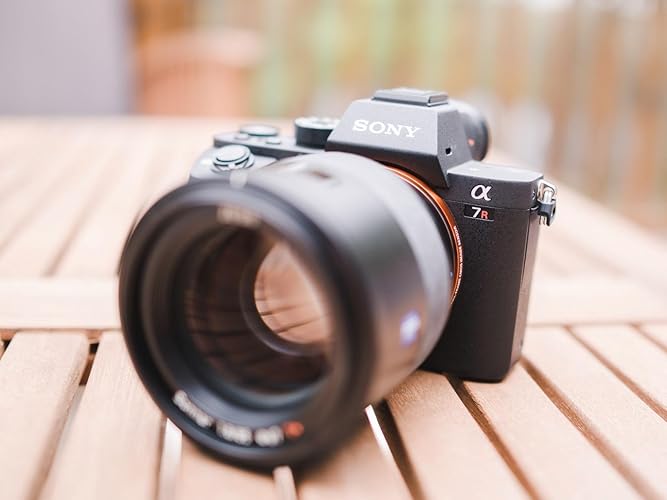
Sony a7R II Full-Frame Mirrorless Interchangeable Lens Camera, Body Only (Black) (ILCE7RM2/B), Base

  • Based on 526 reviews
Condition: New
Checking for the best price...
$1,991.85 Why this price?

Buy Now, Pay Later


As low as / mo
  • – Up to 36-month term if approved
  • – No impact on credit to apply
  • – Instant approval decision
  • – Secure and straightforward checkout

Ready to go? Add this product to your cart and select a plan during checkout.

Payment plans are offered through our trusted finance partners Klarna, Affirm, Afterpay, Zip, Apple Pay, and Google Pay. No-credit-needed leasing options through Acima may also be available at checkout.

Learn more about financing & leasing here.

Selected Option

Free shipping on this product

FREE 30-day refund/replacement

To qualify for a full refund, items must be returned in their original, unused condition. If an item is returned in a used, damaged, or materially different state, you may be granted a partial refund.

To initiate a return, please visit our Returns Center.

View our full returns policy here.


Availability: Only 2 left in stock, order soon!
Fulfilled by AVC Photo Store & Studio

Arrives Thursday, Aug 13
Order within 17 hours and 11 minutes
Available payment plans shown during checkout

Protection Plan Protect Your Purchase
Checking for protection plans...

Style: Base


Color: Black


Set: Body Only


Features

  • Worlds first Full-frame 5-axis in-body image stabilization optimized for 42.4MP full-frame, 4K movie recording with full pixel readout and no pixel binning
  • 2.4-million dot XGA OLED Tru-Finder w/ZEISS T- coating, connectivity to smartphones via Wi-Fi and NFC w/camera apps, Fast focal plane phase-detection AF realized with A-mount lenses
  • Shutter vibration suppression, curtain shutter, silent shutter, Resolution meets sensitivity 42.4MP up to ISO 102,400/4K up to 25,600, Durable, reliable and ergonomically enhanced for professional use
  • Fast Hybrid AF with 399 focal plane phase-detection AF points and sensor is 35 mm full-frame (35.9 x 24.0 mm), Exmor R CMOS sensor
  • Inside box: Rechargeable Battery NP-FW50; Cable Protector; AC Adapter AC-UUD11; Battery Charger BC-VW1; Shoulder strap; Body cap; Accessory shoe cap; Eyepiece cup; Micro USB cable

Description

Interchangeable Lens Digital Camera with APS-C, Auto Focus & 4K Video - ILCE 6300L Body with 3” LCD Screen & 16-50mm Power Zoom Lens - E Mount Compatible - Black. Operating temparature - Range -32-104°F / 0-40°C

Compatible Mountings: Sony Mirrorless


Aspect Ratio: 32


Photo Sensor Technology: CMOS


Supported File Format: JPEG, Raw


Image Stabilization: Sensor-shift


Maximum Focal Length: 50 millimeters


Optical Zoom: 40 x


Maximum Aperture: 2.8 f_stop


Expanded ISO Minimum: 102400


Metering Description: Center-Weighted Average, Multi-Zone, Spot


Compatible Mountings: Sony Mirrorless


Aspect Ratio: 32


Sensor Type: CMOS


File Format: JPEG, Raw


Image stabilization: Sensor-shift


Maximum Aperture: 2.8 f_stop


Expanded ISO Minimum: 102400


Photo Sensor Resolution: 42.4 mp


Photo Sensor Size: Full Frame (35mm)


Maximum Shutter Speed: 30 seconds


Minimum Shutter Speed: 30 seconds


Exposure Control: Aperture Priority, Auto, Manual, Program, Shutter Priority


Form Factor: SLR-style-mirrorless


Effective Still Resolution: 42.4 mp


Special Feature: Face Detection


Color: Black


Screen Size: 3 inches


Shooting Modes: AUTO (Auto), Programmed AE (P), Aperture priority (A), Shutter-speed priority (S), Manual (M), Movie (Programmed AE (P) / Aperture priority (A) / Shutter-speed priority (S) / Manual (M))


Item Weight: 625 g


Video Resolution: 4K UHD 2160p


Viewfinder: Electronic


Flash Modes: Auto, Fill Flash, Hi-Speed Sync, Off, Rear Sync, Red-Eye Reduction, Slow Sync, Wireless


Camera Flash: Hotshoe


Skill Level: Professional


Specific Uses For Product: Photography, Videography


Compatible Devices: Smartphones, Computers


Continuous Shooting: 5


Aperture modes: F2.8-F16


Viewfinder Magnification: 0.78x


Flash Sync Speed: 1/250 Second


Connectivity Technology: HDMI, NFC, USB


Wireless Technology: Wi-Fi


Video Output: HDMI


Total USB Ports: 1


Total Video Out Ports: 1


Total USB 2.0 Ports: 1


Hardware Interface: USB


HDMI Type: Type D Micro HDMI


Display Type: LCD


Dots Per Screen: 1228800


Display Fixture Type: Tilting


Display Resolution Maximum: 1,228,800 dots


Auto Focus Technology: Eye Detection


Focus Features: Hybrid


Autofocus Points: 399


Focus Type: Auto Focus


Focus Mode: Continuous-Servo AF (AF-C), Direct Manual Focus (DMF), Manual Focus (MF), Single-Servo AF (AF-S)


JPEG Quality Level: Fine


Supported Image Format: JPEG


Bit Depth: 14 Bit


Total Still Resolution: 42.4 mp


Maximum Image Size: 8 mp


Maximum Focal Length: 50 millimeters


Optical Zoom: 40 x


Lens Type: body-only


Zoom: AF mode


Camera Lens: No Lens


Minimum Focal Length: 10 millimeters


Real Angle Of View: 58.1 degrees


Focal Length Description: 16-50mm (35mm equivalent)


Digital Zoom: 4


Metering Methods: Center-Weighted Average, Multi-Zone, Spot


White Balance Settings: Auto


Self Timer: 10


Brand: Sony


Model Name: sony A7R II


Built-In Media: ac adaptor, accessory shoe cap, battery charger, body cap, cable protector, eyepiece cup, micro usb cable, rechargeable battery, shoulder strap


Model Number: ILCE7RM2/B


Global Trade Identification Number: 32


Number of Items: 1


UPC: 027242893832


Age Range Description: Adult


Manufacturer: Sony


Manufacturer Part Number: ILCE7RM2/B


Warranty Description: 1 year coverage for labor, 1 year coverage for parts


Image Capture Type: Video


Flash Memory Type: SDXC


Memory Slots Available: 1


Write Speed: up to 300 MB/s


Flash Memory Speed Class: 30, 60, or 90


Frequently asked questions

If you place your order now, the estimated arrival date for this product is: Thursday, Aug 13

Yes, absolutely! You may return this product for a full refund within 30 days of receiving it.

To initiate a return, please visit our Returns Center.

View our full returns policy here.

  • Klarna Financing
  • Affirm Pay in 4
  • Affirm Financing
  • Afterpay Financing
  • Zip Pay in 4
  • Financing through Apple Pay
  • Financing through Google Pay
Leasing options through Acima may also be available during checkout.

Learn more about financing & leasing here.

Top Amazon Reviews


  • A Wonderful Powerhouse
Style: Base Color: Black Set: Body Only
Walking around with this camera is very comfortable - yet not as stealthy as my RX1R II. The body is solid though a little small and I find my pinky dangles in the air - so I use it to support the bottom of the body. Middle and ring fingers hold on to the small front grip (which is comfortable) and my index finger lives between the shutter release and shutter speed dial (explained a little more below). There is a slight bump-out on the rear where my thumb comfortably sits and provides quick access to the f-stop dial. It's a slightly different grip on the RX1R II which, though smaller, doesn't make it seem as small - maybe the lack of the bump-out grip in the front of the RX1R II. I enjoy the placement of the buttons and dials on this camera. They are solid and smooth to operate - and the ones that need to click into position do so. At this time, with the camera always in manual (M) mode I have the front dial set to adjust shutter speed, the rear to adjust f-stop and a button on the rear to adjust ISO on the fly. A single click on the button brings up the ISO menu, then the thumb wheel allows me to quickly scroll to the rating I want. The only other button programmed so far is C1 for eye detection. Obviously, only used in portraits but seems to nail it every time. I use this same setup on the RX1R II. I have been using the Exposure Comp wheel more and more to give me the exposure exactly how I want it rather than relying on post to correct that. Also been getting into relying almost solely on the histogram in the viewfinder to expose my work now. The shutter release is smooth and pleasing (and I like the sound of it) and has the option of silent shutter, though I haven't tried that to date. SONY A7R II - SENSOR The A7R II has a 42.4-megapixel back-illuminated 35mm full-frame Exmor R CMOS sensor powered by the BIONZ X image processing engine to support 14-bit uncompressed RAW images. Technically, getting an ISO range of 50-102,400 but realistically using ISO 100-25,600. Even more realistically for my style is ISO 100-6400. Unlike my RX1R II, there is no optical low-pass filter on this camera. 5-AXIS IMAGE STABILIZATION The Sony A7R II has 5-Axis Image Stabilization which has been maximized for the 42 MP sensor. This system corrects camera shake while shooting along the 5 axes of angular shake (pitch & yaw), shift shake (along the x/y axis), and rotational shake (roll). Pair this with a IS lens (like the Zeiss Batis 85 I have been using) and you can freehand some ultra-lowlight photography. BATTERY Battery is notoriously bad on these cameras, but there are a ton of tips and tricks out there to increase life. Best thing I suggest is tossing the camera into Airplane mode - this turns off all the Wi-Fi and searching for networks. With this off, I can shoot all day with 3 batteries at the ready. To be honest, I shoot so little on a typical day (200-300 max photos) that I seldom need to jump to a backup. Some other things you can try are reducing the brightness in the monitor and viewfinder, having a short power-save time, turn off the "Sunny Weather" option, turn off audio signals and turn off Pre-AF. If I am walking around between shots, I tend to switch the camera off too. Not sure how much that helps, but a habit I picked up with the RX1R II. I also suggest having a couple battery backups and a couple chargers in the house. Right now, I have 2 Sony stock batteries and 2 off-brand ones. I haven't noticed much of a difference between the two. For the house, I have a pair of chargers, as these batteries seem to take forever to get to a full charge. At least with a pair, I am able to cut the charge time in half. FINDER / SCREEN There are a couple ways to compose images with the A7R II. Either the screen on the back of the camera with LiveView or via the Electronic View Finder (EVF) that's really a godsend. The camera has the intelligence to automatically only power the view you are using. If LiveView, the EVF is powered off. If you put your eye to the EVF, it fires up in an instant and the back screen powers down. Very good for a camera that's a battery whore, as mentioned above. With either of these views, you can increase or decrease the resolution, though they both look really good at standard. Very bright and quite responsive. Nearly identical to what I said about the RX1R II and not like the LiveView of the past (where my last experience was with a laggy Sony NEX-3). I keep the rear screen fairly dim, so I like to use the finder as my review of images when needed. The eye cup for the A7R II finder is much better than the RX1R II, by the way. The former is a proper viewfinder with a rubberized eye cup (see rear image of A7R II below in the My Defaults section) while the later is a pop-up EVF and does not offer eye relief at all. Both screens offer a slew of data from shutter speed, ISO, f-stop to digital levels, histograms and so on. I won't bore you with all the goodies, but there is a plethora of stuff that can be added to or removed from either screen. The rear screen tilts up and down which is nice to hold over your head or at your feet to frame a decent shot. I don't use the screen often, but really enjoy the ability when I need it to compost a shot this way. I find this can be a stealthy way of composing a shot without those around aware of what you're doing - if stealth is your motive. AUTOFOCUS The Sony A7II offers up 25 contrast detection points and 399 phase detection points covering about half the sensor. The modes available here are Single, Continuous and Manual focus as well as AF-A and DMF modes that can be used with the native FE glass. As I don't tend to shoot moving targets, I stick to Single mode for almost all my shooting and have found it to be quite fast and really accurate. As always, you can also switch the focus areas between Wide Area, Zone Area, Center Area (my preference), Flexible Spot, Expand Flexible Spot, Lock-on AF Expand Flexible Spot, Lock-on AF, Eye AF (which I mapped to C1), and Face Detection. Like with the Sony RX1R II, the files spoil me. There is a great deal of latitude in them and so much shadow detail. The IQ is really nice to work with and I am getting the hang of how they behave with my one-click edits. Conclusions It is very early on with this camera to have any firm conclusions, but I have to tell you, I was secretly hoping to not love this one. I have my film cameras that I am more than happy with, and my Sony RX1R II that I figured was all I wanted. I wanted to shoot this, get it out of my system, then return it. Well, it's not going back. As soon as I strapped on the Zeiss Batis 85 and walked around with the Sony A7R II I was smitten. This camera is really offering everything I currently want in a digital setup. Gorgeous files with the colors I enjoy, great speed and a joy to walk around with. I read complaints about the menu system, but really, once you set it up once, you don't need to dig in there much and it truly isn't that bad. This is a fine compliment to my film work and will also be a great compliment to the Sony RX1R II - so yes, they are both staying. I plan to get a ton of use out of this throughout the year and re-touch this review with future thoughts, uses, issues or what have you. ... show more
Reviewed in the United States on June 12, 2017 by Raymond Larose

  • Best Camera I've Ever Owned
Style: Base Color: Black Set: Body Only
I decided to move to Sony's platform from shooting Nikon's D810 and I'm really glad I did. While the controls might not be quite as intuitive as my Nikon D810 and this camera definitely wouldn't work well as a weapon in a pinch, the image quality is so perfect and amazing that it's forgivable. Here are the pros and cons as I see them to owning the SonyA7rII: Pros: Amazing image quality - the best I've ever seen - and I did a lot of side by side with the D850. When dealing with high end camera's that occupy very top of the DxoMark scale, it really comes down to specific needs and personal preference. The EVF is absolutely fantastic to use. It's clear, the colors are wonderfully vibrant and true to life, and the ability to zoom in on far away objects from the viewfinder for perfect focus is a great benefit worth the extra demand on the battery. Silent mode which uses an electric front shutter is great and now (after upgrading to the latest firmware version) appears to work when uncompressed RAW is selected Though small, this camera feels solid and, with the grip, fits my large hands comfortably Though Sony doesn't have a large lens selection, the lenses they do have are insanely sharp and bar none among the best I've ever owned, particularly their Zeiss lenses and new Sony "G" lenses. To give some perspective - the best lens for Nikon ends at a 36 sharpness rating, Sony's lens lineup almost starts where Nikon leaves off and goes up to an insane 46 rating (per DxoMark). I can use this camera with ALL of my vintage glass including Nikkor AI and NAI MF lenses, Helios, Pentacon, Zeiss, and INDUSTAR, etc. All that's needed is a simple adapter and each of every one of theses lenses benefits from Sony's 5-axis in-body image stabilization. the shallow depth of the camera body ensures it's compatible with virtually every 35mm camera lens ever made - something that I ran into trouble with on my D810 because Nikon actually has the widest body of all camera makes. My M42 mount lenses (for example) would have to be mounted slightly inside of the D810 body to get the right magnification and infinite focus. And that's not even an option because doing this risks destroying the mirror. Even vintage Nikkor AI and NAI lenses can't be used without fairly major modification which also ruins the lens value. A lot of people seem to really dislike the A7 line UI. I personally kind of like the interface. Maybe it’s because I work with a lot of technology, but I find it pretty simple to use and after owning my camera for a few weeks have the placement of everything committed to my long-term memory. It also looks more modern than Nikon or Cannon’s UI. It might seem a little segmented at first, but in the end, everything kind of makes sense as a whole so I’m counting it as a pro. Love that Sony included two batteries and a charger. This really makes me feel like I bought a high-end camera. If they’d throw in a screen protector (see my grumble below), I’d be completely happy with the included accessories. Cons: The battery life could be better I'd love to see the build quality be just a bit more robust. I.e. I wouldn't take this on out in sub zero weather, do a photo-shoot in a sand storm, or bring it with me white water rafting. Even decent weather sealing would be a nice gesture. This one is probably on the top of my list - I'd love to see dedicated controls for all major settings that I use every day. I can set the aperture from the back dial and the exposure from the front dial, but it would be great to have a control for the ISO. I virtually always shoot in full manual mode and having to right click on the wheel to bring up an ISO dialogue before selecting the ISO is just the tiniest bit annoying. The camera should come with a snap on screen protector like Nikon provides. When you spend this much on a camera and don't get basic protective equipment, you feel like Sony is being a tad on the penny pinching/apathetic side. Some tips: Knowing how short the battery life would be I loaded on six batteries and bought a grip for the camera so I can use two at a time. With the grip I can shoot about half of what I used to get away with using my D810, which is workable Get a good protective carrying case/backpack for this camera to keep it safe. My final verdict: It's overall the best camera I've ever owned. While it is quirky in some way, some of the quirks are starting to grow on me. Now we'll see about longevity. The shutter is rated at 500,000 actuations, so I'm hopeful. ... show more
Reviewed in the United States on October 11, 2017 by The Opinionated Realist

  • Snappy snappy snapity snap
Style: Base Color: Black Set: Body Only
I'm an amateur wildlife and landscape photographer, though I tend to dabble in all kinds of shooting situations, such as portraits, night(long exposure shots), and macro, and I'm in love with this camera. I've had the A7RII for a month now, and it blows my previous camera out of the water. It's small, making it very portable. It's sharp. It's fast. It's got more than enough resolution for my needs. It focuses quickly. It has tons of features. It feels good in my hands. Low light and long lens capabilities are simply amazing. With the right lenses, it takes gorgeous images. I shoot 90% of the time in "M" mode and I love the customizability of the buttons. Update 12/07/2015 - after updating firmware to version 2 I'm still seeing digital artifacts. Artifacts show up horizontally with the camera oriented upright. I'm trying to post photos - updating rating to 4 stars from 5 due to on-going artifacts. Maybe I have a defective camera body? I'm not going to dwell on the specs, or give you a long drawn out story. I'll just summarize how it works from my perspective: Pros: lightweight, high-res, dusk loving, pixel peeping, low noise, dream machine. Shocking dynamic range shooting RAW compared to my old archaic beast that is now relegated to a dusty drawer. Snappy continuous shooting features. Beautiful video. I love using the Sony 55 F1.8 for gorgeously sharp photos (cropped, it generates similar resolution and sharpness compared to 300mm on my old 20 MP camera). Wildlife photos always come out crisp and clean with manual focus + focus peaking + MF assist (took a little to get used to the fly-by-wire lenses). Cons: much of what you've probably read - battery life is mediocre. I've resorted to shutting off the camera much more frequently between shots to conserve the battery life. Mandatory: car charger, 3 batteries. Also... the infamous lossy RAW (sniff) - while the impact I'm sure is negligible, why choose a lossy compression format Sony? Please offer a firmware update to shoot lossless raw! I don't mind compression - just don't make it lossy. Please, pretty please, with a cherry on top. Even with lossy RAW, shooting at full resolution gobbles memory cards. I tend to go through a 32GB card every time I go through a battery. Will need to upgrade to 256 GB cards soon. Speaking of SD cards, if you happen to have old cards laying around, you may as well trash them. A7RII boot time is super-slow with slow SD cards (10 second start-up with one card I tested), and the buffer fills much quicker (cant even get a full panorama shot with some of my old SD cards). Go with SDXC UHS II cards, 1000x or higher. Lens selection is still lacking after 5+ years producing these cameras. There are lots of adapters, but autofocus speed just isn't the same when using an adapter and non-Sony lenses. Would love to see some bigger Sony zoom lenses to really take advantage of the higher resolution sensors. I'd also love to see touch-screen to set the focus point. Now wouldn't that be sweet. I noticed in-camera post-processing seems to be a tad bit slow. If you shoot a 5 second exposure, the camera post-processes for almost 5 seconds. This is similar to my old camera. I was expecting an improvement here. I like to shoot lightning shots and thunder storms, and the amount of post-processing reduces my effective continuous exposure by half. And finally USB. The micro USB connector seems a little flimsy to me, and only supports USB 2.0 transfer speeds. Big memory = big transfer time. Invest in a good USB 3.0 SDXC UHS II reader. It's worth every penny of your time. Maybe in the next camera rev Sony will get it all right! But I'm sure I'll think of something else to complain about then too. You may have noticed I focused a little more on the Cons. Why? Well because it's easier for me to talk about the bad points when there is sooooo much gooey goodness in the camera. Its a freaking fabulous camera. I'll never go back if Sony can keep this up! I hope their product team keeps listening to customer desires. It will always lead them in the right direction. Update: 5/6/2017 - This camera is a work-horse. No problems at all over the last year. I was trying out some astrophotography with the camera, and decided to do an ISO invariance test to figure out what ISOs were usable for a 30 second exposure of a dark sky. I couldn't find a lot of information about this test being performed against the A7RII online, so these are my results. See the uploaded results. This camera is nicely ISO invariant from IS0 50 all the way to ISO 6400 for very dark sky photography at 30 second exposure. At 50 and 100 ISO, there was some noise and noticeably more hot pixel artifacts in the image. These image artifacts went away completely by ISO 800. At ISO 6400, the image was becoming over-exposed and dynamic range was suffering as a result. So for astrophotography, at least for my needs, ISO 1600 and 3200 are the best balance for less noisy photos of the night sky without suffering from lost dynamic range. I may repeat the test some time in the future with a shorter exposure (use 30 seconds for these tests) and ramp ISO to the max to see where it takes me. ... show more
Reviewed in the United States on September 17, 2015 by VJS

  • Medium Format Quality Images on a Tripod, Compact Carry With a Prime Lens
Style: Base Color: Black Set: Body Only
I was looking for the quality of medium format film images and reviews suggested that this camera produce images equal to some medium format digital cameras. So far this camera has met my high expectations. The main advantage of this mirrorless camera over a dslr is evident with a quality prime lens where the compact size and weight is most beneficial. To really appreciate the image quality requires great glass like the 1.8/55, a tripod and a hands free trigger. That does not mean that this camera cannot be used for compact carry with the pancake 2.8/35 (with an ingenious tiny lens hood) and a shotgun sling. It can also be used for available light shooting with the 1.8/55, perhaps using eye focus. Features like weather resistance, in camera stabilization, eye focus, silent shooting mode, ISO minimum shutter speed, dynamic range optimization, manual focus zoom, programmable buttons, in camera apps and wireless communication are nice. Sony seems committed to software improvement as this camera is now up to firmware 3.0 which SUPPORTS UNCOMPRESSED RAW (82 meg files). As for lenses, this camera takes FE (Full Frame E Lenses) and E (APS-c) lenses. E (APS-C) lenses should work on this camera in sensor crop mode (using only part of the FF sensor). And the FE lenses for this camera should work on Sony E (APS-C) cameras with the expected crop. Many shorter Canon L lenses will autofocus with an adapter. Due to a number of adapters, this camera can be used with lots of legacy glass in manual focus mode. I strongly recommend that you carry a number of batteries when on a shoot with this camera and turn on airport mode. If you need a bigger body, you can add a Gariz case or two battery grip. My wish list. Currently, as far as my test show, most in camera lens corrections ARE reflected in the RAW files. So if you plan to do post processing lens corrections you may want to turn off all in camera lens corrections (Gear --> 7 --> Lens Corrections Option in the Menu). My wish for Firmware 4.0 is an option to turn off in camera lens corrections only for RAW, leaving lens corrections on for JPEGs, as I am currently shooting in RAW+JPEG. Another wish is the ability to program a button to switch from FF (full frame) to APS-c and back. This would allow for easy in camera cropping (55 -> 88 ) on the fly. I was able to import the uncompressed raw + jpegs to the no longer supported Aperture 3.0 on OS X 10.11.1 as the A7Rii RAW conversion is part of the operating system. Have fun! ... show more
Reviewed in the United States on January 3, 2016 by JAL

  • Best Camera for all-around
Style: Base Color: Black Set: Body Only
The following review is from a photography perspective. I have personally enjoyed the video capabilities; however, I am in no position to share my input on its features in terms of film/ videos. I used to use the Canon 6D body, and when I saw the specs of this camera it got me interested in the sony lineup. However, I was content with my canon lenses. The ability to use adapters to use almost any lens is what got me to make the switch (of bodies). There are several key features about this camera that make it amazing, but here are a couple of my favorite: -EVF: I never have to chimp after taking a shot, I know exactly what I'll get in terms of exposure. -5-axis-stabilization: I predominately use primes, and most do not have IS. This allows me to shoot at lower shutter speeds if necessary. I rarely need a tripod anymore (except for long exposures of course). -Flip Screen: I wish it could flip out and rotate like the Canon 60D, but no full frame has a flip screen. Its a minor addition but it is a life saver for composing shots where the camera can't be held naturally. -MASSIVE Megapixel Stills: The megapixel beast, only second to the canon 5dsr, is perfect to retain a lot of detail. Is it overkill for the average photographer? Absolutely. It is extremely handy when it is needed. There is no hesitation in the need to crop. -35mm Mode: Allows me to have 2 focal lengths at all times (with primes). It also cuts down on the file size considerably. Its literally having a crop sensor and full frame in one. -Wide customization for button layout: Allows me to find the best layout to make changes in settings on the whim. It also helps to have several buttons to be able to access multiple features without having to go into the messy menu system. Here are a few things I dislike, or wish the camera had: -Fairly slow buffer/ load lags: When shooting (even just one photo), in order to preview it, it takes about 2 seconds until it you are able to preview it. That is when you turn off auto preview. Shooting at burst makes this wait time considerably longer. This is an expected obstacle; however, it is occasionally a nuisance when time is very limited. -Touch Screen: Wish it had one like the a6500. Potentially will be an added feature to the Mark iii? -Lack of multiple SD card slots: It would help to have 2 SD card slots to ensure a backup copy of all photos. For a professional, this would be added confidence, and not risk ruining an entire shoot. There is not a whole lot of negatives about this camera. Its perfect for portraiture, lifestyle, landscape/cityscape, and travel photography. It is weak in sports/action/nature photography due to the lack of fast autofocus (in comparison to Canon and Nikons 1dx and D5 or even their crop sensor DSLRs). It also shoots Full-Frame 4K! It is versatile, small and lightweight, and packs a punch. This camera will offer a pleasant experience. It is not for everyone, but it is certainly a treat for those that use/own it. ... show more
Reviewed in the United States on December 20, 2016 by Amazon Customer

  • Wonderful Camera: Review from a photo enthusiast.
Style: Base Color: Black Set: Body Only
Let me begin by saying that I feared the steep price point of this camera would not be justified by the performance and benefits. I started shooting a little over a year ago with a Nikon APS-C, and was satisfied but I really wanted to move up to a full-frame camera. I'd considered sticking with Nikon, however there were so many folks raving about this particular camera I decided to give it a go. After using this camera for a couple of months I can tell you that I do not regret it at all. The Sony A7RII is a marvelous piece of kit that has exceeded my expectations in so many ways. As with anything, though, it certainly isn't without its drawbacks. What I like about it: Many of the features that I find beneficial are the auto white balance which is spectacular (at least when used outdoors), 42mp high resolution, custom function buttons, full range of dials – I'd become so used to using the dials on my Nikon to adjust aperture, shutter speed so it's nice to have that option on the A7Rii –, and the extended dynamic range. Also, since I'm partial to landscape photography there is a lot of walking about. The size and weight of the A7Rii are ideal for just that purpose. Continuous auto focus is superb for the situations in which I've needed to use it so far. I've heard from folks that it doesn't perform so well for sports photography, but for my purposes it works perfectly. Manual focus assist and focus peaking have also been immensely useful. Perhaps one of the most useful features for me is the electronic viewfinder because it allows me to compose shots in low light, or with filters attached. Things I would improve: As I said, the camera is great but by no means perfect and I think it would benefit Sony to make some improvements. - EVF / Live View Sensor: Way too sensitive. If I want to shoot from the hip the camera has to be far away enough from my body in order to engage Live View. Additionally, if I'm composing my shots using live view and my fingers or wrist strap come too close to the eyepiece, the image jumps from LV to EVF. Not at all ideal. It would be great if Sony would also add the option to switch off LV except when reviewing photos. As it stands, if you turn off live view, photo review must be done through the EVF or by clicking the review (play) button. - Read / Write speeds / Buffer Time: Yes, I know that the A7Rii writes HUGE files and those files take time to read from and write to the card. Unfortunately read/write speeds remain consistent irrespective of image format and size. I've tested just shooting Fine jpg format, and it still takes way too long to write to the card. With all the new high-speed cards becoming available, it would be great if Sony had software that would take advantage of the faster cards. It also makes image review painfully slow. Again, I get that some time is required for the images to write to the card, but the A7Rii does this much slower than other cameras. It also makes for checking sharpness during review very painful since there is a two second lag between the time I hit the button that allows me to zoom in, and actually being able to zoom in. - Custom function buttons: As much as I love the custom function buttons, I would really like to see Sony expand this feature to allow users to assign functions to buttons from menus other than just the shoot menu. - Battery life: I've heard a lot of different justifications for why the battery life on this camera is so poor, but at the end of the day I think Sony should spend a little more time on improving battery life. Users are currently able to shoot an average of 300 photos whereas other cameras are getting over 1,000. I hope this review has helped someone who might be on the fence as I was when I contemplated making my purchase. Below are a couple of photos I've shot with the A7Rii. The first – L.A. city skyline – was shot with the Batis 18mm f/2.8, and the second – the Huntington Beach Pier – was shot with the Sonnar 24-70 f/4. Update 02/08/17: The paucity of lenses offered by Sony has prompted me to amend my review, but I will leave the rating as is because this is my opinion and has no bearing on the quality of the product. When I purchased this camera, I did so knowing full well that FE lens selection was limited. I figured that because FF mirrorless cameras were relatively new, that it would take Sony some time to catch up in the lens department. After months of new releases by Sony and third party lens manufacturers for A and E (APS-C) mount lenses, I'm beginning to doubt that. The first Sony FF E mount camera, the Sony A7, was released over three years ago, and rumors of the Sony A7RIII are swirling about the internet. Fed up with the waiting game, I purchased the Sigma MC-11 adapter, which works wonderfully. I'm of the opinion that, if Sony is really serious in its endeavor to maintain its competitive edge, it needs to do something about its line of lenses. Yes, they have a nearly-full range in the GM line, but these lenses are – in some cases – double that of Canon and Nikon glass, but are of equal or lesser quality leaving them little justification for the price point. They have their budget-conscious line like the 50mm f/1.8 and now the 85mm f/2.8, but if the atrocious reviews of the 50mm are any indication, I think I know what to expect from the 85mm. "Why are you complaining if you knew that Sony's FE lenses were limited," you're probably asking. And it's a good question. I was seduced by higher resolutions, size / weight, and – I will sheepishly admit – the hype. Buyer's remorse? Maybe just a little. "But you can adapt non-Sony lenses to the A7RII," you might say. Yes, I can and I have. I recently purchased the Sigma MC-11 adapter and a Canon 70-200mm and it works splendidly with my A7RII. But then why shouldn't I have taken my $3400 and spent it on a Canon 5D MK 4 or a Nikon D810, skipped the adapter, and have a wide variety of quality, affordable lenses to choose from? Perhaps I should have. I spent less than half for the MC-11 adapter and a certified refurbished 70-200, than I would have on the Sony 70-200 GM. Why am I writing this? I'm writing this because I am frustrated with Sony's apparent lack of interest in creating a robust, diversified, and AFFORDABLE kit for its consumers. The A7RII was sold out for months, a clear indication that folks are very interested in moving towards mirrorless. It's a bit like manufacturing a revolutionary car with roll-down windows and a solitary AM/FM radio, then releasing a double-din nav system and power windows of a quality equal to that of its competitors, but at twice the price. I'm writing this as a point of contention, something to consider before purchasing this camera. So, don't buy this camera? No, that isn't what I'm saying. I'm saying if you're intent on buying it, to be aware that your options are LIMITED with respect to Sony native lenses, in terms of quantity, quality, and affordability. I've added this in the hopes that it might save someone else the frustration of waiting and hoping that Sony will wake up and work to meet the demands of its customers. ... show more
Reviewed in the United States on October 14, 2016 by Michael

  • Phenomenal Camera
Style: Base Color: Black Set: Body Only
I made the jump to full frame and I am absolutely loving it! I moved over to full frame from my previous Sony a55. This thing is solid, feels very good in your hands with the added dimension in the grip. It is light enough when compared to other larger DSLRS so carrying it is a joy. At the moment I am using the LAEA 4 with 2 minolta lenses, Sigma 85 1.4, and my Tamron 28-75 2.8 a mount lenses. I am planning on grabbing the 55 1.8, Macro 90mm, and Batis lenses soon but in the meantime I am enjoying every minute of this amazing camera. Note, for those of you who own A mount lenses make sure you research which lenses auto focus with the LAEA3 because most of mine did not work with that adapter. The LAEA4 works with all the older lenses that do not have a built in drive but you do lose the 399 focus points and several auto focus modes. However, I found that the LAEA4 focuses well with my lenses and the 1/2 stop I lose is no problem with this camera. This camera is NOT perfect, but it is definitely close to it and I believe with some firmware upgrades it will be even more AMAZING. Pros: Lightweight Built Quality EVF is AMAZING, I can see it near darkness through it! Resolution is CRAZY good, you can crop till you heart is content... Image Quality High ISO Capability (12800 ISO is usable) 4k Internal Recording and various other video features Dynamic Range is great Cons: Lossy RAW compression (Hopefully fixed soon)...some artifacts occur if files are pushed too much! Just get it right in camera and you are good! No Dual Card Memory Slot Short Battery Life (But you can plug this thing into a portable charger to extend the batter life) ... show more
Reviewed in the United States on August 17, 2015 by Manuel L.

  • Nice camera and meets my everyday use.
Style: Base Color: Black Set: Body Only
I waited for Nikon mirrorless for too long time and finally decided to try Sony. It's a good camera but very different to Nikon DSLR. It's smaller, but not that light weight. mirrorless camera body is smaller than DSLR but not the lens. Optics is still follow its own rule. Image quality is good, high ISO is also not bad, as many others already mentioned, no need to repeat here. After a year's use, it seems that Sony may need to improve some functions. 1. Image file number DSC0XXXX. Nikon only has 4 digits counter. when I first saw Sony has 5 digits counter, I feel that's great. However, it turns out that the first 0 is not belong to the counter and will not change, so still 4 digits counter. Also, I haven't figure out the way to change "DSC0", have to use other software to change the file name each time (not to be confused with my another Sony camera) 2. no menu showing recent adjusted functions 3. no real sleep mode? If I forgot to shut down the power, camera will continue burning power until battery is over. All the power would convert to heat and camera becomes very hot (not sure if that's harmful for the camera life...) 4. Focusing system need to be improved. This may also be related to the lens. It's not rare to see photo are not in focus. Now I get used to get at least 2-3 shot for the same photo just in case there's not in focus problem. Most depressed part, after I purchased the a7Rii for less than a month, Sony released the a7Riii....and then several months later, camera price jump down....then several months later, Nikon released Z7.... Anyway, in general, this is a good camera. ... show more
Reviewed in the United States on September 28, 2018 by XINX

Can't find a product?

Find it on Amazon first, then paste the link below.
Checking for best price...