
Search  for anything...

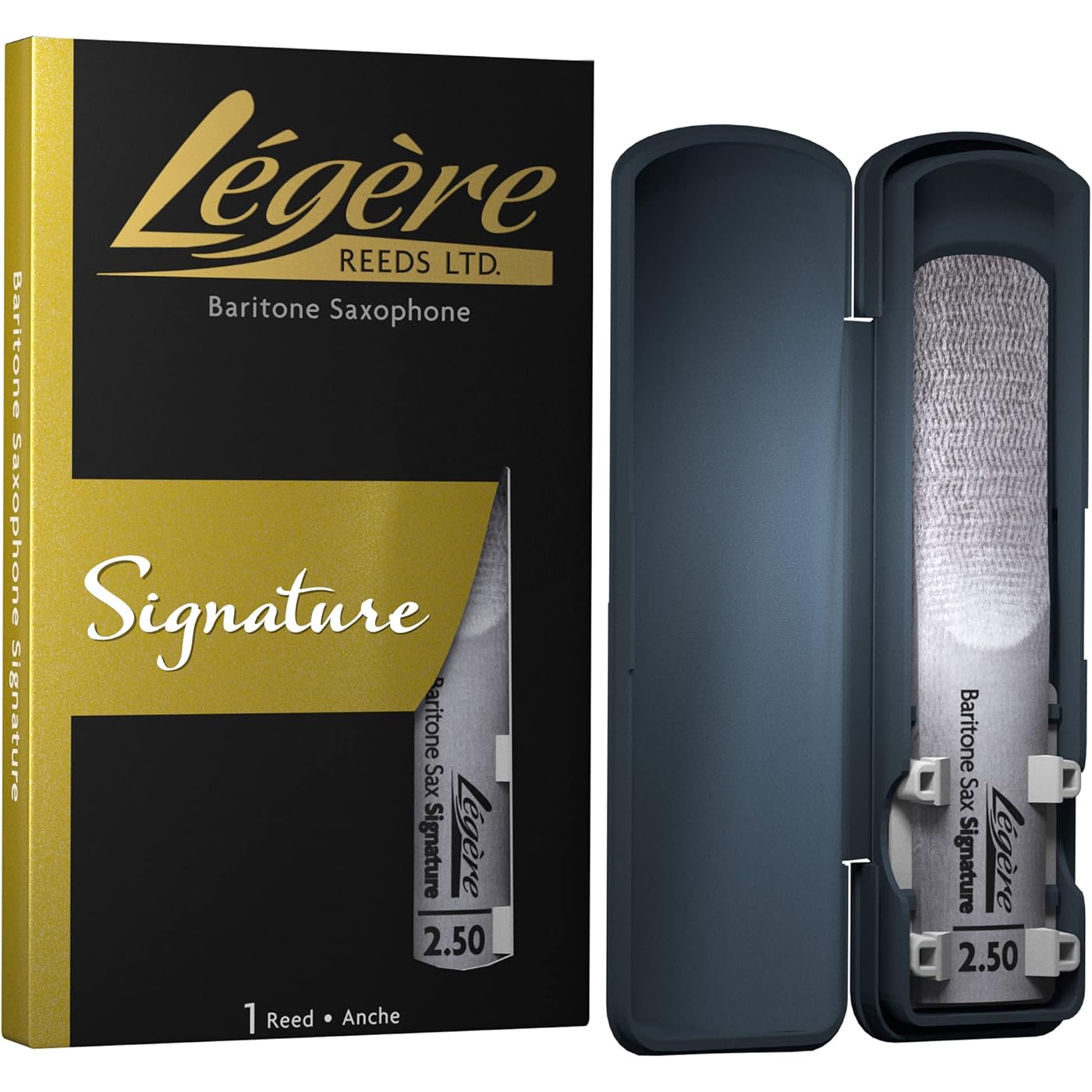
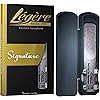
Légère Reeds, Baritone Saxophone, Signature, Synthetic Reed (BSG250)

Based on 125 reviews
Condition: New
Checking for the best price...
$37.93
Save $2.07 was $40.00

Buy Now, Pay Later


As low as $9 / mo
  • – 4-month term
  • – No impact on credit to apply
  • – Instant approval decision
  • – Secure and straightforward checkout

Ready to go? Add this product to your cart and select a plan during checkout.

Payment plans are offered through our trusted finance partners Klarna, Affirm, Afterpay, Zip, Apple Pay, and Google Pay. No-credit-needed leasing options through Acima may also be available at checkout.

Learn more about financing & leasing here.

Selected Option

Free shipping on this product

FREE 30-day refund/replacement

To qualify for a full refund, items must be returned in their original, unused condition. If an item is returned in a used, damaged, or materially different state, you may be granted a partial refund.

To initiate a return, please visit our Returns Center.

View our full returns policy here.


Availability: In Stock.
Fulfilled by Amazon

Arrives Monday, Nov 2
Order within 21 hours and 16 minutes

Available payment plans shown during checkout

Protect Your Purchase

Easy claims online, fast replacements, no fees

Checking for protection plans...

At a glance

Condition
New
Size
Strength 2.50
Model
BSG250
Dimensions
2.75 x 0.44 x 4.5 in
Weight
0.02 kg
Color
Transparent
Material
Food-Grade Polypropylene
In the box
Case and Single Synthetic Reed
Warranty
30 day exchange policy.

Features 5

  • CLEAR AND EXPRESSIVE SOUND. The Signature for saxophone offers exceptional tonal depth and consistency.
  • SYNTHETIC FOR DURABILITY AND LONGEVITY. Legere synthetic reeds are not affected by environmental conditions such as high humidity. Legere reeds last longer saving you time and money.
  • NO PRECONDITIONING. Legere reeds are ready to play. You wont need to pre-soak a Legere reed to get the perfect pitch. Ready to play when you are!
  • INCLUDES CARRY CASE for easy storage. Keep your Legere reeds in one place and safe from the elements.

Description

Légère Reeds produces state of the art synthetic reeds for many single and double reed instruments. Distributed worldwide, the reeds are produced in an ultra-modern manufacturing and distribution facility in Barrie, Ontario, Canada. The Signatures for Saxophone respond without hesitation. They are thinner and stiffer than a traditional cane reed, making them easy to play and wonderfully smooth. They produce a pristine, centered sound with colorful overtones. Every reed is crafted with clean, pure, & economically friendly food-grade Polypropylene Each reed is cut to precise specifications with diamond cutters to create the perfect reed Each reed undergoes testing to ensure it meets our standard and will provide perfect consistency What reed is best for beginners, intermediate, and advanced musicians? Advanced & professional musicians will appreciate the responsiveness and sound clarity of the Légère Signature, American Cut, and French Cut lines while students and marching band performers may prefer our Classic models which have greater durability What types of saxophone reeds does Légère offer? Signature, Classic, American Cut, French Cut, & Studio. Most of these reeds are available for Soprano, Tenor, Alto, and Baritone saxophones. Are there multiple strengths offered for each saxophone reed type? Yes. We offer multiple strength options for our reeds typically ranging from 2.00 to 4.00 No matter your skill level or genre of choice, there is a Légère reed just for you! Advanced and professional musicians will appreciate the responsiveness and sound clarity of the Légère Signature, American Cut, and French Cut lines while students and marching band performers may prefer our Classic models which are versatile and offer greater durability. Our reeds are available in different strengths and instrument types so that you can create the perfect sound for your instrument. Signature Classic American Cut Signature

Specs 19

Color Transparent
Brand Legere
Instrument Key Baritone Saxophone
Material Food-Grade Polypropylene
Style All Purpose Saxophone Reed
Brand Name Legere
Item Highlight All Purpose Premium Synthetic Reed, Strength 2.50, Includes Carry Case, Durable, Weather Resistant, Consistent
Global Trade Identification Number 05

Frequently asked questions

If you place your order now, the estimated arrival date for this product is: Monday, Nov 2

Yes, absolutely! You may return this product for a full refund within 30 days of receiving it.

To initiate a return, please visit our Returns Center.

View our full returns policy here.

  • Klarna Financing
  • Affirm Pay in 4
  • Affirm Financing
  • Afterpay Financing
  • Zip Pay in 4
  • Financing through Apple Pay
  • Financing through Google Pay
Leasing options through Acima may also be available during checkout.

Learn more about financing & leasing here.

Top Amazon Reviews


Good alternative to natural reeds. (see user tips at end of this review)
Size: Strength 2.50
First off, this reed is not so good as the best natural reeds I have played; however, it is definitely better than the average of a box of a dozen. I would say typically 1 or 2 reeds in a 12 pack equal or better this reed! I am an amateur played in a couple of New Horizon Big Bands - getting 10 hours a week of sax time, and this reed works well for me and many of the guys I play with. I let my instructor (who is internationally known, gets a minimum of 8 hours sax time every day!) try one and he was impressed with the overall "playability" of it, but it did not convert him from using natural reeds. He knows how to salvage some of the natural reeds, and also does more stuff like harmonics/altissimo and growls, etc. Whether he is just used to how a natural reed behaves or if the natural reed is more capable I cannot guess. However, for me, this solves many problems. The Benefits for me: 1) Consistency between reeds. I won't say every reed plays exactly the same but they are extremely consistent compared to natural reeds! 2) Always ready to go! 2) a) I am "schedule challenged" and not having to wet the reed to get it past the warp before playing is a big plus. 2) b) The same goes for practicing at home. I leave my sax on the stand and it is much easier to pick it up and play when I have 15 minutes free when I know I can immediately begin playing! 2) c) Doesn't apply too me, but some of my friends double, playing sax with an occasional clarinet part. They find putting a Legere Signature reed on their clarinet just makes life easier! I have been playing these reeds for over 3 years and here are some tips I think will help the next guy: 1) Subtract 1/2 to 3/4 from the natural cane reed hardness! I play a #3 natural reed and found the Legere #2-1/4 to be the best match. More recently, I have started playing a #2-1/2. I assume (and like to think) that is because I am getting better and more aggressive in my playing, but I would advise anyone to buy at both 1/2 and 3/4 below your cane reed preference to see which is better for you. Legere has a return policy that allows you to swap reeds while determining your correct number. Go to the Legere website to get details. I am not positive that Amazon orders will adhere to this policy - probably so, but make sure! 2) Buy a second as soon as you determine what number. So, if you tried 1/2 and 3/4 below your normal and returned one, you should now have two of these, so this is covered! The reason it is important to have a second reed is it is the only sure way to determine if the reed you are playing is getting worn out. Essentially, the reed gets softer as it is played. I have not kept track, but would guess I get about 6 months out of a reed. Of course the change is gradual and I subconsciously adjust my embouchure to match the reed. Eventually, I realize I am struggling to pop out a high note (on Bari Sax) and impress myself with how gently I can get a low A to speak at pianissimo levels! That is my clue that the reed is getting past its prime. However, I find a better approach is to have a new reed available for comparison and any time I have a major gig coming up, I will throw on the new reed to see if I like it better! If you are really thrifty, you can switch back to the old reed after your gig (considering it a "practice reed"), but I usually toss the old reed in the trash because otherwise I end up with a collection of old reeds that I will never play again! 3) Break-in the reed! I have no way of knowing if this is real or just psychological, but it seems to me like spending a few minutes with a fresh synthetic reed blasting out low notes helps loosen up the reed. It makes sense in keeping with how the reed changes over months of use, and it seems reasonable that the first few minutes of play on a reed that has not yet been flexed is liable to change the properties. I feel this gets it past those first changes of break-in into a more stable reed for the coming months. I also want to do this before comparing it with an older reed (item 2 above). 4) Soften sharp corners. I don't know why, but every now and then I'll get one of these where the edge of the reed is sharp and feels like it is cutting my upper lip on either side. This would never happen with a cane reed because natural rood fibers are rounded. If this happens you want to gently soften the corner. Obviously you do not want to change the reed much and it only takes a small change to fix this. Probably the safest way to do this is with some 200 or higher (finer) grit sand paper. Do not press (you are only wanting to alter the tiny edge of that corner of the plastic reed). Give it two light strokes straight down (not across!) the sharp edge of the reed. That should do it, but test it to be sure. Another technique for this: I usually don't have sandpaper handy, so I usually take a razor sharp knife or box cutter and turn the blade 90 degrees to the reed and lightly slide it down the edge. You probably won't even see the plastic coming off (if you did, it would be a "wisp"), but one pass should do it. The trick here is to a) keep the blade right at 90 degrees so it doesn't try to dig into the plastic, and b) use a very light touch so there is no "chatter" as the blade slides along the corner! ... show more
Reviewed in the United States on October 26, 2019 by Kurt E.

Phenomenal Plastic Reed
Size: Strength 2.50
Works really good, doesn’t chip unless if treated really bad.
Reviewed in the United States on July 24, 2026 by Nellie

Great value
Size: Strength 2.50
This is a great value for the money. The sound quality is still excellent. My son prefers these over all others.
Reviewed in the United States on June 23, 2024 by scott

Daughter loves
Size: Strength 2.50
My daughter plays the Bari sax and loves these reeds!
Reviewed in the United States on June 4, 2024 by Kim

Amazing reed
Size: Strength 2.50
It’s so good especially if you are in marching band
Reviewed in the United States on June 13, 2024 by Liz jensen

Sounds and plays better than 90% of cane reeds
Size: Strength 2.50
I love this reed! I also bought a new box of D'addario Jazz Select 3S unfiled at the same time, and this thing outplays the entire box hands down. With the little amount I've been playing lately, I think I'll go synthetic for the foreseeable future. Highly recommend!
Reviewed in the United States on February 18, 2019 by RetroDad

Wish I had known about these sooner.
Size: Strength 2.50
The tone quality is better than other fiberglass reeds I've purchased, and the expense is totally worth not buying wooden reeds that dont last.
Reviewed in the United States on October 18, 2021 by Trishabelle

Not Quite As Sturdy As I'd Like
Size: Strength 2.50
Cane baritone sax reeds are ridiculously expensive. Legere synthetic reeds are not cheap, but are an alternative. The reed in question is highly playable throughout all registers with a great, full sound. However, the reed got a small chip in it about two weeks in. I was not expecting the reed to be that fragile. However, for some reason this hasn't affected the performance of the reed. Recommended, but proceed cautiously when using it. ... show more
Reviewed in the United States on April 6, 2017 by Saxman
Checking for best price...