
Search  for anything...

GMKtec K11 AMD Ryzen 9 8945HS 32GB Dual DDR5 2TB PCIe 4.0 SSD

Based on 279 reviews
Condition: New
Checking for the best price...
$1,099.58
Save $99.42 was $1,199.00

Buy Now, Pay Later


As low as / mo
  • – Up to 36-month term if approved
  • – No impact on credit to apply
  • – Instant approval decision
  • – Secure and straightforward checkout

Ready to go? Add this product to your cart and select a plan during checkout.

Payment plans are offered through our trusted finance partners Klarna, Affirm, Afterpay, Zip, Apple Pay, and Google Pay. No-credit-needed leasing options through Acima may also be available at checkout.

Learn more about financing & leasing here.

Selected Option

Free shipping on this product

FREE 30-day refund/replacement

To qualify for a full refund, items must be returned in their original, unused condition. If an item is returned in a used, damaged, or materially different state, you may be granted a partial refund.

To initiate a return, please visit our Returns Center.

View our full returns policy here.


Availability: 19 left in stock
Fulfilled by Amazon

Arrives Thursday, Nov 5
Order within 14 hours and 17 minutes

Available payment plans shown during checkout

Protect Your Purchase

Easy claims online, fast replacements, no fees

Checking for protection plans...

At a glance

Condition
New
Size
32GB+2TB I 8945HS
Model
K11
Storage
2 TB
Memory
32 GB
Dimensions
5.2 x 5 x 2.3 in
Color
Black
Warranty
GMKtec offers a 1-year limited warranty for each mini PC, starting from the date of the purchase
Works with
Headphone, Keyboard, Monitor, Mouse, Printer

Features 7

  • AMD Ryzen 9 8945HS Processor: GMKtec K11 mini pc equipped with the AMD Ryzen 9 8945HS CPU, featuring 8 cores, 16 threads, and boost up to 5.4 GHz. It offers superior multitasking performance for demanding tasks like gaming and content creation, with energy-efficient power management at 35W TDP (upgradable to 70W)
  • 32GB DDR5 Dual Channel & 2TB SSD Dual Slot Expansion: Installed with DDR5 32GB RAM 5600MHz (Dual Channel 2x16GB), the Nucbox K11 mini pc support expansion to 96GB RAM. Featured with 2TB M.2 2280 PCIe 4.0 SSD, supports dual slot expansion to 2*PCIe 4.0 2TB SSD up to 8TB. (Upgrades not included)
  • Oculink Port: The K11 Oculink port enables higher bandwidth capabilities, better frame rates and lower lag. The standard also operates at PCIe x4 speeds, compared to Thunderbolt's x3. Gamers and content creators can benefit from OCuLink's higher bandwidth, resulting in better performance and lower lag for eGPU setups.
  • Mini PC Computer with 8K Quad Screen Display: Nucbox K11 is equipped with Dual USB4 USB-C Video output. The latest HDMI 2.1 port can connect to large screen TV and Display Monitors and output up to 8K@60Hz resolution. The Type-C DisplayPort Video output can connect to the latest monitor displays utilizing 4K@144Hz. Features simultaneous four screen display.

Description

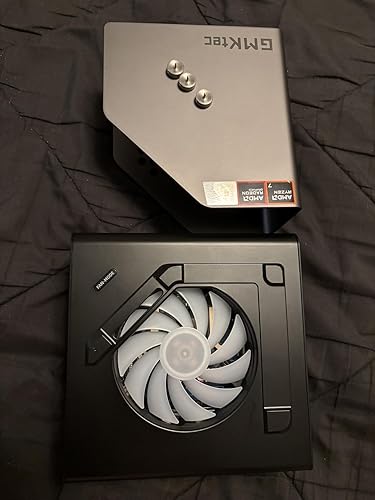
Introducing the Improved Nucbox K11 Mini Gaming PC with a translucent top cover that can easily be removed by rotating the cover counter clockwise. It also comes with a metal chassis, Oculink, HDMI 2.1, DP2.1 and dual upgraded cooling fans and vents. In this video, the Nucbox K11 shows how easy it is to setup and use the computer right out of the box! Simply connect the power supply, HDMI cable to your display and complete the setup within 3-5 minutes. In this video, we will show the Nucbox K11 playing some of the recent AAA game titles with steady fps. AMD Radeon 780M iGPU delivers great performance and can combine the latest Frame Gen technology for superior gaming experience. This is one of the best value gaming pc mini desktop computers in the current marketplace. In this video, we showcase the inside components of the Nucbox K11. We only use premium quality DDR5 RAM sticks and SSD drives. Our upgraded twin cooling fan system keeps the cpu cool at all times. We also demonstrate how to repaste the thermal paste and uninstall the cpu cooling fan. Purpose: GMKtec aims to provide customers with reliable high-quality products, professional after-sales service, and become a leading brand in the Mini PC industry. About: GMKtec is a company established in 2019, focusing on the research, design, and production sales of computer hardware. We have our own R&D & manufacturing team. Our Mini PCs deliver the best powerful performance in an ultra-compact form for everyday computing tasks.

Specs 64

Brand GMKtec
Operating System OS
CPU Model AMD R Series
CPU Speed 5.2 GHz
Cache Size 32 GB
Graphics Card Description Integrated
Graphics Coprocessor AMD Radeon 780M
Memory Storage Capacity 2 TB

Frequently asked questions

If you place your order now, the estimated arrival date for this product is: Thursday, Nov 5

Yes, absolutely! You may return this product for a full refund within 30 days of receiving it.

To initiate a return, please visit our Returns Center.

View our full returns policy here.

  • Klarna Financing
  • Affirm Pay in 4
  • Affirm Financing
  • Afterpay Financing
  • Zip Pay in 4
  • Financing through Apple Pay
  • Financing through Google Pay
Leasing options through Acima may also be available during checkout.

Learn more about financing & leasing here.

Top Amazon Reviews


GMKtec K12 MiniPC:Ryzen 7H255+780M GPU (Fast, Expandable, Colorful, and saves Electricity Cost!)
Size: 32GB+1TB I H 255
I spent a lot of time checking this K12 out, and now have a good understanding of it. One big point is that this K12 MiniPC is "Rock-Solid". It never crashes, and I 'push' the limits as best I can when I test. And I tested a lot. No matter how hard I pushed it, it just kept going, seemingly effortlessly. I like it when I can't find a way to make a new PC crash. Reliability is important to me, and it delivered on that. Another nice feature is that the included Windows 11, 24H2 does not require a Microsoft account to use. I never use that, so I liked not having to figure out how to 'get around that'. GMKtec just took care of that where no Microsoft account is needed to get going. That is one less hassle, and I appreciate not having to deal with figuring out a workaround. So getting into Windows was super easy and smooth. See below for more details of my experiences. CPU I was not initially sure what a Ryzen 7H255 was. When I looked into it I found it is very similar to a Ryzen 7, 8845HS. Ok, that sounds good since the Ryzen 7, 8845HS is one of the faster processors I had so far tested (prior to this K12 MiniPC). However, the K12 is faster then my 8845HS computer. On the site CPUBENCHMARK.net, the Ryzen 7H255 has a CPU mark of 30410, whereas the older Ryzen 7 8845HS is rated 7 percent slower at 28447. My testing actually yielded even higher benchmarks. I got 31766 using their “Performance” setting which puts this about 12 percent faster. Or put another way, it runs at 112 percent of the 8845HS. They both have the same Cache sizes including 16MB of L3 Cache. They both include Radeon 780M Graphics, however Notebookcheck.net has the Ryzen 7H255 as being 5 percent faster in 3DMark graphics performance then the Ryzen 7 8845HS, and also even beats the Ryzen 9 8945HS by 2 percent. The Ryzen 7H255 runs at up to 4.9 GHz. POWER USAGE GMKtec has three settings (in BIOS) for power usage, ‘PERFORMANCE’ runs at up to 70 Watts. ‘BALANCED’ runs at up to 54 Watts, and ‘QUIET’ runs at up to 45 Watts. Keep in mind, that overall, this K12 just ‘sips’ power. Most of the time my Watt usage (not doing a benchmark) was roughly just 3 to 6 Watts. That means the K12 can run 16 processes, all at the same time, on only about 5 watts if not being stressed. I still have computers with 750 Watt power supplies. This K12 has markedly higher performance on about one-tenth, to one-twentieth the power usage of those older desktops I have worked with. That turns into significant money savings. Some (like me) keep their computer on all the time. If we assume a typical saving of 100 watts less power use for the K12 compared to some big desktop computer you are using, then that becomes 876 Kilowatt Hours per year, and where I live that costs me an extra $385, that I can save by switching to the K12 MiniPC, and the kicker is that it has better performance, is much smaller, is quieter, and is faster. Essentially, if you use an older Desktop computer, there is a good chance that switching to a MiniPC such as the K12 will have it pay for itself after a year or so. GPU This Ryzen 7H255 includes an integrated very powerful GPU called the 780M. This GPU has 12 RDNA 3 cores, running at up to 2.6 GHz. I tested this GPU that comes with the K12 MiniPC against other PC’s and Graphic cards where I have a good database on performance. This K12 GPU tests better in 2D and about the same in 3D as the following dedicated Graphics cards: AMD RX580 8GB NVIDIA GTX 1650 And the K12 test almost as fast in 3D as an AMD RX590 as well. Just as a rough cost evaluation. I just checked, and an NVIDIA GTX1650 with 4GB, or 6GB, costs between $200, and $400 dollars currently. ‘VRAM’ Now, what is interesting is that the K12’s integrated GPU, allows you to select the amount of Video dedicated RAM, from half a Gigabyte, all the way up to 16GB. (This comes from your RAM, however, since the K12 comes with 32GB of DDR5 RAM, it effectively means no decrease in performance to the K12’s Processing Power, since it would always have left between 16GB, and 31GB for its other tasks.) Whereas, if you spend $300 to get an NVIDIA GTX1650 with 4GB of VRAM, then that is it, you cannot increase it. BIOS With the K12, you go into BIOS (by hitting the ESC key when it boots, go to the ADVANCED tab at the top, go down to GFX Configuration, go to iGPU Configuration and change it from AUTO to UMA_SPECIFIED, then below that is UMA Frame buffer Size, select that and pick the size of the GPU VRAM between 512MB, to 16GB). I set mine at 4GB. That still leaves me 28GB Ram which is way more then needed, however, it feels good to have the luxury of extra Ram. What is literally Crazy is that I have 3D benchmarks on the RYZEN 9 7900X and the RYZEN 7, 7700, and it may be hard to believe, however, the K12 with its included GPU, tests at over Four times the speed in 3D then either of those cutting edge chips. (The reason why is that AMD apparently crippled the GPU in those expensive chips to presumably make you buy an expensive separate Graphics card for some $200-$500 dollars.) Here in the K12, you get a GPU included that tests at over 400 percent of the 3D Mark scores of the above Ryzen 7, 7700, and Ryzen 9, 7900X, without having to buy a separate Graphics card. OCULINK and External GPU Since we are on the subject of Graphics and GPU’s, I think I should add that there is an important feature that comes with the K12 MiniPC which is called “OCULINK”. This is a newer connection standard. By purchasing for example an External GPU, you simply connect it to the K12 via an OCULINK cable, and you have the Power of a very substantial Graphics card, such as if you want super hi-resolution gaming. So, if you wondered if the K12 MiniPC was limited compared to a ‘big’ PC, in fact it is quite expandable. That OCULINK port (and the USB-4 port as well) give the K12 a way to quickly transfer data at speeds we usually associate with full size expensive Desktop Computers. To be specific, the USB-4 port allow for transfer at 40gbps. And the OCULINK port is even faster at 64gbps. (Compare this to USB-3 which transfers at 5gbps). So OCULINK is 13 times the speed of USB-3. (However, the K12 has faster USB-3, it uses USB-3.2 ‘GEN2’ which runs at twice the speed of USB-3.1). External OCULINK GPU package For example, GMKtec has an External Graphics Card Package (called the GMKtec AD-GP1) which connects with the K12’s OCULINK Port. This self contained package includes an AMD Radeon 7600M-XT GPU with 8GB of its Vram, its own 240 Watt power supply, and Four high resolution Monitor connections via Two HDMI-2.1 ports, and Two DisplayPort-2.0 ports, as well as USB-4 which also does Power Delivery, and of course on OCULINK port for connecting to the K12. All of these four video outputs allow for 4K at 120Hz, or 8K at 60 Hz video resolutions. This allows the K12 to work even for those wanting cutting edge Graphics beyond the already integrated 780M GPU. (Currently, the AD-GP1 is priced at $460). The OCULINK port by the way is like an internal PCIe 4.0x4 connection, running at cutting edge 64Gbps which is the same as PCIe4.0x4 speed and is really fast. Its like you get to Plug a fast PCIe card into the K12 using OCULINK. (It just sits outside instead of inside the case.) I checked and by adding for example the AD-GP1 7600M-XT video card to the K12, the total graphics power would approach 400% of the included already powerful 780M GPU. A rough way to characterize this is that the included 780M GPU gives you good 1080p Gaming, whereas using OCULINK and for example, the GMKtec AD-GP1, you would be able to do 4K gaming. For my current uses, I am really pleased with the performance of the included 780M, it is very fast. APPEARANCE, IMPRESSION My initial impression upon seeing this K12 MiniPC is that it is substantial. It has a nice heft to it, and comes in a larger rectangular box as if to hint at something powerful inside compared to a smaller, ‘generic’ MiniPC. When opening this larger box, you are presented with an attractive silvery-grey metal cover over a black plastic case which is somewhat larger then other MiniPC’s I have worked with. The attached metal cover gives a more premium look to the K12 when compared to smaller MiniPC’s that do not have cases enhanced with metal. Under that Metal cover are two fans. A bottom CPU fan that is small, and also a top fan that is larger with white blades and beautiful LED colors. There is a button right on top of the K12 that says “FAN MODE”. By pressing this button, you can select from about 13 different color patterns that are animated, as well as colors that stay solid. I happen to like pretty LED colors that can be selected. I always have liked having bright colors that I can select from to match my moods, or state of mind. Call it small, but I like that. Some of the colors are a pretty blue, a pink, a green, and a yellow, as well as arrangements of moving colors that look nice. I like the mode where different colors cycle in what appears as a circular fashion around the fan. This is where I have mine set for now. If I want to ‘zone out’, I can just look at these colors, it is calming and relaxing. Kind of like meditation (without any ‘work’.) POWER ADAPTOR For the K12, the power adaptor is much smaller then prior GMKtec MiniPC’s. I included a photo comparing this new compact adaptor in comparison to the older larger ‘bulky’ adaptor. Both have the same output power specifications, (19Volts, and 6.32Amps). I did notice on the smaller adaptor some electrical noise at times that seemed to get into the audio output. The larger adaptor (from my other GMKtec MiniPC) did not transfer any electrical noise. I have let GMKtec know that this is something I noticed, and they can follow up and see if they find that to be of significance. RAM, NVMe details This K12 will accept up to 96GB of Ram, (it uses DDR5 Ram at 5600 MT per second.) Also, the K12 has three PCIe connectors on the inside, each can accept up to 8TB, allowing for up to 24TB (24000GB) of Internal NVMe storage. Using the Oculink Port gives you external access to the PCIe bus running at ‘4.0’ speed. (PCIe 4.0 speed means 8 Gigabytes per second, or 4 Gigabytes per second (using either x4, or x2 respectively). For comparison, USB2 is up to 0.05 Gigabytes per second, and USB3.1 is 0.5 Gigabytes per second. That means both the PCIe and Oculink run at 160 times the speed of USB2, and 16 times USB 3.1 Speed. PORTS The K12 has four USB3.2-Gen2 ports, (which run at 10Gbps.)(One is a Type-C). Also two USB2 ports, And importantly, a second Type-C port, that is USB4, which runs at 40gbps. For Video Output, there is an HDMI 2.1 Port, and a DisplayPort 1.4. Each of these video ports can deliver 8K video at 120HZ. The two Type-C ports can also deliver Video output, allowing for FOUR video displays to be connected to the K12. There are also two 3.5mm audio output ports, for audio which is a nice touch. Allowing you to connect to the front or the back of the case. For Networking, there are TWO LAN ports, each runs at 2.5G (whereas most Lan ports only run at 1G). That means you could setup the K12 to handle really fast Network processing, such as Router functions, if you wanted to. And of course the prior mentioned OCULINK connector, which is like an internal PCIe running at 4.0x4 which is 64gbps, except it allows you to get that with a thin cable so you can expand the K12 while still having state of the art transfer speeds. In summary, This K12 MiniPC is yielding extremely high scores in my Aquamark benchmark. It beats an Intel i5-13420H with a dedicated NVIDIA RTX4050. It is essentially the same in Aquamark as top notch DESKTOP processors such as the RYZEN 9 7700X, and the RYZEN 7 7700. I did not expect the K12 to deliver at such a high level before I tested it. Here are the Aquamark scores of the K12 and these top competitors: Computer/MiniPC Aquamark Score FPS GMKtec K12 (Ryzen 7H255) 251.74 Ryzen 7 7700 249.96 Ryzen 9 7700X 259.73 Intel i5-13420H + NVIDIA RTX4050 197.71 ... show more
Reviewed in the United States on September 29, 2025 by Zed

I love it
Model Purchased: - AMD Ryzen 7 5825U (Turbo 4.5GHz),16GB DDR4, 512GB SSD - Paid $290 before tax - And connected it to a 4K monitor @ 60hz What did I do: - First thing was to install a super clear de-bloated Windows11 from USB. Worked great. - Obtained and installed latest drivers from GMKtec google drive. Worked great. - In BIOS made sure the CPU was in Balanced mode since performance mode caused too much fan noise. And set power mode to Balanced in Windows as well. - This new computer replaced a large desktop Intel i7 + Nvidia card. The Positives: - Very quiet, but I did place it under the desk as there was a very slight high-pitched coil hum and fan noise when it sat on my desk. - The performance in general rivals my old system with a few tweaks. Given my old system's dedicated NVidia card, I was gaming at 4k 60frames or higher. I had to step that down to 2K and less frames in general, but I didn't want this for gaming. If I wanted a better gaming experience I would have purchased a higher-end GMKTec gaming system. - The form-factor is tiny, I've had larger Intel i7 desktops that were so bulky, heavy, louder, and didn't perform this well. I don't even need a dedicated graphics card any longer. - My old computer used 250 watts, this new PC is using 8-12 watts as I write this review and up to 25 watts under heavy load. For comparison, my monitor steadily uses 50 watts. It just runs cooler. - I recommend this or the higher-end GMKTec PC's for anyone looking for a new PC. It just works, is affordable, and I enjoy using it. I just don't think about my PC as much any longer, since it is so quiet, has the performance I need, and it's out of sight and literally out of reach, which means I use the Windows Sleep feature to "turn it off/on" and it uses less than a watt in sleep mode. The Negatives: - The onboard fan is tiny and therefore loud if you intend to push this PC beyond the limits I described above. It will run at 65watts BIOS Performance mode, and you can get great performance but you'll hear the fan. - When I plug in a USB memory stick into the front USB-A 3.0 port to backup data I notice that the bluetooth mouse cursor/pointer will skip sometimes on screen as I'm using the PC, like a lag or delay. It's very annoying, so I just remove the USB stick and don't leave it plugged in. It's not a big-enough problem to try to find the root cause. I don't know if anyone else has seen this issue. Conclusion: Absolutely great all around inexpensive PC. I love it and this brand! ... show more
Reviewed in the United States on November 22, 2025 by SN

It works
This is an okay product I initially thought it had a gigabit LAN after looking at the hardware but the OS seems to show correctly as 2.5 G LAN so I'll retract that.
Reviewed in the United States on May 13, 2026 by Gary M.

It's small but truly mighty.
Size: 32GB+2TB I 8945HS
Excellent tiny little computer! I was stunned when I realized just how small it is - but I love it. I've had it for a few months now and it's been flawless - it runs everything I've thrown at it. Doesn't run hot (though I must admit it sits on a perforated metal shelf so there's PLENTY of airflow). Keep in mind that I am not a gamer, so I can't speak to its strengths there. It runs Corel Graphics Suite and several other graphics programs easily, with no effort, and the usual roster of email, web browsers and Microsoft Office without a hiccup. I had never heard of the brand but I'd buy another now in a heartbeat. ... show more
Reviewed in the United States on February 19, 2026 by A. McCullough

I wasn't sure but I am now.
I bought this as a small secondary machine that I was hoping I might be able to run one particular game that has issues on my main system. I love tiny machines and normally buy refurbished Lenovo Tiny systems but I already know their graphics would not be remotely up to the task. So, I took a shot and purchased this one after reading loads of the reviews. For reference the game I wanted to run is 7 Days to Die. Well, the setup took no time at all. Windows 11 was activated, I ran updates and finally downloaded the game. The networking was great (ethernet) and the game downloaded in record time (speedtest is showing 980 on my gig connection). Now to see if it works. Is it up to my main gaming system? No but the other system has an RTX 2060 so the graphics comparison isn't truly fair. Running with everything set to high it runs a dismal 12 fps. I turned down a number of the high impact settings and got ti up to 26 fps which is surprising playable. So, is it a great gaming system? Probably not, but does it do what I needed it for? Absolutely. I would say if you are looking for low end gaming it might work well for you. If you are looking for a relatively inexpensive, but very nice general use system this is great. I have no idea what the life span will be for it as I've only had it about 1 month but so far I am pretty happy with the purchase. Now if you will excuse me I am off to kill some zombies. ... show more
Reviewed in the United States on August 15, 2024 by Zarf

This MINI PC... Games (and a whole lot more)!
Size: 32GB+2TB I 8945HS
This is my 3rd Mini PC from GMKTec, and I've been very impressed with all of them. This latest model has an AMD Ryzen 9 8945HS with integrated Radeon 780M graphics and is being marketed as a mini gaming PC, so I thought I'd put it to the test. I installed Fortnite through the Epic Games Launcher and asked my son to demo. I attached some pictures and a video, but he was surprised at how well it ran the game on high settings. My monitor tops out at 2K resolution (2560x1440 pixels / QHD 1440p), and while not 4K, he was still playing with good quality and frame rate without having to drop to 1080p (which is fine too). The fan does get a little noisy during heavy loading (i.e., gaming), but it isn't too bad. I recalled my first GMKTec mini PC has the ability to run in a lower power mode with slower fan speeds through BIOS adjustments, so I looked through the BIOS on this PC but didn't find what I was looking for. I'll need to dig a little deeper here. This PC has Windows 11 Pro 64-bit, so Pro is an unexpected upgrade, although with the networking capabilities this PC has, it probably is a necessity. It has 32.0GB RAM and a 2.0TB SSD. There are traditional USB A slots on the back for keyboard and mouse, but it also has numerous USB C 4.0 ports on the front and back, one of which is directly next to the power plug. I need to look into this because I may be able to use my 140W USB-C wall charger to power this PC through its USB-C 4.0 port instead of using the larger laptop-style charger brick and cable that it came with. I attached some benchmark results, including one from CPU-Z showing this PC's processor is slightly faster in single and multi-thread testing compared to an Intel Core i9-11900K. This PC is fast, and the little LED multi-colored fan is a nice touch. The top clear lid comes off easily if you turn it counter-clockwise about 45° - putting it back on is easy too by doing the inverse. Out of the 3 GMKtec PCs I've purchased, I had an issue requiring support only once with the first PC. Their support team responded within 12 hours and quickly resolved my issue. If you're looking for something small to free up desk space but powerful enough to do anything business-related while being able to game too, then this PC is a great choice for you. I purchased their next model down, the GMKTec NucBox K8 Plus, to run in our conference room at work, and it handles large assemblies in SolidWorks (3D CAD software) very smoothly. I know you'd be surprised at the performance at any size, but in something this small, it is remarkable. Laptop components in a mini PC form factor for the win! I'll never buy a huge tower again. ... show more
Reviewed in the United States on May 30, 2025 by BDM

Good performance and great value
Size: 32GB+1TB I H 255
It was a toss up between this or SER9 since both were on super sale. Very happy to have gotten this one. Memory and SSD both very fast. I thought the light ring and steel top might be cheesy but actually looks great in real life. Temp stays solid at 35C. When stressed the fans are quite quiet. CEC function works. Computer sleeps when TV is turned off. However I want my PC on all the time. Turning off CEC in BIOS does disable this, but CEC is not fully disabled and blocks my AV from turning off with the TV. I did the DIY tape over pin 13 trick and it works great now. A CEC blocking adapter would be more ideal but the tape trick works fine for me. ... show more
Reviewed in the United States on February 7, 2026 by dlxuchus

Exceeds Expectations
Size: 32GB+1TB I H 255
The 780m iGPU in this system performs far better than I expected. iGPUs have come a very long way in the last five years, and this is a good example of how far they have come. I was able to play some fairly heavy games (Palworld, Claire Obscure: Expedition 33) at 1080p getting over 30 FPS in most instances at reasonable settings. I performed a little bit of benchmarking on Windows, but considering it is one of my least preferred OS to use, I didn’t do a lot. Performance was good, games ran well enough, etc. This is a pretty beefy systems with 8 cores and 32GB of DDR5 5600. One thing I really noticed about Windows is the power consumption was odd; the system would idle down to about 10-11 watts, but because Windows probably had random background processes going, it would frequently spike to around 40 watts and idle back down again. If you plan to have this PC as an always on system, maybe avoid using Windows. The real testing happened after I installed Bazzite (my favorite OS, right alongside Aurora Linux), which was a perfectly smooth install. As a side note to anyone who hasn’t used Bazzite lately, it feels great as a day to day main driver OS these days; it has come a long way. While in gamescope the system idles around 12-13 watts (not bad at all) without the pesky spikes Windows was experiencing. When at max load, I was hitting around 85 watts. For gaming itself, I initially tried out Palworld, Claire Obscure: Expedition 33, and ReCore. - Palword 1080p, medium settings, 35-50 FPS in the open world. 60 FPS in dungeons. - Expedition 33 1080p, medium settings, 28-40 FPS in Lumiere (one of the more difficult places for the game to run. So many particles and people it’s really taxing). - ReCore 1080p, 60 FPS, high settings. It’s an older game, so it locks 60 FPS pretty easy. I took some video of recordings of all three games (steam game recording doesn’t catch the FPS counter of MangoHud, so you’ll just have to trust your eyes and the stats I’ve given). I am more than impressed with the performance this Mini-PC has for gaming. I didn’t expect it to be able to run Expedition 33 at 1080, let alone at a playable FPS. Just about anything pre-2025 should run pretty darn well on this system. For day to day tasks this system should very easily handle just about anything you throw at it. I didn’t test video editing or any of the artistic pursuits, but those should be good enough on this system. Don’t expect much out of it for AI; this chip isn’t built for that. It could run a very small language model (7b?) and maybe do some slow image renders, but really look elsewhere if that is your goal. As a server, this system is very well suited as well. Memory is 2 SODIMM slots, so you could max out to 128GB RAM. 8 Cores/16 Threads would run quite a few services. There are 3 2280 NVMe slots in this system, so you have room to add plenty of storage. The idle wattage is quite low making it a good choice as well. Finally, this system has 2 2.5GB/s LAN ports. Overall, I am impressed. My bar was pretty high, but my expectations have been exceeded. ... show more
Reviewed in the United States on September 23, 2025 by Joshua H
Checking for best price...