


Search  for anything...

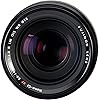
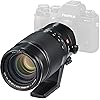
Fujinon XF50-140mmF2.8 R LM OIS WR

  • Based on 382 reviews
Condition: New
Checking for the best price...
$1,699.00 Why this price?
Save $200.95 was $1,899.95

Buy Now, Pay Later


As low as / mo
  • – Up to 36-month term if approved
  • – No impact on credit to apply
  • – Instant approval decision
  • – Secure and straightforward checkout

Ready to go? Add this product to your cart and select a plan during checkout.

Payment plans are offered through our trusted finance partners Klarna, Affirm, Afterpay, Apple Pay, and PayTomorrow. No-credit-needed leasing options through Acima may also be available at checkout.

Learn more about financing & leasing here.

Free shipping on this product

FREE 30-day refund/replacement

To qualify for a full refund, items must be returned in their original, unused condition. If an item is returned in a used, damaged, or materially different state, you may be granted a partial refund.

To initiate a return, please visit our Returns Center.

View our full returns policy here.


Availability: Only 5 left in stock, order soon!
Fulfilled by Amazon

Arrives Wednesday, May 20
Order within 5 hours and 26 minutes
Available payment plans shown during checkout

Protection Plan Protect Your Purchase
Checking for protection plans...

Features

  • Equivalent to 76mm to 214mm;Internal focus
  • Focal Length : 50-140 mm
  • Focus range: Normal: 1m - (whole zoom position), Macro: 1m - 3m (whole zoom position)
  • Max. magnification: 0. 12x (Telephoto), Maximum aperture of F2.8
  • Dust / water and low temperature resistance

Description

A telephoto zoom offering the most frequently used telephoto focal lengths, equivalent to 76mm to 214mm, and a maximum aperture of F2.8. It features the latest technology, including dust / water and low temperature resistance, a triple linear motor, and the world's top image stabilization technology in its class, so that users do not miss a shot in any conditions. Its advanced performance makes it a perfect choice, not only for portraiture and snapshots, but also to capture fast-moving subjects in sports or wildlife photography, and for general outdoor nature photography.

Brand: Fujifilm


Focal Length Description: 50-140mm


Lens Type: Telephoto


Compatible Mountings: Fujifilm X


Camera Lens Description: Fujifilm XF50-140mmF2.8 R LM OIS WR


Focal Length Description: 50-140mm


Lens: Telephoto


Compatible Camera Mount: Fujifilm X


Maximum Focal Length: 140


Minimum Focal Length: 50


Lens Design: Zoom


Focus Type: Auto Focus


Lens Fixed Focal Length: 140 Millimeters


Lens Coating Description: HT-EBC


Zoom Ratio: 2.81


Image stabilization: Optical


Real Angle Of View: 31.7 Degrees


Maximum Aperture: 2.8 f


Minimum Aperture: 22


Number of Diaphragm Blades: 9


Compatible Camera Models: Fujifilm X series


Photo Filter Size: 72 Millimeters


Lens Mount: Fujifilm X


Brand: Fujifilm


Camera Lens: Fujifilm XF50-140mmF2.8 R LM OIS WR


Model Name: 16443060


UPC: 074101025712


Manufacturer Part Number: 16443060


Global Trade Identification Number: 12


Unit Count: 1.0 Count


Model Number: 16443060


Item Weight: 1 Kilograms


Item Type Name: Mirrorless camera lens.


Manufacturer: Fujifilm


Built-In Media: lens


Warranty Description: 1 year coverage for labor, 1 year coverage for parts, This warranty doesn’t cover accessories not made by the manufacturer, batteries, or flash equipment


Iso Range: 100-6400


Has Self-Timer: No


Video Capture Format: MP4


Video Capture Resolution: 4K


Compatible Devices: Fuji Cameras, Fuji Digital SLRs


Light Sensitivity: 100-6400


Maximum Shutter Speed: 30 Seconds


Shooting Modes: Portrait, Landscape, Sports, Night, etc.


Exposure Control Type: Automatic


Water Resistance Level: Water Resistant


Media Type: ProductImage


Viewfinder Type: Optical viewfinder


Color: Black


Frequently asked questions

If you place your order now, the estimated arrival date for this product is: Wednesday, May 20

Yes, absolutely! You may return this product for a full refund within 30 days of receiving it.

To initiate a return, please visit our Returns Center.

View our full returns policy here.

  • Klarna Financing
  • Affirm Pay in 4
  • Affirm Financing
  • Afterpay Financing
  • PayTomorrow Financing
  • Financing through Apple Pay
Leasing options through Acima may also be available during checkout.

Learn more about financing & leasing here.

Top Amazon Reviews


  • Everything It Should Be, But What About The 55-200?
Style: Base Pattern: Single
I'd like to get a couple of things out of the way: First, as I've mentioned in other reviews I ran camera stores and a national photo catalog for years. Second, I've sold hundreds of 70-200s and borrowed them dozens of times but never owned one long term, I could always use a loaner. In short I have a lot of experience with lenses in general including fast tele-zooms. Thumbnail review of the Fuji 50-140mm f2.8 - If you need it, buy it, it is really as good as everyone says it is. Pleasing and solid build, I have no concern it will require more than normal care in handling. Functionally the zoom and focus rings are as smooth in operation as any top end lens I've handled. Internal focus and internal zoom seems to be hard to find anymore, but having both makes it very easy to use filter holders and grad filters. The short arc to zoom makes composition a breeze. The IS is nothing short of outstanding, I can handhold the 50-140 and get fewer blurred images than with the 55-200. And finally images taken with this lens are some of the sharpest I've seen. Oh, and the foot on the rotating collar isn't Arca Swiss compatible but you can swap it out for a foot that is for about $40 from 3rd party vendors. tldr/ As a photographer I shoot across a range of styles, from street to tabletop and landscape. What I do not shoot are portraits, sports, or video. I did all three ages ago and found that I had no desire to continue. What drives me to acquire camera equipment is need with also a little bit of desire, I need certain focal lengths but I want the equipment that's the best fit for me. I'm 7 years past my switch from Canon to Fuji and I'm still very happy with my pictures so I think the verdict is in for me, I'm not feeling any motivation to use another brand or platform. Two years ago I needed a longer lens to punch in on my landscapes and to make panoramic images of deep scenes. I purchased the 55-200 because that's what I felt I could afford. The lens is very sharp, compact, and fast focusing - the 55-200 is a great lens. But. Because the barrel extends on the 55-200 while zooming, and there is no way to lock it down, each time I adjusted filters setting up a shot the zoom would creep in or out changing composition and focus (the lens isn't constant focus throughout the zoom range). The 55-200 is a great lens, just not for what I want to shoot. The 50-140 was my second choice, but only because of price. As mentioned above the quality of the lens and its images are fantastic, but it's the internal focus and zoom that have been game changers for me. I no longer have zoom and focus creep when adjusting filters and my landscapes are much better for it. Soapbox moment: The 50-140 gives approximately the same magnification through the viewfinder as a 70-200 on a FF camera. The rest of that statement is: f2.8 is f 2.8 and doesn't change based on sensor size. Please stop multiplying apertures to find an equivalent. Applying 'crop factor' to aperture only helps describe the out of focus background in specific situations, it has nothing to do with light gathering. So, f2.8 is f2.8. This lens gathers as much light allowing similar shutter speeds in a given lighting situation as a FF 70-200 f2.8. Also, I suggest not worrying too much about equivalency between two different sensor formats. Honestly, nobody in film days ever spent this much time rationalizing magnification and bokeh differences between 35mm (FF) and medium format. We just shot our cameras. The same applies here, how often do you look at a scene and say to yourself "I think a 73mm focal length would be perfect"? You just don't do that when you're shooting a zoom, you view the scene through the eyepiece or back panel and compose your image. You just shoot your camera. In that moment is anyone really doing the math to determine the FF equivalancy of their shot? Off the soapbox... Summary: The 50-140 lens works for me in ways that the 55-200 couldn't. Internal focus and zoom make a huge difference for me and I probably should have purchased this lens first and skipped the 55-200. The 50-140 is a monster of a lens in comparison, but it fits on my XT bodies well and feels comfortable to tote around. I will shoot this lens most often from a tripod, but when handheld the IS is exceptional and helps deliver very sharp images. Highly recommended! ... show more
Reviewed in the United States on May 28, 2020 by StuE

  • Canon 70-200 2.8 --> Canon 70-200 4 --> Fuji 50-140
Style: Base Pattern: Single
I agonized over 56mm 1.2 Vs. 90mm 2 Vs. 50-140 2.8. I have all three of them right now but only plan on keeping two of them. I think I'm going to keep 50-140 and 56.1.2. The 50-140 is incredibly versatile. It's every bit as good as Canon 70-200 2.8 ii and Canon 70-200 F4 IS, both of which I previously owned. The Canon 70-200 2.8 is still better in terms of bokeh and higher magnification factor. The drawback is its 500g extra weight. And when you add another 500g of weight from a full frame body, that's a total of 1kg extra. Not fun to carry for a long period of time at all. I sold both canon lenses since I got the fuji 50-140. Optical image stabilization is highly effective. Autofocus is fast and accurate. Image quality is very high. I can't find obvious flaws. Unfortunately this lens has low magnification factor. So let's say I want to get a closeup shot of a flower this lens can't do that. Bokeh is decent but not spectacular. That's why I have 56 1.2. Small enough to bring along just in case. When I first got the lens I was surprised to hear rattling noise when I gently shake the lens. It turns out that this is perfectly normal and was by design. My Canon lenses make no noise at all so I didn't like what I heard at first. But after a while I got used to hearing it. The noise goes away when you turn on the camera, and comes back when you turn off. Other than this, build quality is very high. It makes me want to hold it. My Canon 70-200 2.8 makes me want to put it down. There was a period of time when I had both Canon 70-200 f4 and fuji 50-140. The choice was not as obvious as 70-200 2.8 vs. 50-140. Both 70-200 f4 and the fuji counterpart offer excellent image quality. If I mount the Canon 70-200 f4 on a Canon 6D series, the combo weighs about the same as xt2 + 50-140 combo. I feel that the bokeh is better on the canon and it's about 200g lighter. In the end I chose the fuji because i really love my xt2. And even though 50-140 is larger and a bit heavier it's one full stop faster, making it potentially a great event lens. Besides the OIS is much quieter and appears to be more effective. Mostly importantly I already sold all my canon full frame. And the only way to use the canon is to mount it on my M5. By the time I add an adapter, the size difference disappears. In summary, I'm very glad I got this fujinon 50-140 as a bring-everywhere lens. It is by no means small but very manageable. It's weather resistant. It allows to me to use lower ISO thanks to its extremely effective OIS. If you like traditional DSLR like the canon 5d series and you don't mind the weight, then I think a 5Div and 70-200 f2.8 combo is still superior because of better bokeh and higher magnification. But I do mind. I'm getting old. I just want something lighter and more manageable. ... show more
Reviewed in the United States on June 11, 2017 by yeung w.

Can't find a product?

Find it on Amazon first, then paste the link below.
Checking for best price...