
Prime Big Deals are live! View Deals
Search  for anything...

Triton Audio FetHead in-Line Microphone Preamp

  • Based on 1,933 reviews
Condition: New
Checking for the best price...
$74.95 Why this price?
Prime Big Deal · 6% off was $79.98

Buy Now, Pay Later


As low as $12.49 / mo
  • – 6-month term
  • – No impact on credit to apply
  • – Instant approval decision
  • – Secure and straightforward checkout

Ready to go? Add this product to your cart and select a plan during checkout.

Payment plans are offered through our trusted finance partners Klarna, Affirm, Afterpay, Zip, Apple Pay, and Google Pay. No-credit-needed leasing options through Acima may also be available at checkout.

Learn more about financing & leasing here.

Free shipping on this product

FREE 30-day refund/replacement

To qualify for a full refund, items must be returned in their original, unused condition. If an item is returned in a used, damaged, or materially different state, you may be granted a partial refund.

To initiate a return, please visit our Returns Center.

View our full returns policy here.


Availability: In Stock.
Fulfilled by Amazon

Arrives Saturday, Oct 10
Order within 38 minutes
Available payment plans shown during checkout

Protection Plan Protect Your Purchase
Checking for protection plans...

Features

  • Low-Noise Class-A JEFT Amplifier
  • Double Single-Ended Amplifier Topology
  • Shielded Enclosure
  • 4 Matched JFETs

Description

FetHead preamp boosts ribbon and dynamic mics by 27dB, improving response and extending range. Eliminate preamp noise. Trusted since 2008, unmatched in quality. Boost your microphone. The design of the Fetheads, BigAmps, and problem solvers allows them to plug right into your interface or microphone, requiring only a single XLR cable. The robust metal housing offers optimum protection and durability, even under demanding conditions. The Protective pouch for the FetHead plug provides additional protection against dust and damage when not in use or during transportation. When using the FetHead, make sure you have Phantom Power enabled on your interface, preamp, or mixing console.

Item dimensions L x W x H: 5.05 x 1.25 x 1.2 inches


Voltage: 24 volts


Manufacturer: Triton Audio


Mounting Type: Surface Mount


Brand: TritonAudio


Voltage: 24 volts


Mounting Type: Surface Mount


Number of Channels: 2


Package Type Name: Box


Item Dimensions: 5.05 x 1.25 x 1.2 inches


Specification Met: RoHS


Manufacturer: Triton Audio


Model: GS458RT


Brand Name: TritonAudio


Number of Items: 1


Unit Count: 1 Count


UPC: 774675409474 765407296424


Item Weight: 2.72 ounces


Part Number: GS458RT


Frequently asked questions

If you place your order now, the estimated arrival date for this product is: Saturday, Oct 10

Yes, absolutely! You may return this product for a full refund within 30 days of receiving it.

To initiate a return, please visit our Returns Center.

View our full returns policy here.

  • Klarna Financing
  • Affirm Pay in 4
  • Affirm Financing
  • Afterpay Financing
  • Zip Pay in 4
  • Financing through Apple Pay
  • Financing through Google Pay
Leasing options through Acima may also be available during checkout.

Learn more about financing & leasing here.

Top Amazon Reviews


  • Silent, Solid, and Truly Professional Inline Gain
Design & Build Quality 🧰 The FetHead is a compact and beautifully machined inline preamp that looks and feels like proper stage hardware, not a gimmick add-on. The steel body is solid and well-finished, with precisely fitted XLR connectors that click in snugly. The labeling is minimal and professional — this feels like a tool made for daily use, not a studio toy. The internal shielding is clearly doing its job, as there’s no detectable hum or interference even when plugged directly into a noisy interface chain. Ease of Use ⚙️ Using the FetHead is as straightforward as it gets — just insert it between the mic and the preamp, and you’re done. There are no switches, no power supply, and no fuss. It runs on phantom power from the interface or mixer, yet doesn’t pass it to the mic, so it’s fully safe for dynamic and ribbon microphones. The small size makes it easy to leave it permanently attached without straining connectors or interfering with stands. Performance in Real Life 🎙️ Noise performance is astonishing. With the preamp gain maxed out but no mic connected, the FetHead remains completely silent — no hiss, no hum, no trace of circuit noise. In a real setup with an AKG D5 dynamic mic, the self-noise floor sits below –80 dB, which is far beyond what most interfaces can measure accurately. The gain boost is clean and transparent, adding presence and clarity without changing tone or adding harshness. On stage, it behaves predictably and never overloads the input; in the studio, it makes low-output dynamics sound like they’ve come alive. Notable Issues ⚠️ None in practice. The only “limitation,” if one has to find it, is that the FetHead is a fixed-gain device — you don’t control the amount of amplification — but that’s part of its simplicity and reliability. Final Verdict 🔑 The Triton Audio FetHead is one of those rare tools that just disappear into the signal chain because they do their job flawlessly. It’s quiet, strong, compact, and built like it belongs on a professional stage or broadcast desk. For dynamic and ribbon microphones, it’s a true plug-and-forget solution that delivers a clean, silent signal boost every time. Absolutely recommended for anyone who values precision and silence over marketing fluff. ... show more
Reviewed in the United States on October 31, 2025 by V. B.

  • Amazing results while maintaining a small foot print.
This past year, I've struggled with my microphone's gain since I'm practically yelling at the top of my lungs with my Shure SM57. I couldn't seem to get my voice loud enough, even with system wide post processing and my gain set to max on my audio interface. My hope was to use this mic for chat, some streaming, and music production. Thinking back now, I should've conducted more research with my gear and how low of a sensitivity the SM57 was. At the time, I was still a bit new to microphones, and what setup would pair well with each other. At the start of 2020, I had started off with a Shure SM57 & a Native Instruments Komplete Audio 1, and boy did I learn the hard way about how much power was needed to push that mic to the point where people can actually hear me without the mic sitting inside my mouth essentially. Over time I've learned to cope with this handicap. That is until recently, where I started to do more research into my predicament and what possible ways I can go about to remedy this situation. I stumbled upon two choices, the Cloudlifter, and Fethead. Since i'm in a spot where space is limited on my work area, I resorted to the Fethead (I also liked the look of it as well). And man, let me tell you the relief that I had when I first attached it onto my mic. My voice still sounded clear, with just a small amount of hiss, but that is almost inaudible. The Fethead seamlessly attaches to the mic via Female XLR on one side to Male XLR on the other, meaning I wouldn't have to deal with having to use another XLR cable if I had gone with the Cloudlifter. I can honestly say that this was such a massive improvement, without having to buy a whole new setup. I recently switched over to the Motu M2, so I only did some tests between the M2 and the Komplete Audio. I found the M2 to work very well paired with the Fethead, and does sound just as clear without the Fethead (Though you'll still get some humming at higher gains). The Komplete Audio also sounded great, but definitely needed more gain compared. Overall, the Fethead is an amazing purchase if you need the extra boost in gains without sacrificing too much in terms of audio quality. ... show more
Reviewed in the United States on March 29, 2021 by Randy

  • No exaggeration - this Fethead really does add noticeably more clean decibel gain to your recording!
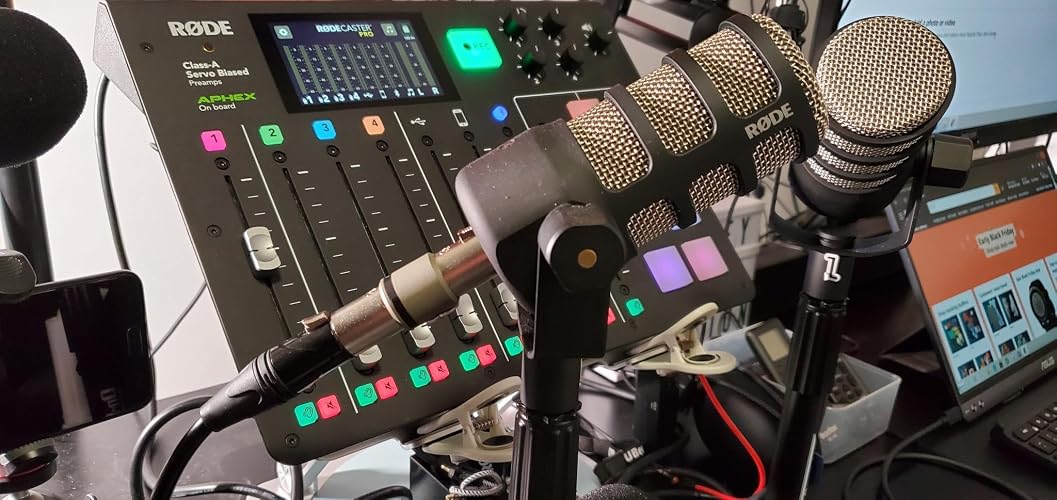
The Triton Fethead is amazing and really does exactly what it claims to do, which is to add an extra 25 decibels of gain to a microphone for louder recording volume. Why is this important you might ask? Because some microphones such as the legendary Shure SM7B are notoriously quiet and gain hungry. So in order to get louder recording volume without resorting to maxing out your gain dial knob which will cause unwanted background humming/hissing noise, you can simply attach a Fethead to the rear of the microphone, then the XLR cable behind it...then BAMMM! You instantly get more decibel gain for recording while being able to reduce the gain dial setting a few notches lower to avoid that unwanted background electronic noise that happens when you max out your gain dial setting. I don't have the Shure SM7B mic, instead I'm using the very popular Rode PodMic which is usually sold out and back ordered everywhere. I find the PodMic to be a little bit on the quiet side for my taste...not terribly quiet, but could certainly benefit with a boost by having a Fethead slapped onto the booty of the mic. With a Fethead attached to the PodMic, I'm able to go into the Rode Rodecaster Pro audio level setting to reduce the level lower. This in turn improves the overall sound quality while having higher decibels for my voice recording from the PodMic to the Rodecaster. When I first got the Fethead, I was a little skeptical, but all the many YouTube reviewers kept saying this device works wonders. Sure enough, all those glowing online reviews are correct, the Triton Fethead is positively worth the $89 price tag if you want higher recording volume from your microphone. 5 stars all around! ... show more
Reviewed in the United States on November 16, 2020 by Casey C.

  • Work perfectly
I've placed it right in XLR on my Rode PodMic and connected using cord to Tascam Series 102i mic/line input and turned phantom power on. Gain knob was at max value minus maybe 1 degree. Now it's near 3/4 of max.
Reviewed in the United States on August 30, 2026 by Aliaksandr Matsiukhin

  • good product, but do your research
first of all, any trouble i had with this preamp were my fault for not doing more research beforehand. that said, i feel like i should warn anyone who is in the same spot as me that this product will not work with a condenser microphone unless you buy a secondary phantom power source. the initial reason i bought this was because i had bought an at2020 condenser mic that i had hooked up to a cheap mixer. this was working fine (the mixer had 48v phantom power), but it was extremely quiet. if i cranked the mixer volume and gain all the way up, it would be at a barely reasonable volume, but with a lot of noise coming from the mixer. to solve this i figured i would amplify the microphone before it got to the mixer, and an inline preamp like this seemed like the best choice. it turns out i didn't read the fine print, and when i plugged in the preamp i got no sound whatsoever. it turns out that the preamp steals all of the phantom power from the mixer and leaves the condenser mic powerless. this isn't a problem for other types of microphones, but i didn't realize the difference at the time. the solution was to buy a seperate power source for the mic and let the preamp be powered by the mixer. it's a somewhat convoluted setup, but after figuring it all out, it totally works. i'm sure there are more elegant solutions (and maybe i could avoid the original problem altogether) but i'm happy with my hacked together solution. as for the product itself, i like that the form factor is small, the build quality is solid, and there is no extra noise added to the signal. it's dead simple to use, and it does what it advertises. i still wish the fact that it doesn't work with condenser mics was more prominent. maybe it's considered to be common knowlege, but it helps amateurs like me if you list potential problems like that on the store page. ... show more
Reviewed in the United States on July 2, 2022 by Ross Hartzell

  • Light and a life saver when recording outside the studio
I have an RE20 which needs a lot of gain to get a decent level. It's a mic that rejects external noise and just captures what's in front of it which is what I needed to record a YouTube video. Unfortunately, I was doing voiceover work and only had a Tascam field recorder on me. The Tascam is great but it has a lot of preamp noise compared to an audio interface, especially when using a dynamic mic and turning the gain up. I put the Fethead on the RE20 and immediately was able to cut my gain by more than half which cut out almost all the noise and left me with levels that were higher than when my gain was set at double what I had before. On an audio interface this isn't and really shouldn't be needed, even with a cheaper interface. In a recording environment with an audio interface a tool like this is only really good for situations where you have something like a ribbon mic that you want to protect from phantom power because the interface only lets you control phantom power for 2 preamps at a time or in a situation where you have a noisy interface preamp and want to turn down the gain to get rid of that (but that's really rare). I haven't compared it to the Cloudlifter yet but I'd say both are nice to have in a studio environment. Neither should color your sound in any way you can really hear. I'd say the Cloudlifter has the advantage of letting you daisy chain XLR cables together in cases where you need a longer cable but don't have one. As far as specs go, the Fethead has around 7dB more gain than the CL-1 but that's not going to be a dealbreaker for most people. I may update this review after trying out the Cloudlifter when it arrives but I fully expect they both work and behave the same and just have different form factors and a tiny difference in specs. ... show more
Reviewed in the United States on October 4, 2023 by Bill P.

  • Trident Fethead Vs the sE Electronics DM1 Dynamite
At the time of writing, I couldn’t find a comparison of these two inline preamps anywhere. I was able to do a side by side test with the Trident Fethead and the sE Electronics DM1 Dynamite. TEST EQUIPMENT: -Two SHURE SM58 dynamic microphones (Both purchased at the same time and in pristine condition) -Two 20’ Mogami Gold 2534 XLR cables -Triton Fethead Standard -sE Electronics DM1 Dynamite -Behringer XR18 digital mixer -Reaper 64 bit DAW for recording and playback -Two mostly functioning earholes The mics were set side by side at matching inward angles and attached to identical desktop mic stands. This Behringer mixer offers up to 60dB of gain. The mic with the Fethead was set to 26dB to get my peaks around -9dB when speaking. To match the output, the mic with the DM1 Dynamite had to be set to 32dB. I swapped cables and tried different ports on the mixer and consistently got the same results. The extra gain raised the noise floor a bit making the Fethead the clear winner in this aspect. Other important distinctions are the size and weight. The Fethead is shorter and a fair bit lighter. The Dynamite stuck farther off the back and could easily interfere with mic positioning. For me, the Fethead is much easier to work with. Both feel solid and well-constructed but the Dynamite would be a far more effective projectile. Both have a small amount of play where they connect to the mic but the Dynamite seemed a bit looser. With the added weight and the fact that it sticks out farther, it seemed like a bigger concern with the Dynamite. But we’re all really good bout securing our cables… right? In terms of tonal coloration, the Fethead seemed more subtle. The Dynamite was a bit punchier but the Fethead was more clear and crisp. The DM1 gave the tone a bit of an edge. That might be great in some applications but not ideal if you’re trying to capture the truest possible sound. This is more a matter of taste and desired outcome. With this gear, in my humble opinion, the Fethead is clearly the better choice. It has a better overall sound and a more manageable size. It even improved my noise floor a bit. This is definitely something worth having in your kit. I’ll be purchasing more Fetheads. The 5 star rating is based on value for cost and not how it would compare to a $5,000 preamp. LLAP ... show more
Reviewed in the United States on June 20, 2019 by Rabid Hamster

  • Made my NTG-2 usable!
If you have a mic with a high noise floor (sounds like hiss when the gain is turned up), this is your solution. I've had a Rode NTG-2 which is a notoriously weak condenser mic that I've never been happy with. I bought a Tascam DR-60D MkII which still resulted in an unacceptably high noise floor. However, the FetHead completely solved this issue both with the Tascam and recording directly into a C100 Mk2. The NTG-2 now sounds GREAT and this purchase has breathed new life into it. This FetHead requires phantom power but does NOT forward the phantom power, so condenser mics either need to use the phantom version of the FetHead or a battery, if supported. Triton Audio recommends this version with a battery for the NTG-2. The FetHead itself is small and plugs inline with the XLR cable. I really like this form factor as it's very easy to use and doesn't require an additional XLR cable. The quality of the FetHead was bad enough I'm not sure mine is genuine - the logo is off center and the FetHead itself isn't completely straight. It seems to work just fine though. All in all, considering the price and form factor this is a must buy if you need some additional clean gain. If you have hiss, buy this before trying anything else and avoid my mistake of buying increasingly expensive interfaces! ... show more
Reviewed in the United States on November 15, 2023 by RJ Nunnally

Can't find a product?

Find it on Amazon first, then paste the link below.
Checking for best price...