
Search  for anything...

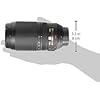
Nikon 70-300mm f/4.5-5.6G ED IF AF-S VR Nikkor Zoom Lens for Nikon Digital SLR Cameras

  • Based on 1,512 reviews
Condition: Used - Very Good
Checking for the best price...
$275.00 Why this price?

Buy Now, Pay Later


As low as $45.83 / mo
  • – 6-month term
  • – No impact on credit to apply
  • – Instant approval decision
  • – Secure and straightforward checkout

Ready to go? Add this product to your cart and select a plan during checkout.

Payment plans are offered through our trusted finance partners Klarna, Affirm, Afterpay, Zip, Apple Pay, and Google Pay. No-credit-needed leasing options through Acima may also be available at checkout.

Learn more about financing & leasing here.

Free shipping on this product

This item is eligible for return within 30 days of receipt

To qualify for a full refund, items must be returned in their original, unused condition. If an item is returned in a used, damaged, or materially different state, you may be granted a partial refund.

To initiate a return, please visit our Returns Center.

View our full returns policy here.


Availability: Only 1 left in stock, order soon!
Fulfilled by Amazon

Arrives Aug 4 – Aug 9
Order within 5 hours and 22 minutes
Available payment plans shown during checkout

Protection Plan Protect Your Purchase
Checking for protection plans...

Features

  • 70 300mm telephoto zoom lens with f/4.5 5.6 maximum aperture for Nikon digital SLR cameras
  • Internal Focus (IF) system provides fast and quiet autofocusing; 4.9 feet Minimum focus range, Focal Length Range : 70 300 mm.Two focus modes are available M/A and M
  • Vibration Reduction (VRII) minimizes effects of camera shake to produce sharper images
  • 2 Extra Low Dispersion (ED) glass elements delivers super contrast and resolution performance
  • Lens, frond and real cap, HB 36 Hood and CL 1022 Pouch / Packaging type : White box(Bulk Packaging)

Description

From the Manufacturer This high-power, high-performance 4.3x telephoto zoom with VR image stabilization lens allows better hand-held telephoto shooting ED glass. High-power 4.3x Telephoto Zoom-Nikkor lens approximates the picture angle performance of a 105-450mm lens on 35mm SLRTwo Nikon Extra-low Dispersion (ED) glass elements deliver superior optical performance for both digital and 35mm photography. ED glass minimizes chromatic aberrations, contributing to superb contrast and resolution performanceFocus as close as 4.9 ft throughout entire zoom rangeA Silent Wave Motor (SWM) enables fast and quiet auto focusing, along with quick switching between auto focus and manual operation (M/A and M)Vibration Reduction, engineered specifically for each VR NIKKOR lens, enables handheld shooting at up to 4 shutter speeds slower than would otherwise be possible, assuring dramatically sharper still images and video captureInternal Focus (IF) provides fast and quiet auto focusing without changing the length of the lens, retaining subject-working distance through the focus rangeNon-rotating front element provides for convenient use of circular polarizing filters and the Nikon Wireless Close-Up Speedlight SystemA nine-blade rounded diaphragm opening makes out-of-focus elements appear more natural

Brand: Nikon


Focal Length Description: 70-300 millimeters


Lens Type: Telephoto


Compatible Mountings: Nikon F (FX)


Camera Lens Description: Nikon 70-300mm f/4.5-5.6G ED IF AF-S VR Nikkor Zoom Lens for Nikon Digital SLR Cameras


Focal Length Description: 70-300 millimeters


Lens: Telephoto


Compatible Camera Mount: Nikon F (FX)


Maximum Focal Length: 300 Millimeters


Minimum Focal Length: 70 Millimeters


Lens Design: Zoom


Focus Type: Ring-type ultrasonic


Lens Fixed Focal Length: 300 Millimeters


Lens Coating Description: BBAR Coating


Zoom Ratio: 4.3x


Image stabilization: VR II, 4 stops claimed


Real Angle Of View: 34 Degrees


Minimum Aperture: 32


Number of Diaphragm Blades: 9


Photo Filter Size: 67 Millimeters


Lens Mount: Nikon F


Video Capture Resolution: 720p or 1080p


Exposure Control Type: Automatic, Manual


Water Resistance Level: Not Water Resistant


Media Type: ProductImage


Color: Black


Screen Size: 5.6 Inches


Brand: Nikon


Camera Lens: Nikon 70-300mm f/4.5-5.6G ED IF AF-S VR Nikkor Zoom Lens for Nikon Digital SLR Cameras


Model Name: 2161


UPC: 182080216110 222983801744 689076614122 018208021611


Manufacturer Part Number: 2161


Global Trade Identification Number: 11, 22, 73


Unit Count: 1.0 Count


Model Number: 2161


Item Part Number: JAA795DA, JAA795DAPL


Item Weight: 745 Grams


Manufacturer: Nikon


Built-In Media: AF-S FX Vibration Reduction NIKKOR 70-300mm f/4.5-5.6G IF-ED Zoom Lens for Nikon DSLR Cameras, CL-1022 Soft Lens Case, HB-36 Lens Hood, LC-67 Snap-on Front Lens Cap, LF-4 Rear Lens Cap


Warranty Description: 1 year coverage for labor, 1 year coverage for parts, This warranty doesn't apply to the batteries and software driver that accompany this product


Frequently asked questions

If you place your order now, the estimated arrival date for this product is: Aug 4 – Aug 9

Yes, absolutely! You may return this product for a full refund within 30 days of receiving it.

To initiate a return, please visit our Returns Center.

View our full returns policy here.

  • Klarna Financing
  • Affirm Pay in 4
  • Affirm Financing
  • Afterpay Financing
  • Zip Pay in 4
  • Financing through Apple Pay
  • Financing through Google Pay
Leasing options through Acima may also be available during checkout.

Learn more about financing & leasing here.

Top Amazon Reviews


  • A sharp zoom telephoto with good optics and features
I have a Nikon D90 camera. Note that this is a DX camera and, therefore, I am only using the middle part of the image focused by this lens. Since that portion is typically the best part of the image, those of you using cameras with full-framed sensors (such as the D3 line or the D700) should look elsewhere for advise. I have had this lens a little more than a week and have been very impressed with auto-focus speed (assuming enough light, but see below), sharpness, and basic lack of notable aberrations. I am using Photo Shop CS5 for processing and both the raw-image and main dialogs provide (from Adobe) distortion correction profiles for this lens. A plus. I am using a 16-bit per color channel process and typically making 13" x 19" prints, occasionally with some cropping. This is enough magnification to see most sorts of lens flaws. Given this setup and my DX camera, I'm rating this lens five-star. Whenever I get a new lens, I practice using it around the house and neighborhood for several days to become acquainted with its quirks. I did so with this lens and found two quirks that are noteworthy. First, this is a BIG lens, particularly where extended to a full 300mm and the lens shade is snapped on. In fact the weight makes it difficult to hold steady and the focal length amplifies user shake. I had to practice my technique so that VR and me together could take super pictures. If you have enough light to shoot at 1/100 sec or faster, this problem will seem to go away. However, if your technique isn't good, you will end up with a sharp picture offset somewhat from what you thought you were shooting. In other words, you need good technique (or a tripod or a monopod) to supplement VR at all shutter speeds. Another issue caused by length and weight is that it is much harder to steady the camera when used in portrait orientation than in landscape. This is because the camera grip on Nikon cameras is put on the right and that means it is on the bottom (or top) in portrait mode. Since your wrist is twisted, it is harder to steady. Second, auto-focus wont zip from 70mm to 300mm or vice versa in most instances. My advice is to use the manual focus ring to get close to focus when you start way out of focus. Make it a habit to do so. Otherwise, you will miss some pictures while the lens stays confused. Depth of field is negligible when you use a long telephoto and 300mm qualifies to that description. So the lens needs some help. It's not the lens' fault, it's just physics. I bought this lens to replace my Nikon 55-200mm VR. That lens is great and costs less that half as much as the lens I'm reviewing. I believe the new lens is worth the extra money but the 55-200mm is certainly a good alternative if budget is an issue. The extra 100mm on the long end is worth it and the lens is sharper, to my eyes, at equivalent focal lengths. Of course you are considering buying this lens because of the extra 100mm or because you have a non-DX camera and have no other Nikon choices in this price range. The build quality is also better; since I don't plan to bounce either lens on the floor, that is a minor consideration. ... show more
Reviewed in the United States on November 15, 2010 by Dragoneer

  • Awesome lens with some minor issues
I purchased this lens over a year ago and to date, it is still one of my favorite lenses to use. If you reading this review, you probably have read all of the other reviews and heard about its minor quirks (slow AF speed and softness at 300mm). However, if you know its limits, you can work around most of these issues. I mainly use this lens for daytime bird photography on my D90 with the occasional sports/triathlon picture taking. This lens has a maximum aperture of f/4.5 at 70mm which increases to f/5.6 when zoomed to 300mm. Because it is a relatively "slow" lens, I wouldn't recommend taking low-light pics with it. Unless if you are into abstract photography or something and dig blurry or light streaked pictures. Build Quality: The lens feels really good. A little too plasticy but still pretty good. It has a pretty nice heft to it too. It is mostly made out of plastic with the exception of the metal top bit of the lens just after the zoom ring. The lens mount is also metal which is lovely. The zoom ring feels fine and decently smooth. The focus ring is a little stickier and offers a bit more friction but it is still easy to operate. I have had no issues with zoom creep when the lens is pointing downwards. This lens also features a rubber gasket around the mount of the lens. This further protects your camera and the lens from dust and debris. The petal-type lens hood that the lens comes with is fairly large and does its job well. The lens also smells nice too. A bit of rubbery smell mixed with with a hint of new electronics smell. The anti-glare coating also casts a pretty cool mix of colors when you look into the glass. It's a sort of greenish, redish, yellow. Image Quality: This is where some of the minor flaws of the lens comes in. The pictures from this lens are tack sharp in the 70-200mm range even at the maximum aperture. From 200-300mm, the images soften considerably at max aperture. It isn't really a big deal and not noticeable unless if you aggressively crop your images. At 300mm, if you stop up (or is it down?) the aperture to f8 or f11, the images do get sharper but aren't as sharp as in the 70-200mm range. Comparing it to the Nikon 300mm f4 which I recently acquired, the 70-300mm definitely isn't as sharp as the 300mm/f4 even when stopped down. The 300mm f4 is just a beast of a lens. Autofocus Speed: Decently fast at 70mm, slows a little at 150mm, slows down a little more at 210mm, slows down considerably at 300mm. Hunts a lot at 300mm, especially when focusing in the dimly lit environments. This lens has a manual AF over-ride which enables you to grab the focus ring at any time. I use this feature a lot to conk the lens back on track if it starts to focus hunt in the wrong direction. Not a major issue, but I can definitely see it becoming a little annoying if you are trying to focus in on something fast moving. AF is quiet which is nice. The 70-300mm lens also features Nikon's Vibration Reduction tech which helps you avoid shaky pictures from shaky hands when you are using slower shutter speeds. It really works well and its a wonderful addition to this lens. Overall, a good but not perfect lens. It is definitely a step-up from its little brother, the 55-200mm in terms of IQ and AF speed. ... show more
Reviewed in the United States on September 17, 2010 by Andrew

  • Nice additional lens for my camera.
Yep I bought this one (70-300 mm VR) lens to add on next to my other lenses collection at a fair price, and it does help me a lot to focus on both auto, and manual modes from long distances, and it has 3 switches on this lens (AF/M-MF focus mode, VR, and normal/active) as well and I do admit that I try use it more often to take photos of birds, and other animals from a distance, because this type of lens (70-300mm) is being good for me to use so far on my Nikon D-5100, and I love it. ... show more
Reviewed in the United States on March 26, 2026 by Dawayne McRae

  • The Good, Bad, Ugly, and Uglier
Background: I am a semi-pro photographer (I earn money from photography). I shoot with a Nikon D300s and pretty much all pro grade Nikon FX primes (except for the outstanding Tokina 11-16). I am a die-hard Nikon fan and I am willing to pay a premium for the brand. As I started shooting children's sports, I was compelled to purchase a non DX Nikon zoom. Not wanting to spend $2,300 on the venerable (but very large and heavy) 70-200 2.8, which is a great lens but not enough reach, I sought to save money and obtain greater reach at the same time. Figuring I would be shooting outdoors during daylight, I believed (and still do) the Nikon 70-300mm 4.5 to 5.6 (5.6 at the long end) would suffice. It should be noted that I previously owned the DX 18-200 but never really liked that lens and sold it. In fact, I consider the 70-300mm more "pro" and better build than the 18-200. However, the 18-200 is smaller, lighter, and a better all around solution. The good: This lens is what I consider borderline pro-grade. It feels like a pro build in your hands and seems well built (made in Thailand- NOT CHINA). The lens is made of strong plastic (ABS?) which really keeps down the weight (very important for all day shooting). Both focusing and zoom rings function well and the VR does make a big difference but only when photographing stationary objects without a tripod. When photographing a moving subject like in sports, the VR has no effect and under some circumstances can create problems- so turn it off. You can always tell who is a serious shooter by looking at their VR to see if it is on or off when shooting moving subjects. The IQ of the lens is very good. Auto focusing is spot on and reasonably fast at all aperture ranges. Just be sure to watch your shutter speed when shooting manual. The picture quality of the lens is outstanding and requires little to no post processing for sharpness. Distortion is well within control. Using Lightroom 3 or Nikon Capture NX2, you can apply auto distortion control easily (if wanted). Also note the extra 100mm reach is critical when shooting children's sports especially from the end zone. Just be sure to use a quality monopod and turn VR off. This lens is smaller than the 70-200mm but still pretty big. It will take up room in your camera bag so be prepared. I use a lowepro slingshot AWsoo and it fits pretty well with 4 primes and a flash. The bad: the second week I used this lens I experienced auto focusing problems. I anticipated this though due to "The Ugly" (see below) and I do not believe it is Nikon's fault. I noticed that when I locked focus on a QB about to take the snap, I could not easily refocus on the helmet of the center just a short distance away. The lens would first focus all the way out then try to refocus in with no luck. I experienced this situation in broad daylight with great contrast. This situation caused me to lose the shot sequence on numerous occassions. I did not experience any grinding as some other reviewers noted. Other aspects of the lens seemed good. However, autofocus is obviously critical. Subsequently, I exchanged the lens (replacement) for a new one and am curently using it. The ugly: AMAZON PACKAGING IS THE PROBLEM. The first lens I received came in a big box with just one air bag. The lens obviously took a beating during shipment. Note, most of my lenses are ordered through Amazon and this is an ongoing problem. Though Nikon internal packaging is very good, Amazon's negligence in shipping causes problems. These are fine optical instruments that should not be bounced around during shipment. The VR components are sensitive as noted when you shake the lens you will often hear a clunking. That clunking is a "floating" lens element and the sound is normal. During shipment, the lens must be immobilized against shock as much as possible. Amazon really screws this up. I called and spoke to a Nikon rep who said Nikon recommends retailer packaging include complete immobilization of the lens during shipment to the end-user. The uglier: I ordered a replacement lens. However, I first formally complained to Amazon about the inadequate packaging and explained the basis for my complaint. I also noted the issue when I ordered the replacement. Much to my surprise, my replacement came packaged with NO AIR WRAPS. Thats right! Amazon shipped the lens in an even bigger box but with NO BUBBLE WRAP or AIR BAGS at all. The second lens probably took a worse beating during shipment than the first. It is apparent to me that the Amazon shippers are incompetent and Amazon quality control personnel should be fired. I have had the replacement lens for one day and tested it. It works great so far. Let's see what happens over time. (I will edit this review in two weeks to update on the second lens). SUMMATION: This is a great lens at a great price point. It will serve you well in outdoor daylight conditions (sporting events, nature photography, etc...) It may also serve you well indoors if lighting around the subject is adequate. The VR works very well and will make a difference for stationary objects. Auto focusing is silent and fast unless the lens is damaged during shipment. Distortion is minimal, very little CA, and easily corrected via auto distortion correction (LR3 and NX2). Come on Amazon- get some intelligent packagers and fix the problem at the source. Otherwise, I will keep returning the lenses until you get it right. ... show more
Reviewed in the United States on September 25, 2010 by ReconScout

  • Great lens, but do you want a 70-300mm?
I bought this lens for $500+ about a year or so ago. It replaced a much cheaper Nikon 70-300mm f/4-5.6G AF Nikkor SLR Camera Lens that fell and broke. But the upgrade has been tremendously worth it. As an amateur enthusiast, what I like about the lens is -- the Vibration Reduction! This is priceless, because it really helps you dispense with a cumbersome tripod for many low-light situations, and shoot stable pictures just from your hand. Of course, how much it eliminates shake depends on how slow the shutter speed is, but I have taken completely stable photos at 1/10 of a second -- and I know I have shaky hands. -- the AF-S "silent wave" motor that quickly and silently auto-focuses, and the fact that you can then seamlessly manually tweak that focus using the focus ring, without having to switch from AutoFocus mode to Manual Mode. Not needing to switch modes means you're ready to take that shot when the moment comes along, rather than miss it twiddling with your camera :) -- and yes, the optics are overall very good, including the "bokeh". It's a Nikon, after all! However, there are cons too: -- the weight is substantial, and if like me you're using either the super light film N75/F75 or the D40, the camera tends to feel just a little unbalanced (front heavy) in the hand. More crucially, a heavy camera+lens can make your hand shake more, thus negating to some extent the advantage of the VR in low light situations. -- the Autofocus can take a bit long -- or fail to achieve focus entirely -- in situations of low light, and especially at the longer end of the zoom spectrum. Since I do a lot of low-light photography, I end up often switching the lens to manual focus mode. Given the weight of this lens (probably unavoidable to accommodate the 17 high quality lens elements inside, as well as the autofocus motor), you might seriously want to consider whether you want a 70-300mm lens at all. If you shoot mostly wide angles, you would certainly be better off with a shorter range VR lens, which would be both lighter as well as faster (this one opens up only to f4.5). Quite apart from weight as well, 70-300mm is a bit of an odd range. At the long end, it's really not long enough for bird photography or professional sport photography -- though probably good enough to shoot your kids playing soccer or something. And at the wide end.. it's certainly not wide enough for any situation in which you want to take in the breadth of the view. I probably use it most often for long-range portrait shots. I also end up losing valuable time (and thus altogether missing many photo opportunities) simply switching between this lens and the 18-55mm lens. And fancy equipment all comes to naught if you miss shots because you weren't ready for the moment! I think for me personally, the way forward will be to buy the excellent Nikon 18-200mm f/3.5-5.6 G ED-IF AF-S VR DX Zoom-Nikkor Lens, which will replace both this lens and the 18-55mm lens. This lens will serve reasonably well till I buy that, and then probably be resurrected only when full-frame (FX) Nikons become cheap enough to fall in my budget. At that time, I'll love the fact that while the 18-200mm is only a tiddly DX lens, this lens is very much full-frame! ... show more
Reviewed in the United States on December 22, 2008 by Hemanshu Kumar

  • An Affordable Option For Well-Lit Sports Photography
This year I photographed my son's football team. I started the season shooting the Nikon 55-300mm f/4.5-5.6G ED VR AF-S DX lens. While I was able to get a few keepers, I became more and more frustrated with the number of missed shots due to slow focusing. I also became more and more frustrated with the amount of time spent in post processing correcting contrast and sharpness, even after adjusting settings on my D7000. It was time for an upgrade. After a bit of research it seemed like the solution for my problem was the Nikon 70-300mm f/4.5-5.6G ED IF AF-S VR. After receiving the lens, the first thing I noticed was its build quality, size and weight. Overall the lens felt more professional. Even though the body of the lens is “plasticy” it has a heft to it. For me the added weight was not a con. Honestly, it seemed like the camera was more balanced while shooting. Initially the zoom ring felt a little stiff. However, after a bit of use it felt more fluid. The focus ring felt fluid from day one. After taking several shots it became apparent that the focusing system was much quicker than the 55-300mm. Even in low light the AF system would quickly lock onto subjects. The vibration reduction (VR) was a treat to use in low light situations. However, I was a bit concerned the first time I used it. With VR enabled and a 1/2 press of the shutter release button you'll hear an annoying clicking sound. The first time I heard the sound my heart sank. Thinking I’d received a defective copy, I prepared to ship the lens back to Amazon. However, before returning the lens I did a little research. A quick Internet search on "Nikon 70-300mm VR clicking sound" produced pages of results. Thankfully the sound was not abnormal. So, with the scare out of the way I commenced to taking more photographs. After transferring the photographs from the camera to the computer the first thing I noticed was how sharper and more vibrant they were. They were so sharp that I had to throttle back the in camera settings used for the 55-200mm lens. Overall, I’ve thoroughly enjoyed using this lens. The reaction from parents was further confirmation that I made the right choice. If your application is sports photography with plenty of light this lens will get the job done. If you're thinking about upgrading from the 55-300mm to the 70-300mm for well-lit sports photography, do it. ... show more
Reviewed in the United States on December 17, 2013 by Cary

  • Deciding Between the 18-200 VR or the18-70 & 70-300 Combination
I read a lot of data; I looked at the products; I swayed back and forth from one theory to the other. You know the drill - you have both pluses and minuses. You weigh it out; you hold it to the light; you weigh it some more... Finally, I decided that lens switching is not the biggest deal some people make it out to be - I don't think I'll miss much. Usually you're doing some shots of the same thing, or subject. This put lens switching concerns low down on the list of consideration. Then there are the other reviewers. Like brown shoes, some hate 'em, some love 'em. Because of the inherent design of digital SLR's, good light and sharpness requires less lens than yesteryear. I finally came to the conclusion that the Nikkor 18-200 VR was a huge, expensive thing I just could not lug around full time. So I got the Nikkor 18-70 ED and this 70-300 VR. Actually a bit more than the 18-200 VR alone, but more versatile and in my opinion, sharper overall. The 18-200 tries to do a lot and succeeds somewhat well across it's broad range. The 18-70 and 70-300 lenses do it better and sharper, albeit heavier and less convenient. This is especially prevalent at the low end, where distortion is readily noticeable in all of them. The 70-300 is certainly better on the higher end, and it gets you all the way out to 300. In my testing I found this lens very responsive, quick focusing, and sharp as a tack. The VR system was a welcome addition as well. Well made, relative to most of the less expensive Nikkors, and with ED IF and VR, all I wanted in a medium to long telephoto. I don't feel the VR is necessary in the wide to normal range, but mandatory for serious low light work at 120mm or so, and up. Look for a used 18-70 lens to go with this 700-300. Get a mint condition (newer version) one for a fraction of the price, and you'll have a near perfect combination. This 70-300 works fine on all the latest Nikons including the D40. You will love your 70-300 when you need it! ... show more
Reviewed in the United States on May 19, 2008 by Pat Martini

  • Ok, but not great.
Hmmm...I'm really torn about this lens. My copy is extremely slow to AF at times, particularly at the long end, which has resulted in missed shots more than once. AF can also be very LOUD in addition to being slow. However, other times it works perfectly and gives me amazing shots, so it's a bit of a coin toss. When it does behave, it's a fantastic lens. The VR helps a lot and I'm not getting the softness that others mention. It also doubles nicely for a portrait lens when you're in a pinch or only want to carry one lens. As others have mentioned, there was some dust on my glass as well but it never shows up in the image so it doesn't bother me too much. I got this at a discount b/c I bought it with the D700, so for the price I paid it's a good lens. If you're shooting FX then this is a great, cheaper alternative to other FX lenses in this range (assuming you want new glass) but for DX shooters, I'd spend my money elsewhere. I would much rather pony up a few extra hundred and get the 18-200 instead, which is what I have on my DX body 90% of the time. I hardly miss the extra 100m on the long end, and the extra 50m on the short end is far more usable. It's also quite heavy (despite all the plastic) so on a DX body it feels unbalanced and far too top heavy. Overall, if you shoot FX, go ahead and get it but keep your fingers crossed that you get a good copy. If you shoot DX, skip this and get the 18-200 and never look back. ... show more
Reviewed in the United States on May 31, 2011 by jantirak

Can't find a product?

Find it on Amazon first, then paste the link below.
Checking for best price...