
Search  for anything...

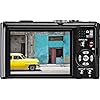
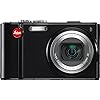
Leica V-LUX 20 12.1 MP Digital Camera with 12x Wide Angle Optical Zoom and 3.0-Inch LCD

  • Based on 19 reviews
Condition: New
Checking for the best price...
$1,099.99 Why this price?
Save $1,744.96 was $2,844.95

Buy Now, Pay Later


As low as / mo
  • – Up to 36-month term if approved
  • – No impact on credit
  • – Instant approval decision
  • – Secure and straightforward checkout

Ready to go? Add this product to your cart and select a plan during checkout.

Payment plans are offered through our trusted finance partners Klarna, Affirm, Afterpay, Apple Pay, and PayTomorrow. No-credit-needed leasing options through Acima may also be available at checkout.

Learn more about financing & leasing here.

Free shipping on this product

30-day refund/replacement

To qualify for a full refund, items must be returned in their original, unused condition. If an item is returned in a used, damaged, or materially different state, you may be granted a partial refund.

To initiate a return, please visit our Returns Center.

View our full returns policy here.


Availability: Only 1 left in stock, order soon!
Fulfilled by 42nd Street Photo

Arrives Friday, Feb 27
Order within 5 hours and 34 minutes
Available payment plans shown during checkout

Protection Plan Protect Your Purchase
Checking for protection plans...

Features

  • 12.1-megapixel sensor
  • 12x Leica DC Vario-Elmar 1:3.3 4.9 / 4.1 49.2mm ASPH (25-300 mm) Integrated zoom lens; focal lengths from super-wide to extreme telephoto
  • GPS module for registration of geographical data of every shot
  • 720p HD movie capture with 12x zoom range
  • Compatible with SD/SDHC/SXDC cards (not included)

Description

From the Manufacturer Compact size, intuitive handling and a high-performance 12x zoom lens make the Leica V-Lux 20 the perfect companion to have around wherever you happen to be - for every day photgraphy, touring the city or holidaying by the beach. The Leica V-Lux 20 is the perfect tool with which to capture those wonderful moments in life as high quality pictures. Direct, spontaneous, and intuitive. This is made possible by numerous automatic functions and a versatile 12× zoom lens with an enormous focal range from 25 to 300 mm. The optional manual setting of apertures and shutter speeds offers even the most demanding photographers complete creative control. With the latest advanced features such as HD movie and optional GPS image tagging1, the V-Lux 20 offers the greatest possible flexibility and ease of use - for still photography or movies when you are out and about, and even for archiving pictures already taken. Enormous focal length The Leica DC-Vario-Elmar 1:3.3 - 4.9 / 4.1 - 49.2 mm ASPH. (25-300mm) zoom of the V-Lux 20 is a lens with extraordinarily high performance. Its high-quality zoom enables the use of an enormous range of focal lengths from 25 to 300 mm for both photos and video recording. For macro photography, extremely wide-angle views, or zooming in on distant subjects - the V-Lux 20 captures amazingly sharp images across the entire wide-angle to telephoto range. When shooting with longer focal lengths or in poor light, optical image stabilisation effectively prevents blurred or shaky pictures. The V-Lux 20 features a 12.1 effective megapixel sensor. Flexible use of the sensor format guarantees full exploitation of the entire zoom range (35-mm equivalent: 25-300 mm) in all possible image aspect ratios, whether set for 4:3, 3:2, or 16:9. Easy, intuitive handling Leica cameras have always been designed for the best-possible handling. The ergonomically- positioned and logically-arranged controls of the Leica V-Lux 20 ensure intuitive handling of the camera for less experienced photographers. A wide range of automated functions ensures even simpler handling. At the same time, manual setting options for aperture values and shutter speeds provide greater creative scope for more demanding or experienced users. The mode-selection dial on the camera's top plate allows fast and simple switching between the various automatic modes and manual operation. Movies in HD quality The 720p HD movie function is a further addition to the versatile features of the Leica V-Lux 20. Movies are recorded in M-JPEG HD format, tagged with GPS data. HD movie recording is started with the touch of a button on the back of the camera. Once recording, the "director" can concentrate completely on the subject or scene, because the intelligent automatic systems of the V-Lux 20 integrate all the essential functions such as face recognition, automatic scene capture selection, and smart exposure for stills and movie recording. Integrated GPS function The compact size and enormous zoom range of the Leica V-Lux 20 make it an ideal companion when you are out and about. And its integrated GPS tagging function is another excellent reason to take it along wherever you go. This innovative feature records the geographical coordinates of the location and the local time of every picture you shoot, and stores this information in the EXIF data of the image files. This provides a multitude of exciting possibilities and benefits. When traveling with the V-Lux 20, it displays all the sights in the immediate neighbourhood. In fact, it has access to a total of 500,000 such points of interest across 73 countries. And each picture can reveal exactly where it was shot on maps published in social networks, image portals, and map services like Google Maps or Google Earth. Easy image processing As a very special extra, the Leica V-Lux 20 is supplied complete with a copy of the powerful, easy-to-use, complete image processing solution Adobe Photoshop Elements 8.0. This software package enables fast and convenient media management and intuitive post-processing of photos and movies. Never before has it been so easy to make incomparable pictures for printing, online galleries, and mobile devices. Note: It is possible that GPS tagging may not function in the People's Republic of China and neighbouring regions. Satellite signal reception may not be possible, depending on the location. In such cases, the positioning data may be recorded inaccurately or not at all.

Compatible Mountings: Leica DC


Aspect Ratio: 169


Photo Sensor Technology: CCD


Supported File Format: JPEG


Image Stabilization: Optical


Maximum Focal Length: 300 Millimeters


Optical Zoom: 12 x


Metering Description: Multi, Center-weighted, Spot


Brand: Leica


Model Name: V LUX 20


Product Dimensions: 4.06 x 1.3 x 2.36 inches


Item Weight: 7.7 ounces


Item model number: V-LUX 20


Batteries: 1 Lithium Ion batteries required.


Is Discontinued By Manufacturer: No


Date First Available: September 1, 2008


Manufacturer: Leica


Frequently asked questions

If you place your order now, the estimated arrival date for this product is: Friday, Feb 27

Yes, absolutely! You may return this product for a full refund within 30 days of receiving it.

To initiate a return, please visit our Returns Center.

View our full returns policy here.

  • Klarna Financing
  • Affirm Pay in 4
  • Affirm Financing
  • Afterpay Financing
  • PayTomorrow Financing
  • Financing through Apple Pay
Leasing options through Acima may also be available during checkout.

Learn more about financing & leasing here.

Top Amazon Reviews


  • The best SLR non SLR
I have been taking digital pictures for quite some time. When they started about 5 ago, camaras were very basic. We were just glad that we didnt have to purchase film and pay to develop them and be able to take many pictures instead of 12 or 24. As time passed by, more and more features starting to show up in basic digital camaras but never to be compare with what one can accomplish with a SLR. I travel a lot and when you are in front of the Eifel Tower or the Louvre Museum and you want to capture awesome pictures of those monuments you realize the shortcomings of a basic digital camara. So I decided to get a Canon SLR about 2 years ago. Not a good experience. I returned it. You needed to be a proffesional photographer in order to use it. Then about a month ago, checking the Internet I realized several companies were working in smaller SLR camaras like the Olimpus e-620 and the SP-800UZ. With the first one you can change the lenses and with the second one it comes with a fix lens and gives you 30X of zoom. I ordered the Olimpus SP800UZ and had great expectations however when one zooms all the way the image quality is not very good. The size is still too big for my needs and taste. So I read a lot about the Leica V-Lux 20 and on May 20 when it came out I ordered one. This is sort of a preliminary report. The camara has so many features that I haven't been able to use or learn them all. I live in Chicago so this morning I headed for downtown and took about 100 pictures of all over the place. I am impressed. One of the things that bugged the must with basic camaras is that when you want to take 2 or 3 pictures of something that is happening that one needs to capture right away and the flash is needed, there is waiting time of about 5 seconds until one can shoot again. This camara is NOT like that. It takes picture after picture right away. The quality of pictures is very good. The zoom is only 12X but when I zoom all the way the quality of the pictures is excellent. Another reason I wanted this camara was because of the High Resolution video. A complaint that I read from otehr camaras was that they couldn't zoom while in video mode. This camara takes very nice video and one can zoom while in video mode. However if you have a PC you need Apple Quick Time to watch the movies. Most camara manufacturers are doing their own software. Leica comes bundled with Adobe Photoshop Elements 8.0 instead. I haven't seen the video on TV because I need an extra cable that I don't have yet but the video in the PC looks very nice. I was particular impressed with the quality of the sound. Well I hopes this helps anyone who is thinking about purchasing this camara. Something that is different, maybe more lasting is the power switch and the view stored pictures switch, instead of the traditional push buttons this camara comes with slides switches which sound to me like less teckie but I am sure Leica had a very good reason for them. ... show more
Reviewed in the United States on May 23, 2010 by Helmuth Walch

  • Not quite a Leica.
I am inclined to agree with reviewer RT about the V-Lux 20. I too own the D-Lux 4, and also a Nikon D3S. I was looking for something of Leica quality, but with the added reach of the extra zoom lens. I bought my D-Lux 4 a year ago with a then-in-place rebate from Leica, so I paid exactly the same for my D-Lux 4 as I just paid for the V-Lux 20, so they are worth comparing. What I have found upon trying the camera out for a few days: 1) GPS: Tags all your photos with place, date and time. Handy if you travel A LOT. Otherwise, a novelty and major battery suck. The GPS draws power even when the camera is off, unless you put it into airplane mode. Presumably this is to have current coordinates on hand when you power it up. The GPS can be slow to 'latch on' when taken out of airplane mode. It took 10 minutes to triangulate the signal with an unobstructed 360-view of the sky in the San Francisco area. If this were a car navigation system, you'd have arrived at your destination by then. 2) Lens: amazing range with significant extra reach over the D-Lux 4. However, the picture quality suffers. Noticeable softness when compared to the D-Lux 4. Not significantly better than Canon Powershots, which run half the price. (I own two Powershots as well.) However, color rendition and contrast are superior to Canon point-and-shoots. See the focal length sample photo I uploaded to to the V-Lux 20 product description here on Amazon. [UPDATE: I ran some side by side comparisons with my Powershots, and the Leica lens is not as soft as I first perceived. It is noticeably sharper than the Canons, and does not suffer from much edge softness at very wide angles. Also, the optical zoom in this camera is very impressive for a point-and-shoot. However, you have to be in the right mode otherwise you invoke a little extra (digital) zooming, which is not great.] 3) No RAW. May be a non-issue to some, but I always shoot RAW with my D-Lux 4 and there have been a few amazing shots that I was glad I was able to post-process and get the most out of them. The V-Lux 20 has two JPEG modes: compressed, and less compressed, and you can also choose the aspect ratio and image file size. The lowest appears to be a 'notepad' image size of about 2 mpx. 4) Slower lens: more image noise and less options for shooting in low light than the D-Lux 4, which sports an f2 lens. 5) Build quality. As RT said, definitely not up to the quality of usual Leicas, including the D-Lux 4. It feels flimsy and lightweight. The controls do not feel as smooth and precise as the D-Lux. 6) No hotshoe or viewfinder. Probably not an issue for most people, like me. I never used the external Leica flash and I don't know anyone that ever used the external viewfinder on the D-Lux 4, especially as a fixed viewfinder is fairly useless with a zoom lens. But these might be important for you. 7) Integrated hand grip. Unless you've used the D-Lux 4 without a hand grip, you won't know how important this is. On the D-Lux 4, it's an expensive option; here, it's designed into the body. 8) Integrated lens cover. Very useful. 9) Movie mode. Seemingly the same as the D-Lux 4: 720 HD. One nice touch is there is now a single dedicated button on the back of the V-Lux to start recording a movie. Handy for candid moments. Also, the full focal length of the zoom works during movie mode, which is great. The D-Lux 4 cannot zoom while shooting movies. And the zoom on the V-Lux is dampened, meaning you cannot jump from widest angle to maximum telephoto quickly -- this is a good thing in my opinion as it paces the zoom to be more pleasing to the viewer. Lastly, it seems like the maximum continuous length of movie you can shoot in HD is about 8 min 30 sec. At this point recording will stop and whatever's left in the buffer will be written to disk. Once this is done, you can start another 8 min 30 sec of movie taking. In theory this is fine, but when I was shooting my kids in a 20 minute play, I lost some in the middle. I expect the V-Lux is not being positioned as a replacement for a dedicated movie camera. Also, if you are a Mac user, the movies created with the V-Lux can be imported into iMovie and Final Cut Pro without conversion as they are Picture-JPEG format. (My Nikon D3S, on the other hand shoots 720 HD as .AVI files which cannot be used in Mac editing software without conversion.) 10) Hard-to-find case. People who spring this kind of money for a point and shoot don't want to protect their investment with a ten dollar case from China off eBay. They want the absurdly overpriced but beautifully made Leica case. However, I got an email from Leica today saying that the first shipment of cases won't be in for several weeks, and those are already pre-sold. It could be months before the case actually becomes available. [Update, 06/03/10: the V-Lux case is trickling into the channel. I managed to order one on from an authorized Leica dealer on eBay who had three in stock.] 11) Aesthetics. OK, looks matter. It's a Leica. It has a red dot. As Einstein said, "Make things as simple as possible, but not simpler." The V-Lux 20 has just enough controls, and they are laid out very well. The on-screen menu system leaves a bit to be desired, but then again I've never seen an on-screen menu on any digital camera that didn't look like it came off a DOS computer. The form factor of the body is excellent. 12) No LCD cover. The D-Lux 4 didn't have one either, but most of the back is taken up by the LCD and it WILL get scratched. Do what I did and get the excellent DuraSec adhesive screen protectors. They're made in Germany, and for a few bucks you can buy a pack of 5 that will fit both the D-Lux and V-Lux. 13) Battery life: disappointing. Leica rates it for 300 pictures. I got about 270, only five of which used flash. I suspect that the power-hungry GPS is the culprit here. Annoyingly, the V-Lux battery is very slightly different in size to the D-Lux Battery, so I cannot use my spare D-Lux battery. And the killer is that a spare V-Lux battery is a hundred dollars! Wow. My Nikon D3S uses batteries that cost about that much. But I get over 4,000 shots off one of those batteries, and it's a considerably more complex camera, powering autofocus lenses, viewfinders and 3 displays. I don't know if the V-Lux is 'chipped' -- meaning it will ONLY take the Leica batteries. The Panasonic (see below) is chipped, which has annoyed many owners. 14) Documentation: pretty much none in printed form. The manual (which you WILL need) is a PDF on a CD. I understand discount point-and-shoot makers adopting this strategy to shave a nickel off the retail price, but Leica? My D-Lux came with several printed manuals. And don't think it's Leica's effort to be more environmentally conscious... the burden of using electricity, resources and consumables is just being shifted from it to you! At this price, I expect a manual I can throw in my pocket or camera bag. 15) Camera strap: hand strap only. Leica supplies a hand strap with the camera, and that's all that will fit on the V-Lux 20. Unlike the D-Lux 4, the V-Lux only has one anchor point, so you can only fit a hand strap and not a neck strap. Unfortunately, the official Leica case for this model (Leica #18 700) also does not have a strap of any kind, and you can't add one either. It has a belt loop, so apart from (awkwardly) carrying it in your hands, you can only attach it to your belt. Personally, I like to keep a camera around my neck when I am out and about, so this decision with the V-Lux 20 is unfortunate, especially given it's aforementioned size. It won't easily -- if at all -- slip into a pocket either. Strange, for a camera aimed at the frequent traveler. The V-Lux 20 is a curious beast indeed. It is pitched as a 'travel' camera, but it is quite big. It's about 70% larger than my Canon Powershot SD780. It's pitched as a 'family camera' judging by the 'notepad' mode and the 3 dedicated pre-defined 'scene' modes, but it's priced way beyond a family camera. It's also positioned as a 'semi-pro camera' with aperture, shutter priority and manual modes, but I doubt any pro would shoot with it due to the shortcomings mentioned above. For comparison, I have achieved results from my D-Lux 4 that are (sometimes) as good as my Nikon DSLR. Not a chance with the V-Lux. An interesting side note: the Panasonic Lumix DMC-ZS7 is essentially the same camera. It was co-developed by Panasonic and Leica, and sports a Leica lens. The offspring of this marriage yielded two cameras: the DMC-ZS7 and the V-Lux 20. My understanding is that there are three main differences: the aesthetic styling of the camera, the JPEG processor (some say the Leica is better), and the price. The Lumix is half the price of the V-Lux 20. I was initially unsure about keeping this camera or not, but I have decided to keep it as a backup to my D-Lux 4, and as something my whole family can use. Despite its quirks, it will make a decent family camera (with occassional one-button HD video shooting), and the reach of the (optical) telephoto is quite astonishing for a point and shoot. My advice is: if extra lens reach and geo-tagging of images is really important to you, then the V-Lux 20 is a reasonable investment. Secondhand Leicas still sell for about 90 cents on the dollar (sometimes more.) Compare that to Canon or Panasonic. However, if picture quality and shooting in low-light are more important, I would spring the modest extra money and get the D-Lux 4. Know that you will still need to buy the hand grip and dedicated case for it, so whichever route you choose, it really is an investment. I be interested to hear from anyone with hands-on experience of the Lumix sister camera to the V-Lux 20. Update October 2, 2010: Well, I said in my original review that I had decided to keep this camera, but I didn't. After more extensive real world testing, I decided that my D-Lux 4 was just so superior in image quality, and that a much smaller Canon PowerShot was more convenient for my family, that I had no real reason to keep the V-Lux. So, I reiterate: if image quality is your top priority, I would forego the GPS and extra reach of the zoom (heck, just move closer or farther away to frame your shot differently!) and spring the modest extra for the D-Lux. There's a reason it's been around for a couple of years and still sells for top dollar and is generally out of stock! Or, you could wait to read the reviews of the forthcoming D-Lux 5 which sounds very impressive and promised even better image quality with a new CCD. ... show more
Reviewed in the United States on May 26, 2010 by Beemer903 Beemer903

Can't find a product?

Find it on Amazon first, then paste the link below.
Checking for best price...