
Search  for anything...

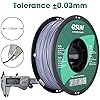
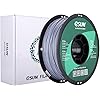
eSUN PLA PRO (PLA+) 3D Printer Filament, Dimensional Accuracy +/- 0.03 mm, 1kg, Plastic Spool, 1.75mm, Gray

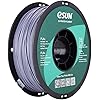
  • Based on 13,717 reviews
Condition: New
Checking for the best price...

Buy Now, Pay Later


As low as $6 / mo
  • – 4-month term
  • – No impact on credit to apply
  • – Instant approval decision
  • – Secure and straightforward checkout

Ready to go? Add this product to your cart and select a plan during checkout.

Payment plans are offered through our trusted finance partners Klarna, Affirm, Afterpay, Zip, Apple Pay, and Google Pay. No-credit-needed leasing options through Acima may also be available at checkout.

Learn more about financing & leasing here.

Selected Option

Free shipping on this product

FREE 30-day refund/replacement

To qualify for a full refund, items must be returned in their original, unused condition. If an item is returned in a used, damaged, or materially different state, you may be granted a partial refund.

To initiate a return, please visit our Returns Center.

View our full returns policy here.


Availability: In Stock.
Fulfilled by Amazon

Arrives Sunday, Aug 23
Order within 20 hours and 43 minutes
Available payment plans shown during checkout

Protection Plan Protect Your Purchase
Checking for protection plans...

Color: Gray


Features

  • 1KG net (approximately 2.2 lbs) Filament with Black Plastic Spool
  • eSUN PLA PRO 3D Printer Filament Vacuumed Sealed With Desiccant. Superb layer bonding. Several times stronger than PLA.
  • 1.75mm Filament Diameter (Dimensional Accuracy +/- 0.03mm)
  • Recommended Extrusion/Nozzle Temperature 205C - 225C
  • Spool Diameter: 8" - Spool Width: 2.50" - Spool Hub Hole Diameter: 2.05" - Inner Circle Diameter: 3.5"

Description

eSUN 3D Printer Filament: PLA PRO (PLA+) Extrusion Temperature Range: 205 to 225 Celsius PLA PRO(PLA+) Advantages: Superb layer bonding High rigidity. Good glossiness. Several times tougher than PLA Smoother finished printouts. No cracking or brittle problem. Prints are hard to break. PLA PRO(PLA+) print temperature is about 20 Celsius higher than regular PLA. Most users print at around 210 to 215 Celsius. PLA+ has a low shrinkage rate and sticks very well both to bed and layer to layer. PLA+ is a biological material, extracted and purified from corn grain, eco- friendly, odorless, and harmless to human. The product is vacuum packed with a manual. It is not easy to absorb moisture and is ok for long-term storage. It absorbs slower and less moisture than standard PLA. Many colors to choose from.

Brand: eSUN


Material: Polylactic Acid


Color: Gray


Item Weight: 1 kg


Item Diameter: 1.75 millimeters


Brand Name: eSUN


Additional Features: Enhanced Strength and Durability, Improved Print Quality


UPC: 856501006290


Manufacturer Part Number: IG-C-PLAPRO175H1


Unit Count: 35.27 Ounce


Manufacturer: ESUN


Number of Items: 1


Item Type Name: eSUN PLA+ filament, Grey, 1 Count


Model Number: PLA+175H1A


Material Type: Polylactic Acid


Color: Gray


Item Weight: 1 kg


Item Diameter: 1.75 millimeters


Frequently asked questions

If you place your order now, the estimated arrival date for this product is: Sunday, Aug 23

Yes, absolutely! You may return this product for a full refund within 30 days of receiving it.

To initiate a return, please visit our Returns Center.

View our full returns policy here.

  • Klarna Financing
  • Affirm Pay in 4
  • Affirm Financing
  • Afterpay Financing
  • Zip Pay in 4
  • Financing through Apple Pay
  • Financing through Google Pay
Leasing options through Acima may also be available during checkout.

Learn more about financing & leasing here.

Top Amazon Reviews


  • ESun PLA+ is my new standard for PLA filament
Color: Black
So im a hatchbox guy when it comes to PLA. They have excellent filament, great colors, and for 20 bucks a 1kg spool, you really just cant beat it. However, ive switched to printing a lot of PETG lately and love that. I went to ESun for my PETG, and it prints like a dream. But, i like options, and so i wanted more PLA and i was running low. Hatchbox is out of stock on EVERYTHING, and so i took a look at ESun. Their PETG is cash money, so their PLA should be great as well i assumed. Then i saw they have a PLA+ option. I love pla, but man i wish it was a bit better. Welp, ESun delivers. I doubt itll have the heat resistance that PETG does, but i know my filaments and i wont us PLA+ in a hot environment. Anyhow, im using a Original Prusa Mk3s and i loaded up a spool of the PLA+. Nothing but problems. At first. Lots of folks said use base PLA settings. NOPE. Dont do that. I looked around, some people print colder, some hotter, so its all over the place. One thing you gotta know when getting this stuff, is your going to have to mess with your temps. It was printing like garbage, stringy, blobs everywhere. I canceled the first two prints i did with this stuff about a minute in. It wasnt even done printing the brim. Yeah, that bad. So, i took my temps on my MK3s to first layer of 225, bed at 65. Second Layer and beyond i went to 220 nozzle 60 bed. Right now, im printing a yellow banana stand, and i have to say it looks AMAZING. These temps work for me, and i saved the profile since i couldnt find an ESUN profile. Again, tho, ive seen people print cooler. This is just my 3rd shot at temps and it looks good, so ill keep 225/220 - 65/60 unless i see a need to back it off a bit. ESUN, if your reading, one favor i have to ask. I love your products, but i really wish filament makers like yourselves would have on your website a part that just has Printer Profiles for your products. Maybe throw the link on the cards you put in the box with all the great information on them. You must do extensive testing, and this would take your product above and beyond anyone out there since NO manufacturer posts filament profiles on their site. And they are pretty universal. Make one for Slicer, one for cura, and youd prolly cover 90% of your user base. And wed love you for it. But yeah, if youre looking for a great spool of solid filament that prints great, ESun should be on your short list. Ill still get some hatchbox from time to time, if esun is out of stock lol. But for now, for PLA+ and PETG... im an esun guy. ... show more
Reviewed in the United States on July 27, 2020 by Corey J. Reynolds

  • This is What PLA is Supposed to Be
Color: Black
I printed a lot of PLA over the last year, so when Intservo invited me to test a spool of the new eSUN PLA PRO (PLA+) filament in exchange for a comparison review, I agreed. I'm glad I did.... this PLA PRO (PLA+) will be the filament I buy from now on. The colors are very close to the old favorite eSUN PLA colors, but the PLUS colors are a bit richer and have a deeper tone, (as near as I can tell on the several colors that I bought for the testing). But the PLA PRO (PLA+) is a LOT stronger, and more flexible after printing. To strength-test it, I ran a print with the PLA PRO+ that I had consistently had trouble with just using plain PLA. The problem print has a latch that would snap under pressure when the support was removed. (Six times in a row - very frustrating.) The PLA PRO filament printed at a slightly higher temperature than the regular PLA, and it was.....creamier. (Sorry...not a terribly masculine word....but that's what it was.) It was strong enough that I was able to remove the support without breaking the latch off into my hand for the seventh time, and it flexes enough to allow the latch to close and open easily. No fear of it cracking again. The support was not overly clingy either, which I would have expected. But it came away cleaner than regular PLA supports. Definitely a pleasant surprise. I wanted to test it on overhangs as well, so I put it up against another print that had caused trouble for me with overhang curl and heat pitting on a curved bottom surface. The underside of the egg shaped print usually developed pitting, (even with support), in PLA. I absolutely didn't believe the results of this test...which was run with NO SUPPORT for the PLA PRO (PLA+) filament, on a smaller version (heat soak effect magnified), just to see what it would do. I'll put the pictures below, because otherwise, you won't believe it either. (Keep in mind, the bottom of the white PLA egg had support underneath it, and it still looks like a mountainside. The black PLA PRO egg showed a smooth surface with ZERO support, and the top of the egg did NOT collapse! I've NEVER been able to print that egg without center support. The PLA PRO printed without it. (Gonna be reprinting all of those as well in the PLA+.) I tested a couple of Benchies - the PLA PRO handled them just fine without any added support. There was no warping or curling. (I do run a MIC6 plate with a PEI coating, so warp is not usually a problem, except on steep overhangs.) Finally, I did a test on heat resistance, and there was no significant gain in the PRO filament. Both straightened segments slumped in a 250°F (120°C) oven, at about the same time. Bottom line - this is by far the best PLA I've tested. The only thing I noticed was a few absolutely miniscule zits here and there, because I haven't dialed it in yet. It's slightly shinier than regular PLA, but the shine can be easily and uniformly knocked back with a damp Magic Eraser. Give it a try and see if you like it as well. It is so easy to print, you'll never go back to the other stuff. Update: Just printed a flat box divider that shows the flex on this stuff - the divider is 2.8 mm thick, so it would be pretty stiff (and might break) when bent this much, if it was printed from plain PLA. The curvature was not imprinted into the divider though - it flattened back out. ... show more
Reviewed in the United States on May 18, 2016 by Jules

  • The Backbone of My 3D Printing Business for 5 Years
Color: Purple
eSun PLA+ has been a staple in my 3D printing business for over five years now, and for good reason. It prints beautifully — insanely forgiving, consistent, and dependable across dozens of projects. Layer adhesion, finish, and overall reliability are top-notch. The only reason I’m giving it four stars instead of five comes down to the gray color specifically. While all the other colors are very consistent, the grays can sometimes vary a bit — occasionally leaning bluish, other times closer to a true gray. If you have to swap spools mid-print, the difference is noticeable. It’s not a deal-breaker, but it’s something to keep in mind if you rely on perfect color matching. That said, I value eSun’s color standards and print quality far more than a perfectly wound spool or fancy packaging. This filament simply works, and it has earned its place as my go-to material. The one knock I have — and the reason this is 4 stars instead of 5 — is the gray color consistency. Sometimes it leans bluish, other times it’s closer to a true gray, and if you have to swap spools mid-print, the difference is noticeable. Every other color I’ve used has been solid, though, and for me that reliability is far more important than a perfectly wound spool or fancy packaging. At the end of the day, eSun PLA+ remains my go-to filament. After hundreds (and hundreds) of spools, I can confidently say it’s one of the best values in 3D printing. ... show more
Reviewed in the United States on February 25, 2022 by Michael Jennings

  • Excellent PLA filament! The best quality parts I have every printed!
Color: Peak Green
Honestly speaking, I do not remember having bought PLA filaments from a Chinese manufacturer before. But when I got my latest 3D printer from China, the quality of the parts turned out using the sample filament that came with the printer got me thinking if I should give these products a chance. Ironically, the US made PLA filament which I had purchased a few months ago was over-sized and caused the extruder to constantly slip leading to a clicking noise so annoying that I had to kill the print! Therefore, I decided to take a chance and order this filament from eSun. And to my surprise, did it deliver! The pictures speak for themselves! To be fair, this review applies only to this shade of Green eSun filament! ------------------------ Print Settings: ------------------------ I printed the part in the pictures with a temperature of 210-deg-C and the bed heated to 65-deg-C. A bit on the higher side, but for the combination of the printer location and air circulation, this is what works for me. With the print speed set to 50 mm/s, shell thickness to 1.2 mm, 20% infill and Raft enabled, this print took about 6.5 hours to complete. Better a slow and steady good print than a hurriedly delivered crappy print! In addition, I dabbed the print bed with a popular non-toxic washable glue stick when the extruder reached 209-deg-C (see note below). ------------------------ Observations: ------------------------ First, I have never had a print where the Raft looks as good as the print does. Second, the Raft peeled clean off the print without that tacky sound you usually hear when removing the raft. Third, finish on the underside of the print looked a lot better than my prints from my stock of other filaments, and the top-side of the print had an excellent finish. Fourth and final, the color of finished part fluctuates between different shades of Green - the bright Green looks best under sunlight or bright White light. I have another roll of eSun Orange and I'm yet to test it out. I would be really shocked if it does not turn out as good. FOOTNOTE ON GLUE APPLICATION : In most 3D printers, the bed heats up first, followed by the extruder tip because it's faster to heat the tip once the bed gets to the set temperature. Therefore, it's recommended to wait until the extruder reaches closer to the set temperature before dabbing on the glue because you don't want the glue to go dry. In my case, I wait until 209-deg-C because the print kicks off at 210-deg-C as soon as the extruder reaches the temperature. Also, I buy myself some time to apply the glue by *Not* homing the printer before kicking off the print. I do so by usually moving the Z axis 30 - 50 mm above the bed before I hit the print button. This gives me time to dab on the glue as the printer slowly auto-homes. Obviously, these methods work best on open-bed printers where there's less obstruction to on the bed. And plenty of caution is recommended when working around moving printer parts and high temperatures! ... show more
Reviewed in the United States on July 30, 2017 by TimeTraveller

  • From Disappointment to Happiness!
Color: Purple
Update: I received and email; and a comment that I didn't know I had received, from William at Intservo. We talked about what to do about my prints and why they were not sticking to the print bed. He was able to narrow the problem down to the fact that I was running my print head at 190 degrees C. William suggested to try and run the print head at 215 degrees C and see what the results would be, I left the print bed alone and kept it at 65 degrees C. After going into my slicer and changing some settings, I started up the new print. In the end, the print was successful and did stick to the print bed a lot better. The only thing that I didn't really like was the smell. While the print was going, everything smelled like burning plastic, as well as something else that I really couldn't tell. Other than that, the print went well and worked much better than what I had orginally experienced. Thanks to William I was able to get back on the right track with my prints, and now I know what settings I need when I order my next role of filament from eSun! Old Review: This is the second time I have bought from eSun, and I have to say that I am disappointed. The first PLA filament thought I had bought worked well and I enjoyed the quality of the print that I was getting from the PLA. I was annoyed with the issue of eSun not doing a very good job of how they put the filament on the spool. It would always overlap itself and could cause potential snags. But at the price I was paying it was a minor thing. Flash forward to this role and I am truly disappointed in the results. First and most important I can not get this filament to stick to my print bed. Not matter if the printer is in a box, open air, printing surface at 55 degrees C or 85 degrees C, the print will not stick. The only way it will stick is with glue on the bed, and I hate doing that. This filament has already cost me a heat sink and almost cost me a print head, because of the PLA not sticking to the bed. As the printer was printing, the print came off the bed causing the filament to melt in a pool which eventually coated the print head in PLA. After the print head was completely covered in PLA, the filament had nowhere to go, so it go jammed in the bowden. I tried everything I could to save the heat sink but it was no use. After I had multiple prints fail on me I decided that I should try a different filament to see what the issue was. I had Hatchbox filament that I had laying around, so I tried it, and it will stick without any issues. So sad to say for some unknown reason this will not stick to my print bed for me, without glue. Me personally, I am not going to use glue on my print bed, so I don't think I will end up buying this again. And as a last side note, the way the filament is wrapped on the spool is terrible. I run into overlapping constantly. I haven't had a print fail because of it yet, but I am surprised I haven't had one yet with how bad it is. Sorry eSun but this wasn't a good spool. ... show more
Reviewed in the United States on September 26, 2017 by brant dotson

  • Excellent stuff, it's now part of my regular rotation
Color: Cool White
This stuff is great. Is it without compromise? No, but it's still an exceptional filament. There seems to be a misconception that it's significantly stronger than regular PLA, but that's not the case. It's actually slightly-softer, and has a slightly-lower Tg. However, I DO mean slightly... the numbers are negligible considering PLA's typical use for low-heat, decorative purposes. This isn't a secret, the filament comes with a comparison sheet and it clearly shows these numbers. The reason everyone thinks it's so much stronger is because it's MUCH more flexible than regular PLA, which as everyone knows is extremely brittle. The PLA+ prints are much easier to handle or fit into other parts since they won't snap/shatter as soon as you try to bend them slightly. This makes huge difference. As for print-ability... it's simply amazing. I've produced my best-looking prints using this filament. It handles bridges and overhangs very well, it has negligible stringiness, and it shows exceptional detail across all layer heights. I've never seen my 0.1mm prints look so good. Despite what some people say, it's not quite as easy to print as regular PLA. But is it as difficult as ABS to print? Not even close... Your bed does need to be leveled well for it to stick and it required glue stick on heated glass for good adhesion, where I found I can print regular PLA on bare heated glass. I had no problems with warping, but I did need to let the part cool down naturally on the platform before attempting removal. When I first attempted to remove a print warm it did warp slightly after cooling. In summary, it's sort of like PLA (with all it's benefits) inherited the flexible characteristics of ABS at the expense of 10% more print difficulty. It's doesn't have enough strength or heat resistance to replace ABS, but one could easy replace all their PLA with PLA+ and be very happy. It's certainly worth the $3 extra per spool. I have no reason buy regular PLA anymore. In case you're curious, here are my basic settings. Extruder Temp = 215 C Bed Temp = 70 C Speed = 45-60mm/s Cooling Fan = 100% entire print Additions = Pre-extrusion brim enabled, no raft Adhesion = Elmers purple glue stick on glass ... show more
Reviewed in the United States on December 18, 2016 by Jared Walters

  • The better PLA
Color: Brown
UPDATE: After posting this review, I got an offer from INTSERVO for a free roll of black PLA+ for an honest review. With the addition of black to the other spools I had already purchased, I had almost every color needed to print a project that caused normal PLA to break during assembly and that is the MakerBot Nutcracker (thing 579567 on Thingiverse). I made a dozen of these a couple years ago for family as Christmas presents. I had to file down the assembly tabs since with regular PLA, they would snap when assembling. I'm happy to report that when I built it out of PLA+, I had no tabs break (well, I ended up with two broken ones but that is because I bent the piece when assembling). I was able to put the whole thing together without having to glue the parts like I did with PLA. Once part, the mustache, was extremely hard to get right with PLA because of the overhangs. I would have to do a lot of cleanup work on it. With PLA+, I was able to use it as is right off the printer! I also had problems with stringing between parts with PLA. Not with PLA+. The pictures are the PLA+ parts on the printer. I used the same settings as I did for PLA, but upped the bed temperature from 60 to 65 and the hot end from 205 to 220. Now if they would just offer a Tan color, I could do it in all PLA+. I'm going to join in here a sing the praise of eSun's new PLA PRO (PLA+). I took advantage of the sale price ($3.00/spool - better than nothing) and took a gamble buying 7 rolls untested. I have used eSun PLA and PETG for some time and have never had any real problems with it so figured the risk was worth it. Also, when you buy 6 at once, you get another 5% off. So far I have only printed with the brown and it is coming out perfect. No build up like I get with PETG after awhile. I normally print in PLA for most things, but use PETG when I know the object could be subject to some flexing. In testing the strength, I printed a 2mm thick bar. If printed in PLA, it would snap after just a few degrees of deflection. With PETG, I can bend it in half without it breaking. The PLA+ was in between the two, but closer to PETG. I was able to bend it to over 90 degrees without it breaking. At about 135, it did break, but not snapped in two like PLA. This is going to be my new replacement filament as I use up my PLA stock. ... show more
Reviewed in the United States on May 26, 2016 by ElmoC

  • Best PLA yet!
Color: Peak Green
Best PLA yet! A nice balance of strength, flexibility, and layer bonding. Prints nice and clean, very little stringing or oozing. Much stronger than standard PLA, even thin pieces will flex a lot before deforming or cracking. This new filament may win me back from PETg. (Update after first month) Smaller prints were perfect, but after printing some large multi-piece prints my transition from base PLA settings was not as seamless as others have posted (Maybe it's just this color?) With the larger travel moves and multiple components, I was getting some bad stringing, irregular layer lines, blobs, and zits. Tinkering with coast, wipe, and retract wasn't helping as much as I hoped, but after turning the temperature up an additional 10 degrees over where I started I'm getting much better results. I post this not as criticism of the product, but to help others that might struggle with quality. Using a Makerfarm Pegasus printer with direct-drive extruder using an E3D V6 hot end, and slicing with S3D here are the changes over my base PLA configuration, this is really good, but not as perfect as I want so I may update again after more time and tweaking: - Temp: 215c for all layers (Others had posted 205 after the first layer, and that's where I started.) - Retract: 2.0mm @ 40mm/s (was 1.2) - Coast: Yes, 0.2mm - Wipe: Yes, 5mm (I had been using it already, but many don't wipe with PLA so I thought I'd add this) So, verdict after the first month. Pros: Flexibility, Layer bonding, Shine, not brittle at all. Cons: Strings a bit worse, finicky ooze control. ... show more
Reviewed in the United States on June 8, 2016 by Mike

Can't find a product?

Find it on Amazon first, then paste the link below.
Checking for best price...