
Search  for anything...

EF ECOFLOW DELTA Pro 3 4096Wh Extra Battery, Expansion Lifepo4 Battery

  • Based on 714 reviews
Condition: New
Checking for the best price...
$1,799.00 Why this price?
Save $800.00 was $2,599.00

Buy Now, Pay Later


As low as / mo
  • – Up to 36-month term if approved
  • – No impact on credit to apply
  • – Instant approval decision
  • – Secure and straightforward checkout

Ready to go? Add this product to your cart and select a plan during checkout.

Payment plans are offered through our trusted finance partners Klarna, Affirm, Afterpay, Zip, Apple Pay, and Google Pay. No-credit-needed leasing options through Acima may also be available at checkout.

Learn more about financing & leasing here.

Selected Option

Free shipping on this product

Non-returnable. Transportation of this item is subject to hazardous materials regulation

View our full returns policy here.


Availability: Only 3 left in stock, order soon!
Fulfilled by Amazon

Arrives Saturday, Oct 24
Order within 10 hours and 57 minutes
Available payment plans shown during checkout

Protection Plan Protect Your Purchase
Checking for protection plans...

Set name: DELTA Pro 3 Extra Battery


Features

  • [Pair for Additional Needs] The rated capacity of one battery is 4kWh. The capacity can be expended up to 48 kWh by connecting additional DELTA Pro 3 units or extra batteries in parallel. It also accommodates charging via a gas generator for both the main product and extra batteries, allowing for an expansion up to a maximum capacity of 48kWh.
  • [Reliable Power Endurance] DELTA Pro 3 supports LFP battery which provides 4000 cycles till it lowers to 80% capacity. Thats almost 11 years of regular use. Every battery houses an integrated BMS module to regulate its voltage current, and temperature, keeping it safe,secure, and long-lasting.
  • [Energize Almost Everything] The EcoFlow DELTA Pro 3 supports 120V/240V voltage and has a 4000W output (6000W with X-Boost, scalable up to 12000W), powering nearly all essential home appliances, such as a 3-ton* central AC or a 1 HP water pump.
  • [Forget Refueling] Featuring a 4096Wh LFP battery capacity, expandable to 48kWh with extra batteries or smart generators, providing 2-4 days of whole-home backup power. With 7 unique and 18 combo charging methods like AC wall outlets, solar panels, gas generators, EV charging piles, or the EcoFlow smart home panel 2, you can forget fuel worries.
  • [Explore the Secure Feeling] The EcoFlow DELTA Pro 3 features automotive-grade LFP cells and IP65-rated CTC battery pack technology, safeguarding battery health and extending lifespan. Enjoy peace of mind with a 5-year warranty and exceptional customer service, available anytime for any issues.

Description

DELTA Pro 3 DP3+Dual Fuel Generator DELTA Pro 3+Extra Battery DELTA Pro 3+400W DELTA Pro 3+50 Amp Hub

Brand: EF ECOFLOW


Wattage: 4096 watt-hours


Fuel Type: Non-gasoline


Power Source: Solar Powered


Recommended Uses For Product: Camping, Residential


Item Weight: 72 pounds


Voltage: 120 volts_of_alternating_current


Output Wattage: 4000


Special Feature: EcoFlow DELTA Pro 3 Smart Extra Battery


Included Components: EcoFlow DELTA Pro 3 Smart Extra Battery


Wattage: 4096 watt-hours


Fuel Type: Non-gasoline


Power Source: Solar Powered


Recommended Uses For Product: Camping, Residential


Voltage: 120 volts_of_alternating_current


Output Wattage: 4000


Additional Features: EcoFlow DELTA Pro 3 Smart Extra Battery


Engine Type: Battery


Total Power Outlets: 3


Starting Wattage: 4000 watts


Running Wattage: 4000 watts


Frequency: 50 hertz


Runtime: 4 minutes


Item Weight: 72 pounds


Item Dimensions L x W x H: 8.49"L x 11.61"W x 27.34"H


EU Spare Part Availability Duration: 5 years


Brand Name: EF ECOFLOW


Included Components: EcoFlow DELTA Pro 3 Smart Extra Battery


Model Name: EFD521-EB


Model Number: EFD521-EB


Item Highlight: with 11-Year Lifespan, Backup for Home Use, Camping Accessories, Emergencies, Power Outages, RVs


Number of Packs: 1


Number of Items: 1


UPC: 842783143013


Unit Count: 1 Count


Manufacturer: EcoFlow


Item Type Name: power-generators


Manufacturer Part Number: EFD521-EB


Warranty Description: 5 Year Manufacturer


Frequently asked questions

If you place your order now, the estimated arrival date for this product is: Saturday, Oct 24

This item is non-returnable:

Non-returnable. Transportation of this item is subject to hazardous materials regulation

View our full returns policy here.

  • Klarna Financing
  • Affirm Pay in 4
  • Affirm Financing
  • Afterpay Financing
  • Zip Pay in 4
  • Financing through Apple Pay
  • Financing through Google Pay
Leasing options through Acima may also be available during checkout.

Learn more about financing & leasing here.

Top Amazon Reviews


  • EF ECOFLOW DELTA Pro 3 4000Wh Extra Battery: Officially More Reliable Than My Wi-Fi
Set name: DELTA Pro 3 Extra Battery
I bought this extra battery because I already had the Delta Pro 3 and I live in a place where the power grid treats “reliability” like it’s an optional upgrade. I figured, why stop at 4kWh when I can go full supervillain lair and stack another 4kWh on top? So I did. Now I’m sitting at 8,000Wh of pure, unadulterated “I laugh at blackouts” energy. This thing is stupidly good. Charges fast, runs quiet, powers literally everything I throw at it without breaking a sweat. Fridge? Check. AC unit? Check. Wife’s entire skincare fridge that somehow uses more electricity than the actual refrigerator? Also check. I ran the house for three days during a storm and the only thing that died was my excuse to skip doing the dishes (“Sorry honey, no power”). The expansion is seamless—clicks in like it was born to be there. The app actually works (unlike certain streaming services I could name), and the build quality feels like it could survive being dropped off a truck driven by someone who failed driver’s ed. Only complaint: it’s heavy. Like, “I now have a new core workout called ‘moving the EcoFlow’” heavy. But honestly? Worth it. I’d rather deadlift freedom than beg the electric company for mercy. If you’re on the fence, just get it. Your future self—the one sipping cold beer while the neighbors argue over who gets the last extension cord—will thank you. 10/10. Would survive the apocalypse again. ... show more
Reviewed in the United States on February 9, 2026 by Ginger Mc

  • Use
Set name: DELTA Pro 3
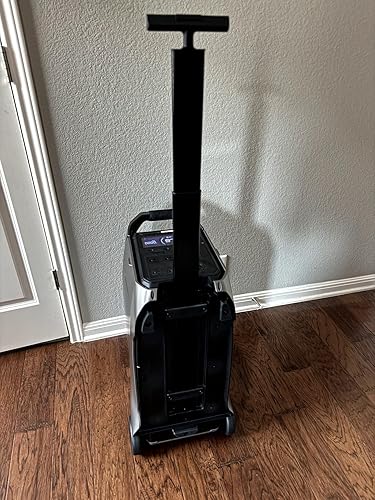
I am very satisfied with the EcoFlow DELTA Pro 3. It is powerful, reliable, and easy to use. It charges quickly and provides enough energy to run several essential appliances during a power outage. The design is modern, the wheels make it easy to move, and the display clearly shows all the important information. It is an excellent investment for emergency backup power, camping, or everyday use. I highly recommend it! ... show more
Reviewed in the United States on August 28, 2026 by Marice Chirino

  • Great mobile power station!
Set name: DELTA Pro 3
The other reviews already went into a great deal of details into what's new with the Delta Pro 3, so I won't rehash them. It makes for a great portable power station, and improves upon its predecessor, the Delta Pro (which I also own). The improvements include, but not limited to: - Higher output and capacity: 4000W and 4000Wh vs 3600W and 3600Wh in the Delta Pro. - Sleeker silver exterior design. - The Extra Batteries can now stack directly on top of the DP3. - Significantly beefier solar charging capabilities: 2600W from 2 ports (30-150V/15A, 1600W Max. 11-60V/20A, 1000W Max.). This compares to Delta Pro's single port (11-150V/15A), 1600W Max. - It is much quieter - the cooling system has been significantly improved, and is now MUCH quieter. Most of the time, I can't even hear it. - It can now do 240V output from a single DP3 unit. This is in contrast with the Delta Pro, which required two units AND a Double Voltage Hub accessory for 240V output. - It now has neutral-ground bonding feature built in and can be toggled in the app, where as this capability required an extra accessory with Delta Pro. It's the last two points I want to expand on. Delta Pro owners will know that to charge their EVs, they needed a grounding adapter. This is because most EV chargers check for a neutral-ground bond and won’t function without it (e.g. the Tesla Universal Mobile Charger). This actually doesn't apply to just EV chargers, many devices and RV electrical systems checks for neutral-ground bond as well. The downside of using the EcoFlow grounding adapter is that you have to connect a bunch of extra wires and dongle. And using a non-EF grounding adapter with a single DP has the danger of frying the DP if you forgot to remove the adapter before charging (EF adapter disables charging when connected). One of the really cool things is that the NG bonding feature is now built into Delta Pro 3. You can now toggle this directly in the app, which also explains that AC charging is disabled while using this feature. I tested two methods of charging: 1. 240V charging using a L14-30 (front outlet) to 14-50 adapter, and the Tesla UMC. 2. 120V charging using a special TT-30 (side outlet) to 14-50 EV charging adapter, and the Tesla UMC. At 240V, you can see that I was able to hit the max output of 4000W. I held it at this rate for 30 minutes. The DP3 didn’t even break a sweat. At 120V, I was able to max out the Tesla UMC at 32A. This is technically beyond the TT-30’s max rated current output of 30A, but the DP3 handled it like champ. I ran the battery down to empty this time. Do note that the output current here is much higher than at 240V EV charging (32A vs 17A), which generates a lot more heat. So after discharging in my hot garage, the DP3 needed to cool down for about 45 minutes before it’s able to start recharging. Whereas after the 240V EV charging test, I was able to start recharging the DP3 right away. Not a big deal, just something to be aware of. ... show more
Reviewed in the United States on July 13, 2024 by Phoenix Down

  • Niceeeee Power Station
Set name: DELTA Pro 3
After investing in this power station, it was long after purchasing it that we needed to use it during a power outage. We bought this just for the fridge to keep my medicine refrigerated and not waste food!!!! Just using the fridge with it, lasted for a whole day and a few more hours….Impressive! Unfortunately, because our power was out for (3) days, we took it by a relative with power to recharge it for about 4 hrs and went to have dinner. We kept the fridge door closed until we brought the power station right back home. Works like a charm…..It’s expensive, so keep watching out for sales. It’s very heavy, but easily to move around on wheels. ... show more
Reviewed in the United States on August 11, 2026 by L’J

  • Catastrophic System Failure (Error 71) & Nightmare Warranty Support
Set name: DELTA Pro 3
I purchased the DELTA Pro 3 to serve as a reliable home backup power solution. Instead, it suffered a catastrophic system failure (Error 71) that permanently locked the Battery Management System (BMS). The unit reads 100% capacity but refuses to activate any AC or DC outputs. Hard resets do nothing. It is a completely dead $2,100 paperweight. However, the product failing is only half the issue. EcoFlow’s customer service and warranty logistics are appallingly incompetent, specifically when it comes to US DOT shipping laws. Because this is a 115+ lb lithium-ion battery, it is legally classified as a Class 9 Hazardous Material (UN3480). You cannot just drop this off at a retail shipping store. It requires specialized dangerous goods documentation to legally transport. Over the course of three weeks, EcoFlow's support team has proven they have no idea how to legally ship their own products: They initially sent me a standard FedEx Ground label with no Hazmat designation or external warning stickers. The FedEx sorting hub illegally flagged it, rejected the shipment, and sent it back to my house. After I complained, they sent a manual Hazmat certification form but illegally listed my personal cell phone number as the 24/7 Hazmat Emergency Response contact. FedEx rejected it again because federal law requires a certified corporate emergency responder (like CHEMTREC) for dangerous goods. They also failed to provide the mandatory OP-900 shipping system form. After FedEx rejected it a second time, they promised to issue a specialized UPS label over the weekend. It has now been three weeks since I first contacted them, and I am still being ghosted. I am now trapped with a broken 120-pound hazardous material in my house that I cannot legally mail back, while EcoFlow drags their feet on fulfilling their 5-year warranty. Do not buy this unit for emergency backup. If it breaks, you will be entirely on your own, fighting with frontline customer service agents who do not understand basic DOT freight regulations. ... show more
Reviewed in the United States on July 16, 2026 by kexol

  • The Echoflow 3 delta pro gives you 120/240 volt power
Set name: DELTA Pro 3
The echoflow Delta Pro 3 is a well engineered and attractive product that allows you to have 120/240 volt AC split phase power from lithium batteries. Anker makes a good competitive product that sells in the same price range as the Echoflow Delta Pro 3. Before you buy the Echoflow you do a product search by looking at the available selection of Lithium battery devices on Amazon. Then you should look at YouTube to see people's comments on those products. You also need to be aware of the advantages and disadvantages of using Lithium batteries as opposed to other types of batteries. That is quite a bit of research work that you should do if you want to get the best product for your needs. I chose the Ecoflow because it is an established manufacturer, has a good track record, and has the specific features that I need. 1) I have a couple of gas generators that provide adequate power but they use an alarming amount of gasoline. I can quickly recharge my Echoflow using the (provided) 120 volt AC power cord that plugs into the Echoflow. The 7000 watt generator handles that load with ease and can simultaneously run the rest of the house's power needs. I can run the gas generator for a couple of hours per day and fully recharge the Echoflow. Running the generator for this limited time period is really quite fuel efficient. 2) The Echoflow has a 30amp self locking outlet which is the same as on my gas generator. I remove the power cord from the gas generator and plug it into the Echoflow and am able to operate the house using the Echoflow for the remainder of the day. I can even run my 240VAC well pump! 3) I can extend the runtime of the Echoflow by plugging in a few portable solar panels. more runtime in the future I can double my battery storage by buying another battery pack. If I want to double my maximum wattage I can buy another Delta Pro 3 and use a cross connect kit so I wind up with needing a 50 amp plug & cable rather than a 30 amp cable. A recent one day power outage showed me that this whole system works quite well and I don't expect that I will need to buy an additional battery or an additional Delta Pro 3 unit. Finally, I should mention a few problems: 1) The on-line user manual needs to provide much more detail about the unit. 2) The various plugs and switches need to be labeled right there on the machine. 3) Right below the AC power input cord there is a slide switch. As you face the rear of the unit moving the switch to the left causes the AC outlet to charge at its maximum rate of about 1800 watts. This is great if you have a 20 amp 120 volt outlet. If you are plugging into a small generator or a 15amp house outlet you need to slide the switch to the right (in the manual this is called the "adjust" position.) You also need to use the cell phone app so you can adjust the maximum charge rate. 4) The cell phone app is exceedingly useful and you should not buy this Echoflow unit unless you are willing to download the app to your cell phone. 5) Lithium-ion battery devices all suffer from have a quite limited temperature operating range. The ideal operating temperature is between about 40 degrees F. and 88 degrees F. The unit should never be exposed to less than 30 degrees F. or more than 115 degrees F. 6) The manual cautions you to never allow the unit to get wet. All that being said, I found that the Delta Pro 3 is an excellent match for my needs. ... show more
Reviewed in the United States on July 19, 2024 by Kindle Customer

  • Gets the job done!
Set name: DELTA Pro 3
overall its been really great to have as a backup power source. its extremely well build but I have to knock it for one main reason. You cannot always control how much wattage your charging rate is. If you have a limited power source that you are trying to keep at a constant wattage feeding this, once you get to 100% capacity the ecoflow turns into a pass through mode which in turn will ramp to whatever the incoming power source can handle. Unfortunetly for me the reason i want to limit input is to not trigger a fused outlet on my rivian truck. I needed to stay under 1500w to not trip that fuse. The work around that I did was to use an ac->dc power supply coming out of the trucks inverter. I used one that is less than the trucks output max. Then used the DC power cords of that power supply and plugged into the solar input on the ecoflow. This workaround works however its not as efficient since im going back and forth between AC and DC multiple times. Outside of that its been a stellar backup energy source for my house and would recommend as a great buffer between a lower wattage power source and your house generator plug. ... show more
Reviewed in the United States on January 29, 2026 by Keegan Brosman

  • Delta Pro vs Delta Pro 3 vs Goal Zero Yeti Pro 4000
Set name: DELTA Pro 3
When the original Delta Pro was announced, that BEAST of a battery surprised me with its design. This was coming from someone who had reviewed over a dozen battery brands, including Goal Zero, Jackery, BigBlue, Bluetti, Rockpals, Aimtom, and the like. Goal Zero and Jackery were two of my favorites, but the EcoFlow Delta Pro surprised me indeed and had skyrocketed the company to one of the top brands I had tested and used up to that point. Fast-forward two years later, and EcoFlow had since released the Delta Pro Ultra (with a radically different design) and then the newest family member, the Delta Pro 3. I wondered what happened to a Pro 2, but the company apparently decided to skip that number. ANALYSIS The EcoFlow Delta Pro 3 (DP3) continues to pack impressive features and updated technology over its predecessor, the Delta Pro (DP1), raising the battery capacity from 3,600Wh to 4,096Wh. It also increased its already-impressive AC inverter's output from 3,600W of continuous power to 4,000W, and the surge from 7,200W to 8,000W. Goal Zero's Yeti 4000 Pro only offers 3,600W and 7,200W, respectively. What do these numbers mean? How much energy a battery can store is measured in Wh (Watt-hours), and how much power is used or produced in W (Watts). That gives the DP3 enough battery and output strength to power practically anything in the house or work space. Couple that with the 240V AC Out port, and even a heat pump, central air conditioner, or water heater can run off it. OUTPUT POWER Should the DP3's 4,000W output capability not be enough, two more units can be linked in parallel to provide up to 12,000W. This would allow the three Delta Pro 3's to power multiple, high-energy appliances at the same time, such as the central air conditioner, a microwave, and a tankless water heater. Truly, that is IMPRESSIVE. Delta Pro 3's UPS feature allows devices to run off the AC wall outlet in pass-through mode, and as soon as a blackout occurs, it switches to the internal battery within 10 ms. I simulated this by unplugging the charging cable and watching my desktop computer not even reboot. Nicely done. Note: Using a battery as a UPS (charging and outputting at the same time) could shorten its lifetime. ENERGY STORAGE Battery capacity can be expanded from 4,096Wh to 12,288Wh by attaching 2 DP3 Extra Batteries (at 4,096Wh each) on top of the DP3, allowing it to store enough energy to power a whole house (via its EF Smart Home Panel 2 transfer switch) for several days. Goal Zero offers the same functionality via its Haven 10 system. EcoFlow, in its marketing material claims that capacity can be expanded to 48,000Wh by linking 3 DP3s (12,288Wh), 3 DP3 Extra Batteries (12,288Wh), and 3 EF Smart Generator 4000's (which generate power by burning gasoline). In a way, EF cheated here a bit with its marketing by including a hybrid gas generator into the mix. Going purely on the batteries alone, the maximum capacity is 12,288Wh x 2 = 24,576Wh. Goal Zero's Yeti Tank Pro system can go up to 20,000Wh. Either way, expanding to such capacity can become prohibitively expensive ($30,000+) and may be better-suited for businesses. Do note that should you stack DP3 Extra Batteries on top of the main unit, the design immobilizes the DP3: it cannot easily be removed for use on a road trip. Goal Zero, on the other hand, stacks its Yeti 4000 Pro on top of its Yeti Tank Pro expansion batteries. This allows the main unit to be transported to a camp or worksite. But, considering how heavy the DP3 is at 115 lbs -- the heftiest power station I have ever reviewed -- I can see why EF decided not to stack the main unit on top of the expansion batteries. BATTERY CHEMISTRY There had been a lot of debate over whether Nickel Manganese Cobalt (NMC) or Lithium Iron Phosphate (LiFePO4) was better. Both are Lithium-ion batteries. Goal Zero debuted with Lead-Acid batteries that were bulky and heavy. Today's devices use Lithium-ion -- commonly NMC or LiFePO4 (LFP) chemistries -- for more power in a smaller, lighter package. NMC, however, is more volatile than LiFePO4 and becomes riskier as more cells are packed together. Goal Zero and Jackery used NMC for some time whereas EcoFlow and Bluetti use LiFePO4. Jackery launched its first LiFePO4 model in mid-June 2023 and Goal Zero in October that year. LiFePO4 batteries are less volatile (safer), more usable in extreme temperatures, and have a higher charge cycle count (battery lifetime) than NMC. But, they are also bigger and heavier. CAUTION: Lithium-ion (LiFePO4 and NMC) batteries do NOT like to remain discharged at 0% for prolonged periods of time. If you let your battery stay at 0% for too long, you may not be able to charge it again without specialized equipment. Keep them at between 20-80% while in storage to maximize their lifetime. CHARGING The DP3 can be charged from the AC wall outlet at 1,800W, but also from EV (Electric Vehicle) stations. The latter, however, I find rather impractical because you are likely NOT going to bring the DP3 along on a ride. Where the battery DOES shine is its ability to be charged from solar panels via two simultaneous inputs: 1,000W and 1,600W for a total of 2,600W. Goal Zero's Yeti Pro 4000 can charge at up to 3,000W, and the EF DP1 at 1,600W. Delta Pro 3 can be fast-charged from empty to 80% in about 50 minutes from the AC wall outlet at 1,800W, and about 3 hours to 100%. Goal Zero's Yeti Tank Pro 4000 can similarly be recharged to full in about 3 hours at 1,800W (AC Wall) or 2 hours by 3,000W solar. The DP3 thankfully continues to offer one feature that highly impressed me about the original: the ability to combine AC wall charging, solar panels, and the EF Smart Generator 4000 for an impressive fast-charging of up to 7,000W! The DP1 could only go to 6,500W, and Goal Zero's best, the Yeti Pro 4000, only to 3,000W. I cannot imagine someone needing to charge THAT fast, however. EcoFlow Marketing at play here, folks. Li-ion LiFePO4 can be charged an estimated 4,000 cycles before the battery capacity drops to 80% of its original. What that means is that after about 10 years, the DP3 can no longer store 4,096Wh, but just 3,277Wh. It then drops another 80% to 2,621Wh after another 4,000 cycles. That still makes it last considerably longer than Li-ion NMC batteries commonly found in cellphones. Tip: AC charging is prioritized over DC when both are connected simultaneously. Never use an extension cord to charge the DP3 with unless it's a heavy-duty one. PHYSICAL DESIGN EcoFlow did a great job with the look of the power station. It continued its more luxurious design on the heels of its EF Glacier car freezer that I previously tested but have not yet published a review for. Sleek, modern, and expensive-looking. It certainly looks and feels more premium than the original DP1, although I do prefer the tough, curvier style of the Goal Zero Yeti Tank Pro 4000. Unlike its predecessor, however, the DP3 now has its side port covers slide into the body instead of popping or flipping out. The latter made the DP1 sometimes frustrating to put away. UV coating was applied to the DP3's exterior, but what benefit that provides, I do not know. Prevent the power station from having a sunburn? EcoFlow rates the power station's weather protection to IP65: the higher the digits, the better. First number refers to protection against solids, and the second against liquid ingress. Thus, the DP3 is dust-tight (6 is the highest level) and can withstand water jets (ie. rain) with the "5" rating. The highest liquid protection is level 9. I really liked the original DP1's telescoping, retractable handle: extend it to one of two lengths to tilt the battery backwards, then pull and roll the power station across the house — at least, that's the theory. Dragging the heavy battery on uneven grounds (like gravel) or traversing stairs was a huge challenge with the Delta Pro's small wheels. Luckily, the DP3's bigger wheels now make it easier to be transported around across rougher terrain. Physically, the DP3 is longer, slightly wider, and heavier than the original Delta Pro. I am not a fan of this. Did you notice the weight I had mentioned? One hundred and fifteen (115) pounds is no joke for the average person to carry up a flight of stairs! It managed to be even heavier than the original's 99 lbs! The EcoFlow tries to shed some of its LiFePO4 battery weight and cost by using a mostly plastic exterior. Although the Delta Pro 3 still looks quite nice, Goal Zero's Yeti Pro 4000 series is housed in a mostly metallic enclosure that helps dissipate heat and is more durable. Metal withstands impact force better than plastic, no doubt about that, but also adds weight. Two distinctive, exterior design philosophies each with their own pros and cons. Delta Pro 3 is physically larger than the same-capacity Yeti Pro 4000, for some reason. ADDITIONAL FEATURES The Delta Pro 3 can be remote-controlled via the EcoFlow smartphone app or a physical display unit that is ideal for homes or RVs. EF's app contains a great amount of data, insight, and configurable options. EcoFlow's Oasis is a new feature that uses Artificial Intelligence (AI) to optimize charging and discharging by learning usage patterns and taking energy cost and weather into consideration. It can also interact with other IoT (Internet-of-Things) devices throughout the home, enabling automation for things like turning on the house's fans when the thermostat reaches 75F degrees. However, IoT devices are prone to hacks. My security reocmmendation is to put the DP3 and other IoT's onto a separate WiFi network from your main one. PRICING EcoFlow generally prices its products lower than the market leader, Goal Zero, but for some reason, the DP3 actually costs more than what the GZ Yeti Pro 4000 goes for at the time of this writing. Or, GZ lowered its price in response to the DP3's release ;) The joy of competition and consumer choice! GRIPES Not everything is to like about the Delta Pro 3. It is the largest, heaviest power station I have ever come across. Picking up its 115 lbs and onto the vehicle is back-breaking! Unlike its predecessor, it also came with fewer accessories (cables, specifically), has no built-in 12V cigarette output port (a dongle is required, but not included), and its display -- though in color but not as colorful as the DP1 -- is much more difficult to read at most angles than the Goal Zero Yeti Pro 4000. FINAL THOUGHTS Overall, it both pains and delights me to see the Delta Pro 3 continuing to offer some impressive, modern features, but in some ways it also took a few steps back from what the original DP1 offered. Its large size and weight makes it more suitable as a permanent fixture inside the garage than be a portable powerhouse. It also did not surprise nor impress me as much as the DP1 did when it turned Goal Zero's Yeti X series upside down -- probably because GZ's Yeti Tank Pro 4000 made great strides to catch up and even regain leadership in some aspects. Nonetheless, the DP3's battery capacity, expansion and interconnectivity options, and power input/output capacities make the DP3 an excellent choice. ... show more
Reviewed in the United States on June 26, 2024 by YuenX

Can't find a product?

Find it on Amazon first, then paste the link below.
Checking for best price...