
Search  for anything...

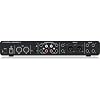
Behringer U-PHORIA UMC404HD Audiophile 4x4, 24-Bit/192 kHz USB Audio/MIDI Interface with Midas Mic Preamplifiers

  • Based on 2,388 reviews
Condition: New
Checking for the best price...
$139.00 Why this price?
Save $10.99 was $149.99

Buy Now, Pay Later


As low as $23.17 / mo
  • – 6-month term
  • – No impact on credit to apply
  • – Instant approval decision
  • – Secure and straightforward checkout

Ready to go? Add this product to your cart and select a plan during checkout.

Payment plans are offered through our trusted finance partners Klarna, Affirm, Afterpay, Zip, Apple Pay, and Google Pay. No-credit-needed leasing options through Acima may also be available at checkout.

Learn more about financing & leasing here.

Selected Option

Free shipping on this product

30-day refund/replacement

To qualify for a full refund, items must be returned in their original, unused condition. If an item is returned in a used, damaged, or materially different state, you may be granted a partial refund.

To initiate a return, please visit our Returns Center.

View our full returns policy here.


Availability: In Stock.
Fulfilled by Adorama

Arrives Wednesday, Oct 7
Order within 2 hours and 16 minutes
Available payment plans shown during checkout

Protection Plan Protect Your Purchase
Checking for protection plans...

Size: UMC404HD


Style: Audio Interface


Features

  • 4x4 USB 2.0 Audio/MIDI Interface for recording microphones and instruments
  • Audiophile 24-Bit/192 kHz resolution for professional audio quality
  • Compatible with popular recording software including Avid Pro Tools, Ableton Live, Steinberg Cubase, etc.
  • Streams 4 inputs / 4 outputs plus 1x MIDI I/O with ultra-low latency to your computer, supporting Mac OS Xp and Windows XP or higher
  • 4 state-of-the-art, MIDAS designed Mic Preamplifiers with +48 V phantom power. "Built-like-a-tank", impact-resistant metal chassis Designed and engineered in Germany

Description

BEHRINGER U-PHORIA UMC404HD. Maximum input level : Mic: -4 dBu / Line: +20 dBu / Instrument: -3 dBu, Frequency response: 10 Hz – 43 kHz (0 / + 0.3 dB)Main Outputs on balanced XLR and 1/4" TRS connectors.

Brand: Behringer


Compatible Devices: Personal Computer


Supported Software: Avid Pro Tools, Ableton Live, Steinberg Cubase


Connectivity Technology: USB


Number of Channels: 4


Compatible Devices: Personal Computer


Supported Software: Avid Pro Tools, Ableton Live, Steinberg Cubase


Connectivity Technology: USB


Number of Channels: 4


Operating System: Windows


Audio Input: USB


Maximum Sample Rate: 192 KHz


Item Dimensions D x W x H: 11.5"D x 5.12"W x 1.81"H


Item Weight: 2.7 pounds


Brand Name: Behringer


Number of Items: 1


Manufacturer: Music Tribe US


UPC: 748252142146 888365527864


Global Trade Identification Number: 46


Unit Count: 1 count


Item Type Name: Audio Interface


Model Number: UMC404HD


Manufacturer Part Number: UMC404HD


Warranty Description: Please refer to http//www. Music-group. Com/warranty. Aspx.


Frequently asked questions

If you place your order now, the estimated arrival date for this product is: Wednesday, Oct 7

Yes, absolutely! You may return this product for a full refund within 30 days of receiving it.

To initiate a return, please visit our Returns Center.

View our full returns policy here.

  • Klarna Financing
  • Affirm Pay in 4
  • Affirm Financing
  • Afterpay Financing
  • Zip Pay in 4
  • Financing through Apple Pay
  • Financing through Google Pay
Leasing options through Acima may also be available during checkout.

Learn more about financing & leasing here.

Top Amazon Reviews


  • Great value, so far so good
So far I can't complain. The device does everything it's supposed to do that I have tested so far. That's everything except MIDI. Looking at the aggregate reviews of this product and its siblings on Amazon you will see a really mixed bag of results including as much as 12% one star. That can be a bad sign, but not necessarily. Looking at the reviews of this exact product on another web site that sells musical and pro-audio exclusively the aggregate rating there is higher with a near-zero fraction of very low ratings. That fact combined with the low cost of the product made it worth taking a chance on. At this price point, compared with what I will have to pay for a different very high-end product that pretty much takes out all the risk makes this Behringer product "trial" essentially disposable. For me, that's pretty much how I have to look at the costs of these things. That won't be true for everyone. So my experience with this so far: Set it up with some audio sources to the inputs, verified they were routing through to the headphone output, made sure I understood how to use the controls associated with this basic mode of operation. All good. Tested it with a CD player, a guitar (through an effects box), and a microphone. Phantom power is good, but it's all-or-nothing for all four inputs so watch out for that if you are using mixed microphones. Downloaded the UMC driver from Behringer and installed it. No problem, no conflicts. This is on Windows 7. Make sure you're up to date on windows updates, and read the release notes for the driver thoroughly. There are a couple of things that will break the driver due to missing updates or non-default group policy. It's all spelled out in the release notes. This alone probably accounts for half of the "didn't work with my computer" problems. After installing the drivers I connected the device to the computer for the first time. It was recognized and appeared in the driver's on-screen device list/manager window. This is a nice feature of the driver. You can't do a ton of stuff with it but at least you can see what's connected and you can do some basic configuration. Next thing I did was start my DAW. I'm using the current (free) version of Cake Walk by BandLab. I figured it would see the new audio device and ask me if I wanted to switch my input and output assignments to this device. What it actually did was blue screen the computer! And it was not a fluke. Totally repeatable, as long as the 404's usb cable was plugged in. But it started with no problem with the 404 disconnected. Once Cake Walk was running I connected the usb from the 404 again and everything was ok. Cake walk recognized the audio devices and I switched my inputs and outputs over to it accordingly. With that step done, Cake Walk now opens and closes and opens again while the 404 is connected with no problems. I would have to say it's a toss-up between blaming the UMC driver or Cake Walk for this initial problem. It doesn't matter, it was just a transient. So now my audio is going in and coming out of the computer. I'm really just learning Cake Walk so I'm not doing a lot of complex tests at this point. I recorded some audio off the input from the 404 and played it back through the 404 and that all worked. Audio quality is fine. I'm not an audiophile and I'm not using this for professional recording and it suits my needs for now. A couple of negatives: Phantom power is not individually selectable per input. Everyone will complain about this. The headphone / monitor output on the front panel can only listen to two of the four output channels (audio coming from the computer) at once. A pushbutton on the front panel selects between outputs 1+2, or 3+4. You cannot get all four at once, and this is quite a limitation if you're not using a mixer. Overall I'm totally happy with this so far. I have not experienced any of the complaints that I have read in other reviews. It will be interesting to see if it holds up over time. ... show more
Reviewed in the United States on November 30, 2018 by Christopher L. Barber

  • Solid build. Great specs. Dead simple driver. What more could you ask for?
I admit I was a little skeptical of Berringher. I’ve had one of their stomp-box DIs for several years and have never been that impressed with it. This box changed my mind. Well designed, designed to last, low noise, high s/n. The headphone output is plenty loud for me. The drivers are dead simple. I’ve used many other interfaces and I appreciate dead simple. I’m using Cubase 10, Audacity, Reaper, and an old version of CakeWalk. It works with all of them with no fuss at all. Dead simple. Previously I used a Tascam FireOne. It was not dead simple. Moot point, it will not work with Windows 10 at all and is no longer supported by Tascam. After using the Berringer for more than a month I have finally found something to warn you about. Don’t set your cellphone on top of it while using it. Makes weird random noises every few minutes. Yep, that’s the only con I’ve discovered in over a month. I’m using it nearly every day. It’s a great box. Roughly six months in and I use this box nearly every single day. Not a single glitch of any kind. It has the quietest preamps I've ever used. The Tascam I was using before was good, this is much better. 2025 Update: I've been using this interface for a few years now and I'm still impressed. I use it on a purpose built MSI motherboard with Windows 10 and an ASUS FA16 gaming laptop running Windows 11. Works perfectly on both and allows me to have two completely different mixes of plug ins, one for tracking/mixing and another for Mastering. I'm now using Cubase 13 Artist and occasionally Cakewalk or Audacity. I've never had a problem mapping inputs and outputs, mono or stereo. ... show more
Reviewed in the United States on September 24, 2019 by Computer Geek

  • Behringer makes good products, be aware of issue with OBS I mention
I like this device, sounds great and it solved a problem with my pc audio I was having that did not let me play multiple sources at the same time. I use it mainly as my pc sound card and midi interface, both work well. One thing I did have an issue with was trying to use OBS, for some reason which I never figured out, when I used with OBS I got small sporadic audio dropouts, never could figure out if it was the UMC404 or OBS, but all the other audio software i have worked perfect, so must be some issue OBS does not like its driver. I think it is a great value for the money, Behringer products have never disappointed me, I own their mixers and mics and they have been working for 15+ years. ... show more
Reviewed in the United States on July 1, 2026 by Jeff Stauffer

  • 4 MIDAS Pre-amps, MIDI, USB powered, AND +48v for less than $100 is pretty much a no-brainer!
I accidentally found out about this through "Fluff" on Riff's and Beards (Youtube). I already own a professional home studio complete with a Focusrite Liquid Saffire 56, Octopre, and pretty much all the gear I could ever need. However, I needed something portable for traveling. There's nothing worse than being stuck on the road with time to kill, while you have projects sitting at home that need to be mixed! Even worse... hauling your recording rig around from place to place so you can work with artists on the go SUCKS! So I discovered this little gem, created a portable setup around it that fits into a carry-on bag... and I LOVE the little thing! It's lightweight (4lbs), sounds AMAZING, well built (very solid), no audible latency, fit's into a small bag, Mixed XLR or 1/4inch inputs (ARE YOU KIDDING ME!? For LESS than $100?), has phantom power so I can use my condenser mics; it's just a fantastic little unit for SO CHEAP! IT does have 2 VERY minor drawbacks (as others have mentioned), 1. Phantom power across the channels CAN kill ribbons mics, so disable that if you're using a ribbon (common knowledge for most engineers), 2. hunting down the drivers for it was kind of a pain... but not that big of a deal. I'm a big fan of Focusrite pre-amps, and almost bought a Scarlett with 1 input for $100... but why get 1 input, when you can have 4? It doesn't take a genius to figure that one out! My laptop powers this thing without issue, and let's get one thing straight... Behringer hit it right out of the park with this little guy! If you're a beginning musician, vocalist, Youtuber, voice-over artist, podcaster... ANYONE who needs a professional sound for your audio; do yourself a favor and grab one of these! ... show more
Reviewed in the United States on July 13, 2018 by sneakily1

  • A remarkable audio interface for the price, w/ a couple of issues.
I've owned several audio interfaces over the years, the most recent being a Firewire one (Edirol FA-101, which I loved, but was difficult to use), and I have to say, this UMC404 is nifty. I seems sturdy and setup was easy. The layout is also sensible, with most of the inputs being on the front, and the outputs on the back which makes cable routing easier. I would say the sound is clean and largely noise-free. I was a bit worried about buying a Behringer, because my experience in the past with their products has always been "hit and miss" in terms of quality. But this device is relatively solid. And for the price, it's actually impressive. Why 4 stars? Well, remember it's a $100USD device. So it does have some notable limitations. Although there is more than enough gain on the inputs, and noise-free-ish, there isn't a lot of headroom. In fact, I was able to over-drive the inputs with some relatively aggressive pounding on a keyboard. So this means you are probably going to spend some time tweaking the pots down a tad for "hot" inputs. It's really more of an annoyance, to be honest, but it's what you get for $100. Installation was easy. After downloading the drivers for the Behringer website, and a reboot, it work great. Working fine in Cubase 9 and other apps like the Adobe Creative Suite. Glad I bought it. ... show more
Reviewed in the United States on August 10, 2017 by Ryan Mount

  • Best in Class!
I've been recording music and sound both professionally and for fun since the mid-90's. I've been fortunate enough to get to use a wide variety of equipment at all levels, from cheap junk to top pro quality. My home desktop recording setup has centered around an M-Audio Delta1010 card for many years. In studios, I've used a variety of things, from Digidesign, RMC, Apogee, etc... I needed a simple and cheap USB interface to use with an old beater laptop for some mobile recording. After much research, I nabbed a Behringer UMC404HD. The price was cheap enough to be worth the gamble; I've used Behringer things a few times in the past, but never an interface, and was worried it might be too junky to be usable. But seeing that these are perpetually out of stock at most places, I figured it would be easy enough to flip if it ended up being a lemon. Thankfully, I won't even need to worry about that, because this one is a winner! Best $99 I've spent on anything in a long time. Sound quality is great. I'd say the quality of the conversion beats my M-Audio card (which was originally at least 6x the price!). I'm going to chalk this up to improvements in technology over the years, and it really makes the Delta show its age. A nice clear sound, not lacking in body, and doesn't have any of the harshness I've encountered with other Behringer products of the past. I'm not going to say it's "warm" sounding at all, but it really doesn't need to be, honestly. It's just a solid clear sound with a minimum of any noticeable hype or color. Behringer's parent company recently bought Midas, and the UMC404 claims to have the same mic preamps as used in the high end Midas consoles. Which model of console is anyone's guess, and it's really more just an excuse to stick the name on there to play off the reputation of the name (though, Midas is a big name in live FOH consoles, not really anything to do with recording consoles). But whatever, the mic preamps do sound good. Noise isn't too bad - recording piano with some dynamic mics didn't get any bad noise issues. It will get a bit hissy if you have to max the gain out, but there are few situations where I see that happening, and if you really need lowest noise, you can always use a nicer external preamp and patch into the line inputs. The inserts included on each input is a nice touch! You can easily patch a compressor after the mic input - which is good news for tracking vocals. This is an extremely helpful feature that most other interfaces neglect. One complaint about the mic preamps: they don't work well with low-output ribbon mics. I tried it with my Cascade Fat Head II and it was a no-go. Not enough clean gain available. Had to max it out to get any signal and at that point the noise was too much. Ribbon users would need something like a Cloud Lifter or other external preamp to be able to use them with the UMC. Too bad, but that's really not a huge letdown considering the price and how well the unit performs otherwise. Control panel for the drivers is very spartan, but it does enough to tell you what's going on and make a few adjustments. People like me who are used to the luxury of an onboard DSP zero latency monitor mixer (like the Delta has) will be a little disappointed by the lack of monitor adjustment with the simple analog input monitoring on the box itself, but it's still work-able, just a bit unusual to lack a separate control for monitor mixing. But considering the price and general sound quality, this isn't really a complaint. As far as how well it plays with software, I've tried this with Adobe Audition, Reaper, and Tracktion. It works just fine doing multitrack using the ASIO drivers in Reaper and Tracktion, but it did NOT work well with Audition at all. Attempting to use the ASIO drivers to do a multitrack recording in Audition caused Audition to crash. Multitracking in Audition doesn't seem to work at all with this, even when switching to the MME or WASAPI drivers. I'm blaming this on Audition because Adobe sucks. Tracktion was billed as "included" software, but it wasn't actually in the box with it, and when I registered the product with Behringer to get my "free" download code, I have yet to get any reply from them. There's a free version of Tracktion available and that's probably what they're talking about. Behringer pulled this crap before by including the freeware Audacity with interfaces and billing it as some great deal of included software (and Audacity sucks, BTW). Tried messing with Tracktion a bit, but really not a fan of the workflow. It's quick and easy, but it's too stripped and just not an interface I find comfortable. Reaper gave the best results for multitracking on the laptop, and then I used Audition for editing/mastering the final mix. My main software on desktop is Samplitude Pro X, but I haven't plugged the Behringer into my desktop yet. The laptop is running Win10, so good news for Win10 users that the drivers seem to work fine with it. Haven't tested the MIDI yet, and therefore haven't used any realtime softsynths with it, so I can't make any judgment about the latency. The control panel gives you some control over this, so I'm sure I could probably get it to where it feels good for realtime synth. But as this is being used almost exclusively for recording, low latency is really not on my list of needs. Time will tell about the long-term reliability of a $99 interface with this much packed into it, but overall construction seems solid and I've had no feelings about it being too delicate to carry around in my backpack. Should hold up well to regular mobile use. Giving something like this 5 stars seems excessive, because there's certainly better out there. But at this price? Not even close! In the very crowded world of sub-$200 audio interfaces, I will put the UMC404HD up there as a clear winner. ... show more
Reviewed in the United States on December 6, 2016 by Martin C.

  • Great buy
I bought it specifically to plug my guitar into my MacBook and record onto logic Pro. It works absolutely brilliantly. Yeah there are smaller cheaper units, but this is a fantastic piece of pro equipment at the price point.
Reviewed in the United States on August 27, 2026 by Amazon Customer

  • Better than I expected.
At one time Behringer products were the ban of the industry, cheaply made/reversed engineered/and slave labor were the typical comments you'd hear about them...I have owned several products that were frankly unusable (cheap compressor and a horrific ADA8000)...since purchasing Midas and a few other companies and being re-branded as Global Music I have to say things have really turned around... First lets talk about the drivers, if you are running a Mac OS the drivers are already installed, plug it in go to your midi/audio device settings and choose it, you're done...in Windows (depending on OS version) you are going to need to download and install the appropriate drivers...depending on your computer this can be painless or a nuisance but thats hardly a Behringer problem...my install went quickly and thank god the old days of having to restart your computer every time you installed something is over... Once installed the drivers are pretty seamless...depending on the application it seems that bit depth is adjusted on the fly, which is also a wonderful new thing, not sure if its just ASIO 2 or what but I like it. As far as the U-phoria UMC404HD...for $99.00 you are not going to beat the quality or functionality of this device... I own a plethora of state of the art converters, from Apogee and Prism to the high end Lynx stuff and even some developmental TI and AKM boards...I also have a handful of the smaller Roland/Edirol devices as well as a Duet from Apogee...so my "A/B" comparison pool is above average (yes I might be a hoarder I never sell or get rid of any audio gear)... Frankly the converters in this UMC-404HD are as good as anything in my arsenal (also considering that at anything over 96kHz you are already outside the realm of tangible human hearing when it comes to noise floor anyway)...I have a tendency to NOT like any AKM converter and I pretty much could tell these were NOT that typical wet blanket smearing that a badly implemented "signal chain/psu/chip-choice" usually gives you...these converters are smooth, no clipping, no computer noise (switching power supplies in an DAC power system are a terrible idea but the technology is apparently coming round)...I haven't tried them at 192kHz because its really just a preference and eats up hard drive space (google NWaudioguy and read his stuff on this), but at 96khz everything is smooth as butter crisp and detailed just the way you want it. The Midas pre's are wonderfully quiet, I would compare them to my API stuff with less gain, and overall this device seems to be on the quieter end of converter boxes/pre's, everything is sorta preset at a lower input level, which is fine if you ask me, no reason to drive your digital hot anyway...there is a hint of color but no smearing and no real clouding of the audio signal, its pretty much "what you hear is what you get", I cannot say this about any of my other devices with built in preamps...I NEVER use a devices pre's because I have a rack full of vintage stuff that is better, but this device is now my exception, it sounds as good as the rack stuff, just not as loud...speaking of which (built in preamps) you CAN bypass the pre's by simply using a TRS on the insert jack on the back, so if you don't like the pre's just bypass them and use your own outboard, you still get quality DA/AD conversion and you can real-time monitor with the mix knob on the front...but like I said this product seems to be on the low end of output level so that rule applies across the board to your headphone out...you are not going to be driving some high end/high impedance headphone to bleeding ears level with this thing, not a lot of volume range on the headphone mix but so what? Typically you should be sending out a separate headphone mix to a band anyway and you've only got 4 inputs so lets not pretend this is for tracking an orchestra, it is what it is and its quite good at that. As far as functionality, having an A/B monitor switch on the front of this device is brilliant thinking on Behringers part...no other device in this price range is that versatile... The ONLY drawback/complaint I have is really just a minor one and that is the phantom power switch powers ALL of the channels at once, (not that phantom will harm a non-phantom mic) and I get why they did it (cost probably and for what? A few guys like me complaining?) but it seems to me there should be a way to change this in software if you want (my Apogee Duet lets me do this). I'm not going to go into all of the functions, others (and the Behringer sales video) will do a better job there...all I have to say is if you have heard in the past how crappy Behringer products are and avoid them like the plague I can assure you that something has changed in this company for the better...now the one caveat to that is I have not had to deal with their customer service, for all I know it could be non-existent, but I highly doubt it, they seem to be forward thinking here and listening to the customer base much better than the others...at one time if you had Behringer products in your studio people mocked you, that has changed...if you DON'T have their stuff now I would say you haven't tried them...this is now my favorite converter because, well...the price and the build quality makes my pocket book smile and the ease of use and functionality makes my workflow smile...the fact that its easily portable and I can switch it between DAW systems super fast makes it a bonus all the way around. Get one. They are cheap. ... show more
Reviewed in the United States on July 3, 2017 by Mark Pixley

Can't find a product?

Find it on Amazon first, then paste the link below.
Checking for best price...