
Search  for anything...

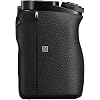
Sony Alpha a6000 Mirrorless Digital Camera 24.3 MP SLR Camera with 3.0-Inch LCD - Body Only (Black)

  • Based on 1,846 reviews
Condition: Used - Very Good
Checking for the best price...
$418.00 Why this price?
Save $3,781.99 was $4,199.99

Buy Now, Pay Later


As low as / mo
  • – Up to 36-month term if approved
  • – No impact on credit to apply
  • – Instant approval decision
  • – Secure and straightforward checkout

Ready to go? Add this product to your cart and select a plan during checkout.

Payment plans are offered through our trusted finance partners Klarna, Affirm, Afterpay, Apple Pay, and PayTomorrow. No-credit-needed leasing options through Acima may also be available at checkout.

Learn more about financing & leasing here.

Selected Option

Free shipping on this product

This item is eligible for return within 30 days of receipt

To qualify for a full refund, items must be returned in their original, unused condition. If an item is returned in a used, damaged, or materially different state, you may be granted a partial refund.

To initiate a return, please visit our Returns Center.

View our full returns policy here.


Availability: Only 1 left in stock, order soon!
Fulfilled by Amazon

Arrives Thursday, Jun 11
Order within 13 hours and 17 minutes
Available payment plans shown during checkout

Protection Plan Protect Your Purchase
Checking for protection plans...

Color: Black


Style: Base


Set: Base


Features

  • 24 MP APS-C CMOS sensor ISO 100-25600 and Focus Sensitivity Range :EV 0 to EV 20 (at ISO 100 equivalent with F28 lens attached)
  • Operating temperature:32-104F / 0-40C.Hybrid AF with 179-point focal plane phase-detection and 25 contrast detect points Built-in Wi-Fi and NFC
  • Up to 11 FPS continious shooting, Compatible OS:Windows Vista SP2*8, Windows 7 SP1, Windows 8, Windows 81, Mac OS X (v106-v109)
  • 3-inch tilting LCD with 921,000 dotsCompatible with Sony E Mount lenses
  • OLED electronic viewfinder with 100% coverage and 14 million dots
  • SD/SDHC/SDXC and Memory Stick Pro Duo/ Pro-HG Duo memory

Description

79-point focal plane phase-detection AF sensor. The compact, lightweight camera delivers superb image quality - via newly developed 24.3-effective- megapixel (approx.) Exmor APS HD CMOS sensor and BIONZ X image processing engine - as well as highly intuitive operation thanks to an OLED Tru-Finder and two operation dials. The charging time is approximately 310 minutes. Sensor - Anti-Dust System - Charge protection coating on Optical Filter and ultrasonic vibration mechanism. Audio - Built-in stereo microphone

Compatible Mountings: Sony E (NEX), Sony FE


Aspect Ratio: 32


Photo Sensor Technology: CMOS


Supported File Format: JPEG (DCF v2.0, EXIF v2.3), RAW (Sony ARW 2.3)


Image Stabilization: No


Optical Zoom: 1 x


Maximum Aperture: 36 f


Expanded ISO Minimum: 100


Metering Description: Multi, Center-weighted, Spot


Brand: Sony


Compatible Mountings: Sony E (NEX), Sony FE


Aspect Ratio: 32


Sensor Type: CMOS


File Format: JPEG (DCF v2.0, EXIF v2.3), RAW (Sony ARW 2.3)


Image stabilization: No


Maximum Aperture: 36 f


Expanded ISO Minimum: 100


Photo Sensor Resolution: 24 MP


Photo Sensor Size: APS-C


Maximum Shutter Speed: 1/4000 Seconds


Minimum Shutter Speed: 30 seconds


Exposure Control: Aperture Priority, Automatic, Manual, Shutter Priority


Form Factor: Mirrorless


Effective Still Resolution: 24.3


Special Feature: Face Detection


Color: Black


Screen Size: 3 Inches


Shooting Modes: Bulb Mode,Aperture Priority, Manual, Program, Shutter Priority


Item Weight: 0.76 Pounds


Video Resolution: FHD 1080p


Viewfinder: Electronic


Flash Modes: TTL, Auto, Fill Flash, Off, Rear Sync, Red-Eye Reduction, Slow Sync, Wireless


Camera Flash: Built-in Flash,Hot Shoe, Wireless


Skill Level: Professional


Specific Uses For Product: Photography, Videography, Low-Light Photography, Travel Photography


Compatible Devices: Sony E-Mount devices, potentially other Sony Alpha Series devices


Continuous Shooting: 11


Aperture modes: F3.6-


Viewfinder Magnification: 0.70x


Flash Sync Speed: 1/160 sec


Connectivity Technology: HDMI, NFC, USB


Wireless Technology: NFC, Wi-Fi


Total USB Ports: 1


Total Video Out Ports: 1


Total USB 2.0 Ports: 1


Hardware Interface: Memory Stick PRO Duo, SDHC, SDXC


HDMI Type: Type D Micro HDMI


Display Type: LCD


Display Fixture Type: Tilting


Display Maximum Resolution: 921600


Has Color Screen: Yes


Display Resolution Maximum: 921600


Flash Memory Type: SD/ SDHC/SDXC, Memory Stick Pro Duo/ Pro-HG Duo


Memory Slots Available: 1


Recording Capacity: 120 Minutes


Write Speed: 11 fps


Compatible Flash Memory Type: SD, SDHC, SDXC


JPEG Quality Level: Basic, Fine, Normal


Supported Image Format: AVCHD, JPEG, RAW


Bit Depth: 14 Bit


Total Still Resolution: 24.3 MP


Maximum Image Size: 24.3 MP


Optical Zoom: 1 x


Lens Type: Interchangeable


Zoom: Optical


Camera Lens: interchangeable


Real Angle Of View: 33 Degrees


Focal Length Description: 35mm


Digital Zoom: 2


Number of Diaphragm Blades: 7


Metering Methods: Multi, Center-weighted, Spot


White Balance Settings: Auto


Self Timer: 10 Seconds


Brand: Sony


Model Name: ALPHA A6000


Built-In Media: AC Adapter AC-UB10, Eye Cup, Micro USB Cable, NP-FW50 Lithium-Ion Rechargeable Battery (1020mAh), Sony Alpha a6000 Mirrorless Digital Camera Body (Black), Warranty


Are Batteries Included: No


Model Number: ILCE6000/B


Remote Included: No


Model Series: Alpha


Global Trade Identification Number: 15


Generation: 6


UPC: 027242878815


Unit Count: 1.0 Count


Manufacturer Part Number: ILCE6000/B


Manufacturer: Sony


Warranty Description: 1 year coverage for labor, 1 year coverage for parts


Age Range Description: Adult,Teen,Adult


Digital-Still: Yes


Movie Mode: Yes


Image Capture Type: Stills & Video


Auto Focus Technology: Hybrid


Focus Features: Hybrid


Autofocus Points: 25


Focus Type: Auto Focus


Focus Mode: Continuous-Servo AF (AF-C)


Autofocus: Yes


Frequently asked questions

If you place your order now, the estimated arrival date for this product is: Thursday, Jun 11

Yes, absolutely! You may return this product for a full refund within 30 days of receiving it.

To initiate a return, please visit our Returns Center.

View our full returns policy here.

  • Klarna Financing
  • Affirm Pay in 4
  • Affirm Financing
  • Afterpay Financing
  • PayTomorrow Financing
  • Financing through Apple Pay
Leasing options through Acima may also be available during checkout.

Learn more about financing & leasing here.

Top Amazon Reviews


  • and so far I have been nothing less than pleased with its’ performance
Color: Silver Style: w/ 16-50mm Set: Base
Criteria: The evaluation of this product was based primarily off of user friendliness, durability, image quality, video quality, the system, and speed. Review: The Sony a6000 camera is my first journey into the mirrorless camera world, and so far I have been nothing less than pleased with its’ performance. I am not an expert photographer, so it was important for me to find a camera that it was high quality, but also approachable. With this in mind, the first major criteria I was looking for were user friendliness, durability and a good system working behind the scenes. The top dial makes it easy to shift between operating modes that include aperture priority, shutter priority, manual, two auto modes and video or panoramic. The a6000’s ‘auto scene’ modes have produced very nice pictures if I am looking for a quick snapshot and don’t have time to mess with any settings. The viewfinder is very useful for sunny days where the standard viewing screen may be hard to see. The viewing screen, however, also is very handy with adjustable angles for flexible viewing of the pictures you’re taking. The only knock on the screen is the lack of touch screen, which is becoming more common in higher quality cameras. The overall layout of the camera is very user-friendly and never felt overwhelming to me. I was a little concerned before ordering of how durable it would be, however it feels solid and I don’t anticipate problems with it holding up with responsible use. The camera’s system and default settings are nice out of the box, but prepare to do a bit of tinkering to figure out which settings work best for you. It’s not always easy to scroll through all the menus to find what you need, however Sony gives you tons of control over your images if you are willing to take the time to make the adjustments. The system and camera layout would be useless if the end result was a bad image, however I can assure you compared to any cheaper cameras you may have used before, it will certainly impress. The autofocus on this camera is blazing fast and allows for great images at a high shutter speed. Just be sure to warn anyone taking a picture for you not to hold the button down too long, or you’ll end up with tons of duplicates in no time. The cameras sensor is 24.3 megapixels and allows for superb quality for the price range. The provided lens (Sony E 16-50mm F3.5-5.6 PZ OSS) is decent, but you’ll want to consider adding others to your arsenal down the road. This isn’t a big issue however as the E-mount system is easy to find adapters for nearly any lens that you may want or already own. The image/video quality paired with the lens versatility that the a6000 offers was a major selling point for me. The bottom line is the Sony a6000 provides very nice image/video quality, versatility, user friendly physical layout and a customizable system for whatever your needs may be. I still haven’t had a chance to do anything with longer exposures or a ton of video, but I have been encouraged by the quality of the camera and its’ pictures so far. If you are looking for really nice quality at a price point that may be less cringe-inducing than a lot of DSLR’s, this is certainly one you’ll want to consider. Overall Rating: 4.5/5 ... show more
Reviewed in the United States on September 25, 2015 by Ben

  • A small camera that packs a big punch
Color: Black Style: Base Set: Base
PROS --------- - Dynamic range is better than Canon's cameras; comparable to Nikon's cameras since Sony makes the sensors for most Nikon bodies. - Better color accuracy than Canon cameras. Canon sensors process the infamous and very slight red hue. - Great continuous shooting rate: 11 frames per second! - Portable - Light - Extremely fast autofocus speed. Sony boasts the world's fastest auto-focus for their mirrorless lineup. - High ISO performance rivals full frame cameras. - Built-in wifi - Built-in NFC - Ability to directly install camera apps via Sony PlayMemories via wifi. - View finder displays how photo will look depending on settings. - Awesome video recording capabilities compared to Canon and Nikon - In-camera HDR feature - Articulating screen CONS --------- - Short battery life compared to traditional DSLR's (However, spare third party batteries are very affordable) - Changing some settings seems to require a couple more steps compared to Canon and Nikon platforms - NFC feature does not appear to work on iOS as of 3/2016; works perfectly on Android platform - Sony PlayMemories mobile app is required for NFC transfers - In-camera HDR feature only works when shooting in JPEG - 1.5x crop factor compared to full frame cameras (explanation below) PERSONAL TESTIMONIAL ----------------------------------------- I vowed I'd never return to cropped sensor (APS-C) cameras after purchasing a Canon 6D full frame camera. However, I did my research on the mirrorless platform, and I was sold on the Sony a6000, so much that I sold my Canon gear to fund the purchase of this camera body. The weight difference between the 6D body and the a6000 body is like night and day, and my neck will thank me later. Upon taking my first photos with the a6000, I instantly noticed the difference in color reproduction and dynamic range over my former camera. Then, I tried continuous shooting and I was floored--11 frames per second, which now allows me to take much better action shots. That, along with the a6000's extremely quick auto-focus resulted in some great photos of my daughter's very first soccer game. High ISO performance on the a6000 rivals that of a full frame camera. Now, it will be better on full frame, but the a6000 comes very close. With my Canon APS-C cameras (t3, t4i, and 60D), noise level was quite prominent above ISO 1600. With the a6000, photos at ISO 6400 are usable, and in some cases, even up to ISO 12,800. The built-in wi-fi has been helpful in allowing me to download apps directly to my camera. I've tested NFC on an Android phone, and it works perfectly (after downloading and installing the Sony PlayMemories mobile app). However, I have been unsuccessful in getting it to work on my iPhone 6S. I was never able to record acceptable video with my Canon bodies. I soon learned that Canon DSLR's are notoriously awful at video recording. I no longer have this issue with the a6000. Its quick autofocus does wonders on video as much as it does on stills, and it can record at 1080p, 60 FPS. The a6000 does have an in-camera HDR feature that's pretty decent, but since I mostly shoot RAW, I prefer shooting bracketed exposures and merge them later in post-processing as the in-camera HDR only works with JPEG's. The camera's articulating screen also comes in very handy when shooting at extreme angles, although it cannot be flipped all the way out for selfies. A smaller camera body obviously results in a smaller battery footprint. Since the a6000 packs so much power in such a portable body, battery life is unexceptional. The average battery life on the Canon 6D is rated at about 950 shots per charge, whereas the a6000 is rated at 310 shots on the view finder and 360 in live view. Fortunately, third-party batteries for the a6000 are very inexpensive. The trade-off was worth it in exchange for actual video recording ability, better quality photos, and significantly better continuous shooting speed. Now for crop factor. A full frame camera sensor is the same size as a 35 mm frame of film. The Sony a6000's APS-C sensor is 1.5 times smaller, so photos will have a narrower field of view. For example, a 14 mm lens on my Canon 6D has a 14 mm field of view since the 6D is a full frame camera. On the a6000, the same 14 mm lens will actually give me a field of view equivalent to 21 mm on full frame (14 x 1.5). Although the focal length is the same, the a6000's field of view will be tighter because of its smaller sensor size. This is a disadvantage to some, but for me, it was another trade-off I was personally willing to make because of how awesome the a6000 is. Just like I had no regrets buying the Canon 6D as it is a great camera in its own right, I have no regrets selling the 6D for the sake of adapting to the future of photography. My a6000 is pumping out better quality images and performing nearly as good at high ISO than my former camera body. I've yet to use it in more real world scenarios, but so far, I'm very impressed despite trading off battery life and crop factor. For over half the price of my previous setup, I couldn't go wrong. This is the perfect camera for the enthusiast and professional alike. In the case of the Sony a6000, big things really do come in small packages. ... show more
Reviewed in the United States on March 28, 2016 by polar_fatalism

  • Sony is EVIL!
Color: Black Style: Base Set: Base
What was Sony thinking? This camera has just been released a little over a year ago and its price has dropped to a bargain level at $448 recently. When I saw this, I couldn't believe my eyes and immediately pushed the BUY button. I myself have already owned the entry level A3000 and that was another good bargain. But this with WIFI, NFC, best in class 24 megapixel sensor, and best in class frame rate? You 've gotta be kidding me. The list could go on and on and other reviewers have already mentioned some of its great features. So I 'm not going to repeat them here but focus on my perspective as a Canon DSLR shooter I always think Canon has been milking its APS-C sensor for years and the recent update over my 5-year old 7D was just a meh. The opportunity of adding a Sony came when I looked for a compact camera I could carry for those long hikes and international travels. Hauling a DSLR makes my shoulder hurts. The Sony A3000 was an answer. I have had that camera for a little over 5 months and I liked its value proposition. But in my mind, I always wanted the A6000 because it 's just a far better camera with its WIFI, EVF, and CMOS sensor. Its body shape is also less DSLR like and looks just like a rangefinder. It 's perfect for street photography with a prime lens on it. At the time I bought my A3000, the A6000 was selling for well over $600 and I wanted just to test the water with the A3000 and see how things go. Because Sony E mount body has such a short flange distance, you can literally mount any legacy lens with an appropriate adapters. I myself have a Metabones Canon FD lens adapter and it works very well with the Sony E mount bodies. If you are not into sports or wildlife, manual focus is a breeze with the Sony. All their bodies have focus peaking and magnification with one touch of a button. However, the A6000 has far better resolution on the EVF than its A3000 sibling. So that was a blessing for me as I have an aging eye sight. The tilted LCD screen is also very helpful if I need to raise my camera to shoot with a crowd in front of me. All these additional features and the price justify the A6000 over the A3000 if you ask me today. The A3000 price has dropped slightly but not as much as the A6000. $200 is a big drop forthe A6000 and I can tell you its CMOS sensor is far better than any Canon sensor at the same APS-C size. The RAW files from the A6000 have more latitude to push shadows in post without revealing any color banding noise unlike my Canon. This makes it easier for me to shoot under a high contrast situation. Speaking of which, I absolutely love the Sony built-in HDR function. The resulting photos came out very natural and you could even do it handheld as the Bionz X processor has the intelligence to do image alignment. With the A6000 fast frame rate, that becomes unnecessary unless you are making long exposures. I cannot do this with my Canon DSLR. I normally need to use ND grad filter for highly contrast scenes. But with this Sony, I no longer need to carry those ND Grad filters and the mounting bracket. That saves me some space in my camera bag. To augment this camera for street photography, I have recently acquired a Sony 35mm F1.8 and it 's a perfect match in heaven with the A6000. The setup is so compact, light, and discreet. The only thing I would complain is that the shutter on the A6000 is much louder than my other A3000. So now my A3000 has become my backup. These cameras are perfect for travel to those third world countries and unfamiliar neighborhoods. At least you don't look like a walking ATM machine. Ain't Sony EVIL? (aka electronic viewfinder interchange lens). I am now thinking to switch some of my Canon gear to Sony. Sony has a habit of introducing new bodies every year or so. You just need to time it if you are looking for real bargains. Their bodies might be cheap, but they make that up by selling you more expensive lenses sometimes even more than the camera bodies. Their Zeiss lenses are among the best yet expensive. But you can always get away with legacy manual focus lenses if you don't need autofocus. Sony 's manual focus aid is the best in the industry IMO. I cannot even do manual focus efficiently with my Canon 5D Mark3 which is over 6 times more expensive than the Sony A6000. ... show more
Reviewed in the United States on December 12, 2014 by E. Hung

  • An excellent camera that falls just barely short of perfection
Color: Black Style: Base Set: Base
Let me start this review with some background of my photography experience. (Short story, I am an amateur, skip to “PROS” section) I bought a Nikon D40 and had it for several years before selling it in college and I was short on cash. Ever since then I’ve been relegated to my various cell phone cameras. I always had intentions of buying back into the hobbyist camera space at some point, and with an upcoming trip to Europe this summer, there was no time like the present to make a purchase. I had set a budget for myself that basically put my sights on the OM-D E-M10 and the Sony A6000, sans kit lens and spending the money (well worth it, we’ll get to that in a bit) to get a fast prime near the 50mm equivalent range. I never got a hold of an E-M10, so I will not compare the two, but will say that the APS-C sensor size of the A6000 was a key point for me. Without stirring the micro four thirds vs. the world debate, for me, sensor size still means something. Reality is that for the hobbyist, honestly, I don’t think you can choose incorrectly. The purchase was an A6000 (body only) with the well-reviewed SEL35F18 lens. I am forgoing the kit lens and intend to fill out my lens set (eventually) with the SEL1018 and another mid-range zoom. I cannot emphasize enough how great the SEL35F18 lens is. I am in love with it, and I think that it will really teach me to shoot correctly, rather than lean on the “zoom” crutch. If you have the extra cash, I would highly recommend this kit as a great starting point. I am not a professional, I have not taken photography courses, so I will cover the camera from the perspective of a guy looking to take photography to the next level. Let’s dig on in… PROS: -The A6000 is small. Coming from a rather chunky D40, I was pleasantly surprised by this. With the relatively small lens, a 35mm prime, it feels very well weighted, if just a tad plastic-y. Large lenses could upset the balance of the camera, but you wouldn’t have a 70-200 mounted for walk around use, anyways. -Controls…plenty of them. Spend some time while laying it bed to just mess with the settings and feel the camera out. DO NOT let your first experience with the camera be something special, such as a graduation or wedding. There’s a lot of options and flexibility here to make your photos shine, and keeping it in Auto or Superior Auto means you’re missing the point. That said, Sony does a good job of catering to the new photographer as well as those well versed in photography (and everyone in between). The controls allow you to grow and take more and more control as you learn (and less while you’re still figuring it out). -Menus: They go hand in hand with the controls I mentioned above, there’s a lot to them, but the layout is simple. Take some time to understand them, and you’ll be A-OK. -Viewfinder: You’re not going to mistake it for a traditional mirror box, but it gets the job done and it plenty functional. It’s not grainy or low quality by any means. Being my first OLED viewfinder, I have no comparison points but I’ve come away impressed so far. Though, the sensor that enables it is a bit too sensitive, can’t find a way to adjust that. -Focusing: Lightning fast. Allegedly a huge improvement over older compact system cameras, and for that I am grateful. Haven’t done any serious continuous AF shooting quite yet, but its done what it hasn’t skipped a beat. -Image quality: Given that I am an amateur, I am by no means a pixel peeper. So I think the IQ is fantastic. I think the JPG engine turns out somewhat dull images by default, but with a little tweaking, that can be easily fixed. We’re getting to the point where most any compact ILC can pump out decent images, and for me the A6000 certainly doesn’t disappoint. CONS: -I almost wish the grip was slightly bigger. I’ve got bigger hands, so things get tight after awhile. With a larger lens on the camera, I worry that the small grip won’t be sufficient to support the setup, forcing me to a 2-handed shot. The other benefit to the bigger grip would be an improvement in… -BATTERY LIFE. Through my use so far, I’d say it’s around ~300-325 shots. That’s not a lot. When I unboxed the camera I was shocked at how small the battery is. A slightly larger grip to fit a bigger battery would be a wise decision. A fine line between keeping the setup compact and improving the shooting experience, but I think Sony has some room to tip toe further towards that line, especially when you move beyond the tiny kit lens. -The Screen: To start, it’s a 16:9 screen and the sensor is 3:2. When reviewing images the on-screen image is pretty darn small. The screen itself is functional, bright, and effective; but the aspect ratio is a head scratcher. Also… -NO TOUCHSCREEN: The camera has nearly 200 AF points, and to pick a spot focus you use the tiny D-pad to the right of the screen. It is, to say the least, not intuitive, and slows down the act of taking a shot. -RAW+JPG Shooting: When shooting in JPG mode, you get the option to use some in-camera effects. Some are cheesy, others such as HDR can produce genuinely nice results. If you switch to RAW+JPG shooting, you lose the ability to use those effects for BOTH the RAW and the JPG image. Now, for the RAW image this makes sense, but it would be nice to be able to capture an unmolested raw file while still messing around with the in-camera effects/filters on the corresponding JPG file. From my understanding, competitors such as Olympus handle this much better. The rest is all gravy. Nit picks here and there that are more quirks than true cons. CONCLUSION: This camera rocks. It’s not perfect, hence the 4/5 rating, but it’s probably the best camera money can buy at the current MSRP (body only). It’s got a good size to it, plenty of controls and easy to navigate menus that allow you to grow into the camera, a viewfinder that’s unassumingly tucked away into the body (rather than atop it), a great AF system, and excellent image quality. As for what could be improved, I’d like to see a bigger grip to accommodate larger lenses and a bigger battery to build upon the mediocre battery life. I think a touchscreen was a glaring omission that really slows down the shooting experience. And the fact that choosing JPG + RAW shooting mode disables most all in-camera effects, even for the JPG copy is a bummer. It’s basically Sony forcing you to either act like a professional, or act like a child, but you can’t mix work and pleasure. Competitors handle that aspect better. If you go with the A6000, skip the kit lens and spend some time with a fast prime. If not the SEL35F18, then look at the cheaper Sigma Primes. The kit lens may not be bad, but shooting with a prime really makes you think about your style and understanding of composition. Hope you found this a worthwhile review. Happy to answer any and all questions (Again, from an amateur perspective) in the comments. ... show more
Reviewed in the United States on May 2, 2014 by iburke

  • Still a Great Camera for 2018! Great Beginners and Advanced Enthusiast! Still a Great Camera for 2018! Great Beginners and Advanced Enthusiast!
Color: Black Style: Base Set: Base
I've owned every Sony mirrorless camera since the Nex-5N. I've also owned every Sony A7 full frame mirrorless camera except for the A9. I'm currently shooing with the Sony A7riii professionally. The Sony A6000 was my first advanced semi-professional camera in the Sony mirrorless line and it was a game changer for me. I have since upgraded to the A6500 but in 2018 this is viable camera for those wanting to get into more serious photography and those who want a small compact travel camera that can change lenses. Many professionals also keep one of these as a backup for equipment failures. The A6000 went down in history in the Sony line as a legendary camera. Pros: Price. When I first purchased this, this was $800 with a 16-50mm kit and $650 for just the body. The price has come down a lot now to $500 for body and kit and $450 for just the body. In the used market you can find them for just a little over $300. This is an amazing deal for a camera of this caliber. When I purchased this camera, it used to be the top of the Sony mirrorless APS-C line. It was a replacement for the NEX 6/7. Nowadays there is a an A6300 and A6500 so it's become the low tier product. But at this price it's still viable as a entry-level camera. Size. There's very few cameras that are as compact as the A6000 that packs a punch. The A6000 with the kit 16-50mm lens is small enough to fit in purses and cargo pant pockets. It will also fit perfectly in compartments in backpacks and other bags. It is significantly smaller than most entry level DSLR cameras from Canon or Nikon. FAST. This camera shoots continuous bursts extremely quick. I normally shoot on continuous mode (hold shutter down) so not to miss a shot and pick out the best one later. With this camera I need to be wary of how long I hold it down for because after a few seconds I have 20+ photos in my camera that are all essentially the same. I've tried and I can't shoot less than 3 shots with one push of the shutter. If you shoot moving objects you can almost make a flip-book or stop motion movie with this. Amazing speed. Fast autofocus. The AF of this camera is PDAF and Contrast Detect. PDAF is much quicker and contrast detect is used for fine-grain adjustments. It's the same kind of AF system used in the A7 line of professional cameras. The AF is competent enough to track fast moving subjects well and should be more than capable for most people's needs. Lens Compatibility. Even though this is an older Sony E mount camera, it is fully compatible with the entire lineup of Sony E and FE mount lenses. This means you can attach a professional fast 1.8 or 1.4 lens for great low light photos and beautiful bokeh photos. Upgrading a lens is always more bang for buck than upgrading a body. Construction. Overall the camera seems well built and sturdy. It's not waterproof but good enough to handle everyday use. It would not handle serious drops however. Wireless. The wireless feature is an added bonus that most entry-level DSLRs don't have. Download the Sony Playmemories App and you can use your phone to wirelessly transfer files, use your phone as a remote, and as a secondary screen. Improvements in the Sony app has seen much better features and speed over the years. Apps. The apps on the camera are something mostly exclusive to Sony Mirrorless. They're a welcome addition. Some of the best ones are the remote shooting app, the touchless shutter, and numerous time lapse apps. Cons. LOW LIGHT. The main problem with this camera is the ISO quality has been superseded by its competitors due to the sensor's age. The photos become noisy at ISO 800 and above, which is a common ISO used in indoors situations. In low light you absolutely need some flash to fill in the light. Even in RAW shooting the low light, you'll deal with noisy photos. You can always correct some of it in post but the camera's age and limitations do show. The A6300 and A6500 are improvements in the ISO and image quality. The camera is still good for hobby and non-professional work but the A6000 is definitely not good enough for paid or professional work! Battery life. The battery life on all mirrorless cameras are still abysmal, the A6000 included. Sony has upgraded the battery capacity in the newest gen 3 A7 cameras however they have not made it over to the APSC line. The problem is, without a reflex mirror, whenever the camera is on, the sensor is on. The sensor not only takes the photos, it lets you "see" through the viewfinder or LCD. The consequence is the camera is constantly sucking juice when it's on. With regular SLRs, the sensor is only on when you shoot and a SLR will last you several days without charge with normal use. I always keep a spare battery and an external charger around. If you buy this camera (or any other mirrorless camera), I suggest you do the same. Lens compatibility. Even though this works with Sony lenses, unlike the A7 series, the A6000 is not great with many Canon to Sony mount adapters. The performance of non-Sony lenses were always a toss up even with the A7 series but as the A6000 is not a professional camera, most companies like Metabones and Sigma won't be updating their adapters to work well with this camera. If you have Canon or Sigma lenses, expect only partial support with the A6000. Overall this is a fantastic camera. In 2018, it is a bit dated by its competitors and newer versions from Sony. However its role has changed to an entry-level camera and your expectations should match as such. For the price, it is fantastic for a beginner who wants more serious higher quality photos than cell phone cameras. Additionally, professionals regularly use this camera for personal work, or as a backup camera since it can accept professional Sony lenses. Finally, the size is perfect as a travel camera. ... show more
Reviewed in the United States on May 8, 2014 Reviewed in the United States on May 8, 2014 by Y. Wang

  • Small learning curve, amazing quality, LOTS of fun!
Color: Black Style: w/ 16-50mm & 55-210mm Set: Base
I'm not sure I could more clearly love this camera. I purchased this camera after looking for an excuse to buy a nice camera for a long time. When the opportunity arrived for me to teach our school yearbook class, it was time for me to learn how to take good photos. There are plenty of comprehensive reviews on here... so I will just addressed why I pulled the trigger on this purchase, and why I'm so happy with it. For starters, I FIRMLY believe this camera is the best bang for your buck you can possibly get in DSLR or mirrorless at the time of this review. In fact, I've noticed the price just dropped this month. Like many of you reading this, I've spent COUNTLESS hours doing research to be sure this big purchase was the right one. I knew I'd use the camera semi-professionally, and needed it to meet criteria that allowed it to be effective in low light and take rapid shots to capture the action of the kids I work with. The a6000 was the clear winner despite a suggestion from a family member who has a cheaper model Sony mirrorless. After comparing the two... I'm FIRMLY convinced I made the perfect decision for me. I use this camera primarily to take pictures of the kids at our school, and that includes our middle school sports program. At 11 shots per second... I don't miss a beat. I've caught some incredible photos of our kids, and the parents and school community are buzzing about the awesome impact these cool photos have on our ability to create a buzz around campus. One of the parents on campus is a professional photographer, and when she was taking photos next to me at our annual winter concert she looked at my photos and was stunned that I was not only getting photos on par with the quality of her pro DSLR setup, but that some of the low-light photos even came out BETTER. I'm using nothing so far besides the kit lens and 50-210mm lense. Though I plan to upgrade to a strong fixed lens soon. Quick heads up... the Wasabi battery pack isn't just important, it's ESSENTIAL. This camera sucks battery like crazy, but you should be able to go three to four hours of HEAVY shooting on 2 or 3 batteries. With that said, the Wasabi batteries also have a larger capacity than the Sony batteries, so I use them more often anyways. The only other minor gripe I have about the camera is the sensor that detects your eye at the viewfinder (and shuts off the LCD display) is crazy sensitive. But that's super minor compared to what feels to me like the best big dollar purchase I may have ever made. Get a good book to teach you this camera, spend a small amount of time on it, and you won't believe the quality photos you get out of it. ... show more
Reviewed in the United States on December 16, 2015 by SunDevil03

  • Absolutely love this camera!!!!
Color: Black Style: Base Set: Base
First and foremost...UPDATE THE FIRMWARE!!!! Presently the latest is version 2.0. Mine came with version 1.2 or 1.25. I did mess around with it with the old firmware. The shutter speed and auto focusing weren't as good as with the newer firmware. I'm using this with a Tamron 18-200mm (B011). Versatile camera with plenty of features and options, just be prepared to learn what it can do. The interface is fairly intuitive but it takes a little time to get acquainted with it. There is plenty of information out there on this camera. and what it can do. Yes, it focuses very fast and it can fire away like crazy. It's a little touchy when put in continuous mode, tapping the shoot button can mean accidently taking more than one shot. With the Tamron, autofocusing is fast and accurate with both photos and videos. In my brief experience with the camera, I would recommend using the 2x clear zoom and cropping in post to get closer. However, you can get some good shots using the 4x digital zoom but it's essentially the same as cropping in post. Also, when you switch to the 4x digital zoom, you lose the ability to change some focus settings. To enable and use the eye autofocus you have to program it. Not a big deal but kind of silly that you can't access it directly without "programming" it. Overall, it is a quality camera with tons of features and flexibility. It can be a little tricky to handle with a larger lens on it like the Tamron 18-200mm. It's just an adjustment and barely noteworthy. The only downside that I found with the A6000 is the lack of lens selection. There are a lot of adapters for using other lens. However, they all seem to suffer from autofocus inefficiency. On average....Four seconds to lock focus. After doing a lot of research...The only viable option I found was Sony's LA-E2 adapter and a prime lens. I'm completely happy with the A6000 and the Tamron 18-200mm. They do work well together. I just wanted a little more reach which isn't an affordable option right now for the E-mounts. I 'm going to add a Sony VCL-2052K, a step down ring, and see what I get. ... show more
Reviewed in the United States on October 24, 2015 by Colt

  • the camera I've been waiting for
Color: Black Style: Base Set: Base
I have been waiting ever since the panasonic g1 came out several years ago to see how these mirrorless cameras would develop. I knew this had to be the future of photography. Initial reports made me hold off on buying one because there were just too many tradeoffs from a conventional dslr. Last year I finally decided to take the plunge and bought the entry level sony nex f3. The image quality was great. The downsides were with the focus. It was too slow and often slightly off. I also was not a fan of the menu system. I wished it had a few more manual controls or custom buttons. After my experience with the f3 I decided that I would wait until Sony got better with the focusing before I upgraded. When I read about the focus and menu improvements sony made with the a6000, I decided to give it a try. I paired this new body with the zeiss 16-70 lens. What an improvement! The focusing is dramatically faster and more accurate. I love the fact that this camera has the ability to change the size of the focus point in spot focus. Using the small point, the focus is much more consistently correct. I took some close-up shots of some flowers last week, and it got the right spot in focus on at least 9 out of 10 shots, which is pretty good when I was working with a depth of field less than an inch. The f3 used to give me fits trying to get just the right spot in focus. Now the couple negatives... The focus in low light is still slow. If it can find a focus point, it does so fairly quickly with less hunting than the f3 did. If it can't find focus, it tries once and then quits. You have to half-press again to get it to try again. Hopefully in the next generation of this camera they will solve this problem. It is still very useable though. The startup is too slow. I don't know why it takes so long to start up. You would think that as fast as this camera is it would start up quickly. However, it takes longer to start than my year old entry level f3. Hopefully they will issue a firmware update soon to improve this. I read about it in a couple reviews before I bought the camera, but I figured it was due to the power zoom lens. I am not using the power zoom lens, so it really is the camera. Overall, the quality of pics with the zeiss 16-70 lens attached is stunning. I am super happy with the results and I finally feel like I have a digital camera in my hands that equals or surpasses my old Nikon film camera. ... show more
Reviewed in the United States on May 21, 2014 by 28mtnfisher

Can't find a product?

Find it on Amazon first, then paste the link below.
Checking for best price...