
Search  for anything...

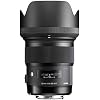
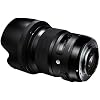
Sigma 50mm F1.4 Art DG HSM Lens for Nikon

  • Based on 621 reviews
Condition: New
Checking for the best price...
$1,034.00 Why this price?

Buy Now, Pay Later


As low as / mo
  • – Up to 36-month term if approved
  • – No impact on credit to apply
  • – Instant approval decision
  • – Secure and straightforward checkout

Ready to go? Add this product to your cart and select a plan during checkout.

Payment plans are offered through our trusted finance partners Klarna, Affirm, Afterpay, Zip, Apple Pay, and Google Pay. No-credit-needed leasing options through Acima may also be available at checkout.

Learn more about financing & leasing here.

Selected Option

Free shipping on this product

FREE 30-day refund/replacement

To qualify for a full refund, items must be returned in their original, unused condition. If an item is returned in a used, damaged, or materially different state, you may be granted a partial refund.

To initiate a return, please visit our Returns Center.

View our full returns policy here.


Availability: Only 2 left in stock, order soon!
Fulfilled by 6ave

Arrives Saturday, Aug 22
Order within 13 hours and 19 minutes
Available payment plans shown during checkout

Protection Plan Protect Your Purchase
Checking for protection plans...

Style: Nikon


Set: US Version


Features

  • 50mm focal length, Lens not zoomable
  • 75mm equivalent focal length on APS-C cameras, 80mm equivalent focal length on Canon APS-C cameras
  • F1.4 maximum aperture; F16 minimum
  • Ring-type ultrasonic-type AF motor with full-time manual focusing
  • 77mm filters. 77mm filters. 0.4m/15.7" minimum focus. Please use a USB dock for calibrating the focus

Description

SIGMA 50MM LENS NIKON F1.4 ART DG HSM LENS

Brand: Sigma


Focal Length Description: 50 mm


Lens Type: Standard


Compatible Mountings: Nikon F (FX)


Camera Lens Description: 50 millimetres


Focal Length Description: 50 mm


Lens: Standard


Compatible Camera Mount: Nikon F (FX)


Maximum Focal Length: 50 millimeters


Minimum Focal Length: 50 millimeters


Lens Design: Prime


Focus Type: Ring-type ultrasonic


Lens Fixed Focal Length: 50 millimeters


Zoom Ratio: 11


Image stabilization: No image stabilization


Real Angle Of View: 46.8 degrees


Maximum Aperture: 1.4 f_stop


Minimum Aperture: 16


Number of Diaphragm Blades: 9


Photo Filter Size: 7.7 centimeters


Lens Mount: Nikon F


Screen Size: 3 inches


Color: Black


Compatible Devices: DSLR Camera


Exposure Control Type: Automatic, Manual


Water Resistance Level: Not Water Resistant


Brand: Sigma


Camera Lens: 50 millimetres


Model Name: 311306


UPC: 085126311551


Manufacturer Part Number: 311955


Global Trade Identification Number: 51


Unit Count: 1 Count


Built-In Media: Lens


Item Weight: 815 g


Item Type Name: Digital-slr-camera-lenses.


Manufacturer: Sigma Corporation of America


Warranty Description: Manufacturer


Model Number: 311955


Frequently asked questions

If you place your order now, the estimated arrival date for this product is: Saturday, Aug 22

Yes, absolutely! You may return this product for a full refund within 30 days of receiving it.

To initiate a return, please visit our Returns Center.

View our full returns policy here.

  • Klarna Financing
  • Affirm Pay in 4
  • Affirm Financing
  • Afterpay Financing
  • Zip Pay in 4
  • Financing through Apple Pay
  • Financing through Google Pay
Leasing options through Acima may also be available during checkout.

Learn more about financing & leasing here.
Top Amazon Reviews


  • Fantastic lens - just NOT out of the box fantastic!
Style: Nikon Set: US Version
First Impressions: When I received the product, I was very impressed with the weight, the build quality, the smooth manual focus with just the right amount of resistance to make it easy to be precise. The weight was both impressive and at the same time, a little annoying - but there's a lot of glass in this lens, and for a 50mm, it's HUGE. One thing that I knew about in advance (but didn't care for) was that the mounting ring isn't sealed. On the other hand, the mount is steel, so it's going to be much more durable than those plastic mounts we see on some lenses. Of course, just like you would expect, I popped it on my D750 and took it out for a spin. Also like you would expect, I started shooting at F/1.4 - of course! The images were... ok. No-where near as sharp as my images from my Nikon DX F/1.8 35mm... or my Tokina DX F/4 12-28mm... or my Tamron F/2.8 70-200mm. Nor was it as sharp (at the long end) as my Nikon kit DX 55-200mm. While I found this disturbing, I started shooting at smaller F-stops... 6.3, 8, 9, etc. As you would expect, the quality improved quite a bit. At the time, I figured I was facing an auto-focus fine tuning issue... and I was right. I'd gone through some similar issues with my Nikon kit lens, as well as my Tokina 100mm macro lens (when using it as a telephoto). However... now I was faced with an interesting problem. Sigma sells a USB dock (about $59), but I usually used the on-camera auto-focus fine tuning settings to fix issues. The (free) software that uses the dock allows you to make auto-focus fine-tuning changes at - on a prime lens - four different distances. I decided to use my Google-Fu to see if this was a worthwhile investment or not... and I came to the conclusion that it was after reading tons of reviews and forum commentary. Given the cost of the lens, I figured it was a minor investment if it really gave me what I was looking for. So I bought the dock, and rather than using my traditional auto-focus tuning chart, I decided to just take shots at the different ranges at F/1.4 (to make focus issues VERY apparent) and adjust accordingly. This took me about an hour... It was the best $59 and 60 minute investment I've ever made. :) Once I'd tuned the lens based on my pictures, I took it out for a real-world spin... and it was EXACTLY as good as I'd read it to be. :) Sharpness was incredible... not that sharpness is really the only criteria for lens choice, but it's certainly something you have to consider, along with bokeh, focus speed, focus accuracy, F-stop range and so forth. (All of which this lens handles wonderfully well!) Summing it up... once you fine-tune this lens, it lives up to it's hype 100%. :) Having said that... if you're not up for doing AF fine-tuning yourself, you can buy one and have Sigma do it for you. You'll just have to ship it back to them to get it done. (If there's a local authorized Sigma dealer near you, they might do it for you... or not.) Just so we're clear, not ALL the writings I found about this lens required AF fine-tuning. Some were perfect right out of the box, so your mileage may vary. Having said that... if you haven't learned to use your camera's AF fine-tuning (pretty much all DSLR makers have this in their cameras), then you really, really, REALLY should learn how. Chances are you'll find that some of your lenses aren't performing quite as well as they could. :) So, some general pro's and cons: Pros === Sharpness Bokeh Focus accuracy (single-point) Focus speed (single-point) Zero distortion Excellent contrast Excellent color transmission Professional build quality Wonderful manual focus ring Amazing picture quality overall Very nice carrying case Excellent lens cap, doesn't pop off, etc. Cons ==== Weight Lack of dock seal Need to purchase USB dock (perhaps) Storage dock-cap on lens is a bit loose (can use a Nikon cap instead.) ============== Update 8/17/2015 ============== This lens - after AF tuning - is absolutely amazing. I have to say that while I've spent more for a lens, I've never spent my money better. ============== Final Update 9/5/2015 ============== A word about the auto-focus fine-tuning on this lens. First - doing auto-focus tuning at F/1.4 is very, very difficult at close ranges. Finding the focus (forward or back) can be very challenging - it gets easier at more distance (5 feet and up), but at 16 and 28 inches... seeing where the actual focus is can be tough no matter what chart you use. Stick with it, though - and read below, because there's some very important information specific to Sigma Art lenses that you'll need. :) I had bought (via Amazon) a Datacolor SpyderLensCal SLC100, thinking it was time for me to finally move off my old free paper-printed focusing chart. This focusing aid (the SypderLensCal) was and is good for LONG- DISTANCE auto-focus fine tuning. Do NOT use it for ranges of less than 3 feet - all my lenses on both my cameras (D750 and D7100) had a lot of trouble focusing on the target... something I found out later on after spending much time being frustrated by my tuning efforts on this 50mm Sigma Art. Setting aside target problems, I had used the Sigma manual to do tuning for each of the ranges on the lens... while I was initially very pleased with the result, I found inconsistencies over time. After spending many hours re-doing and re-re-doing the settings on the lens with WILDLY varying settings according to each fine-tuning session, I finally called Sigma and asked them what (if anything) I was doing wrong. I had followed their online PDF documentation to the letter - testing and adjusting focus on the closest setting first, followed by the next closest, etc. Turns out their documentation left out one tiny detail, which the tech support guy provided within a minute of our discussion. You have to reset all the settings to the default of ZERO before moving on to the NEXT RANGE. If you leave the closer range (or ranges) in place, it will skew the results of your front/back focus issue. Worse, (as I found out) if the numbers are big enough, you don't really get a change in the adjustments of later settings - I had some of them up to +20 (the max) at one point! Once I changed out the target and followed the proper procedure, I got some fantastic results. The adjustments on my lens copy were small: +1 at 16 inches, 0 at 28 inches, +6 at 60 inches, and +7 at Infinity. (All with a zero auto-focus fine-tuning on my camera settings.) (Although I used a chart to set up infinity, I ended up increasing it from +6 to +7 when I did my real-world tests. My chart testing was inside, and even though I was beyond the 11 feet indicated by the lens, truly distant objects required a little more refining.) Now the sharpness is outstanding and consistent at all ranges - no anomalies - and I'm 100% happy with my lens. :) As stated, this is the last update... hope this helps! ... show more
Reviewed in the United States on August 15, 2015 by Jamie Mercer

  • 5 Years Later: Sigma Art is Highest Rated Auto Focus 50mm Lens (DXOMARK) & Excellent Value
Style: Nikon Set: US Version
Frankly, I was never a big fan of normal lenses. This lens completely changed my mind. I have used this 50mm 1.4 Art lens extensively for 5+ years and it is on my camera most of the time. It was the first small format lens for my Nikon that offered me the kind of resolution I was used to as a long time large format or view camera photographer. It is also remarkably sharp. Check out the benchmark tests for the very top lenses at DXOMARK. I use mine on an aging D800e like in the ratings. That is also the same coupling used for my Sigma 85mm 1.4 Art lens which still stands at the time of this writing as that site's #1 rated lens overall. This is not just puffery. I mention this because I was initially very skeptical of Sigma's dramatic transformation into the league of the highest performance lens manufacturers. I was a reluctant convert. Nothing in SIgma’s history made me anticipate that, which I suppose makes its success all the more noteworthy. Some reviewers have not been able to drop their historical bias against the brand. But the evidence is overwhelming for Art Series lenses. It is also an easily testable proposition. Every lens manufacturer's glass color is different and today we have many choices in third party well as Nikon lenses. Nikon lenses tend to be relatively neutral so Sigma Art lenses are close cousins. I need neutral in my workflow. Other people prefer the warmth of other brands’ color. In post production this issue is easily managed either way. Every lens has its own individual look in rendering the world whether that is inside your studio or in the field, sometimes literally in the field. I happen to need high resolution and optical sharpness. My living is based on getting my work reproduced in books and as an artist I make very large prints for galleries and museum exhibitions. Other photographers might not need those characteristics in order to print large but will use them to make high quality prints from cropped images that still hold up very well. This lens performs very well for all those demands and excels when coupled with high resolution sensors and careful use. As you know any lens will appear better or worse depending on the performance capabilities of specific digital cameras and sensors. If you want to see this lens’ full potential you will need to invest in a high resolution camera. That is now all about the coupling of optics and electronics. [And I add with emphasis, the more you know about pragmatic issues like focussing your camera, manually and with auto focus, the more you will ensure that you are getting the most from what this sophisticated gear has to offer. Skills and knowledge still count and will transform your images as you acquire more. Moreover, courses offering higher levels of decision making can help refine your ideas and compositions. Subjects like art history, design, and aesthetics are some of the things that help take you to the next levels and are good investments when you want to get to the next levels regardless of your gear. You will get more out of your equipment applying what you learn across the board.] It is a fast lens. This one is literally as good as they can get today. You may not need a lens that is sharp at f1.4 very often but when you do you will be very happy. Too many fast lenses are not useable until you stop them down including Nikon’s 50mm 1.4G, but not this one. I can recommend the image quality of the recent, refined but much more expensive Nikon 58mm 1.4G lens, which I consider a specialty lens compared to the "good for everything" Sigma 50 mm Art lens. Fast lenses are effective for separation of an object from a background as well as for low light situations when using a flash fill is not appropriate or will not provide what you want. The Sigma's bokeh is everything I need. It is such a subjective matter that I can’t predict your response but many folks tend to have very strong opinions about this subject making for many contentious debates. But I have not noticed much consensus over the decades. That is not a criticism, just an observation. I don’t use terms like dreamy or creamy. They are limited in what I can convey to you using them and there can be a number of nuanced aesthetic phenomena going on simultaneously in any specific bokeh that deserves a more substantial treatment. Examples include shapes change by lens, distance and f stop. What happens in the highlights, midtowns and shadows also vary from lens to lens. Tonal and color transitions can widely vary and just can’t be adequately reduced to words like blur. There are obviously no metrics for dreamy. Of course, there are many other aspects of optical rendering that are challenging and next to impossible to comprehensively describe using words or describe their effect on viewers. Every lens has its own characteristics for better and worse. But everyone seems to know what they want after they see it so please try out the lens first to see if it gives you what you are looking for. In my lens f4.5 and on both sides of it offer the very best range for sharpness but frankly this lens outperforms the competition at virtually every f stop. Few lenses can make me this happy at so many different apertures. Most lenses are much more clearly optimized and less flexible. Don’t worry if you need more depth of field. All lenses are NOT created equal at lower f stops any more than they are at other settings. Once again, this is a clearly demonstrable and testable matter. Find out all of your lenses’ strengths. Remember there are also lens to lens variations even within the same model. Get specific. It can be well worth the time in the long run for some folks. You will know who you are. As a cautionary tale, be wary of some astonishingly foolish reviews online. You know that already but some are not simply worse in degree but cross over into kind—utter nonsense. I was surprised, shocked and amused by some ridiculous sham reviews. Try and find what actual shooters, not bloggers, have to say first. One wannabe pro claimed we should avoid the sharpest lenses because they are only intended for amateurs, not professionals. This person is not a professional, let alone an expert but unfortunately pretends to be. That is one kind of deception, an appeal to authority. Be skeptical. Be discriminating and let common sense prevail. There is a lot of your money at stake. All 50mm lenses are part of the "normal" focal length range that proves to be very flexible in a variety of uses. They prove easiest when composing since what you see in the viewfinder will be what you get in terms of scale and perspective. Also the unusual lack of flaws and weaknesses in this Sigma Art lens include its corner to corner sharpness that is especially appropriate when making panoramas. There is also reliable uniformity in each file's color, contrast, tonal distribution, lack of distortion and unbeatable clarity. You will have few problems to clean up in post production after stitching. IMO, the world looks very different through great glass. Once you experience that, relatively ordinary lenses will likely disappoint you thereafter. I was hooked decades ago and my discriminating clients appreciated the difference. There are caveats. First, the auto focus strains in many low light situations although that can be as much about the camera as the lens. Low light severely reduces contrast upon which most auto focus relies. It is not a huge issue in my particular case because in those situations I prefer to use a tripod and manual focus anyway. I probably use manual focus more than the majority of people in all situations but I can usually rely on the auto focus when there is enough contrast. Since it is about reverse engineering Nikon's proprietary technology, Sigma offers an inexpensive tool to assist you in fine tuning auto focus if you need it, their dock. It works with all Sigma Art Series lenses and some other Sigma lenses. Focus speed is very good but I do not make big demands on it by often shooting high speed moving objects. I have lenses that are faster but most of the rest are slower. Possibly your biggest reservation is about size and weight. I understand although I gladly accept its weight, 1.8 pounds, in return for consistently outstanding performance, resolution and sharpness. I also have too kits, one for list weight travel. That too is about personal preferences and needs as well as budgets. There are always trade offs. In terms of subject matter, it is not my first choice for portraiture because of distortion from moving in closer than conventional portrait focal lengths require. But if you want distortion then it is the answer, not a problem. Similarly if you want to play with “normal” distribution of space and scale you will need to either go wider or into telephoto lenses to achieve results like intentional distortion and compression. But note that I am describing the trade offs of any normal focal length lens in general. For example, it you wanted the same image quality as this lens but in a focal length are appropriate for most portrait work, you might consider the Sigma 85mm 1.4 Art lens. It is even a bit sharper. It is close to be an astonishing lens in my estimation. But they are close in performance. Lastly, this 50mm lens has no VR equivalent, image stabilization. That could be a deal breaker for some of us. It will matter most in low light situations or if hand holding has been a problem for you. Again, in what I do, a tripod offers one solution but it can’t always take the place of VR in every situation. You simply might not have that option in the kind of shooting you do. Overall, I consider the $950 I paid to have been a steal and the best quality I had ever paid for such a reasonable amount of money although I must add the Sigma 85mm 1.4 Art is tied for value. It is being sold much cheaper today. I am conservative in my buying advice. Know your seller's credentials and policies ahead of time in case anything goes wrong. Amazon charges more but you are always completely protected. And yes, long ago I found that out the hard way. It was a lasting lesson. In summary, this lens is pure pleasure to use, flexible in purpose, affordable and reliable. Test it out for yourself. ... show more
Reviewed in the United States on June 6, 2019 by John McPhee

  • Sigma Got This One Right
Style: Nikon Set: US Version
Right out of the box I was impressed with this lens. No auto focus correction was needed...it was precise. Shooting it wide open at f/1.4 shows minor vignetting (similar to my old Nikon f/1.2 50mm) with no noticeable purple fringing yet. Center of the photo is extremely crisp when shooting at f/1.4, with the corners losing slight sharpness...but whatever you might lose in sharpness at the corners is more than made up for with the soft bokeh this lens produces at f/1.4. The subject jumps out of the melting background giving you that Leica lens sort of 3D look. No noticeable distortion. Stop down to 5.6 or 8 and you get an extremely crisp and clear image from center to corners. Color seems to be rendered subtly and naturally (unlike the Zeiss 50mm I used to own, which seemed to oversaturate the image). As an architectural and real estate photographer, I use it mostly at f/8 and f/11 and have yet to notice any hiccups in focus, nor any chromatic aberration. Manual focus (which I use sometimes) is smooth and precise. It's not a light lens...if you're looking for a compact, featherweight 50mm (there are plenty of options out there), this isn't what you want. It feels solid, as if it were hewn from a chunk of magnesium alloy. It has that strong tank-like nature which the heavier Nikon lenses possess...it seems strong enough to handle some rugged use (i.e. a drop or two, poor weather, etc...). I'd feel very comfortable recommending this lens to anyone who's looking for a solid performer in the 50mm range. ... show more
Reviewed in the United States on October 23, 2014 by Tycoop

  • Awesome lens that is super sharp with great Bokeh. It is heavy though!
Style: Nikon Set: US Version
Wow. I really, really love the Sigma Art line. I have both this and the 35, and they are my go to lens if I can possibly get away with using them. They are super sharp (much sharper than my 24-70 or 70-200) and have such pleasing bokeh. Sure, you can't expect zooms to be as sharp as primes, but these lenses are so good that I actually carry them along with my zooms because if I am shooting any focal length close to 50 or 35, I will switch out the zooms for the Sigma ARTs. They really are wonderful lenses. The only downside is their heft (which can also be an upside if you believe weight equals durability). They really are heavy, with a ton of glass and a lot of metal. I think this 50 weighs almost as much as my 24-70! As such, you really have to commit to carrying it around. This can be especially annoying if you're used to those "nifty-fifty" 1.8s that weigh nothing and can fit easily in a pocket. The ART 50 weighs so much that on small day outings (family stuff or little trips to a new town) I have to decide whether I use this lens or take the 24-70. Amazingly, this lens wins most of the time! It really is that good. (I justify this to myself by saying that I am going to stretch my photographic muscles by only having the ability to shoot 50 all day... I turn it into a challenge!) Of course, on a commercial job, I don't often find myself shooting at 50. It is a shame because I don't get to use this lens on my professional work. ... show more
Reviewed in the United States on August 18, 2016 by Drewcifer

  • Absolutely awesome.
Style: Nikon Set: US Version
Stunning image quality, incredible bokeh, fantastic depth of field control, beautiful color and sharp edges. This lens does exactly what I always hoped for from a 50mm prime. As compared to most other 50mm options, the depth of field isolation at a wide-open aperture is somehow smoother and ever so slightly wider than with others - which means I can isolate a model's face, but keep both eyes and nose in focus - impossible to do with most 50s - I'm always forced to choose which will be slightly out of focus, and this lens lets me get just enough breathing room to produce some stunning portraits, even though most of us don't think of a 50 as a portrait lens much of the time. The only possible downside here is that this lens is more complex than most 50s, and thus also considerably larger and heavier. It's a beast! But the images speak for themselves and I wouldn't hesitate to recommend it to any serious photographer - even at a considerable price premium over other options. Note - I shoot with a Nikon, but have seen this lens for Canon as well and was equally impressed. ... show more
Reviewed in the United States on December 21, 2015 by Robert

  • Heaven in a little lens!!!
Style: Nikon Set: US Version
OK- so I don't even KNOW where to begin with this lens. I had literally put the Sigma 35mm in my cart to check out with, when I saw a review for this. I shoot weddings as my part time work, and I have relied heavy on the Sigma 35mm and 70-200. Honestly, I have become a huge fan of Sigma over the Nikon lenses. Truly. So, as I'm about to check out, I see this lens, and I begin to read reviews. I am overwhelmed by the love for this lens, and while I have a major soft spot for the uniqueness and wide angle of the 35mm, I bought this lens. That was the best decision I have made since I purchased my camera (I have a Nikon D800). This lens leaves me speechless. In a matter of days, my photography went from being good to amazing. The sharpness and clarity is beyond any lens I have ever used, and it focuses in SO NICELY. I shot a very dimly lit concert with this lighting, and the lens perfectly captured the moment. I cannot believe this lens isn't about 2-3k. I would suggest this lens to amateurs and pros because it's so easy to use. And it's beautiful and SO sturdy, on top of it. Merry Christmas to me! A+++++ Lens! -Medinapics dot com ... show more
Reviewed in the United States on December 24, 2014 by jennifer

  • Sharpest Lens I Have Ever Used
Style: Nikon Set: US Version
This is the sharpest lens I have ever used in my life, hands down. I shoot Nikon FX only and own Nikkor's "Holy Trinity" 17-35mm f/2.8, a 24-70mm f/2.8, and Nikkor 70-200mm f/2.8 VRII. I have used countless prime lenses in 1.8 and 1.4 and this lens is not just the sharpest, it has the best overall IQ, and contrast of anything I have used. I never would have believed that something from Sigma could be of such eye-poppingly high quality, but it is. Buy one or rent one from borrowlenses.com if you don't believe me. This thing is a total game changer. The last thing I will say is that this lens is never soft when used properly, unlike Nikon 1.4 lenses I have owned. This is a worthy investment for any serious photographer. ... show more
Reviewed in the United States on June 22, 2019 by Andrew M.

  • Love the lens. Not the buying experience
Style: Nikon Set: US Version
I ended up returning this one and buying it from a brick and mortar store for more. I LOVE this lens, but the Amazon buying experience was sketchy. Cheap deals may be gray market so just check before buying.
Reviewed in the United States on December 30, 2019 by TCJ

Can't find a product?

Find it on Amazon first, then paste the link below.
Checking for best price...