

Search  for anything...

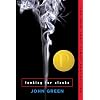
Looking for Alaska

Based on 34,122 reviews
Condition: Used - Good
Checking for the best price...
$5.73
Save $9.26 was $14.99

Buy Now, Pay Later


As low as $1 / mo
  • – 4-month term
  • – No impact on credit to apply
  • – Instant approval decision
  • – Secure and straightforward checkout

Ready to go? Add this product to your cart and select a plan during checkout.

Payment plans are offered through our trusted finance partners Klarna, Affirm, Afterpay, Zip, Apple Pay, and Google Pay. No-credit-needed leasing options through Acima may also be available at checkout.

Learn more about financing & leasing here.

Free shipping on this product

FREE 30-day refund/replacement

To qualify for a full refund, items must be returned in their original, unused condition. If an item is returned in a used, damaged, or materially different state, you may be granted a partial refund.

To initiate a return, please visit our Returns Center.

View our full returns policy here.


Availability: In Stock.
Fulfilled by GREENWORLD BOOKS

Arrives Nov 8 – Nov 10
Order within 21 hours and 41 minutes

Available payment plans shown during checkout

Protect Your Purchase

Easy claims online, fast replacements, no fees

Checking for protection plans...

At a glance

Condition
Used - Good
Dimensions
5.5 x 0.58 x 8.25 in
Weight
2.31 lb
Publisher
Penguin Books
Publication date
December 28, 2006
Edition
1st
Language
English

Description

The award-winning, genre-defining debut from John Green, the 1 bestselling author of The Anthropocene Reviewed and The Fault in Our Stars Winner of the Michael L. Printz Award • A Los Angeles Times Book Prize Finalist • A New York Times Bestseller • A USA Today Bestseller • NPR’s Top Ten Best-Ever Teen Novels • TIME magazine’s 100 Best Young Adult Novels of All Time • A PBS Great American Read Selection • Millions of copies sold! First drink. First prank. First friend. First love. Last words. Miles Halter is fascinated by famous last words—and tired of his safe life at home. He leaves for boarding school to seek what the dying poet François Rabelais called the “Great Perhaps.” Much awaits Miles at Culver Creek, including Alaska Young, who will pull Miles into her labyrinth and catapult him into the Great Perhaps. Looking for Alaska brilliantly chronicles the indelible impact one life can have on another. A modern classic, this stunning debut marked 1 bestselling author John Green’s arrival as a groundbreaking new voice in contemporary fiction. Newly updated edition includes a brand-new Readers' Guide featuring a Q&A with author John Green Read more

Specs 10

Publisher Penguin Books
Publication date December 28, 2006
Edition 1st
Language English
Print length 272 pages
ISBN-10 0142402516
ISBN-13 11
Item Weight 2.31 pounds

Frequently asked questions

If you place your order now, the estimated arrival date for this product is: Nov 8 – Nov 10

Yes, absolutely! You may return this product for a full refund within 30 days of receiving it.

To initiate a return, please visit our Returns Center.

View our full returns policy here.

  • Klarna Financing
  • Affirm Pay in 4
  • Affirm Financing
  • Afterpay Financing
  • Zip Pay in 4
  • Financing through Apple Pay
  • Financing through Google Pay
Leasing options through Acima may also be available during checkout.

Learn more about financing & leasing here.

Top Amazon Reviews


Powerful, sad, thought provoking look at depression, loss of people we love, and suicide.
Format: Paperback
One warning, if you suffer from depression and/or suicidal thoughts, this book may not be a good story to read. The depth of this book, in terms of looking at depression, suicide and loss, really surprised me. I have been trying to find books to help me understand several people I have personally known well, two of whom committed suicide, and my oldest brother who drank himself to death. I have found it really difficult, but helpful, to find books that might help me get my head around the fact that no matter how well we think we know someone, or want to help them, mental health disorders, depression and suicide have sides to them that make it difficult to actually understand the depth of their problem. So, after reading other books like Thirteen Reasons Why, All the Bright Places, The Perks of Being a Wallflower, and others, this book Looking For Alaska had so many poignant points that I found more helpful than the other books. First off, John Green’s characters were well constructed in terms of the tight knit circle of freinds who were there for each other, going through many of the issues of belonging, where do I fit in, etc, of the teenage angst many go through. Much of this book made me think of the more recent pain my daughter went through in high school, which was brutal at times. But, these are timeless issues, and it was easy to think back to my own issues many years ago. Alaska Young, the main character, was very well written. She was beautiful, funny, smart, well liked (to a point), but there were moody, unpredictable sides of her that were hard to understand (which is very true of depression and mental healt issues). Our storyteller Pudge, is smitten with her, as most guys her age would be. And they become best friends. But, there is The Colonel, Pudge’s roommate, funny, smart, with a huge chip on his shoulder for rich and priveledged kids their age. He is likeable and very smart, as well. He has also known Alaska for several years and knows how moody and capricious she can be. Other members of their group take in Takumi and Lara. As the story shows the fitting in issues, Alaska is a character it’s so easy to like. She’s full of life, brightens up the room with her smile and coquettish behavior, but, what’s also likeable, she is always clear with anyone that she has a boyfriend she adores. Two main themes throughout the narrative is that Pudge is driven by a quote he read, that is now directing his life, which states “I go seek a Great Perhaps.” He is looking for more. Alaska is obsessed with something she read in a novel talking about the struggle of life, which states, “How will I ever get out of this labyrinth?” As the story continues, you realize that Alaska flies off the handle, suddenly withdraws from everyone, and no one can understand this side of her. Most of all Pudge. One of Pudge’s and Alaska’s classes together is religion and philosophy. This is a great tool used by the the author to confront many of the issues unfolding. To get to the point, as you see Alaska boldly act brazenly at times, impetuously, and take blame before a panel that caught them all smoking, and other things along these lines, her behavior seems at times self destructive. She drinks a lot and even makes a comment to her friends, when asked why she chain smokes at times, inhaling so hard, she says she does it to kill herself. Green does a great job making her complex in ways that people with mental health issues are really complex. They can be hard to understand and unpredictable. And this is Alaska. There is a point in the book, when they are all drinking heavily, and Alaska suggest they play a drinking game and tell their best day ever, and their worst day ever. They’re all very drunk. And Alaska admits that when she was a little girl, her mother died of an aneurysm right in front of her, and she had didn’t know what to do, but just sat with her waiting for her to wake up. And when her father came home he made it clear that it was her fault her mother died. Why didn’t she call 911? And so on. We find out Alaska is a tortured person and can’t break free of it. Needless to say, later in the story, while all drinking, Alaska gets a phone call in the middle of the night from her boyfriend. No one knows what’s said, but she is horribly distraught and crying uncontrollable, and she has to leave, has to get out, and she tears off and she dies that night. And the big question is was it suicide? And of course, her friends helped her leave because she “had to” so badly. And now they are tortured by the reality that they could have stopped her. The kinds of questioning and guilt Green discribes is so astute and tears at your heart if you have ever suffered real loss of a loved one, especially if it was from suicide or under tragic circumstances. The Religion class resurfaces as it turns out Alaska had written her final essay paper on “How will we ever get out of this labyrinth of suffering?” The teacher, who admired Alaska, and in helping students cope, he puts her question on the blackboard, and he turns her question into an essay question for them final exam for everyone to grapple with. This was a clever device in the story as Pudge comes to grips, and we as the readers try to understand the seemingly senseless loss. The Pudge’s essay answer is a wonderful wrap up to the story. He uses things they learned from Buddhism to state things like, all things that come together will fall apart, and all things are interconnected, so that the loss of Alaska, she isn’t truly lost. “Maybe she was just matter, and matter gets recycled.” But, Pudge also realizes that even as sad and tragic as Alaska’s life was, it didn’t have to end that way. Pudge writes, “Awful things are survivable,” and he wishes he could have told Alaska that. And that we are as indestructible as we believe ourselves to be. ... show more
Reviewed in the United States on March 23, 2019 by MJ Smith

Would I want my teens to read this book?
Format: Paperback
Yikes! oral sex on a first date in a YA novel... Though Miles "Pudge" Halter is a somewhat more appealing coming of age narrator than the boring Holden Caulfield, I was, as both high school English teacher and parent of a son and daughter, more than a little shocked by the gallons of alcohol and countless number of cigarettes smoked by the charismatic, but self-destructive Alaska and her prank-obsessed clique at the Culver Creek Boarding School in Alabama. Would I want my own son and daughter reading this novel? Should I timidly place Green's award-winning book on the overcrowded, independent reading bookshelf in my classroom and risk being chewed out by an outraged parent, dragged before the school board, and fired? (Fired being the modern day equivalent of the state approved poisoning of Socrates by the powers that be/were for corrupting the minds and morals of Athenian youth) I have taught at both public and prep schools, secular and religious, in big city and small. More than anything I hope to inspire my students to be--well, life-long readers who are book crazy, who get deeply and deliriously moved by what the characters in books DO and choose NOT TO DO, thinking and feeling deeply, so they can become--and I know this sounds corny--better people and wiser citizens of Planet Teen. (I hereby amend Sartre's definition of existentialism: "We are what we do" to "We are what we don't do") when it comes to the big and small matters of the heart. The writer part of me thinks that Green's "famous last words" is a gimmick, but the reader part of me was deeply moved and truly enjoyed discovering the last words of Tom Edison and others. In today's hurly burly society with digital gadgets galore, reading is one of the last few places where a young adult gets time to THINK. And teens will think when they read "Looking for Alaska". No parent wants his or her teen to get into a car drunk. Every parent hopes that if the teen does, true friends will arm wrestle the keys away, if necessary, because drunk driving has tragic consequences; and yes, we are all responsible for one another--especially the teen bystander who has the most power to help a friend in need. The "before" and "after" structure of Green's inventive novel, gives teen readers space to think about the life and death choices they make and cannot unmake. There's a lot of talk in high schools about consequences and teen's taking responsibility for their choices. In fiction, students get to live many lives, walk in the shoes of teens who are alike and different from them, and hopefully become more discerning, more compassionate. More. Few of us will become as rich or as successful as John Green. But all of us have a chance to be that Good Samaritan, the one who makes the difference in somebody else's life among our own circle of friends. So, despite the vulgarity, despite the wholly offensive oral sex scene which the Catholic mother in me wants rip out (my heart aches for Lara), I reservedly praise this controversial novel. Because I think, I hope what John Green is trying to do, besides earn money as an author, is tell a good and perhaps even wise story that encourages teens to press the pause button, to stop and reflect on what happens after you have clumsy, unromantic sex, and the boy dumps you, to think about how your behavior may or may not be enabling what may very well become a lifelong addiction for another, more vulnerable human being. Readers of LFA will discover what goes terribly awry when unresolved grief eats away at you, discover what is it like to be the nerd, the trailer trash scholarship geek, the rich preppie, and the desperately seeking bipolar alcoholic who though pretty and smart is profoundly unhappy. My favorite character was the Old Man, the old-fashioned religious philosophy teacher. But, there was a character missing in this novel--the guidance counselor, that caring adult, a teacher or janitor somebody grown-up who would have discerned how lost and on the edge Alaska was, and helped her heal from the guilt surrounding the death of her mother. Unlike Margot Roth Spiegelman in "Paper Towns", I found Alaska Young to be a deeply sympathetic, dangerous character who betrays her roommate, Lara, and Miles. In many ways, this is a very ethical book. Miles goes the distance is looking, not just for Alaska and the Great Perhaps of whether she committed suicide or not, he goes the spiritual miles of looking for forgiveness, a very Christian idea. BTW, my own nephew, the irreplaceable and wholly awesome Mark Jr, was killed by a drunk teen driver, when he himself was just a teen. By some fault in the stars, I read "Looking for Alaska" near the anniversary of Mark Jr.'s death. I give "Looking for Alaska" four stars, minus one for the obvious parental reasons. I would consider teaching it in a community college freshman class, but nope, not high school,even thought it has all the hot button topics that need to be discussed in the high school classroom. I reserve five stars for Marjorie Kinnan Rawlings' sublime "The Yearling" and Louisa May Alcott's "Little Women". They sure don't write YA novels like they use to. And that is truly a shame. A coda to best selling and immensely talented YA author, John Green: "less is more" when it comes to all things vulgar in YA novels. You do, as an artist, have a responsibility to your impressionable YA readers and our culture at large to uplift both. Yes, I know: "Romeo and Juliet" has vulgar language and bawdy scenes too, but I won't get fired for teaching Shakespeare. This novel is not representative of the "average" American teen; it is a rich white boy's lament, which is why it fails--like the "Knock, Knock" joke. ... show more
Reviewed in the United States on July 6, 2014 by bjk

An excellent debut novel from Green, for Adults and Young Adults alike.
Format: Paperback
"Grade 9 and up." "Young Adult." "Inspire young people." Those phrases all turned me off of this novel, which I had been interested in after becoming a fan of John Green's vlog on YouTube. After becoming so familiar with the author, I was curious as to his writing. However, I'm around 20 years late from being able to claim the title of a "young adult," so I assumed I was too old for this book. I don't really know what classifies as book as "young adult," and could only associate things like Judy Blume, which I read as a kid. But the recommendations from here, and the startling realization that I have already read and enjoyed other YA books (Harry Potter, The Golden Compass, etc) fortunately changed my mind. As it turns out, "Young Adult" literature is mainly characterized by having a young protagonist, fewer characters, and a limited time span. "Looking for Alaska" reads in every way like any other "adult" novel that I might enjoy. My fears that the book would be "dumbed down" for kids or have large text were unfounded. "Looking for Alaska" revolves around the protagonist, Miles, and his social relationships with some new friends at boarding school, especially the self-destructive and beautiful Alaska Young. They share a common enjoyment of smoking, drinking, intelligence, and pranks. Saying much more would be revealing too much of the plot. I've seen the criticisms that this book is not suited for young adults due to the themes of drinking and sex. While I understand some parents' concerns, I found nothing in this book that any 10 year old does not already know, or sees on TV and in music every day. The language is very limited and fairly mild. 9 years old may be a little young for the subject matter in this book but 11 and up should have no problems. I initially checked this book out of the library. After finishing, I purchased it on Amazon, which is the first time I've ever bought a book I've already read. I was so impressed with Green's writing that I wanted to own the book so I could let friends borrow it and keep it in my library. With the exception of one or two others, I've never felt such an emotional connection with the characters of a book before. I found myself very involved with their lives in the story, which is a testament to the extraordinary character development that takes place in as little as 100 pages. This novel mainly centers around that character development, however there is enough "action" to keep the plot moving along and the story from getting boring. While it's not the most entertaining, out of the thousands of novels I've read in my life, John Green's "Looking for Alaska" definitely falls somewhere in the top 10 of the best written. It has already been recognized as such by the Young Adult Library Services Association, having received the Michael L. Printz Award for excellence in young adult literature (Green's follow up novel An Abundance of Katherines, was a runner-up the following year and received a Printz honor). I would definitely recommend this book to any age group, but especially anyone who is interested in writing and wants to see an example of great literature. ... show more
Reviewed in the United States on October 11, 2007 by Jacopo

Beautifully Witty and Existential, yet Heartwarming and Hopeful
Format: Kindle
I finished this book with tears in my eyes, existential dread… and a new resolve to live my life more fully. This book will leave young pondering deep questions and with a new desire to not settle for a minor life but instead pursue the “Great Perhaps”. Shout out to my wife for suggesting this incredible book to me. ... show more
Reviewed in the United States on September 4, 2026 by Jeremy Pierce

Well Written, but a Tad Unrealistic...Too Sexual For YA
Format: Kindle
Sometimes I think I wanted to give this four stars, but then I keep going back to three and in the end settled for three because of a couple of things. Had nothing to do with the writing. Author is damn good. Extremely talented. The sexual content is NOT for a YA category. I did a little research and found that YA means 12 and up. EXCUSE ME??? I am by no means an archaic person, but too many sexual descriptions and situations are not meant for little kids. It's too bad too, because with the removal of one or two parts, more parents would be encouraged to have their teens read this. I was really a bit peeved learning teachers allow this in school and the author jokes about not doing the kids homework for him at the discussion towards the tail end of this book, once the story is over. Reading about blow jobs with a clear description of two juniors doing this together is not ok. I remember having to get permission slips signed for reading certain books in high school and my parents would not have allowed this one. Who in the hell wants their 12 year old or Even 13, 14 or 15 reading about blow jobs? Moving on... The story was very, very well written. I think the only problem I had with it was the kids reactions after Alaska died. Her friends kept talking about it over and over and over again. Day after day, week after week, hour after hour. Picking it apart fact by fact, then starting all over again. On and on for more than three months. They did not grow up with her. It wasn't a sibling or a parent. Yup. I think teens especially would get hit hard after losing one of their friends, but the book took up way too many chapters (nearly half the book) with two of the main characters talking it to death and with Pudge failing several tests after that? When did his progress report get sent home? Never happened. I almost stopped reading. Couldn't take it anymore. We get it....She died. It all got a bit monotonous. My view point comes from a much older adult, so maybe someone thirty years younger may read this and really identify. Don't know, but anyone and everyone can say they knew someone in school who died. I lost several friends while in school, probably more than some even, but none of it ever played out like things did in this book. I had a classmate (the nicest guy), who would come to class wearing ankle weights and would laugh telling us he was tired of being so skinny and wanted to bulk up. At the beginning of the next semester, he stopped coming to school. We found out later that he had had leukemia and never told anyone. The weights were to build up strength. We talked about it for a week. Another friend at 14, plowed into a brick wall on a motorcycle. Killed instantly. Wasn't discussed past a few days. Not among all of us kids. It was just a sad, tragic accident. My friends older sister died in a car accident on her way home from her boyfriends house one Saturday night. Same thing. Discussed some and little bits here and there over time, but that's it. A boy I had a crush on frequently camped out with his guy friends at a campground where they'd make a campfire and hang out on weekends playing music, shooting out cans and bottles and just having fun. One night our friend got up from the campfire and walked off out into the dark. The guys heard a gunshot. He had killed himself. No suicide note left. They had wondered if he had been angry with any of them and yes, they talked about any signs that may have been there, but we were all fifteen years old. You went on. After a couple of weeks, you didn't go day to day talking about it every second. Maybe this book just seemed like they were harping on this a bit too much, but I've been there. Just didn't seem real. Even at fifteen, you know it's not you who made that choice and you know you'll never have all the answers you want. I liked everything about this book except for the extreme amount of time spent on yakkin about Alaska and why and how and on and on. Just didn't feel authentic to me and I've lived it and remember wondering if any of us had done something to push him into the decision he made that night. While devastating and extremely sad, kids are pretty resilient and don't sit there for months talking things to death or reenacting a timeline. ... show more
Reviewed in the United States on February 24, 2015 by SkylarRose

A Tremendous Trip! Long Live Alaska Young!
Format: Kindle
Alaska is a place. You can find it deeply embedded within the fisted heart of Miles `Pudge' Halter. He who set out to discover the Great Perhaps found it burning brightly in the person of Alaska Young. Sometimes, though, you have to be careful what you ask for. The Great Perhaps is a fabulous journey...and a tumultuous burden. Looking for Alaska is one of those books you cling to at the end. I know this doesn't make sense, but the love I have for LFA makes me think of A Separate Peace...not the book itself, but the love I have for it. That's how it goes sometimes, and for no definable reason...you equate books by the feelings you get when reading them, not by subject matter or similarities they share. Book love. It's an odd thing. These two books will always be intertwined in my brain not because they're in any way similar, but because the feelings I experienced while reading them were. That being said, I absolutely adored Looking for Alaska. FAVOURITE QUOTES: ~ 'She had the kind of eyes that predisposed you to supporting her every endeavor.' ~ 'The Great Perhaps was upon us, and we were invincible.' ~ 'We ran like we had golden shoes.' ~ 'We are as indestructible as we believe ourselves to be.' ~ `I wanted to be one of those people who have streaks to maintain, who scorch the ground with their intensity. But for now, at least I knew such people, and they needed me, just like comets need tails.' When I say these are some of my favourite quotes, I may be downplaying it a bit...these are tattoo-able, especially the second quote. Green has such a way of working life mantras into his prose...he probably doesn't even realize he's doing it. He's an absolute master at it! Alaska Young kind of deserves the pedestal her friends and co-students almost unwittingly put her on. Alaska Young is awesome. Our narrator knows it, too. Pudge (Miles Halter) may have been late to the party, but he definitely arrived at just the right spot when he got there. He arrives at Culver Creek Boarding School a year after everybody else...but he gets to share a room with The Colonel, Alaska's best friend and confidante. That puts Pudge right in the middle of the Great Perhaps that he craves so obsessively. I loved Pudge's uniquely quirky ability to memorize famous last words...and perhaps this is the personality trait that intrigued his new friends and quickly ingratiated him into their lives. Without it being said, I had the feeling that these new people in Pudge's life--The Colonel, Alaska, Takumi, Lara--these were the in-crowd. And he effortlessly fell in with them. Pudge becomes instantly enamoured with Alaska Young, a girl who is always referring to her off-campus boyfriend...always pointing out that she is not available. She is the risk-taking, free spirited girl who is comfortable with whoever she is on any given day...on the surface. She's the girl that everybody wants a piece of--they sense her magic, she is the centre that the rest of the Culver Creek Boarding School orbits around. But there are complications and secrets in the life of Alaska Young. Viewed through the eyes of our narrator, we begin to put the pieces of Alaska Young together. Pudge becomes one of the tails to her fiercely burning comet. He allows the story he is telling to be about her, not him. John Green is a complete and utter MASTER. I can't even get into what happens in this novel without plastering SPOILER ALERT all over everything, but I will say it is kind of broken down into a BEFORE and an AFTER. There is a great event that ricochets the dynamic circle of friends into a cyclone of emotion. There are a lot of hi-jinx and one-upping in the BEFORE, as everybody tries to outdo everybody else in the practical joke department. And there is a lot of introspection in the AFTER...a lot of questioning, soul-searching, etc. Looking for Alaska is an amazing character study. Phenomenal characters you will love forever! This is definitely in my pile to be read yearly. Right there beside my beloved copy of A Separate Peace. You're gonna love this one! It's my favourite John Green title. Expectation: Out of the water! ... show more
Reviewed in the United States on August 20, 2012 by Kevin Craig

Overall, a powerful book for young adult readers
Format: Kindle
This is my daughter’s (second) favorite book (‘Divergent’ is first). She asked me to read it and I was very happy to do so. After I finished the book she and I spent a long time talking about the book and it was a wonderful way to connect with her. in this novel Alaska is not a place but rather a person, a teen girl who was given the opportunity by her “Hippy” parents to select her own name. She attends Culver Creek boarding school where our story’s protagonist, Miles Halter, decides to attend after two unhappy & friendless years in his hometown high school. Upon arrival at Culver Creek Miles is immediately befriended by his roommate, Chip "The Colonel" Martin, and bestowed with the nickname “Pudge” (because he is thin). Their first outing together is to Alaska’s room, where everyone goes to score cigarettes & booze. Alaska, Pudge, The Colonel and a Japanese student named Takumi Hikohito soon become inseparable friends. The Colonel is the studious one, dedicated to earning excellent grades so that he can graduate, get a good job and buy his single mother a real home so she can move out of the trailer park. Alaska is the wild one, always engaged in outrageous and self-destructive behavior*. *Note: I read this book shortly after reading another of John Green’s books entitled ‘Paper Towns’. It’s always a mistake to read two books by the same author in quick succession because similarities are bound to arise that can spoil the current book. That is, unfortunately, what happened here. There was a teen female character in ‘Paper Towns’ who was so self-absorbed and self-destructive as to be infuriating and I’m afraid that character colored my impression of Alaska, whom I otherwise might have been more sympathetic to. The novel is set up in chapters entitled “so&so many days before”, etc. so the reader knows that we are heading towards a life changing event of some sort. I especially liked this format as it felt to me the way that the human mind actually organizes itself: we remember things as being “Before” or “After” a life changing event. Another thing I liked about the book was the fact that the adults were portrayed as real human beings rather than the cardboard figures they frequently are in Young Adult novels. The school director and the religion teacher each played significant roles as fully developed emotional people and I appreciated that (one gets tired of Young Adult novels in which the entire world seems made up of teenagers). I also like the way Green incorporates learning into his novels. In ‘Paper Towns’ I came away from the novel with a greater understanding of Walt Whitman’s famous poem ‘Leaves of Grass’ and also with a knowledge of the existence of “paper towns”, a concept which I had not been familiar with before. In this novel the ideas being presented for the reader to contemplate are rather intense philosophical ones. The religious studies class essays that the kids work on throughout the book deal with such questions as “What is the meaning of life?” and “How can we survive the struggle that is life?”. The kids are encouraged to reflect on these questions within the context of the world’s major religious teaching and it all makes for some pretty thought provoking reading, even for an adult. The event that the “before” and “after” chapters allude to is Alaska’s death. She dies in a drunken car wreck and the boys blame themselves for letting her drive drunk before they begin to realize that she may in fact have committed vehicular suicide in which case they blame her for their suffering and guilt. Once again, pretty profound stuff. Overall, a powerful book for young adult readers and not too bad even as an adult read. ... show more
Reviewed in the United States on February 4, 2016 by ZC

Realistic brilliance!
Format: Paperback
John Green has published numerous brilliant books for the world, which both young and old adults have not only cried, but also laughed over. His writing is relatable, allowing the reader to connect to the book on a deeper level than other novels. Looking for Alaska manages to display exciting adventures using 100% real life characters and settings. The novel contains a number of thrills, pranks, and humor, the majority of which take place on one campus, all in less than 250 pages. Living with a minor life in Florida, Miles “Pudge” Halter, who memorizes last words as a hobby, makes the transition from old life to his new, more appealing one at a boarding school in hot and dry Alabama. Upon his arrival, not only does he realize he must transition from the hot, humid weather of his home state to the more awful, hot air of his new home, but he also must transition from a life of innocence to a life full of smoking, drinking, and interacting with a gorgeous girl. Miles’s journey of recreating himself unfolds as he meets new friends, new love interests, and even gets himself into a bit of trouble. The time he spends there makes his old life look even more depressing, until a disastrous event happens halfway through the book. The second half of the book shows how Miles, as well as his friends, cope with this disaster while they search for answers as to what might’ve caused it. Looking for Alaska not only becomes a mystery, but also questions how to escape the “labyrinth” of the world. Looking for Alaska is a fairly easy read, which will more than likely keep you on your feet the whole time with humor and interesting characters. It contains mature humor, scenes, and language, so it may be inappropriate for young children or tweens; not only because of the dirty details, but also because it takes maturity to appreciate the book. I would highly recommend this novel to you if you are a teenager or in your early 20’s, specifically because the connections you are able to create with the characters and situations are unreal. As a teenager myself, I can say I felt a connection to the book; one of my favorite quotes, occurring at the end of the novel, tells about the invincibility of teenagers and humans as a whole. After describing that energy cannot be created or destroyed and humans therefore are indestructible, John Green goes on to say “When adults say, ‘Teenagers think they’re so invincible’ with that sly stupid smile on their faces, they don’t know how right they are” (Page 220). Although this is only a taste of the book, you can see the appeal it has to teens, as well as the hint of understanding it contains. In addition, although the entire book is fabulous, I do have to say that the first half really is the heart of the book. After the first half, the chapters seem to lack something. Whether this is the lack of something, or someone, Looking for Alaska still remains a good read, especially because the ending of the book pulls the novel together. Throughout Looking for Alaska, there is a search for the meaning of life, but more specifically what happens to us after we pass on. If you enjoy books with a deeper meaning than what is on the surface, I recommend this novel to you. All in all, Looking for Alaska is both a thrilling and somewhat heartbreaking book that tells a story of pranks and adventures, all while searching for a deeper meaning at the same time. I can guarantee you will come out of it with a better understanding of your life, which is why I highly recommend taking the time to read this book. ... show more
Reviewed in the United States on November 2, 2016 by CHARLES J. PARRY
Checking for best price...