
Search  for anything...

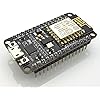
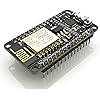
HiLetgo 1PC ESP8266 NodeMCU CP2102 ESP-12E Development Board Open Source Serial Module Works Great for Arduino IDE/Micropython (Small)

  • Based on 2,935 reviews
Condition: New
Checking for the best price...
$7.99 Why this price?
New Year Deal · 33% off was $11.99

Buy Now, Pay Later


As low as $1 / mo
  • – 4-month term
  • – No impact on credit
  • – Instant approval decision
  • – Secure and straightforward checkout

Ready to go? Add this product to your cart and select a plan during checkout.

Payment plans are offered through our trusted finance partners Klarna, Affirm, Afterpay, Apple Pay, and PayTomorrow. No-credit-needed leasing options through Acima may also be available at checkout.

Learn more about financing & leasing here.

Selected Option

Free shipping on this product

FREE refund/replacement until Jan 31, 2026

To qualify for a full refund, items must be returned in their original, unused condition. If an item is returned in a used, damaged, or materially different state, you may be granted a partial refund.

To initiate a return, please visit our Returns Center.

View our full returns policy here.


Availability: In Stock.
Fulfilled by Amazon

Arrives Thursday, Feb 12
Order within 20 hours and 46 minutes
Available payment plans shown during checkout

Protection Plan Protect Your Purchase
Checking for protection plans...

Size: Pack of 1


Features

  • Built-in Micro-USB, with flash and reset switches, easy to program
  • Arduino compatible, works great with the latest Arduino IDE/Mongoose IoT/Micropython
  • Data download access to the website: http://www;nodemcu;com

Description

An open-source firmware and development kit that helps you to prototype your IOT product within a few Lua script lines.Open-source, Interactive, Programmable, Low cost, Simple, Smart, WI-FI enabled

Brand: eleduino


Model Name: NodeMCU


Memory Storage Capacity: 4 MB


CPU Model: MediaTek MT8125


CPU Speed: 8E+1 MHz


Processor: ‎8E+1 MediaTek_MT8125


RAM: ‎LPDDR4


Wireless Type: ‎802.11b


Brand: ‎eleduino


Series: ‎NodeMCU


Item model number: ‎3-01-0268-1


Operating System: ‎Linux


Item Weight: ‎0.317 ounces


Product Dimensions: ‎1.57 x 1.57 x 1.57 inches


Item Dimensions LxWxH: ‎1.57 x 1.57 x 1.57 inches


Processor Brand: ‎Espressif Systems


Number of Processors: ‎1


Voltage: ‎5.5 Volts


Department: ‎baby-boys


Manufacturer: ‎REES52


Is Discontinued By Manufacturer: ‎No


Date First Available: ‎June 30, 2015


Frequently asked questions

If you place your order now, the estimated arrival date for this product is: Thursday, Feb 12

Yes, absolutely! You may return this product for a full refund within 30 days of receiving it.

To initiate a return, please visit our Returns Center.

View our full returns policy here.

  • Klarna Financing
  • Affirm Pay in 4
  • Affirm Financing
  • Afterpay Financing
  • PayTomorrow Financing
  • Financing through Apple Pay
Leasing options through Acima may also be available during checkout.

Learn more about financing & leasing here.

Top Amazon Reviews

  • Best ESP8266 dev board out there!
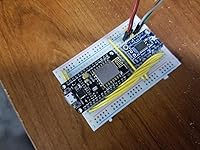
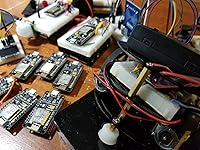
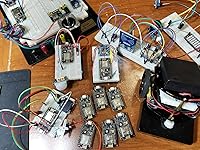
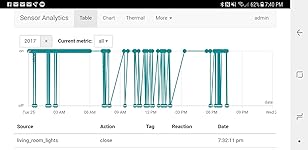
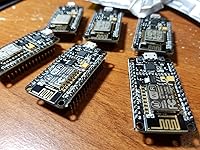
The media could not be loaded. July 25th Review Update ============ I ordered 6 more pieces last night, and I got all of them following day. I installed Micropython on all of them and activated WebRepl, and I have no issues so far. All of them worked! I'm attaching new screenshots (the one with a fleet of NodeMcu's). Included in this screenshots are some of the projects I have done with this board: 1. Thermal camera sensor 2. Motion detector 3. Robot car 4. Laser tripwire system with RFID-based card access 5. Stepper motor with DRV8825 driver integration 6. Micro servo with OLED screen / Hall Sensor switch All of these are programmed with Micropython. I have also attached screenshots of my frontend and backend Raspberry-based data collector and analytics program (my own platform). The point of these screenshots is to show what's possible with this board. So far out of my 19 NodeMcu boards, 17 are perfect. The other two were failure because one of them was never delivered and the other one won't allow any firmware installation. Amazon has refunded those two by the way. July 10th Review Update ============ So I ordered two more. However one of them was missing. Amazon only delivered one! The other one isn't accepting firmware updates. I wasted a week of waiting for the delivery and talking to support. The good thing is Amazon refunded both, and HiLetGo email tech support is able to provide "moral" support. At least they are responsive. So at the end the delivery part was Amazon's fault because what HiLetGo does is they delivery the items to Amazon and Amazon is the one who fulfills the order. Now the other board that's malfunctioning seems to HiLetGo's fault. I am at odds whether I should reduce my rating from 5 stars to 4 or 3 stars. I looked for alternatives but I can't find any reliable sellers with reliable reviews. So I still went with HiLetGo. I ordered an extra 5 boards again. And they all worked fine. It took 2 mins to flash the firmware. So 10 good boards versus 1 missing and 1 malfunctioning (which both got refunded) I think should offset the bad experience I had. Comment below if you agree or not. As part of my research why this other board isn't flashing correctly because of "espcomm_sync failed" errors, it seems it's a hardware misconfiguration. There were suggested workarounds but they didn't work for me. Google "nodemcu espcomm_sync failed" for solutions since I am not allowed to post a URL here. Also Google "Comparison of ESP8266 NodeMCU development boards" to get more information on various NodeMcu boards. I say get the Amica-based NodeMcu board. It's the easiest and most reliable. The good thing is HiLetGo carries the Amica-based NodeMcu. So far the projects I have made with this board are: * Robot car * Magnetic reed switches for door and mailbox * Joystick controllers * Rfid controller * Weight sensors * Neopixel controllers I still prefer this board over the Adafruit Huzzah and Wemos. Recently I've dabbled with Ultrasonic Sensors and Relay. This board also worked flawlessly but the Olimex board seems better but pricier because it has integrated relay. I guess that's not really better because you can buy an extra relay and put it with the NodeMcu. Jun 29th 2017 Review Update ============ So I ordered two of these again since they are the most reliable ESP8266 dev board out there (for the cheapest price). Oh I've tried them all (Huzzah, Olimex, Wemos etc). If you think I haven't, send me a message and I will order it. Today I had a hiccup with uploading Micropython. It won't flash. The same commands that worked on my previous two NodeMcus worked flawlessly from these same vendor. But now it won't. I figured I have to use special flash mode when using esptool. Now it's working again. So for those who are using Micropython and flashing the firmware with esptool, here's the commands that I'd suggest you try 1. Erase first. This assumes you update the PORT accordingly esptool.py --port /dev/tty.SLAB_USBtoUART erase_flash 2. Upload the firmware. This assumes you went to Micropython and downloaded the firmware! The "-fm dio" is CRITICAL for these latest two dev boards I ordered. Previously I didn't need those. I read from the docs, most NodeMcu boards use this mode. So I guess I got lucky on my first two. esptool.py --port /dev/tty.SLAB_USBtoUART --baud 115200 write_flash -fm dio 0x00000 esp8266-20170526-v1.9.bin 3. Reset and connect to your terminal to verify. Bonus content: Upload a NodeMcu LUA-based firmware: =============================== esptool.py --port /dev/tty.SLAB_USBtoUART write_flash -fm dio 0x00000 nodemcu-master-21-modules-2017-06-09-04-48-50-float.bin Note: This assumes you went to NodeMcu and downloaded their firmware. And you browse to the directory where you have this firmware. Upload a NonOS firmware from Espressif: =============================== esptool.py --port /dev/tty.SLAB_USBtoUART --baud 115200 write_flash --flash_mode dio --flash_size detect 0x00000 boot_v1.7.bin 0x01000 at/512+512/user1.1024.new.2.bin 0x3fc000 esp_init_data_default.bin 0x7e000 blank.bin 0x3fe000 blank.bin Note: This assumes you downloaded the ESP8266_NONOS_SDK-2.1.0 sdk from Espressif's website. After downloading browse to ESP8266_NONOS_SDK-2.1.0/bin directory. Screenshots from my projects ======================= I've done a couple but I think these two robots I've made are notable and shows you can control these with NodeMcu. The joystick is controlled by a mini NodeMcu (same code I used for the standard NodeMcu). Whoemever is saying this dev board is fake doesn't know a thing. Original Review ============ I ordered two of this, so I can play around with Micropython firmware (Python-based language) and the Nodemcu firmware (LUA-based language). Pros: * Solid build like a rock (compare to other ESP8266 boards) * It has everything you need. No need for a separate FTDI cable or breakout board * No need to pull down GPIOs to do a firmware flash update. It's all automatic. Firmware update with Micropython is pure magic. * No need to solder pins since they are presoldered. Of course you might need to solder the unit itself with your projects but that's a different discussion. * 4MB memory. That's 32Mbit * Price is reasonable compare to Ebay Cons * None. It just works. That's why I ordered a second one. ... show more
Reviewed in the United States on June 8, 2017 by Mark Serrano Mark Serrano

  • Awesome Board for the Price!
I have over 100 different microcontrollers that I use and have tried for various projects. There is never a one-size fits all, but this board has one primary advantage, the price. If you are familiar with the variety of boards out there one thing you probably know is that the more features you want, the higher the price. Many boards I have used that have built-in Wi-Fi, USB programming and a host of ports can cost upwards of $20. Right out of the gate, this board supports a handful of ways to program it. The two most popular (in my opinion) are Micro Python and the Arduino IDE, both of which have great support. Once you install the driver, it appears as a USB device and is easily programmed. This makes it a great startup board for any beginner as well as a go-to board for advance usage. The Wi-Fi is easy to use and reliable. I have had success with it connected it to various cloud services (did tests with Adafruit IO and Arduino Cloud). Some have complained that the port assignments do not match the board. This is true and untrue. If you understand the difference between Arduino port assignments and how manufactures assign (pin) numbers to their GPIO ports then you will understand why this is different, however, to use the board you do not need to understand any of this. When you install the board driver in the Arduino IDE, you can use pin assignments such as D0 and D1 just like you see printed on the board. Of course, you can still use the GPIO pin numbers as well. If you need to understand the pin assignments in greater detail, click the pin assignment image in the product detail and print it out, it is a great resource. In addition, the Internet is full of samples and explanations on how to get the most of this board. It is open source and many, many people are using it. Check out Adafruit as they have a board called Huzzah based on the ESP8266 and it is similar. In fact, I built a plant monitoring system using the Huzzah and then later swapped it out for this board (I needed more ports). My latest project, a plant monitoring and watering system, uses an SPI device (MCP3008), an I2C device (TSL2591) for monitoring light levels, and several other sensors. I built a small voltage regulator using a LM7805 to provide 5V power to the Vin pin, and I used the 3.3V pin to provide power to my sensors. I drive a 12V motor directly from the power supply using a N-Channel MOSFET and PWM from a digital pin to control the speed. The versatility of this board is amazing, again for such a low price! My only complaint about this board would be that it only has one ADC port that can only measure 0 to 1V. Since I have come across this limitation on other boards, and is not a limitation of HiLetgo’s design, I am still giving this board 5 stars. I use an inexpensive MCP3008 ADC chip and it works just fine while adding 8 ADC channels to my project. If you wish to see an example of my circuit and code, search GitHub using my name and look at the Plant Monitor and Watering System repository. When you using this board you need to be aware that some of the pins serve multiple purposes so you have to be careful how you use them (true with all ESP8266 based boards). For example, GPIO15 (D8) is used to detect boot mode and must be LOW when the device starts. There is a similar requirement on GPIO2. A search on the Internet this will reveal a lot of easy to follow instructions and help you not fall into issues with these ports. Again, these are limitations of the ESP8266 and not HiLetgos’s design, so I am not reflecting this in the rating. I have also confirmed what other reviewers are saying, that is, you can program this at full speed: 921600. I have not had any issue at this COM speed. In general, I am not saying this is the best and only board to buy. I think for the features and the price; this is one of my favorites! ... show more
Reviewed in the United States on June 26, 2019 by D. Porrey D. Porrey

  • Good product
Good product years later and still working well
Reviewed in the United States on August 31, 2025 by f.c.

Can't find a product?

Find it on Amazon first, then paste the link below.
Checking for best price...