
Search  for anything...

Bucktool 13-Inch Benchtop Thickness Planer, 15A 3-blade Low-Noise Benchtop Planer with Automatic Speed Adjustment, Depth Stop & Thickness Scale for Woodworking

  • Based on 2 reviews
Condition: New
Checking for the best price...
$400.00 Why this price?
Save $100.00 was $500.00

Buy Now, Pay Later


As low as / mo
  • – Up to 36-month term if approved
  • – No impact on credit to apply
  • – Instant approval decision
  • – Secure and straightforward checkout

Ready to go? Add this product to your cart and select a plan during checkout.

Payment plans are offered through our trusted finance partners Klarna, Affirm, Afterpay, Zip, Apple Pay, and Google Pay. No-credit-needed leasing options through Acima may also be available at checkout.

Learn more about financing & leasing here.

Free shipping on this product

30-day refund / replacement

To qualify for a full refund, items must be returned in their original, unused condition. If an item is returned in a used, damaged, or materially different state, you may be granted a partial refund.

To initiate a return, please visit our Returns Center.

View our full returns policy here.


Availability: Only 10 left in stock, order soon!
Fulfilled by Amazon

Arrives Sunday, Aug 9
Order within 18 hours and 6 minutes
Available payment plans shown during checkout

Protection Plan Protect Your Purchase
Checking for protection plans...

Features

  • Low-noise motor with automatic speed adjustment:The motor runs at low speed on startup, automatically increases speed when the workpiece enters the planing area, and returns to low-speed operation about 34 seconds after the workpiece exits for quieter and more efficient planing performance
  • Powerful 15a benchtop thickness planer:Powered by a 120V/60Hz, 15A motor, this benchtop planer delivers smooth and efficient stock removal with a feed speed of 24.6 FPM, making it ideal for a wide range of woodworking tasks
  • 13" planing width, 6" thickness capacity and up to 1/8" max cut depth:Designed for versatile woodworking applications, this thickness planer handles workpieces up to 13 inches wide and 6 inches thick, with a maximum cutting depth of 1/8 inch per pass
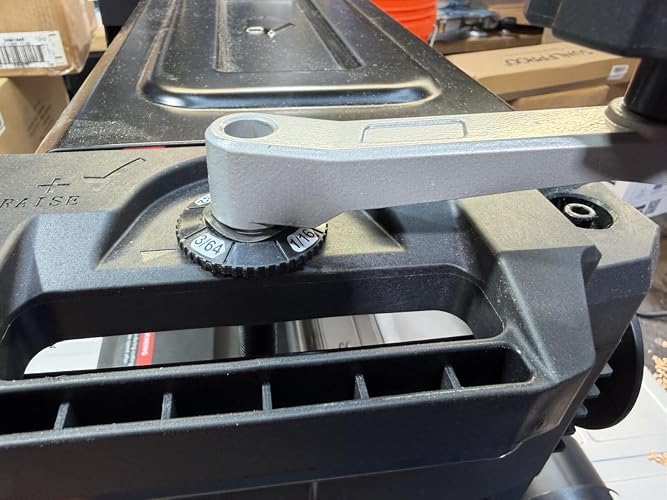
  • 3-blade cutterhead with thickness scale and depth stop:The 3-blade cutterhead helps provide consistent cutting performance, while the thickness scale, fine-adjustment dial, and fixed depth function allow more precise and repeatable thickness settings for woodworking projects
  • Dust extraction connector, carrying handle and 2-year limited warranty:Includes a dust extraction connector for cleaner indoor operation, a carrying handle for easier positioning, and a 2-year limited warranty for added peace of mind

Brand: Bucktool


Power Source: Corded Electric


Cutting Depth: 0.13 Inches


Included Components: thickness planer


Number of Items: 1


Brand Name: Bucktool


Model Number: PT330MTHK-3


Included Components: thickness planer


Manufacturer: BUCKTOOL


Power Source: Corded Electric


Cutting Depth: 0.13 Inches


Input Voltage: 120 Volts


Cutting width: 13 Inches


Frequently asked questions

If you place your order now, the estimated arrival date for this product is: Sunday, Aug 9

Yes, absolutely! You may return this product for a full refund within 30 days of receiving it.

To initiate a return, please visit our Returns Center.

View our full returns policy here.

  • Klarna Financing
  • Affirm Pay in 4
  • Affirm Financing
  • Afterpay Financing
  • Zip Pay in 4
  • Financing through Apple Pay
  • Financing through Google Pay
Leasing options through Acima may also be available during checkout.

Learn more about financing & leasing here.

Top Amazon Reviews


  • Five Inches Wider, and a Good Deal Quieter - A 13-Inch Benchtop Planer Five Inches Wider, and a Good Deal Quieter - A 13-Inch Benchtop Planer
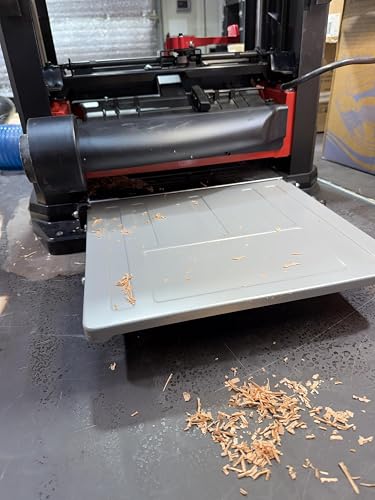
Every cabinet door wider than about sixteen inches starts the same argument in my shop. A 24-inch door wants a 24-inch panel, and the sound way to get there is to glue up two boards of flat, dressed stock - call it two pieces a hair over twelve inches each, because I add a half inch to the width for saw kerf and fit and trim back to the line afterward. The hitch has always been my other planer: it is half of a combination jointer-planer, and it tops out at eight inches wide. Eight inches will not surface a twelve-inch board, so the wide panels have meant working around a tool that could not quite reach. This 13-inch benchtop planer is five inches of fix, and in a shop those five inches are the whole ballgame. ——— Where Things Stand A word before I praise it, because I will not oversell a tool I have not yet bolted down. The new bench is built, but this planer is not living on it permanently yet. A planer is a particular houseguest about space - it needs a clear, straight shot for stock to feed in one side and run clean out the other - so I am still working out the floor plan the empirical way, sliding machines around until each can do its job without another standing in its path. For the test runs I set it on the outfeed table of Bella, our 10-inch table saw, and fed it from there. So take this as a review of a tool well and truly used, but not yet in its final home. ——— How It Cut Used, it impressed me. I will not pretend a benchtop planer stands in for a long-bed, cast-iron stationary machine - it does not, and it is not priced to - but inside its own weight class it did fine work. The surface it left was actually smoother than the face my jointer had put on the very same test piece, which is not what I expected from a tool I can carry to the bench in one hand. I put calipers on the result, as I tend to, and it came in within a thousandth of an inch of my one-inch target. I got there by taking light passes rather than big bites and letting the tool and a little patience guide the result instead of forcing it - which is how you treat any planer you want clean, accurate work from, but this one rewarded the discipline with a number I was happy to read off the calipers. That is the lesson worth passing on: this is a DIY-class machine, no question - but DIY-class does not have to mean imprecise. Give it a light touch and a little patience and it returns genuinely accurate work. The three-blade cutterhead is a good part of why the finish came out the way it did. If Bucktool offered this with a spiral or, better yet, a helical insert head, I would look hard at that version - those heads shear the wood at an angle for less tearout in figured grain, and they let you rotate or swap a single nicked carbide insert instead of resetting a whole knife. As it sits, the straight blades did fine work. You pay for them at change time, though: straight knives are more tedious to dial back in true than dropping in an indexed insert, and that fiddly part is the tax for the simpler, cheaper head. Here is the hopeful part, and the reason I am not too bothered: this planer appears to share its design - and very likely its factory - with several other brands selling the same machine at a similar price. When a platform is that widely shared, aftermarket helical cutterheads tend to show up to fit it, so there is a fair chance you could upgrade the head down the road without replacing the planer. I have not bought one to confirm the fit, so treat that as informed optimism rather than a promise - but it is the sort of bet that usually pays off on a common platform. The noise is what surprised me most. The cutterhead cavity is shrouded - covered across the top and down the sides - and that enclosure does more for the racket than any "low-noise motor" line on the box ever could. My other planer demands ear protection, no debate; this one I could run without and keep my hearing about me. I still wear the muffs and I will tell you to as well, because intermittent loud is still loud and ears do not grow back - but the difference is real and welcome. Snipe, the benchtop planer's original sin, is present here but minimal. The maker's own advice is to run boards longer than the finished length and trim the ends, which is good practice on any planer ever built: the first and last few inches are where snipe lives, so you cut them off and never see them. One fair limit on all this praise: everything so far has been test stock, not my good hardwood, and that is on purpose. A new planer is a little like a first date - I would rather get to know it some before the first kiss, learn its habits and quirks on lumber I can afford to lose, before I trust it with the boards I have been saving for something. What I have seen makes me optimistic about that first real project. But optimism is not a track record, and I will not pretend it is one. Sidebar - Jointer vs Planer: These two get confused constantly, and they are not interchangeable. A jointer makes one face - or one edge - dead flat, giving you a true reference surface where there was none. A planer does something different: it rides the reference face you already made and cuts the opposite face parallel to it, bringing the board to a consistent thickness. Here is the catch that trips people up: a planer cannot flatten a cupped or twisted board on its own. Feed it a banana and it gives you back a thinner banana. That is why the workflow runs joint first, then plane - flatten one face on the jointer, then send it through the planer to bring the other side parallel and the board to thickness. My eight-inch combo machine makes the reference face; this 13-inch planer takes the wider boards the rest of the way. ——— The Controls and the Mess The controls are a mixed bag - plainly marked, but not equally useful. The depth stop is simple and genuinely handy: set it and the head bottoms out at a repeatable thickness, exactly what you want when milling a stack of parts to match. The fine-adjustment dial, graduated down to a sixty-fourth, is finer than most panel work calls for but pleasant to have. The material-removal gauge, though, is nearly useless - I would not trust it to tell me how deep a pass I am about to take. The reliable method is the old one: joint a flat reference face first, then take light passes and let the calipers, not that gauge, tell you when you have arrived. It came with a dust connector, and I had a hose on it from the first pass. A planer throws a startling volume of chips - not fine dust but coarse shavings, and a lot of them - and you want them going somewhere on purpose rather than blanketing the shop. This is the same Bucktool that built the belt sander and the metal band saw already at work on my ancillary bench, and the planer carries the same character: solid value that punches a little above its price without pretending to be a tier it is not. Their quality control showed, too: my out-of-the-box preflight check turned up nothing amiss - every adjustment where it belonged, nothing loose or fighting me - which I do not take for granted on any tool at any price, and least of all at this one. The doors those wide panels become will face the sternest inspection in the shop anyway - Mrs. Patrick has the last word on anything with a finished face, customer pieces included, and her eye finds a proud seam or a high spot faster than any straightedge I own. A planer that leaves a clean, even surface is, in its quiet way, keeping the peace. ——— Pro Tip - Plane Long, Trim the Snipe: Mill your stock several inches longer than the finished part, run it through, then cut the sniped ends off when you cut to length. The snipe lives in the first and last few inches, so if those inches end up in the offcut bin, the part you keep is clean end to end. Costs you a little board length, saves you fighting a problem that has a free solution. Pro Tip - Put Real Extraction Behind It: The bundled connector is the right fitting, but a planer's chip output will overwhelm a shop vacuum in short order. Hook it to a proper dust extractor with real airflow if you have one. You will keep the cut clear, the shop livable, and your lungs out of the bargain - and you will not stop every few boards to dig packed shavings out of the throat. ——— So it is not bolted down yet, and the floor plan is still a negotiation between machines that all want the same elbow room. But the test boards told me what I needed to know: when this planer settles into its permanent spot with a clear run front and back, the wide-panel argument is over. Five inches does not sound like much - until it is the exact five inches standing between you and a 24-inch door. If you are wondering what holds it back from a clean five stars, it is that straight-knife cutterhead: a helical head would carry it from very good to excellent. But that same upgrade would push the price up and out of the value class that makes this planer worth recommending in the first place, so I will not fault Bucktool hard for the choice. At this price, with a little patience at the controls, it is hard to argue with what it gives back. ——— Pros ✅ The 13-inch width surfaces full 12-inch stock - two boards into a 24-inch panel, which an 8-inch machine simply cannot do ✅ Left a surface smoother than my jointer's - the 3-blade cutterhead shows in the finish ✅ Genuinely quieter than my other planer, thanks to a shrouded cutterhead cavity, not just a marketing claim ✅ Snipe is minimal and easily managed by planing long and trimming ✅ Fine-adjustment controls (down to a 64th) that dialed thickness to within .001" of target with light passes - DIY-class, but capable of accurate work ✅ Simple but genuinely useful depth stop for repeatable thickness, plus a dust connector that takes a hose from the first pass Cons ❌ Snipe is reduced, not eliminated - plan to trim the board ends ❌ Throws a large volume of coarse shavings - it wants a real dust extractor behind that connector, not a shop vacuum ❌ Straight-knife cutterhead only - no factory spiral or helical option, and straight knives are fussier to reset true at blade-change time (though a shared-platform design means an aftermarket helical head may well fit) ❌ Reviewed on a temporary setup, not yet in permanent service - the long-haul verdict waits on its final home and steady use Verdict 🏅 Not a cast-iron stationary machine and not pretending to be - but five inches wider, a notch quieter, and smooth enough to make 24-inch doors without apology. Rating ⭐⭐⭐⭐½ 4.5 out of 5 ... show more
Reviewed in the United States on June 11, 2026 Reviewed in the United States on June 11, 2026 by Daniel Patrick

  • Works Well Works Well
This benchtop planer is well-made and works great. It is heavy and very robust. It measures about 20" in height and 23" in width. It has a carrying handle on both sides that make it easier to move and makes it rather portable. The feeding trays also fold up to make it more compact when not in use. It also has a place to wrap and stow the power cord. However, the cord is shorter than preferred. I've been looking at planers for quite a while, but was a little intimidated by their high cost. This planer seemed worth the money for its features. There's a lot to learn using it, but I found that it was more intuitive than I expected. The included manual was adequate in the use of the various settings and controls. The motor is 15A (22,000 RPM) and very capable. It is also low-noise and has automatic speed control. The feed speed of 24.6 FPM is very respectable and operates smoothly. The planer can accommodate workpieces up to six (6) inches of height and thirteen (13) inches in width. It has a maximum cutting depth of 1/8" per pass, but I seldom ever take that much off per pass. The planer has a three (3) blade cutterhead that helps provide a consistent cutting performance. The material removal quage with indicator is easy to see. The depth stop quick setting, stop presets, and release function are all easy to use. The thickness scale, fine adjustment dial, and fixed depth function allow for a more precise and repeatable thickness settings. The On/Off button is large, easy to see, and easy to control. The height adjustment crank is easy to grip and use. The cutter head lock system lever is easy to see and use. The dust extraction connector is a must use and performs well. It collects most of the saw dust. Overall, I am happy with the features and performance of this planer. ... show more
Reviewed in the United States on June 1, 2026 Reviewed in the United States on June 1, 2026 by Vyza

Can't find a product?

Find it on Amazon first, then paste the link below.
Checking for best price...