

Search  for anything...

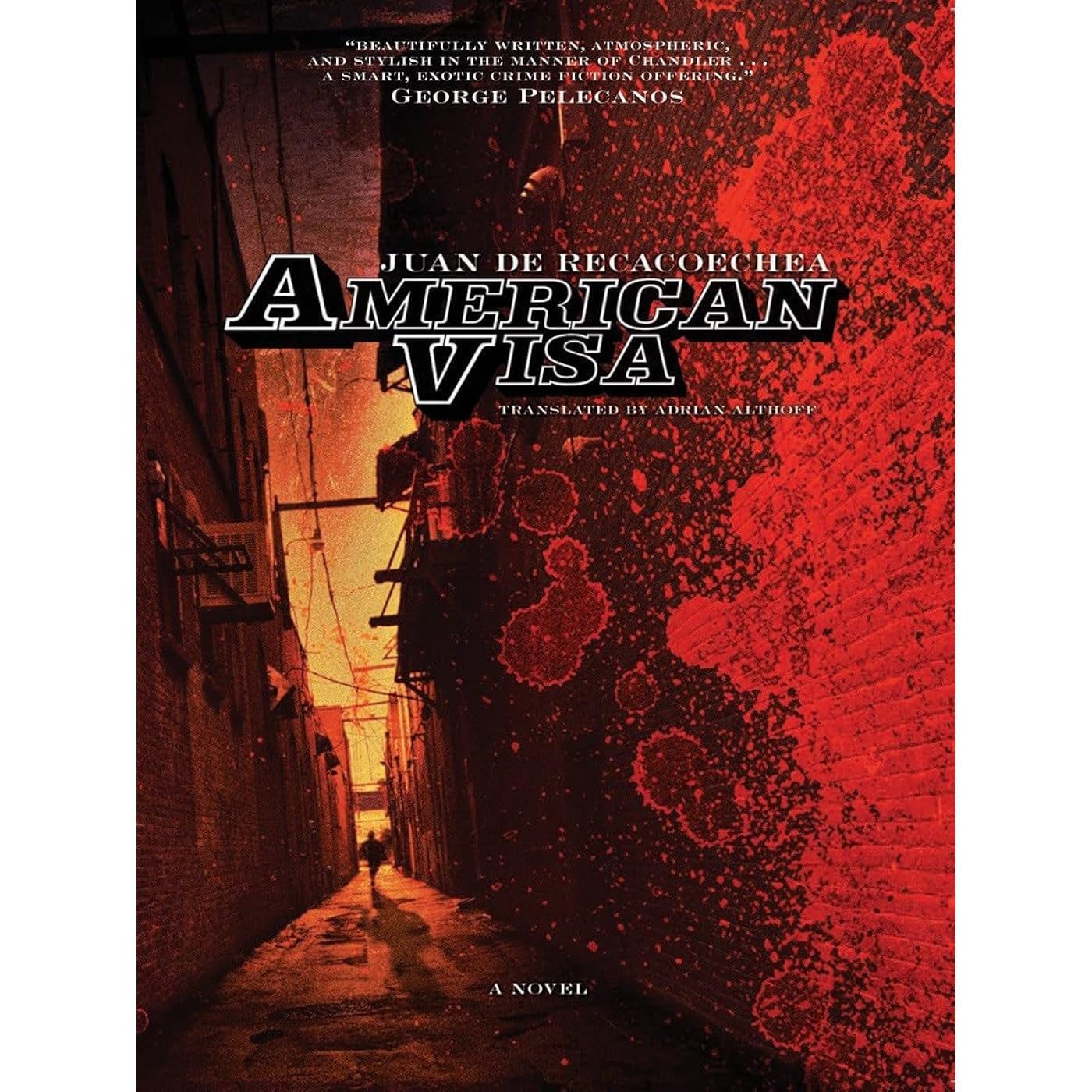
American Visa

  • Based on 28 reviews
Condition: New
Checking for the best price...

Buy Now, Pay Later


As low as $4 / mo
  • – 4-month term
  • – No impact on credit to apply
  • – Instant approval decision
  • – Secure and straightforward checkout

Ready to go? Add this product to your cart and select a plan during checkout.

Payment plans are offered through our trusted finance partners Klarna, Affirm, Afterpay, Apple Pay, and PayTomorrow. No-credit-needed leasing options through Acima may also be available at checkout.

Learn more about financing & leasing here.

Free shipping on this product

FREE 30-day refund/replacement

To qualify for a full refund, items must be returned in their original, unused condition. If an item is returned in a used, damaged, or materially different state, you may be granted a partial refund.

To initiate a return, please visit our Returns Center.

View our full returns policy here.


Availability: In Stock.
Fulfilled by Amazon

Arrives Friday, Jul 10
Order within 3 hours and 59 minutes
Available payment plans shown during checkout

Protection Plan Protect Your Purchase
Checking for protection plans...

Description

Armed with fake papers, a handful of gold nuggets, and a snazzy custom-made suit, an unemployed schoolteacher with a singular passion for detective fiction sets out from small-town Bolivia on a desperate quest for an American visa, his best hope for escaping his painful past and reuniting with his grown son in Miami.Mario Alvarez’s dream of emigration takes a tragicomic twist on the rough streets of La Paz, Bolivia’s seat of government. Alvarez embarks on a series of Kafkaesque adventures, crossing paths with a colorful cast of hustlers, social outcasts, and crooked politicians—and initiating a romance with a straight-shooting prostitute named Blanca. Spurred on by his detective fantasies and his own tribulations, he hatches a plan to rob a wealthy gold dealer, a decision that draws him into a web of high-society corruption but also brings him closer than ever to obtaining his ticket to paradise. Read more

Publisher ‏ : ‎ Akashic Books


Publication date ‏ : ‎ April 1, 2007


Edition ‏ : ‎ First Edition


Language ‏ : ‎ English


Print length ‏ : ‎ 244 pages


ISBN-10 ‏ : ‎ 1933354208


ISBN-13 ‏ : ‎ 00


Item Weight ‏ : ‎ 9.9 ounces


Dimensions ‏ : ‎ 5.5 x 0.61 x 8.5 inches


Best Sellers Rank: #2,875,311 in Books (See Top 100 in Books) #2,077 in Hispanic American Literature & Fiction #3,573 in Heist Thrillers #4,692 in Humor About Law & Crime


Frequently asked questions

If you place your order now, the estimated arrival date for this product is: Friday, Jul 10

Yes, absolutely! You may return this product for a full refund within 30 days of receiving it.

To initiate a return, please visit our Returns Center.

View our full returns policy here.

  • Klarna Financing
  • Affirm Pay in 4
  • Affirm Financing
  • Afterpay Financing
  • PayTomorrow Financing
  • Financing through Apple Pay
Leasing options through Acima may also be available during checkout.

Learn more about financing & leasing here.

Top Amazon Reviews


  • A Rarity - A Strong Mystery Novel that Explains Bolivian Society
Format: Paperback
American Visa is a rarity - a mystery novel that breaks new ground. Author Juan de Recacoechea has penned a novel that succeeds both as a mystery and as an introduction to Bolivian society. The plot is relatively simple. Mario Alvarez is a divorced schoolteacher who quits his job and travels to La Paz to obtain a tourist visa. If he can get the visa, he can join his son in Miami where a job waits him at an IHOP. Predictably, things do not go according to plan. Mario ends up marooned in the seedy Hotel California(!) when he learns that there are ways to "grease the wheels" of the visa process - if you have money. American Visa's strongest elements are its characters and its depiction of La Paz. de Recacoechea's characters are multi-faceted and consistently "ring true" to the reader. At the Hotel California, Mario falls in with a destitute former diplomat and good-hearted hooker. While shoplifting from a bookstore, Mario meets a beautiful young woman who introduces him to Bolivia's corrupt upper crust. The city of La Paz also stars in the novel. Mario travels throughout La Paz and the reader feels well acquainted with the city by novel's end. de Recacoechea inserts social commentary into the novel, but - to his credit - the comments never seem obtrusive. The novel's plot - while not bad - is somewhat predictable. Also, the pacing is relatively slow compared to most mystery novels. de Recacoechea chooses to develop characters and settings rather than insert plane crashes, gun battles, sports cars, etc. Mystery readers who want to expand their horizons should check out American Visa. ... show more
Reviewed in the United States on October 16, 2010 by stoic

  • American Visa
Format: Paperback
I enjoyed this intense melodrama about the trials that some will go through to come to the USA and the corruption behind the process of getting a USA Visa. Despite the serious subject, the author manages to make it interesting and entertaining with a bit of romance. You will feel like you are there walking around the streets of La Paz, Bolivia amid its natives and foreigners. It is quiet a journey. ... show more
Reviewed in the United States on July 24, 2010 by Elsa

  • La Paz noir
Format: Kindle
I was impressed with his other novel about a murder on a train going through the altiplano. The characters and plot were both interesting, as were some of his descriptions of Bolivian culture. This one is too grim and features an underside of La Paz, Bolivia, that might as well have been LA or Chicago. The characters are unforgettable and the plot mundane. Unless you are a huge fan of the noir genre, wherever it occurs, skip this one. ... show more
Reviewed in the United States on February 20, 2015 by Kindle Customer

  • A different kind of story
Traveling in Bolivia, I heard about this book and enjoyed it thoroughly. It is well written and reflects the culture of the country very well, right down to the little details, like how no one ever seems to have change for a $20Bo bill (about US$2.85). It is very difficult to find Bolivian literature translated into English, which is sad, because it is an interesting and diverse culture, with many talented writers. The author here reflects on the political changes wrought all over South America in the post-9/11 era. I later saw the movie (by the same name), a rather famous Mexican version of the story, which was entertaining, but changed the ending and left out many of the more humorous details. I recommend this book for anyone who has visited, or plans to visit the remarkable city of LaPaz or explore the Bolivian culture. ... show more
Reviewed in the United States on February 22, 2013 by Susanna Dewey

  • I Enjoyed This Book
I picked this book up based on the other reviews and I enjoyed it very much. It's a pretty easy read and keeps a relatively small cast of characters. I finished the book in a few days and would definitely try this author again.
Reviewed in the United States on January 21, 2013 by J.W. Posey

  • Five Stars
Format: Paperback
Excellent book...just buy it
Reviewed in the United States on October 9, 2014 by SamIam

  • Down and Out in La Paz
Format: Paperback
The immigrant dream in the era of globalization comes alive in this story of a bumbling Bolivian schoolteacher desperate to get to America. Mario is a divorced middle-aged teacher from the countryside who has to come La Paz to apply for a visa to visit his son in Miami. Of course, his ultimate goal is to create a new life for himself in America, starting with the job his son has lined up for him at an IHOP. The only thing standing in his way is his lack of the titular visa. Taking a room at a seedy Hotel California (ha ha), he meets several colorful long-term residents, including a hooker with a heart of gold, a former diplomat, a transvestite, and a former professional soccer goalie. Armed with little more than a fancy suit, fake documents (which are meant to convince the American Embassy that he has plenty of property in Bolivia that he would never abandon), a fistfull of dollars, and a few small gold nuggets, his initial foray to the embassy leaves him shaken. His papers are pretty flimsy and he realizes that he'll need to obtain his visa through illicit means. And so begins a roller coaster ride through the seedy and sedate streets of La Paz, in an attempt to finagle a visa. Fortunately (or rather, unfortunately), the teacher is also an avid reader of American crime fiction, and thus plans a dubious heist in order to raise the money he needs to bribe a shady travel agent to "fast-track" his visa. Those who have read the same American crime fiction as the protagonist will have a pretty good idea how this will all turn out. Meanwhile, he also befriends a stunning member of the aristocracy who gives him a glimpse of the high life, while his hooker friend tries to convince him to stay in Bolivia and move to the countryside with her savings. In any event, Mario's trials and tribulations abound with booze, sex, and plenty of outsize characters. Whether or not he elicits much empathy from the reader probably depends on one's perspective (I found him too foolish and selfish to care about), the story is an undeniably rich journey through the streets of La Paz. ... show more
Reviewed in the United States on November 28, 2007 by A. Ross

  • "We're all rotting in this country. Only the dead are saved."
Format: Paperback
Though Mario Alvarez thinks of himself as a hero created by one of the great writers of hard-boiled crime stories, he recognizes that, in reality, he is something of a romantic, "a lover of the impossible, a dreamer who never can choose his dream." He has come to La Paz, Bolivia, to get a tourist visa for the United States, and he has only enough money for a week's stay. While he's awaiting his interview with U.S. officials, he comes to know some of the other inhabitants at the Hotel California, all of them with their own problems. Don Antonio Alcorta is an elderly asthmatic, Senor Antelo is a gigantic former soccer goalie who hopes to get a job in the Customs Department, and Alfonso is a transvestite heavily involved in the gay bar scene. Mario also visits his uncle, a barber who does not recognize him, and he spends time with Blanca, a prostitute who wants him to be her pimp. Mario has all the papers he needs for his visa, but when he hears that the consulate will actually need to verify his documents and may even use detectives in their investigation, he flees the consulate-"if they deny you once, they've denied you forever." Learning from an acquaintance that the owner of a travel agency can speed up the visa process for $800, since the agent knows people who work in the visa business, Mario is determined that somehow he will find the money to ensure that he gets his visa. Meanwhile, the reader learns Mario's family history and follows him as he wanders La Paz, a city which has changed dramatically in recent years with the arrival of half a million peasants, many of them Indian. He meets a former friend from the army, now a miner, who has crucified himself on a public fence. He meets an author at a book-signing, and he attends an elegant party, while spending nights getting drunk in the sleaziest bars in the city. By the time he finally decides what he must do to get the money he needs, the reader is rooting for his success, even as he is showing himself to be an undesirable candidate for a visa. All of the characters here are flawed, and though author Juan de Recacoechea presents them somewhat sympathetically, he does not present them romantically. His style is naturalistic, filled with unique metaphors and similes. Life here is truly absurd--a kind of farce--and Mario himself knows that only by committing a major crime "can I redeem myself in my own eyes." "Local color" here is dark and filled with misery, and as the action evolves and incorporates all levels of society, the sense of dramatic irony increases. Described as "picaresque noir" by Amherst Prof. Ilan Stavins in the Afterword, the novel is hard-boiled in the style of the great mystery writers of the 1930s and 1940s, but it is also noticeably existentialistic. The author differs from the existentialists in that his characters seem to accept their ultimate fates with a kind of dark humor, and they manage to find elements of pleasure under even the nastiest circumstances. Published in Spanish in 1994, this novel is reputed to be one of fewer than a dozen novels from Bolivia to have been translated into English-in this case, by Adrian Althoff in 1997. n Mary Whipple Andean Express ... show more
Reviewed in the United States on August 12, 2009 by Mary Whipple

Can't find a product?

Find it on Amazon first, then paste the link below.
Checking for best price...