
Search  for anything...

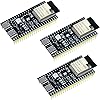
Hosyond 3Pack ESP32-S3 Development Board N16R8 MCU with Dual-Mode Wi-Fi Bluetooth Type-C, Compatible with Arduino IoT ESP32-S3-WROOM-1

  • Based on 122 reviews
Condition: New
Checking for the best price...
$18.98 Why this price?
Save $96.01 was $114.99

Buy Now, Pay Later


As low as $4 / mo
  • – 4-month term
  • – No impact on credit to apply
  • – Instant approval decision
  • – Secure and straightforward checkout

Ready to go? Add this product to your cart and select a plan during checkout.

Payment plans are offered through our trusted finance partners Klarna, Affirm, Afterpay, Apple Pay, and PayTomorrow. No-credit-needed leasing options through Acima may also be available at checkout.

Learn more about financing & leasing here.

Selected Option

Free shipping on this product

FREE 30-day refund/replacement

To qualify for a full refund, items must be returned in their original, unused condition. If an item is returned in a used, damaged, or materially different state, you may be granted a partial refund.

To initiate a return, please visit our Returns Center.

View our full returns policy here.


Availability: In Stock.
Fulfilled by Amazon

Arrives Sunday, May 3
Order within 19 hours and 49 minutes
Available payment plans shown during checkout

Protection Plan Protect Your Purchase
Checking for protection plans...

Color: ESP32-S3


Features

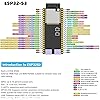
  • Dual Mode & High Performance The ESP32-S3 development board features integrated dual-core xtensa 32-bit LX7 microprocessor, clock speed up to 240 MHz, with 16MB Flash and 8 MB PSRAM. Perfect for Arduino IoT projects requiring stable wireless communication with ultra-low power consumption.
  • Easy Programming & Debugging Equipped with dual USB Type-C ports, this ESP32-S3 board supports both USB and UART modes for effortless programming, firmware flashing, and debugging.
  • Versatile Wireless Connectivity Built-in Wi-Fi (2.4GHz) and Bluetooth 5.0 (LE) dual-mode ensure seamless connectivity with a wide range of smart devices, making it ideal for IoT, smart homes projects.
  • Flexible Download Options Supports dual download methods USB direct download or USB-to-serial download offering flexibility and convenience for different development needs.Ideal for beginners and developers working with ESP32-S3.
  • Advanced Power-Saving Modes Designed for energy-efficient applications, with 3.3V SPI voltage, the ESP32-S3 board supports multiple low-power modes, allowing you to extend battery life based on different usage scenarios.

Description

The ESP32-S3 Development Board, equipped with the ESP32-S3-1 ESP-1-N16R8 module, is a high-performance development platform for AIoT and for Arduino enthusiasts. It integrates a low-power MCU System-on-Chip (SoC) with 2.4 GHz Wi-Fi and Bluetooth LE dual-mode wireless communication. Parameters: Microcontroller: ESP32-S3 Chip: ESP-1-N16R8 CPU: Dual-core Xtensa 32-bit LX7 Clock Speed: Up to 240 MHz Flash Memory: 16 MB (embedded) RAM: 512 KB Wireless Connectivity: Wi-Fi 802.11 b/g/n, Bluetooth 5.0 (BLE) I/O Pins: 34 GPIOs Analog-to-Digital Converter (ADC): 12-bit resolution Digital-to-Analog Converter (DAC): 8-bit resolution UART: 3 UART interfaces SPI: 2 SPI interfaces I2C: 2 I2C interfaces PWM: 16 channels ADC Channels: 18 Operating Voltage: 3.3V Power Supply: USB-C or external 5V supply USB Interface: USB- UART bridge for programming and debugging Product Includes: 3 X ESP32-S3 Development Board with ESP-1-N16R8

Brand: Hosyond


Model Name: N16R8


Ram Memory Installed Size: 8 MB


Memory Storage Capacity: 16 MB


CPU Speed: 240 MHz


RAM Memory Installed: 8 MB


Memory Storage Capacity: 16 MB


Processor Speed: 240 MHz


Connectivity Technology: Bluetooth, Wi-Fi


Operating System: Windows, macOS, Linux


Processor Brand: Espressif


Compatible Devices: Arduino devices, unspecified models


RAM Memory Technology: SDRAM


Processor Count: 2


Total Usb Ports: 2


Brand: Hosyond


Model Name: N16R8


Built-In Media: 3 x ESP32-S3 Development Board


UPC: 768572762978


Mfr Part Number: H076-A


Manufacturer: Hosyond


Warranty Description: No warranty


Frequently asked questions

If you place your order now, the estimated arrival date for this product is: Sunday, May 3

Yes, absolutely! You may return this product for a full refund within 30 days of receiving it.

To initiate a return, please visit our Returns Center.

View our full returns policy here.

  • Klarna Financing
  • Affirm Pay in 4
  • Affirm Financing
  • Afterpay Financing
  • PayTomorrow Financing
  • Financing through Apple Pay
Leasing options through Acima may also be available during checkout.

Learn more about financing & leasing here.

Top Amazon Reviews


  • Works as advertised!
Color: ESP32-S3
This item exceeded my expectations, it had the exact amount of flash and PSRAM available, and as an added bonus, it had octal SPI for the PSRAM. I flashed it with no problem using the example code in esp-idf, and it had the following output: ESP-ROM:esp32s3-20210327 Build:Mar 27 2021 rst:0x1 (POWERON),boot:0x8 (SPI_FAST_FLASH_BOOT) SPIWP:0xee mode:DIO, clock div:1 load:0x3fce2820,len:0x14f0 load:0x403c8700,len:0xd24 --- 0x403c8700: _stext at ??:? load:0x403cb700,len:0x2ef0 entry 0x403c8924 --- 0x403c8924: call_start_cpu0 at C:/Users/weiqi/Downloads/esp-idf-v5.5.3/components/bootloader/subproject/main/bootloader_start.c:27 I (24) boot: ESP-IDF v5.5.3-dirty 2nd stage bootloader I (25) boot: compile time Mar 18 2026 18:44:50 I (25) boot: Multicore bootloader I (25) boot: chip revision: v0.2 I (28) boot: efuse block revision: v1.4 I (32) boot.esp32s3: Boot SPI Speed : 80MHz I (36) boot.esp32s3: SPI Mode : DIO I (39) boot.esp32s3: SPI Flash Size : 2MB I (43) boot: Enabling RNG early entropy source... I (48) boot: Partition Table: I (50) boot: ## Label Usage Type ST Offset Length I (57) boot: 0 nvs WiFi data 01 02 00009000 00006000 I (63) boot: 1 phy_init RF data 01 01 0000f000 00001000 I (70) boot: 2 factory factory app 00 00 00010000 00100000 I (76) boot: End of partition table I (79) esp_image: segment 0: paddr=00010020 vaddr=3c020020 size=0a298h ( 41624) map I (94) esp_image: segment 1: paddr=0001a2c0 vaddr=3fc92d00 size=03214h ( 12820) load I (97) esp_image: segment 2: paddr=0001d4dc vaddr=40374000 size=02b3ch ( 11068) load I (104) esp_image: segment 3: paddr=00020020 vaddr=42000020 size=14040h ( 81984) map I (124) esp_image: segment 4: paddr=00034068 vaddr=40376b3c size=0c19ch ( 49564) load I (135) esp_image: segment 5: paddr=0004020c vaddr=50000000 size=00020h ( 32) load I (141) boot: Loaded app from partition at offset 0x10000 I (141) boot: Disabling RNG early entropy source... I (153) octal_psram: vendor id : 0x0d (AP) I (153) octal_psram: dev id : 0x02 (generation 3) I (153) octal_psram: density : 0x03 (64 Mbit) I (155) octal_psram: good-die : 0x01 (Pass) I (159) octal_psram: Latency : 0x01 (Fixed) I (163) octal_psram: VCC : 0x01 (3V) I (168) octal_psram: SRF : 0x01 (Fast Refresh) I (172) octal_psram: BurstType : 0x01 (Hybrid Wrap) I (177) octal_psram: BurstLen : 0x01 (32 Byte) I (182) octal_psram: Readlatency : 0x02 (10 cycles@Fixed) I (187) octal_psram: DriveStrength: 0x00 (1/1) I (191) esp_psram: Found 8MB PSRAM device I (195) esp_psram: Speed: 40MHz I (198) cpu_start: Multicore app I (932) esp_psram: SPI SRAM memory test OK I (940) cpu_start: GPIO 44 and 43 are used as console UART I/O pins I (941) cpu_start: Pro cpu start user code I (941) cpu_start: cpu freq: 160000000 Hz I (942) app_init: Application information: I (946) app_init: Project name: hello_world I (950) app_init: App version: v5.5.3-dirty I (955) app_init: Compile time: Mar 18 2026 20:07:10 I (960) app_init: ELF file SHA256: 9312ea13a... I (964) app_init: ESP-IDF: v5.5.3-dirty I (968) efuse_init: Min chip rev: v0.0 I (972) efuse_init: Max chip rev: v0.99 I (976) efuse_init: Chip rev: v0.2 I (980) heap_init: Initializing. RAM available for dynamic allocation: I (986) heap_init: At 3FC96828 len 00052EE8 (331 KiB): RAM I (991) heap_init: At 3FCE9710 len 00005724 (21 KiB): RAM I (997) heap_init: At 3FCF0000 len 00008000 (32 KiB): DRAM I (1002) heap_init: At 600FE000 len 00001FE8 (7 KiB): RTCRAM I (1007) esp_psram: Adding pool of 8192K of PSRAM memory to heap allocator I (1015) spi_flash: detected chip: boya I (1017) spi_flash: flash io: dio W (1020) spi_flash: Detected size(16384k) larger than the size in the binary image header(2048k). Using the size in the binary image header. I (1033) sleep_gpio: Configure to isolate all GPIO pins in sleep state I (1039) sleep_gpio: Enable automatic switching of GPIO sleep configuration I (1046) main_task: Started on CPU0 I (1066) esp_psram: Reserving pool of 32K of internal memory for DMA/internal allocations I (1066) main_task: Calling app_main() Hello world! This is esp32s3 chip with 2 CPU core(s), WiFi/BLE, silicon revision v0.2, 2MB external flash Minimum free heap size: 8739128 bytes ... show more
Reviewed in the United States on March 19, 2026 by Qi Xu

  • Good ESP32 boards
Color: ESP32-S3
Programmed easily and is working fine.
Reviewed in the United States on April 2, 2026 by jpipx

  • Work and good value.
Color: ESP32-S3
I’ve used several of these ESP32-S3 boards and haven’t had any issues so far. They’ve been reliable, easy to work with, and a good value for the price. These are based on the ESP32-S3 with 16MB flash and 8MB PSRAM, which is a nice bump over older ESP32 boards. Plenty of headroom for more complex projects, especially anything involving Wi-Fi, BLE, or heavier libraries. The dual USB-C ports are a nice touch. One is typically native USB (for flashing/CDC), and the other goes through a USB-to-UART bridge. Makes flashing and debugging straightforward without needing extra adapters. Wi-Fi and Bluetooth have been stable in my testing, and I haven’t run into any random disconnects or weird behavior. One small but useful note: the onboard LED appears to be on GPIO48 (not GPIO47 as some docs or examples suggest). If your blink sketch isn’t working, that’s probably why. Pros Reliable — I’ve used multiple boards with no failures Good specs (16MB flash + 8MB PSRAM) for the price Dual USB-C ports make flashing/debugging easy Works well with Arduino IDE and ESP-IDF Stable Wi-Fi and Bluetooth performance Compact and breadboard-friendly Cons Documentation is minimal (typical for these boards) Pin mappings (like the onboard LED) may not match common examples No labeling differences between USB ports on some revisions Bottom Line If you’re looking for a low-cost ESP32-S3 board with solid specs and reliable performance, these are a good choice. Just be prepared to double-check pin mappings if something doesn’t behave as expected. Quick Blink Example (Onboard LED) If your blink sketch isn’t working, try GPIO48 for the onboard LED: #define LED_PIN 48 void setup() { pinMode(LED_PIN, OUTPUT); } void loop() { digitalWrite(LED_PIN, HIGH); delay(500); digitalWrite(LED_PIN, LOW); delay(500); } If that doesn’t blink, try checking your board definition in the Arduino IDE and confirm the pin mapping, but on the boards I received, GPIO48 is correct. ... show more
Reviewed in the United States on April 2, 2026 by gfang

  • Good quality ESP32-S3 microcontrollers.
Color: ESP32-S3
I’ve used two of these in prototype projects where I needed the Wifi for monitoring data. Tested all three and all work perfectly. Decent Wifi range as well for not having an external antenna. The S3 version of the ESP32 is worth it for me. Unless you need a super small for factor, these things are great. Just make sure whatever breakout board you have is for the S3 since it does have more pins. ... show more
Reviewed in the United States on February 15, 2026 by Douglas Coco

Can't find a product?

Find it on Amazon first, then paste the link below.
Checking for best price...