
Search  for anything...

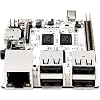
Libre Computer Project AML-S905X-CC Le Potato 64-bit Single Board Computer Pi 3 Alternative (2GB 2-Pack)

  • Based on 1,077 reviews
Condition: New
Checking for the best price...
$120.00 Why this price?

Buy Now, Pay Later


As low as $20.00 / mo
  • – 6-month term
  • – No impact on credit to apply
  • – Instant approval decision
  • – Secure and straightforward checkout

Ready to go? Add this product to your cart and select a plan during checkout.

Payment plans are offered through our trusted finance partners Klarna, Affirm, Afterpay, Apple Pay, and PayTomorrow. No-credit-needed leasing options through Acima may also be available at checkout.

Learn more about financing & leasing here.

Selected Option

Free shipping on this product

This item is eligible for return within 30 days of receipt

To qualify for a full refund, items must be returned in their original, unused condition. If an item is returned in a used, damaged, or materially different state, you may be granted a partial refund.

To initiate a return, please visit our Returns Center.

View our full returns policy here.


Availability: Only 6 left in stock, order soon!
Fulfilled by LoveRPi

Arrives Jun 18 – Jun 20
Order within 4 hours and 50 minutes
Available payment plans shown during checkout

Protection Plan Protect Your Purchase
Checking for protection plans...

Size: 2GB 2-Pack


Features

  • LATEST SOFTWARE SUPPORT: Ubuntu 22.04 LTS and Raspbian 11 support with hardware-accelerated video playback and 3D graphics. Upstream software stack featuring the latest Linux 6.x with open source graphics and video libraries. UEFI support with GRUB sofware behaves like PCs. Direct first software support and community hub for third party help to get started. Video tutorials on YouTube for commonly asked questions.
  • COMPATIBILITY AND EXTENSIBILITY: Great RPi alternative with same form factor as Pi 3 Model B for re-use with existing cases and power supplies. Identically designed 40-pin header enables hardware re-use by maintaining same pins for functions like SPI, I2C, PWM, UART, and more. Powerful GPIO wiring tool, libretech-wiring-tool, is available on Github that can quickly toggle GPIOs and dynamically control dtoverlays for faster design, testing, and learning.
  • HIGH PERFORMANCE LOW POWER: AML-S905X-CC performs faster than a Pi 3 B+ while using half the power. It is designed with power optimizations to increase sustained performance under load and reduce failures due to input voltage and current. It is one of the first SBCs to support 4K multi-codec hardware decoding and features a highly performant OpenGL ES 2.0 GPU for accelerated 2D/3D.
  • FASTER CPU AND DOUBLE THE MEMORY: Quad 64-bit 1.5GHz ARM Cortex-A53 Processors, 4K Ultra HD ARM Mali-450 750MHz GPU, 2GB of High Bandwidth DDR3, 4K 60FPS High Dynamic Range Display Engine for H.265 HEVC, H.264 AVC, VP9 Hardware Decoding and more. The top performing SBC in its price class.
  • OPEN SOURCE COMMITMENT: Libre Computer collaborates with software partners to create upstream infrastructure, drivers, and libraries for open-source projects such as Linux and u-boot that power our products. This enables us to support the latest software innovations created by the community and ensures that our products have the necessary security and software performance innovation for long term support.

Description

Key Features: Quad-Core 64-bit ARMv8 Cortex-A53 CPU with NEON and Crypto Extensions Penta-Core ARM Mali-450 MP3 GPU with OpenGL ES 2.0 @ 750MHz 2GB of DDR3-2133 SDRAM on 32-bit Bus for up to 69Gb/s Unified Memory Bandwidth Multi- Plane Multi-Format 2.5D Programmable Pipeline Display Engine with HDMI 2.0 Output 4K Ultra-HD High Dynamic Range Video Decode Engine with Hardware Accelerated Decoder for VP9, H.265, H.264 Form Factor and GPIO Compatibility with Raspberry Pi 3 for Maximum Re-usability Supported Operating Sytem Images: Latest Linux 6.x With Weekly Security Updates Ubuntu 22.10 / 22.04 LTS / 20.04 LTS Debian 11 Raspbian 11 CoreELEC (Kodi) LibreELEC (Kodi) Android 9.0 Pie Armbian Lakka (RetroArch/Retro Gaming) Batocera (RetroArch/Retro Gaming)

Brand: Libre Computer Project


Ram Memory Installed Size: 2 GB


Memory Storage Capacity: 2 GB


CPU Model: None


CPU Speed: 1416 MHz


RAM Memory Installed: 2 GB


Memory Storage Capacity: 2 GB


CPU Model: None


Processor Speed: 1416 MHz


Connectivity Technology: GPIO, HDMI, I2C


Operating System: Android, Linux


Processor Brand: ARM


Wireless Compability: 802.11b


Processor Count: 4


Total Usb Ports: 2


Brand: Libre Computer Project


UPC: 647923366648


Mfr Part Number: LCB-SBC-AML-S905X-CC-2GB-2PK-UPC


Manufacturer: Shenzhen Libre Technology Co., Ltd.


Warranty Description: 1 Year Manufacturer


Item Dimensions L x W x H: 8"L x 5"W x 1.5"H


Frequently asked questions

If you place your order now, the estimated arrival date for this product is: Jun 18 – Jun 20

Yes, absolutely! You may return this product for a full refund within 30 days of receiving it.

To initiate a return, please visit our Returns Center.

View our full returns policy here.

  • Klarna Financing
  • Affirm Pay in 4
  • Affirm Financing
  • Afterpay Financing
  • PayTomorrow Financing
  • Financing through Apple Pay
Leasing options through Acima may also be available during checkout.

Learn more about financing & leasing here.

Top Amazon Reviews


  • A raspberry Pi alternative which can run Mainsail
I'm sure you're looking at this review because you're in the same boat as everyone else right now trying to either replace a broken Pi, or buy a new one... and the prices are 3x-5x due to the shortage. This board definitely hits the right price point and after two days of tweaking things, I got it to run Mailsail and I'm back in business. Here are some Pro's and Con's: Pro: Same footprint as RPi, including GPIO location and pinouts. Pro: Lower heat production than my Pi3. Pro: CHEAP. Available. Con: No wifi. Not a big deal for me. All my printers are running Ethernet. Con: I can't get UART_A working. I tried everything. I'm using this via USB for now. Con: Very limited number of available software appliance packages. To keep your expectations in check, assume you will download a working Linux, and then you need to do everything else (i.e., download and run KIAUH to get Mainsail and related components running) Keeping all that in mind, and having some experience with SBCs, this one wasn't too terrible. It would have been great if I could have fired up the UART... but thats fine... its better than a dead RPi and a non-functional printer... LOL. I just bought a second one to be part of a simple NOE which I'll use to experiment with to see if I can get the UART functional, while the other one is in my OE. ***UPDATE: January 2023*** I've bumped up my review from 4 stars to 5. This little guy has been a godsend. Its cheap, runs mainsail just fine... and there is an added bonus (why I raised my rating): It runs at or even slightly below 5 volts! Before, with my RPi's, I'd constantly get under-volt errors. The FAQs say that you need a "clean power supply" and I'm running the damn thing on an 750W ATX power supply! Turns out, the RPi needs more than 5V which causes all these undervolting issues. Long story short, Le Potato makes that issue go away... so it just earned itself one more star. Also, in case you're stuck in your transition, here is how to get Mainsail on it: -Download the Raspbian image from Libre Computer's repository. -Use your favorite tool (Balena, or the RPI imager) to write that image on to the micro SD card. -Connect the board with a USB keyboard, and to a monitor with HDMI, and power it/boot. -Once booted, log in via the GUI, launch a terminal window, then launch the configurator at the terminal window( sudo raspi-config ) -In the raspi-config, go to Interfacing Options, then select SSH, and then enable -Shut down the pi, disconnect the monitor and keyboard, boot again. -SSH to the Potato's address -Once logged into the libre, next you need to get KIAUH and the instructions for that can be found by searching for th33xitus and kiauh in google... but summary: you'll need to run one command to clone the KIAUH repository, then run KIUAH and the rest of the process should be pretty self explanatory. after this step is done, you can connect your libre over to the printer controller with a USB cable (I'm still trying to figure out the UART connection), and complete configuration of the controller/mainsail. Good luck! ... show more
Reviewed in the United States on December 29, 2022 by Persepolis

  • Works great for Klipper, but some Pi specific hardware won't work
Bought this to use with a Voron Trident 3D Printer running Klipper. It is working fine with less than 10% CPU utilization most of the time. I would recommend getting the heatsink. For Klipper, I installed Raspian from the Libre site, and used KIAUH to install everything Klipper related. It all just worked. Using the Le Potato vs Raspberry Pi did require some hardware changes on my part to interface with screen, ADXL345 board, and WiFi. There is quite a bit of support in the Libre forums to help handle the differences from Raspberry Pi. The form factor, mounting holes, and GPIO pins locations match the Raspberry Pi 3 and 4. I printed a Raspberry Pi case and it worked perfectly. However, the Pi has proprietary GPIO drivers, so you'll need to use Libre libraries. I only the GPIO pins for power, so I don't know how well this works. You can power the Potato using the same GPIO pins that you would use for the Pi. Unlike a Raspberry PI, there is no DSI connector for HDMI touch screens, so you must use HDMI and USB. I use an automobile USB/HDMI pass through so the Potato can be inside the printer. Since there is no WiFi, I used the GenBasic WiFI dongle and it works out of the box. Note that some adapters are not supported by Raspian. There are RealTek libraries for download. The 3D printer kit I bought had an ADXL345 board that connects to the GPIO pins and a small ribbon cable connector for the Pi. I chose to use a Pi Pico as a secondary MCU to connect to ADXL345 instead of trying to make it work. I purchased and installed the heatsink. I did not monitor CPU temps without the fan, but the heatsink was mildly warm in an 80F area. I printed a mount, and installed a 30mm fan undervolted to 3.3v. CPU temperatures are 14C over ambient for low CPU utilization. LoveRPI has these and all the accessories on their site. Worth checking out. ... show more
Reviewed in the United States on February 28, 2023 by Reviewer1E10

  • Better than a real potato 🥔 Better than a real potato 🥔
Definitely affordable, I set mine up as a mediaserver. It transcodes SD no issues, HD has some buffering no matter the settings I have toggled. I haven't tried 4k media, but I expect more buffering than with HD. It's very straightforward for setup, I purchased a cheap $5 MicroSD card, installed one of the operating systems avaliable on their site: libre.computer No struggles, only issue I ran into was Firefox-ESR wouldn't load, but Dillo won't work for what I need so I went with a Chromium browser. I did purchase a wifi adapter for the board for testing, and got a heatsink and case with a fan. Been running for a few days since last shutdown. Great for simple projects. Just go to the website for schematics, it came in very handy for me. I might get a few more of these as little dev stations for simple programming projects. Over all good experience, the only con I would say is this doesn't come with a power supply. Even those are not too expensive so not much to complain about just something to be aware of. ... show more
Reviewed in the United States on December 30, 2022 Reviewed in the United States on December 30, 2022 by Ryan

  • Great LibreELEC Upgrade for a Raspberry Pi
UPDATE 2: I've since switched to using CoreELEC, and it's also been performing wonderfully. It may be optimizations from the latest version of Kodi or of the skin I was using (Titan), but it's a lot more responsive now. Also, the CEC issue below seems to no longer be an issue, but I didn't test it exhaustively. Not much else to report. Would definitely recommend this little guy as a media center using CoreELEC. It plays everything I throw at it, including 4K HDR content, and it uses about half the power of the RPi3+ it replaced. Early adoption is always a risk, but I'm happy this one paid off. UPDATE: I've been using this daily for 10 months now on the same old 'community' build of LibreELEC. No problems! Watched plenty of 4K HDR HEVC/H265 movies, and all have come through beautifully without a hiccup. However, of note is that LibreELEC now officially supports the LePotato in their mainline builds as of November 13th's v8.90.007 ALPHA release. So this makes the board an even better choice if you were holding off due to the unofficial nature of support in that project. (Also, note that there is the CoreELEC distro which forked from LibreELEC specifically to support Amlogic boards, so you also have that distro to choose from) ORIGINAL POST: I bought this as an upgrade/replacement for my Raspberry Pi 3. I only use these boards to run LibreELEC and function as a Kodi media center front end. My rating and thoughts are only related to the board's usefulness as that. The main perk of swapping from the RPi3 to this was the 4K and HDR output along with HEVC hardware decoding. My TV (a Samsung KS8000) supports both and, happily, both features seem to work great! I've already watched quite a few UHD HDR 10bit HEVC files, and playback was smooth as butter in full 4K with HDR kicking in on the TV. So that said, this has been a mostly great upgrade. A few developers from the LibreELEC community have supported this board specifically (and the Amlogic S905X generally), and the one stable image has been working well for me so far. I've had a few hiccups with HDMI-CEC causing it to freeze, but I believe that's more an issue with LibreELEC than the board itself (HDMI-CEC did actually work fine for when I used it). Disabling HDMI-CEC solved the issue. I have not tried the latest 'developer' build to see if this is resolved, but it's not a deal-breaker for me. If you're a LibreELEC user who's looking to upgrade to a 4K/HDR/HEVC-capable device while still retaining the same form-factor as an RPi (while also reducing power requirements!), this is an excellent choice. And I'd definitely recommend it with the caveat that you should probably be comfortable with at least a bit of tinkering as necessary. If you are, this is a great upgrade. ... show more
Reviewed in the United States on April 15, 2018 by Kintaro Oe

  • This was a rough de-rusting.
I purchased this as an alternative to a raspberry pi to host a personal discord bot and then eventually get to making a pi-hole. Box contents were the board in an ESD bag w/ a little styro block to protect on board components. No instruction manual or power cables/supply included. Those were purchased separately (you might also want to get a fresh SD card and a mini HDMI monitor also--we'll get to that later). Be comfortable digging through forum posts/youtube tutorials Disclaimer: I'm a little rusty with my microcontrollers (familiar w/ arduino/beaglebone). It's taken at least four days of forum searching, and repeated flashing of multiple SD cards to successfully flash Le Potato (apt name) with an OS (ubuntu). I went through official libre tutorials, then other users' tutorial videos, and then dug through the forums when the first two options kept failing. I don't know how both of my rarely used SD cards (sandisk, samsung) were supposedly failing but Libre notes that as a common gotcha. After getting frustrated leaving the board on power overnight, I woke to find the board attempting to boot from SD. In summary, I went through 4 flashing programs (rPi imager, balenaEtcher, win32diskimager, rufus) and 4 distros (2 most-recent distros for Raspbian and Ubuntu) before the board was successfully flashed and booted. Unfortunately the ubuntu distro didn't mention that you can't SSH into the damned thing after booting until you open that via command line. The only issue is I have to do this headless (no monitor) because the Potato didn't output to THREE separate 1080p computer monitors (SCEPTRE, Samsung, ASUS). I'm a little annoyed at this point. Might reflash and see if I can start with SSH open. So there we have it; I haven't been able to get to the fun stuff because setup takes a bit. I went with this on account of seeing a few vets hype it up as a not overpriced Pi. I believe the better way of putting it is that you are getting what you pay for--no frills/handholding. TL,DR: You may or may not get lucky on flashing the board the first time around. Get a power supply, fresh SD card, and monitor for a microcontroller to ease interfacing. Get ready to forum dive if the first two attempts fail. Better suited for intermediate-advanced users. I'll update once I can actually interface fully. UPDATE: Finally got it working! For headless raspbian systems setup life will be easier if you install Buster, setup root username and password, and then update to Bullseye. The default login for pi: raspberry was phased out in Bullseye, so even if you use RPimager's flashing settings to enable ssh/login details when flashing Bullseye, it won't take hold. I still kinda had to do a lot of forum digging to get here though. ... show more
Reviewed in the United States on June 8, 2023 by Victor Omojola

  • Better than the Raspberry PI 3, but...
Expectations: This product could plug in and be a straight across replacement for a Raspberry PI 3 B+. Allows me to summon dragons to do my bidding. Reality & TLWR;: The Le Potato is better than the RPI3B+, with one tiny gotcha. No dragons came to do my bidding. So 3 stars would be this product meets performance of a Raspberry Pi 3 B+ (the unit it was replacing), and allows me to simply plug all the "stuff" that was attached to my Pi 3 B+. That didn't happen, but read on if you care to know the details as why it is still a 5 star product. Installing Armbian (versus Raspbian on the Pi) was a trivial effort, and my HAT works fine, so 3 stars for getting up and running with very little effort. I had two drives (spinny-disc laptop drives) plugged into my Pi 3 B+, via USB->SATA adapters, that worked without a problem. The Le Potato couldn't power them. This behavior was duplicated with a second board. I swapped adapters for powered versions (intended for 3.5" drives) and everything is copacetic. Still, not a straight across replacement; down to 2 stars. The Le Potato (board only) absolutely sips power compared to a 3B+. To the order of 1.5(ish) watts at idle compared to 3.4(ish) watts for the 3B+ (which might explains the inability to power my USB drives). Back to 3 stars. The quad-core Amlogic 905x quad-core A53 at 1.51GHz is paired with 2GB of DDR3 memory. The RPI 3B+ has it's BCM2837 quad-core A53 at 1.4GHz and paired with 1GB of DDR2 memory. The Le Potato benefits being a chronologically later SBC and can take advantage advances in CPU and memory. More performance brings us to 4 stars. I can get the Le Potato right now. The supply-chain problems of 2022 aren't the Raspberry Foundation's fault, but still -- I have 2 Libra Computing Le Potato boards on hand and zero Raspberry Pi. Up to 5 stars. The Le Potato seems to sit somewhere between a Pi 3B+ and a Pi 4B (with 2GB of memory) for comparison. If you need something at 3B/B+ specs, this will do you fine (noting the power issues). ... show more
Reviewed in the United States on August 27, 2022 by T. Dieterich

  • Why Did a Simple Firewall Change Brick This Device? Concerning OEM OS Behavior
This is the first time I’ve written a product review like this, but please hear me out—especially if you care about cybersecurity and network integrity. I purchased this board nearly two years ago. The hardware itself is solid and well-built. However, what concerned me—and ultimately alarmed me—was the behavior of the OEM system provided by the vendor. The first time I booted the OEM Ubuntu image, I noticed that it heavily depended on software sources and mirrors hosted in Mainland China (e.g., the Tsinghua mirror). That raised an eyebrow, but since the system appeared to function normally, I replaced the mirrors and placed the device in a restricted VLAN. Fast forward to last week: for security reasons, I updated my network firewall rules to block all outbound traffic to IPs belonging to major Mainland China entities such as Alibaba, Tencent, Huawei, Baidu, and ByteDance. After this change, the device—still running the OEM OS—became completely unresponsive. When connected to a monitor, I found the system had entirely failed and could no longer boot. This was not just a matter of losing update access—the system had stopped functioning altogether. The TF card image remained untouched. There was no power loss, no failed update, no interaction with the device at all. It just bricked itself after I updated outbound firewall rules on a separate network device. I don’t want to speculate beyond what I observed firsthand, but the fact that blocking Mainland China IP ranges caused the system to become unbootable—without any direct local action—is a red flag that should not be ignored. The hardware remains usable once you install a clean, community-maintained OS like Armbian. That’s what I ended up doing, combined with tight VLAN isolation and a zero-trust network policy. But my experience with the OEM system left me deeply concerned. If you care about privacy or cybersecurity, I strongly recommend avoiding the OEM image entirely. Install a trusted OS, inspect your network traffic, and think carefully about how you integrate this device into your environment. If you're looking for peace of mind out of the box, something like a Raspberry Pi may be a safer choice. ... show more
Reviewed in the United States on March 28, 2025 by Yibo

  • I'm impressed!
I'm so impressed with the Libre Computer Board AML-S905X-CC (Le Potato) 2GB 64-bit Mini Computer for 4K Media. It's a powerful, compact device that delivers an incredible media experience in 4K resolution. The setup process was straightforward and easy, and I was up and running in no time. The device is incredibly versatile and can run a wide range of operating systems, so it was simple to customize it to my needs. The performance of the Libre Computer Board is nothing short of impressive. It can easily handle 4K video playback, and the picture quality is stunning. The sound quality is also excellent, and I'm blown away by the immersive audio experience. The build quality of the Libre Computer Board is top-notch. It feels sturdy and well-made, and I have no doubt that it will stand the test of time. I also appreciate the wide range of ports available, which makes it easy to connect to all of my peripherals. Overall, I highly recommend the Libre Computer Board AML-S905X-CC (Le Potato) 2GB 64-bit Mini Computer for 4K Media to anyone looking for a powerful, compact, and versatile device that delivers an incredible media experience. It's truly a game-changer and worth every penny. ... show more
Reviewed in the United States on February 22, 2023 by Thomas P. Ulrick

Can't find a product?

Find it on Amazon first, then paste the link below.
Checking for best price...