
Search  for anything...

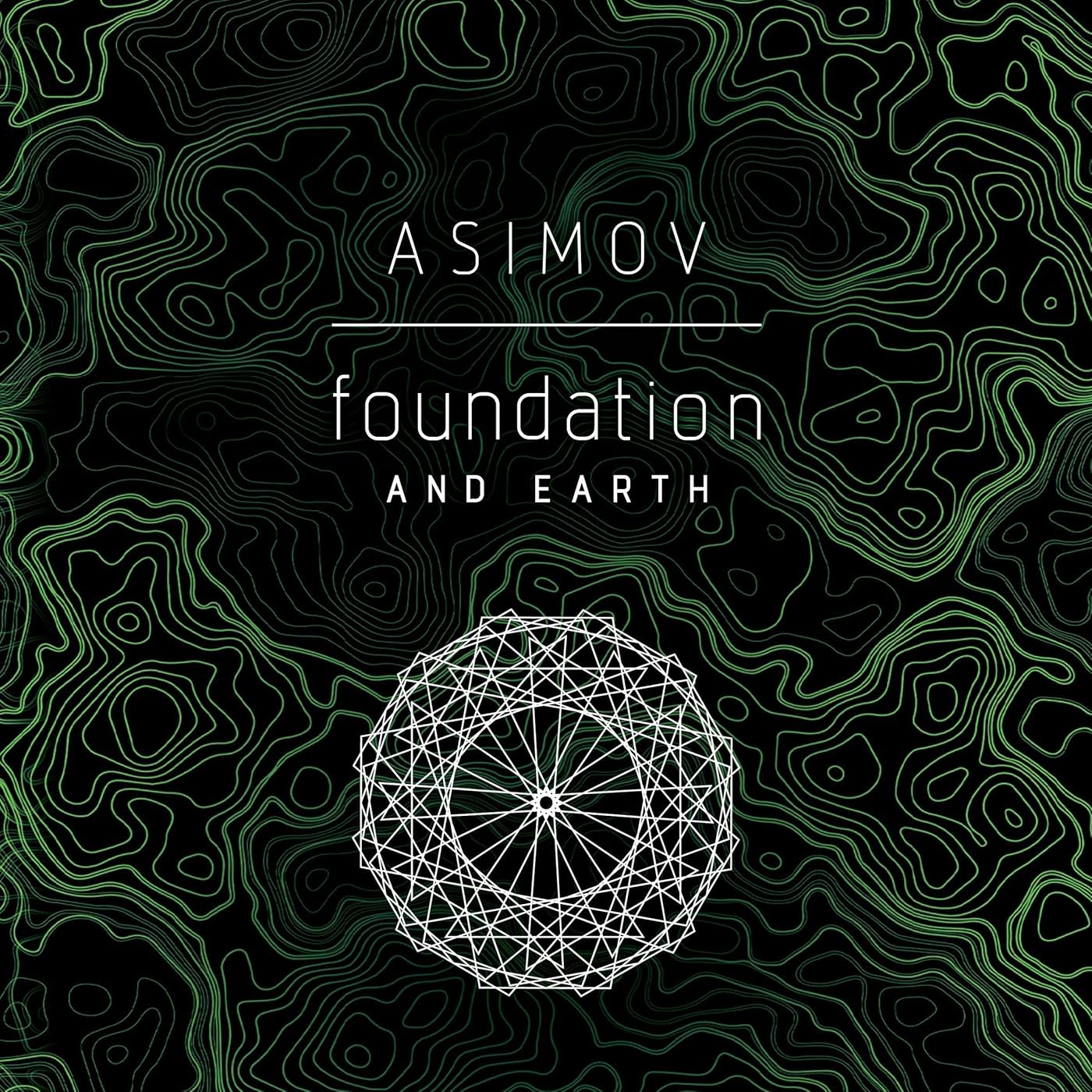
Foundation and Earth

  • Based on 7,721 reviews
Condition: New
Checking for the best price...

Buy Now, Pay Later


As low as $6 / mo
  • – 4-month term
  • – No impact on credit to apply
  • – Instant approval decision
  • – Secure and straightforward checkout

Ready to go? Add this product to your cart and select a plan during checkout.

Payment plans are offered through our trusted finance partners Klarna, Affirm, Afterpay, Zip, Apple Pay, and Google Pay. No-credit-needed leasing options through Acima may also be available at checkout.

Learn more about financing & leasing here.

Free shipping on this product

This item is eligible for return within 30 days of receipt

To qualify for a full refund, items must be returned in their original, unused condition. If an item is returned in a used, damaged, or materially different state, you may be granted a partial refund.

To initiate a return, please visit our Returns Center.

View our full returns policy here.


Availability: 20 left in stock
Fulfilled by Audible,

Arrives Sep 11 – Sep 15
Order within 58 minutes
Available payment plans shown during checkout

Protection Plan Protect Your Purchase
Checking for protection plans...

Description

The fifth novel in Isaac Asimov’s classic science-fiction masterpiece, the Foundation series THE EPIC SAGA THAT INSPIRED THE APPLE TV+ SERIES FOUNDATION Golan Trevize, former Councilman of the First Foundation, has chosen the future, and it is Gaia. A superorganism, Gaia is a holistic planet with a common consciousness so intensely united that every dewdrop, every pebble, every being, can speak for all—and feel for all. It is a realm in which privacy is not only undesirable, it is incomprehensible. But is it the right choice for the destiny of mankind? While Trevize feels it is, that is not enough. He must know. Trevize believes the answer lies at the site of humanity’s roots: fabled Earth . . . if it still exists. For no one is sure where the planet of Gaia’s first settlers is to be found in the immense wilderness of the Galaxy. Nor can anyone explain why no record of Earth has been preserved, no mention of it made anywhere in Gaia’s vast world-memory. It is an enigma Trevize is determined to resolve, and a quest he is determined to undertake, at any cost. Read more

Book 5 of 7: Foundation


Listening Length: 18 hours and 44 minutes


Author: Isaac Asimov


Narrator: Larry McKeever


Whispersync for Voice: Ready


Audible.com Release Date: October 19, 2011


Publisher: Random House Audio


Program Type: Audiobook


Version: Unabridged


Language: English


ASIN: B005X70QLS


Best Sellers Rank: #10,009 in Audible Books & Originals (See Top 100 in Audible Books & Originals) #80 in Hard Science Fiction (Audible Books & Originals) #86 in Hard Science Fiction (Books) #209 in Space Operas


Frequently asked questions

If you place your order now, the estimated arrival date for this product is: Sep 11 – Sep 15

Yes, absolutely! You may return this product for a full refund within 30 days of receiving it.

To initiate a return, please visit our Returns Center.

View our full returns policy here.

  • Klarna Financing
  • Affirm Pay in 4
  • Affirm Financing
  • Afterpay Financing
  • Zip Pay in 4
  • Financing through Apple Pay
  • Financing through Google Pay
Leasing options through Acima may also be available during checkout.

Learn more about financing & leasing here.

Top Amazon Reviews


  • An Intriguing and Fast Paced Conclusion to a Fantastic Series
Foundation and Earth picks up right where Foundation's Edge left of as Trevize, Perolat and Bliss continue their search for Earth. The entire story-line includes the famous wit found in all Asimov's novels but seems to pack in even more intrigue than normal as it slowly becomes clear that something even greater than the Seldon plan may be at play. The story is very fast paced making it difficult to put this book down and it stretches the imagination more than any of the previous books. Asimov uses this final book to tie in both the Robot series and the Foundation series as well as clear up many other questions left open in his prior novels. The result is a very satisfying conclusion the the Foundation series. *** For those new to the series, here are the specific seven books tied directly into the Foundation story line and their original date of publication. I read these in the order they were published and was very happy to have chosen that order. Asimov also tied in some of this other book series into this one (specifically his Robot series) thus making the entire story line a much larger volume of books. Prelude to Foundation (1988) Forward the Foundation (1993) Foundation (1951) Foundation and Empire (1952) Second Foundation (1953) Foundation's Edge (1982) Foundation and Earth (1986) ... show more
Reviewed in the United States on July 4, 2012 by TW

  • Not his best, but a satisfying conclusion
I loved the first four books in this series more than I've loved almost any other book in my life. This one was a little bit of a letdown, but only based on that comparison. If I just read this and didn't have something to compare it to, I would definitely recommend it. Also, it's definitely worth reading if you want a conclusion to the first four books. ... show more
Reviewed in the United States on July 23, 2026 by averagejoe

  • A worthy continuation of the foundation series!
This book is a great continuation of the foundation series. It represents both a beginning and an end, getting together all the foundation books.
Reviewed in the United States on October 25, 2025 by Steve Davis

  • Wish this hadn't ended on a cliffhanger
I just went through a re-read of all of Asinov's books in published order, starting from his earliest short stories (which were conveniently collected for me, thanks to his biographies published in the 1970's) through his major novels related to The Foundation, The Robot stories and novels, and the Empire books. I have yet to read the 3 supposed continuations of The Foundation from the three B's, as I like to call them (Benford, Bear, and Brin). Hopefully, they'll cover what happened after the book ended. ... show more
Reviewed in the United States on December 9, 2025 by Gary C.

  • Great series
Love to read the Asimov books. Favorite genre solely due to this writer. The ending of this book is my least favorite of the series as it was not explored further. It would be interesting to either have an alternate ending for a bit more closure or to find a continuation from this point in another series by another writer. Either way the story is still alive in my mind and all of the characters I’ve loved and loathed will be a part of me forever. The genius of hari seldon will be one for the generations ... show more
Reviewed in the United States on December 18, 2020 by Alexander huffman

  • Entertaining, ties well with previous books specially Robot series
With this book I completed reading a series of 16 books in the order recommended as the story unravels - listed below. (Robot, Empire, and Foundation series). Foundation and Earth offers a nice closure tying events well with the Robot series however, he only goes 500 years into the Sheldon Plan leaving the reader to wonder how the Plan worked in the end. Although Asimov left an opening for the next book which never happened, I was not so much bothered by the cliffhanger as much by the 500 remaining years of the Sheldon Plan. One can argue those are one and the same but I did not experience it that way. Overall Foundation and Earth was a crescendo after the other five foundation books and the one I liked the most. The whole series: I thoroughly enjoyed the Robot series, but I had to push through some of the Empire books (Pebble in the Sky). Most Foundation books were entertaining and I wanted to go back to reading any chance i got. I am being careful not to give anything away, or at least nothing that you could not find in common places. I gave it fours stars instead of five because on at least one occasion I predicted what will happen. I don't always appreciate such predictability and Asimov had such an amazing imagination that he could have avoid it. This is the recommended reading order: 1. I Robot (or The Complete Robot) [ROBOTS] 2. The Caves of Steel [ROBOTS] 3. The Naked Sun [ROBOTS] 4. Mirror Image (short story) [ROBOTS] 5. The Robots of Dawn [ROBOTS] 6. Robots and Empire [ROBOTS] 7. The Stars, Like Dust [EMPIRE] 8. The Currents of Space [EMPIRE] 9. Pebble in the Sky [EMPIRE] 10. Prelude to Foundation [FOUNDATION] 11. Forward the Foundation [FOUNDATION] 12. Foundation [FOUNDATION] 13. Foundation and Empire [FOUNDATION] 14. Second Foundation [FOUNDATION] 15. Foundation's Edge [FOUNDATION] 16. Foundation and Earth [FOUNDATION] ... show more
Reviewed in the United States on December 19, 2017 by Nela

  • I Did Finish The Book
While I very much enjoyed the first three books of the series, I was somewhat disappointed in the ending of Book 4 and drove myself to finish Book 5. What detracted most from enjoying Book 5 was the interplay between the three main characters. There was simply too much arguing between Bliss and Trevise. So much so that I often considered putting the book down. The constant back and forth between them took up chapter after chapter. Trevise's attempt at justifying or questioning his reason(s) for having chosen Galaxia was CONSTANTLY being played with Bliss as his antagonist. I grew so tired of it that I began skimming through their tit-for-tats until the story reached points that got back to the adventure. Most of the arguments and analogies were unnecessary. As the reader, I was well aware of the tension and the reasons for the tension between the two of them from their time in Gaia and at the start of their flight. It was unnecessary to be reminded of it in nearly every chapter. Even after Trevise and Bliss decided to "be friends" - and after their escape from Solaria - we still have to deal with their arguing, with Bliss always explaining that she is Gaia; Trevise always attempting to explain free will; she arguing that Gaia's ways are better. When Trevise kills an invasive spore Bliss has to argue about the value of the spore's life. It's very tiring, very agitating, and very boring. 70% into the book and I found myself saying, "Shut up!" whenever Bliss and Trevise started conversing / arguing. The interaction between Trevise and Bliss is redundant - they argue about every person, every animal, every bite of food, every reaction... One argument after another with little storyline interspersed between long, back-and-forth arguments. They are monotonous, tedious, irritating, and detract from one's enjoyment. (So tedious that my review must be monotonous since so much of the interplay between the three main characters consists of continual questioning and arguing.) I advise readers to skim through the parts of unnecessary discussion if they find themselves getting irritated at this interaction. Instead, while skimming try to pick up facts that are important to the storyline, and move on to the actual adventure in order to get to the true story and hopefully some satisfying conclusion. The character of Pelorat also becomes irritating. He always apologies for not having full mastery of the ancient Galactic language. He always states that he might not be able to do what Trevise asks him to do. He continually questions Trevise's decisions. When Trevise decides to confirm the lack of atmosphere on a planet, Pelorat has to question Trevise's reasoning. Why? In Book 4 of the series it is Pelorat who would turn over every stone to find Earth. But in Book 5 he continually attempts to dissuade Trevise from continuing the quest, saying, "Surely it is useless to go on." In Book 5 the search for Earth is Trevise's quest. It is stated over and over that this is Trevise's mission, that he is in charge of the ship, that he communicates with the on-board computer, that Trevise is the one who is able to draw correct conclusions and make decisions though little evidence is available. The search for Earth is Trevise's. Pelorat agrees (many times in this book) to continue with Trevise and his mission to find Earth and yet every decision Trevise makes is questioned by Pelorat. Is this simply to give Pelorat some lines for the story, or to increase the number of pages one has to read? Again, the conversations between Pelorat and Trevise are excruciatingly long and do not add to the storyline, except sometimes to provide some "science-teaching" in the form of physics, biology, botany, astro-physics, or "planetology". Is the point of their conversations to give the reader understanding into the various sciences? That seems to be the only reason. We do learn some of the science, however, I am attempting to read this for the purpose of enjoyment and to find out what will happen to the First and Second Foundationers and to Seldon's Plan. Beware of Pelorat's constant questioning and anytime Bliss and Trevise engage in one-on-one arguments (which is often). ... show more
Reviewed in the United States on November 5, 2021 by galcarm

  • Satisfying End
When I started reading this (for the 2nd time) I did not expect to be so satisfied by its conclusion. I don’t know if it’s my age speaking, but I found this series to be a very satisfying read.
Reviewed in the United States on September 12, 2025 by Lisa R

Can't find a product?

Find it on Amazon first, then paste the link below.
Checking for best price...