
Search  for anything...

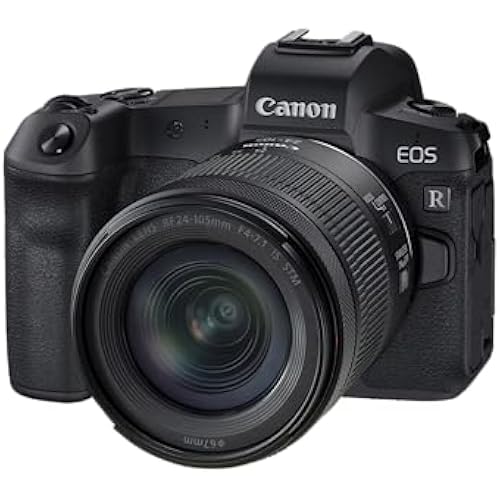
Canon EOS 6D 20.2 MP CMOS Digital SLR Camera with 3.0-Inch LCD and EF 24-105mm f/4L is USM Lens Kit - Wi-Fi Enabled

  • Based on 1,084 reviews
Condition: New
Checking for the best price...
$1,721.48 Why this price?
Save $3.99 was $1,725.47

Buy Now, Pay Later


As low as / mo
  • – Up to 36-month term if approved
  • – No impact on credit to apply
  • – Instant approval decision
  • – Secure and straightforward checkout

Ready to go? Add this product to your cart and select a plan during checkout.

Payment plans are offered through our trusted finance partners Klarna, Affirm, Afterpay, Apple Pay, and PayTomorrow. No-credit-needed leasing options through Acima may also be available at checkout.

Learn more about financing & leasing here.

Selected Option

Free shipping on this product

FREE refund/replacement until Jan 31, 2026

To qualify for a full refund, items must be returned in their original, unused condition. If an item is returned in a used, damaged, or materially different state, you may be granted a partial refund.

To initiate a return, please visit our Returns Center.

View our full returns policy here.


Availability: Only 6 left in stock, order soon!
Fulfilled by Web Offers

Arrives Thursday, May 14
Order within 22 minutes
Available payment plans shown during checkout

Protection Plan Protect Your Purchase
Checking for protection plans...

Style: w/ 24-105mm USM


Set: Base


Features

  • 20.2MP full frame CMOS sensor
  • 4.5 frames per second continuous shooting
  • 1080p HD video recording with manual controls
  • 11-point AF system
  • 3 inch LCD with 1,040,000 dots / SD Memory

Description

The compact and lightweight EOS 6D full-frame digital SLR camera features a 20.2 Megapixel Full-Frame CMOS sensor, a wide ISO range of 100–25600, expandable to L: 50, H1: 51200, and H2: 102400, for incredible image quality even in low light, and a DIGIC 5+ Image Processor. The camera also has a new 11-point AF including a high-precision center cross-type AF point with EV -3 sensitivity, continuous shooting up to 4.5 fps, and Full HD video with manual exposure control, multiple frame rates, and the benefits of a Full-Frame sensor provides stunning performance and creative flexibility. The built-in Wi-Fi transmitter allows you to wirelessly transfer your images to social networking sites through CANON iMAGE GATEWAY, or upload virtually anywhere from your iOS or Android smartphone with the free download of the EOS Remote app.

Compatible Mountings: Canon EF


Aspect Ratio: 43


Photo Sensor Technology: CMOS


Supported File Format: JPEG (Exif 2.3), RAW RAW (5472 x 3648), M RAW (4104 x 2736), S RAW (2736 x 1824) (14bit, Canon original RAW 2nd edition) See more


Image Stabilization: No


Maximum Focal Length: 105 Millimeters


Optical Zoom: 50 x


Expanded ISO Minimum: 50


Metering Description: Multi, Center-weighted, Spot, Partial


Brand: Canon


Brand: Canon


Model Name: 8035B009


Built-In Media: Battery Charger LC-E6, Battery Pack LP-E6, Camera Body Only, Camera Cover R-F-3, EF 24-105mm f/4L IS USM Lens, Eyecup Eb (Not Shown), Lens Cap E-77U (Not Shown), Lens Dust Cap E (Not Shown), Lens Hood EW-83H, Stereo AV Cable AVC-DC400ST, USB Interface Cable IFC-200U, Wide Neck Strap EW-EOS 6D


Are Batteries Included: No


Model Number: 8035B009


Remote Included: No


Model Series: EOS 6D


Global Trade Identification Number: 05


UPC: 013803204155 617407435405


Item Height: 4.37 inches


Manufacturer: Canon


Warranty Description: 1 year coverage for labor, 1 year coverage for parts


Metering Methods: Multi, Center-weighted, Spot, Partial


Exposure Control: Manual


White Balance Settings: Auto


Screen Size: 3 Inches


Display Type: LCD


Dots Per Screen: 1040000


Display Fixture Type: Fixed


Touch Screen Type: Touch Screen


Display Resolution Maximum: 1040000


Has Color Screen: Yes


Flash Memory Type: SD/SDHC/SDXC


Memory Slots Available: 1


Recording Capacity: 478 Minutes


Write Speed: 4.5 fps


Flash Memory Speed Class: UHS-I (C10)


Flash Memory Bus Interface Type: SD


Flash Memory Supported Size Maximum: 64 GB


Compatible Mountings: Canon EF


Sensor Type: CMOS


Image stabilization: No


Expanded ISO Minimum: 50


Photo Sensor Resolution: 20.2 MP


Photo Sensor Size: Full Frame (35mm)


Maximum Shutter Speed: 1/4000 Seconds


Minimum Shutter Speed: 30 seconds


Form Factor: Mid-size SLR


Special Feature: Travel


Color: Black


Item Weight: 0.76 Kilograms


Video Resolution: FHD 1080p


Viewfinder: Optical


Flash Modes: Auto, On, Off


Camera Flash: Built-In


Skill Level: Professional


Compatible Devices: Wi-Fi enabled devices


Continuous Shooting: 4.5 FPS


Aperture modes: F4.0


Viewfinder Magnification: 0.71x


Flash Sync Speed: 1/180 sec


Video Capture Format: mpeg-4;h.264


Expanded ISO Maximum: 102400


Battery Weight: 80 Grams


Delay between shots: 0.22 seconds


Battery Cell Type: Lithium Ion


Battery Average Life: 1090 Photos


Battery Type: Lithium Ion


Processor Description: Digic 5+


Aspect Ratio: 43


File Format: JPEG (Exif 2.3), RAW RAW (5472 x 3648), M RAW (4104 x 2736), S RAW (2736 x 1824) (14bit, Canon original RAW 2nd edition)


Effective Still Resolution: 20.2 MP


JPEG Quality Level: Fine


Total Still Resolution: 20.2 MP


Maximum Focal Length: 105 Millimeters


Optical Zoom: 50 x


Lens Type: Zoom


Zoom: Optical Zoom, Digital Zoom


Camera Lens: Canon EF 24-105mm f/4L IS USM (Zoom, focal length 24-105mm, maximum aperture f/4, Image Stabilization)


Minimum Focal Length: 24 Millimeters


Real Angle Of View: 0.22 Radians


Lens Correction Type: Chromatic Aberration, Peripheral Illumination


Number of Diaphragm Blades: 9


Photo Filter Thread Size: 77 Millimeters


Connectivity Technology: Wi-Fi


Wireless Technology: yes


Video Output: HDMI


Total USB 2.0 Ports: 1


Total USB Ports: 1


Total Video Out Ports: 1


Shooting Modes: Manual


Digital-Still: Yes


Movie Mode: Yes


Image Capture Type: Stills & Video


Night vision: No


Auto Focus Technology: Continuous, Contrast Detection, Face Detection, Live View, Multi-area, Phase Detection, Selective single-point, Single


Focus Features: TTL-CT-SIR


Autofocus Points: 11


Focus Type: Manual Focus


Focus Mode: Manual Focus (MF)


Autofocus: Yes


Frequently asked questions

If you place your order now, the estimated arrival date for this product is: Thursday, May 14

Yes, absolutely! You may return this product for a full refund within 30 days of receiving it.

To initiate a return, please visit our Returns Center.

View our full returns policy here.

  • Klarna Financing
  • Affirm Pay in 4
  • Affirm Financing
  • Afterpay Financing
  • PayTomorrow Financing
  • Financing through Apple Pay
Leasing options through Acima may also be available during checkout.

Learn more about financing & leasing here.

Top Amazon Reviews


  • Upgraded from a T2i crop to the 6D
Style: w/ 24-105mm USM Set: Base
I upgraded from a Rebel T2i w/ 18-135. Here's are my thoughts after taking the camera out on a shoot last night with the 24-105mm L. Ergonomics: Coming from a T2i, one thing that was incredibly difficult to get used to was where the ISO button is located at. It's no longer an isolated button but now a part of a group of 5 other buttons. The buttons are laid out as AF -> Drive -> ISO -> Metering -> LCD light. On the 5D MK3, the buttons are Metering/White balance -> AF/Drive -> ISO/Exposure -> LCD Light. The reason this is important is because from an ergonomic perspective, it's normal to just shift your right index finger from the jog wheel straight down to the ISO button and it's the first button right there. On the Canon 6D, I have to move my finger down and shift it over. I'm getting used to it, but I can't count how many times I've tried to change my ISO and I kept hitting the Metering button and kept taking my eye out of the viewfinder to make sure I didn't change any metering values. Luckily, even if you hit the metering button, settings don't change until you move the jog wheel. So if you're looking through the viewfinder and you hit a button and ISO doesn't show up, then shift your finger left one button. I'm sure this will just take time getting used to. The viewfinder is significantly brighter which was something I never appreciated until using the 6D. In regards to the focal points, the number of focal points seems to make a larger impact on this full frame camera than it did on my crop body (which only had 9 AF points which seemed plenty on the T2i) That is, all 11 of the focal points are towards the center of the frame and on the full frame it seems like there's a lot of places left "open" with no focal points. In other words, it seems like the focal points only cover about 50% of the viewfinder coverage whereas on my crop body (with only 9) it felt like the focal points covered 75% of the viewfinder. Does this matter in the real world? I've not yet to run into any problems, and I suppose one could always use live view focus if for whatever reason one needed a much more precise focus than the 11 AF points. The quality of the center AF point however is superb, and I was surprised I was able to get focus in some situations where my crop body failed in low light situations. In regards to low light image quality, I hated using anything ISO 3200 or higher on my crop body. Pictures were usable but often image quality suffered in graininess and I wouldn't use them for anything professional and even ISO 1600 was borderline but acceptable on my T2i. On the 6D however, I am impressed with the images at ISO 6400, and so far pretty good results at ISO 12800 as well. This was actually one of the biggest driving factors in me upgrading from a crop to a full frame, and I can say that the 6D does not disappoint in this regard. The in-camera HDR is pretty effective. I was surprised at how easy it was to take HDR images without a tripod and have them automatically stitch together and still come out looking good. I am of the mentality that there are certain photos that HDR absolutely adds to a picture, but other times it can distract. The fact that it's so easy to get an HDR picture without a tripod in the field is definitely a plus for me. Keep in mind though that the HDR function will only be available if you are shooting in JPEG mode, so if you're currently set in RAW you'll have to change that setting before setting up the in camera HDR. Once you're finished with any HDR shots, you'll also have to remember to put your camera back in RAW mode. Another nice feature is that there are different raw sizes. RAW - 20MP @ 5472x3648, RAW(M) - 11MP @ 4104x2736) and RAW(S)- 5MP @ 2736x1824. Exactly what it sounds like, but something I wasn't used to seeing on my T2i which always shot in full-size RAW. So if I'm just going out not doing anything serious, it's nice to have the option of a smaller file size while still retaining the benefits of a RAW image. Then again, if I'm not doing anything serious, I would probably just use a cell phone camera. Therefore, neither a pro or a con. In regards to the Wifi features, I will say that the remote EOS app (Android and iPhone) is a far better solution than an articulating screen. When doing self-portraits, it is nice to be able to frame the picture with your phone remotely (remote shooting feature). After my shoot last night, I connected my phone and stuck the camera in the bag as I walked to my car. It felt a lot nicer reviewing my pictures through my phone (and deleting the ones I didn't like) using a touch interface. This is not necessarily a pro or a con, but it was refreshing and I found it to be a better solution as I could zoom with two fingers, pan, etc. I can also see that having a tablet with a larger screen would be useful in reviewing photos in the field. One other thing to mention is that transferring RAW files is pretty slow wirelessly, and it's probably quicker to just pop out the card and stick it in than it is to turn on the wifi settings in camera and then connect through the app. Overall, I'm very satisfied in the upgrade from a T2i to this 6D and I feel it was the correct choice over the 5D MK3 for the following reasons (in order from greatest to least benefit: Slightly better ISO performance (1/2 stop from what I read) over the MK3 -- This may simply be due to the lower resolution / MP count. Slightly improved (-3EV) center focus (as opposed to the -2.5EV on the MK3) ~$900-$1000 dollar price difference Wireless / Remote EOS app. (The MK3 supports this but at the cost of a $500 dollar add-on) The MK3 would be a better choice because: More focal points Slightly higher resolution Location of the ISO button (just my opinion) Dual Card slots (although for me this has zero purpose.) Faster FPS (also has zero purpose cause if I ever need to 'machine gun' my camera 4.5 FPS a second is still plenty fast on the 6D) Update: Canon has released a statement saying that they will allow the center point of the 5Dmk3 to autofocus at F/8 with a firmware update in April of 2013. That opens up a lot of cheaper lens solutions (100-400L 4-5.6) to be used with a 1.4TC to have a max reach of 580mm while retaining autofocus at f/8. This may have been a bigger decision point had I had known about this before purchasing the 6D. However, to the 6D's support, you can swap out the standard focusing screen with an EF-S focusing screen for manual focus. There's also live view focusing, so it's not really a dealbreaker. Update: 1/1/2013 Couple of additional thoughts as I've had this camera. The EOS Remote shooting app for Android and iOS is really a great thing to have on a camera. I just got back from vacation with family and friends and as soon as I took a family photo (some were of people who I didn't know) I was able to ask them for their phone or email address and immediately send it to them. Almost like a modern day Polaroid. I also was able to get impromptu shots of me with my friends by setting the camera on my camera bag and doing the framing with the three of us sitting in front of a fireplace. I've also thought about the lack of dual card slots a bit more, and I think that if you're going to earn money off your camera it might be better to get the 5D MK3 just in case you happen to have a card failure while shooting a wedding or other one time events that you can't reshoot. It's nice to have the extra insurance, but that's about all it gives you. Granted, I doubt a card failure would happen during an important shoot, but it's possible and could prevent you from delivering a product. I think if you're team photographing that this camera supplements a 5dmk3 well, but I like the extra insurance of having backups *just* in case a card failure were to happen as a single shooter. Certainly not a deal breaker by any means, but just food for thought. ... show more
Reviewed in the United States on December 9, 2012 by Dan

  • Game changer...
Style: w/ 24-105mm USM Set: Base
I remember the first time I used the original Canon Rebel. That glorious feeling of going from a digital point-and-shoot to a real SLR... the feel of the body, the satisfying ka-click of a real shutter, the depth of field, the control... I was hooked immediately. After later evolving to a 40D and then to a 60D, I never thought I would have that "oh wow" feeling again until I took a wild chance and spoiled myself. The 6D arrived, and from the moment I looked through that big, bright (and wide!) optical viewfinder, and experienced the amazing flick of the new "silent" shutter, as good as the 60D was, I felt I had jumped to a whole new level. I was not anticipating the new shutter - it's amazing - soft and quiet and very professional with very low volume and vibration. The feel of this thing is like the first time you throw a perfect shifter in a high-end sports car, or slip your arm around a beautiful woman. Okay, maybe that's a bit too poetic... but trust me, you'll find yourself wanting to pull out this baby and flick off a new photo every chance you get. And that was just the start... I turned on the GPS (indoors) and took a few photos a minute later - downloaded them into Lightroom - and LR showed me a satellite view of my house, right down to the corner of the house in which I took the photos! I could not believe how accurate, and how quickly it acquired its location. I haven't used it extensively, but the built-in wi-fi capabilities are pretty amazing too. View images and control your camera remotely from a smartphone or tablet. It transmits a live picture to your device (in my case, a Galaxy Android tablet) and let's you make a few adjustments remotely. It would be nice if it gave you a little more control though. You can also put it into DLNA mode to share with other devices on your network. Once I turned it on, my Playstation3 instantly saw the camera and allowed me to surf through the photos that were still on the camera on my lap. Pretty neat. I wish the UI guys had spent a little more time on the wifi profile menus - they are a lot less intuitive than the other settings. But it works well. I am amazed at the high-ISO performance and it's noise reducing DIGIC 5 processor! You can push it to ridiculous heights before it becomes obvious at anything but pixel-peeking levels. Even the 50,000 and 100,000 ISO range, while obviously noisy, are an acceptable "better than not getting the shot at all", and anything up to 3200 is barely noticeable unless you pixel peek. EVen images shot at 12,500 look pretty good once passed through the noise and color filter in Lightroom. In normal ISO ranges, colors are exceptionally vibrant and solid. The HDR feature is nice, but gives a bit more muted, low-contrast look than I usually achieve doing it manually with Photomatix. I'm not sure I would depend on it for taking realistic photos, but I look forward to really putting it through its paces soon. [UPDATE: I was too kind. The HDR feature is pretty much worthless in my opinion. It just doesn't do very good job. I've quit using it.] I went to a large local photography club the day after I bought it and they were showing off how you could buy a GPS accessory for their 7D for "only" a few hundred dollars, or a wifi/tablet app for a couple of hundred dollars more, and they had all these doo-hickeys hanging off their camera, and there I was, holding this little marvel with all of this built right in, and for a price that, while certainly not inexpensive, is a bargain within the category of full-frame cameras. Naturally, if you're not aware, as a full-frame camera, the field of view is much wider. That nice, inexpensive f2.8 Canon 40mm pancake lens now becomes a real joy to use with this camera. I splurged and got the kit with the 24-105L lens, which seems to be a wonderful lens, but I will withhold my full review of the lens until I get more time in the field with it*. There is no built-in flash, which does not bother me as I hate the harsh on-board flash, and with the low-light capabilities of this camera, it becomes even less necessary. Of course you can still use a Speedlite. If you have anything prior to the 60D, you will love this upgrade. And if you can spare the cash, it's even a big step up from the 60D as well. This thing is a game changer. Don't skip paying the rent or buying food for your children to buy one, but it's well worth skipping a few luxury items and pampering yourself with this exceptional piece of technology. * Update: still adore this camera, but I've got good news/bad news regarding the lens. I spent hours doing side-by-side pixel-peeking comparisons between this expensive (24-105L) kit lens, and the much cheaper 28-135 kit lens that came with my 40D - a lens I always considered an "average" quality lens. You can easily spend 3 times more for the L series 24-105, yet when I compared identical images side by side I found very little to justify the fancy new lens. The build quality and styling is definitely better, and the lens zoom doesn't creep on you when you angle the camera downwards, and if focused perfectly, the L has a little better edge sharpness, but this full-frame sensor on the 6D really brought the old 28-135 to life - the majority of the frame was even sharper, and with better contrast than the L! I would have thought that a full-frame camera would magnify the deficiencies of the cheaper lens, but it really took fantastically detailed images. I have no explanation. I have no real complaints about the 24-105L, other than I was utterly disappointed that it did not stomp on its much cheaper little brother. So... nice lens, but this camera made the old lens pretty nice too. It would be tough to justify buying this lens again. I'd at least do some comparison shopping. ... show more
Reviewed in the United States on March 8, 2013 by Jeff & Wendy S

Can't find a product?

Find it on Amazon first, then paste the link below.
Checking for best price...