


Search  for anything...

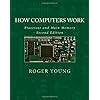
How Computers Work: Processor And Main Memory (Second Edition)

  • Based on 108 reviews
Condition: New
Checking for the best price...
$4.47 Why this price?
New Year Deal · 89% off was $39.99

Buy Now, Pay Later


As low as $1 / mo
  • – 4-month term
  • – No impact on credit
  • – Instant approval decision
  • – Secure and straightforward checkout

Ready to go? Add this product to your cart and select a plan during checkout.

Payment plans are offered through our trusted finance partners Klarna, Affirm, Afterpay, Apple Pay, and PayTomorrow. No-credit-needed leasing options through Acima may also be available at checkout.

Learn more about financing & leasing here.

Free shipping on this product

Returnable until Jan 31, 2025

To qualify for a full refund, items must be returned in their original, unused condition. If an item is returned in a used, damaged, or materially different state, you may be granted a partial refund.

To initiate a return, please visit our Returns Center.

View our full returns policy here.


Availability: In Stock.
Fulfilled by Amazon

Arrives Monday, Jan 5
Order within 3 hours and 19 minutes
Available payment plans shown during checkout

Protection Plan Protect Your Purchase
Checking for protection plans...

Description

Computers are the most complex machines that have ever been created. This book will tell you how they work, and no technical knowledge is required. It explains in great detail the operation of a simple but functional computer. Although transistors are mentioned, relays are used in the example circuitry for simplicity. Did you ever wonder what a bit, a pixel, a latch, a word (of memory), a data bus, an address bus, a memory, a register, a processor, a timing diagram, a clock (of a processor), an instruction, or machine code is? Unlike most explanations of how computers work which are a lot of analogies or require a background in electrical engineering, this book will tell you precisely what each of them is and how each of them works without requiring any previous knowledge of computers, programming, or electronics. This book starts out very simple and gets more complex as it goes along, but everything is explained. The processor and memory are mainly covered. Read more

Publisher ‏ : ‎ CreateSpace Independent Publishing Platform; 2nd edition (April 17, 2009)


Language ‏ : ‎ English


Paperback ‏ : ‎ 152 pages


ISBN-10 ‏ : ‎ 1442113987


ISBN-13 ‏ : ‎ 85


Item Weight ‏ : ‎ 12.8 ounces


Dimensions ‏ : ‎ 8 x 0.35 x 10 inches


Best Sellers Rank: #1,176,367 in Books (See Top 100 in Books) #113 in PC Hardware #325 in Microprocessor & System Design #3,657 in Computer Science (Books)


#113 in PC Hardware:


#325 in Microprocessor & System Design:


Frequently asked questions

If you place your order now, the estimated arrival date for this product is: Monday, Jan 5

Yes, absolutely! You may return this product for a full refund within 30 days of receiving it.

To initiate a return, please visit our Returns Center.

View our full returns policy here.

  • Klarna Financing
  • Affirm Pay in 4
  • Affirm Financing
  • Afterpay Financing
  • PayTomorrow Financing
  • Financing through Apple Pay
Leasing options through Acima may also be available during checkout.

Learn more about financing & leasing here.

Top Amazon Reviews


  • A Fifteen year old learning computers!
I'm a fifteen year old high school student and I have recently purchased this book. This was by far the best five dollars I have ever spent; the knowledge I have gained about computers is unimaginable. Who this book is for: -Person(s) of any age wanting to require knowledge about how computers really work -Anyone who has been interested in electronics -Hobbyists of electronics who create and mod projects on a daily basis Who this book is for not: -Person(s) not wanting to invest time into learning about what is dominating past, current, and future decades As a fifteen year old I haven't been through most high school science classes, nor math classes and this books was very understandable to me. The book starts out as a simple Light circuit with a battery and light bulb and through pages gains complexity and different circuits. The book also explains simple programing and how a computer would use these circuits to store, erase, and read data.The two main parts of a computer this books is revolved around is the processor and the main memory; it fully explains both to its fullest potential and how each use each other to create programs. The final result leaves you with how memory works, and how a processor functions with that memory. It also leaves you with knowing how binary and simple programs work by using the processor and memory. All in all, its a marvelous read. ... show more
Reviewed in the United States on October 18, 2009 by J. Atchue

  • The Grown Up Version of a Kids book
Cheapest book ever and yet I loved it. It feels so good to understand computers now. I reconstructed Roger Youngs's computer with logic gates. This computer he created works and is fully functional. I was afraid that I was gonna waste my money buying another book called code, because perhaps I wouldn't understand it, but this book gave me the confidence to read the other. I would recommend this book to my friends as I learned essential workings of the cpu and memory- which is priceless. The second unit on programming is the only complaint I have as I wished the schematics for that computer was explained, and yes I am aware that the techniques for adding in this book are outdated but It is nice to know we have a better sollution to adding now called the ripple adder or better biproducts such as the cla or mcla. Which would have been nice to introduce this rather than the outdated one, but better yet I learned about clock speed, cpu logic, and memory allocation- for 2 bucks that was an essential bargain. ... show more
Reviewed in the United States on May 27, 2013 by Alex

  • Good Intro, but could have gone farther
This book provides a good introduction to the way in which relays (which can be understood to work as transistors, though a section that fully expanded into transistors would have been nice) are integrated and signals passed for executing commands and reading memory. It presents the information in a very incremental fashion, but one still needs to expend effort (as one does in any learning situation) to trace the various paths to understand what relays are open/closed and why. The diagrams take work to trace, and as with any technical schematic, glancing at the diagram is insufficient. In any given diagram, some relays are open, some closed, and the issue is to work through why is a relay open/closed, and what signal needs to be applied to change it. I would have liked a book that went further and continued to build upon what was presented. For example, getting to the point of showing a full 8-bit system. In addition, in this current world, I would have liked to see assembly commands built around the x86 platform. Nonetheless, if you are like me in not having worked with computers at this level, despite years of programming them, this book is a good introduction into how the logic circuits are created. ... show more
Reviewed in the United States on November 19, 2010 by M. LeCanard

  • Good book
Arrived undamaged
Reviewed in the United States on May 10, 2024 by LEOPOLD T.

  • Quality of presentation leaves a sour note...
This is NOT the book you want to get if you are interested in the question: How do computers work? HIGHLY RECOMMEND you get "Code: The Hidden Language of Computer Hardware and Software" instead: http://www.amazon.com/Code-Language-Computer-Hardware-Software/dp/0735611319 This book leaves a lot to desire. The format is a little awkward (it is a "big skinny" book) and feels like reading a magazine, eg not very ergonomic or comfortable. And it looks as if it could be one-step above a pirated "enlarged" photocopy of an original, smaller book. The printing looks amateurish, the graphics especially look like they were lo resolution "scribbles," drawings like someone would do with a clumsy mouse pointer in Microsoft Paint. I would have rated this book "Hated It" except that I didn't bother to read it. Presentation was so unappealing, and "Code" was such an easy and enjoyable book to read, this one lost all purpose. The only thing that would have made this book better is if it came with crayons to "color over" the crappy illustrations. ... show more
Reviewed in the United States on March 26, 2015 by Austen D. Hoogen

  • From an on-and-off switch to data processing in 141 pages
Most people think computers are all about 1's and 0's. This book shows exactly how all those ones and zero are just symbolic representations of on and off. I thoroughly enjoyed the logical flow of this book. It is not for the novice however. It will get quite involved in logic circuits and how they combine to make memory and processing work in a 16 bit computer. Every computer science student should own this book! ... show more
Reviewed in the United States on October 2, 2013 by bass_oon

Can't find a product?

Find it on Amazon first, then paste the link below.
Checking for best price...