
Search  for anything...

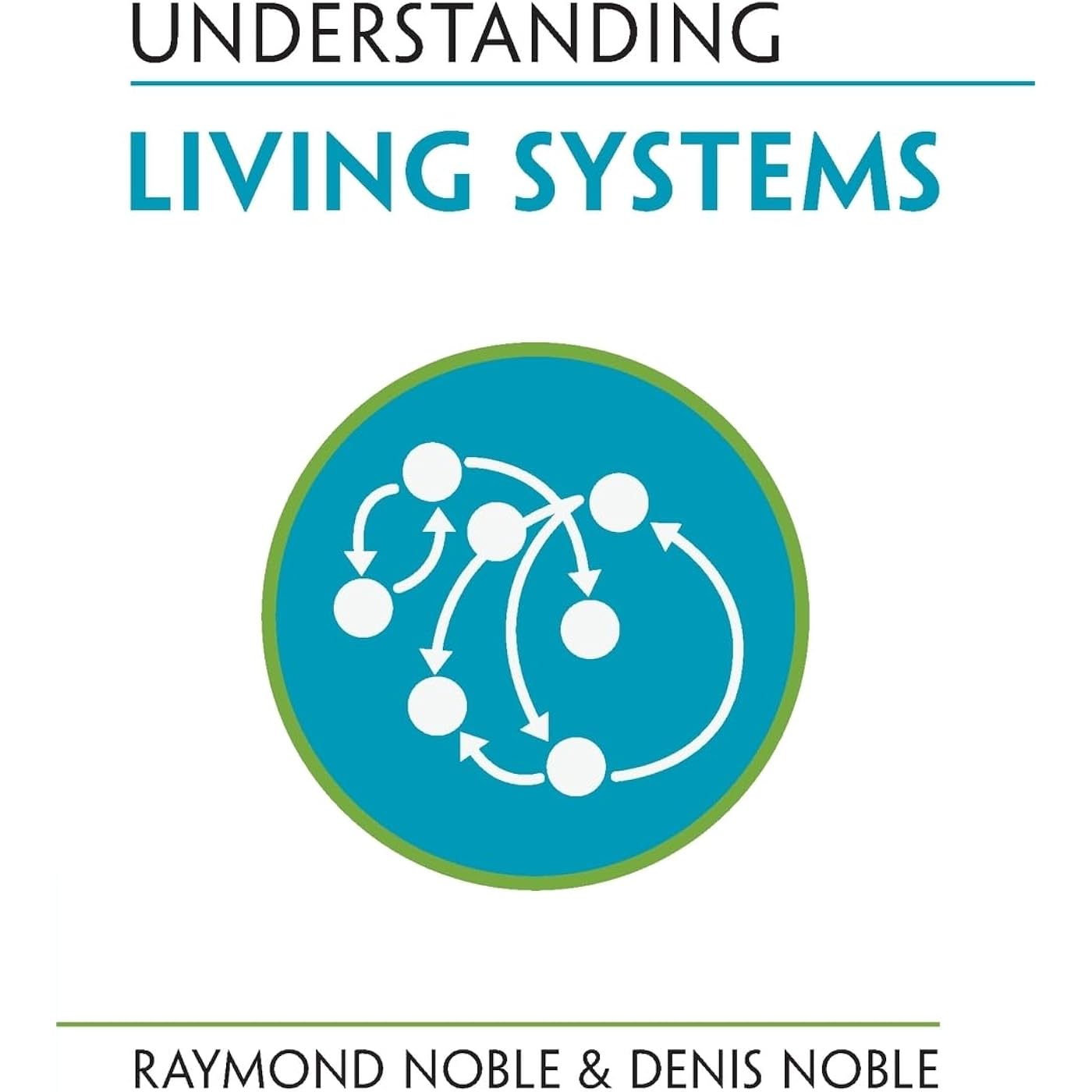
Understanding Living Systems (Understanding Life)

Based on 126 reviews
Condition: New
Checking for the best price...
$19.98
Holiday Deal · 33% off was $29.99

Buy Now, Pay Later


As low as $4 / mo
  • – 4-month term
  • – No impact on credit to apply
  • – Instant approval decision
  • – Secure and straightforward checkout

Ready to go? Add this product to your cart and select a plan during checkout.

Payment plans are offered through our trusted finance partners Klarna, Affirm, Afterpay, Zip, Apple Pay, and Google Pay. No-credit-needed leasing options through Acima may also be available at checkout.

Learn more about financing & leasing here.

Selected Option

Free shipping on this product

FREE 30-day refund/replacement

To qualify for a full refund, items must be returned in their original, unused condition. If an item is returned in a used, damaged, or materially different state, you may be granted a partial refund.

To initiate a return, please visit our Returns Center.

View our full returns policy here.


Availability: In Stock.
Fulfilled by Amazon

Arrives Friday, Nov 27
Order within 13 hours and 3 minutes

Available payment plans shown during checkout

Protect Your Purchase

Easy claims online, fast replacements, no fees

Checking for protection plans...

At a glance

Condition
New
Format
Paperback
Dimensions
5 x 0.45 x 7 in
Weight
7 oz
Publisher
Cambridge University Press
Publication date
July 6, 2023
Edition
1st

Description

Life is definitively purposive and creative. Organisms use genes in controlling their destiny. This book presents a paradigm shift in understanding living systems. The genome is not a code, blueprint or set of instructions. It is a tool orchestrated by the system. This book shows that gene-centrism misrepresents what genes are and how they are used by living systems. It demonstrates how organisms make choices, influencing their behaviour, their development and evolution, and act as agents of natural selection. It presents a novel approach to fundamental philosophical and cultural issues, such as free-will. Reading this book will make you see life in a new light, as a marvellous phenomenon, and in some sense a triumph of evolution. We are not in our genes, our genes are in us. Read more

Specs 10

Publisher Cambridge University Press
Publication date July 6, 2023
Edition 1st
Language English
Print length 196 pages
ISBN-10 1009277367
ISBN-13 65
Item Weight 7 ounces

Frequently asked questions

If you place your order now, the estimated arrival date for this product is: Friday, Nov 27

Yes, absolutely! You may return this product for a full refund within 30 days of receiving it.

To initiate a return, please visit our Returns Center.

View our full returns policy here.

  • Klarna Financing
  • Affirm Pay in 4
  • Affirm Financing
  • Afterpay Financing
  • Zip Pay in 4
  • Financing through Apple Pay
  • Financing through Google Pay
Leasing options through Acima may also be available during checkout.

Learn more about financing & leasing here.
Top Amazon Reviews


Flips 100 years of biology dogma on its head
Format: Paperback
This book re-establishes the role of choice and freedom in biology, after 100 years of being ignored and sidelined. These qualities are not merely characteristics of life, or "epiphenomena". They are the very signature of life. It cannot be understood any other way. This is plain enough to the average six year old, but the opposite is drilled into the heads of most biologists and medical students from the first day of their freshman year. This book canvases zoology, physiology, ecology, genetics, philosophy, and in the process delivers a takedown of the Selfish Gene theory. Everyone should watch author Denis Noble's debate with Richard Dawkins, easily found with an online search. The authors have impeccable credentials; Denis Noble, Oxford Professor, FRS, CBE, deciphered the mechanisms of the cardiac rhythm which made pacemakers possible; he's been nominated for the Nobel Prize and may yet win it. Ray Noble works at the Institute of Women's Health at University College London. Despite their lofty credentials they really do write in simple plain English and readers with a basic grasp of science and biology will have no difficulty following their arguments. The book delivers a careful study of the chain of causation in genetics, showing that it is not possible for "genetic determinism" [the idea that genes determine everything] to be true. Genes are mere organs of the cell and cells modify genes at will. To say the gene is the originator of everything is like defining a human being as "a stomach with legs." They challenge not only the medicine of reductionism, but the nihilism and despair as well. Though never explicitly stated, reading between the lines one can sense the authors' disdain for the pervasive belief that science has rendered life meaningless and narcissistic. It is clear from the stories and examples here that their views are as far from that as can be. In this book you'll get a detailed study of the failings of Neo-Darwinism, the version of evolution taught in most textbooks; and you'll get a preview of the "Third Way" evolution and systems biology which are replacing it. Quoting from page 90: "A major point in this book is that a consequence of a gene-centric approach to animals is that they become treated as machines, as automata. They become seen as the passive recipients of whatever environment they find themselves in. Yet organisms themselves create all the 'natural' environments on earth, and in doing so organisms have evolved in response to change." This attitude of treating animals plants and nature like machines drives environmental destruction and pill-prescribing laziness in medicine. One of the finest rewards of this book is how widely read the authors are, and how many fields they draw from. You'll encounter fascinating anecdotes, for example a detailed explanation of the biological systems foxes use to hunt and cooperate. Finally the book is a short, quick, pleasant read. Five stars all the way. ... show more
Reviewed in the United States on August 16, 2023 by Perry Marshall

Authoritative challenge to the gene-centric dogma
Format: Paperback
Expert overview of biology principles.
Reviewed in the United States on July 16, 2026 by Brian D'Agostino, Ph.D.

Noble's explains evolution using biology of system vs Dawkin's gene-centric approach
Format: Paperback
This is Denis Noble's newer book, written with his brother Raymond Noble, following The Music of Life presenting the biology of living systems as a criticism of the Dawkin's gene-centric approach of evolution. This book further develops the details of the biology of living system , and suggest living system act as agent from the top while behaving as an open system to form social interaction with its peer and the environment. The first major point made in this book is based on the initial research Denis Noble did on ion channel's. It shows the role genes as DNA sequences play as information to make the right protein for the cells regulating heart rhythm. Noble was working on the initial 4 ion channels in the 60s. His research shows a network of cells, genes and their proteins to form a feedback loop of ion chanels for the heart rhythm. It is not dependent on any one gene but on the said network. Further Noble holds that the DNA is only an information template while it is the cell and the organisms the cell under that parcel out information that organises the chromosomes information. Another main area that Noble disagrees with the gene-centric view is the direction of causal chain, namely, unidirectional from the DNA to protein, leading to the view of genes driving the system. But cells and the organism regulate DNA expression and çan alter DNA, which is how it is operated in the immune system. Another interesting finding is adaptations can be metabolic passing from parents to the next generation instead of genetic mutation showing organism can swiftly make adaptations. The chapter "Purpose in Life" is probably a most interesting and controversial proposal from Noble. He sees living forms have goals, objectives such as building a nest, obtaining food, migration, and various functionalities as a display of purpose and agency for living systems. Many of these functionalities are adaptative for survival. Noble then seems to think goal oriented functions, to include adaptative, in living system is a form of agency. That is tantamount to suggesting adaptations are sentient because they are goal oriented. Another interesting proposal in this work is the evolution of living system is tied to the environment in which it is situated such that there is a reciprocal and intertwined relationship between the organism and the ecosystem. Organism interacts and modifies thecenviron.ent They both affected each other. This connection between organism and environment is quite similar to Lewontin's view of evolutionary process. This work is highly readable and engaging. It does make interesting philosophical analysis but is tied to scientific findings. It is no doubt a book to be read after one reads the Selfish Gene and The Extended Phenotype ... show more
Reviewed in the United States on July 4, 2026 by PembrokeSorbonne

Best book on evolution I ever read!
Format: Paperback
I have read MANY,MANY books on evolution. This relatively short book is the very best. Like all sciences, the ideas in evolution get refined and changed over time. STILL, some incorrect things live on for some reason. This book destroys some of the fallacies that are still proffered and especially points out the fallacies about the "selfish gene" and about our offered ideas about genes in general. VERY informative book. ... show more
Reviewed in the United States on January 15, 2025 by The Philosopher

Genome functions
Format: Paperback
Positive Review: Raymond Noble’s "Understanding Living Systems" offers an insightful and accessible exploration of complex biological concepts. Noble’s ability to break down intricate details of cellular processes, genetics, and ecological interactions into understandable segments makes this book a valuable resource for both students and general readers interested in biology. The clear explanations, accompanied by illustrative examples, enhance comprehension and engagement. Noble's focus on the interconnectedness of living systems provides a holistic view that enriches readers' appreciation of the complexity and elegance of life. Negative Review: While "Understanding Living Systems" is informative and well-structured, some readers might find it lacks depth in certain areas. The book’s attempt to simplify complex topics may sometimes lead to oversimplification, potentially glossing over important nuances in biological processes. Additionally, the illustrations, although helpful, might not be detailed enough for more advanced readers seeking a deeper understanding. Those with a strong background in biology might find the content somewhat basic and less challenging than expected. ... show more
Reviewed in the United States on August 13, 2024 by Sabih jibara

Incredible Insights
Format: Paperback
I saw Andrea Morris interview Denis Noble and I heard about this book. Packed with great insights. Dispels modern myths about the role of genes as determinant. Denis asks, "Where are the cures?" A very good question. If genes determine everything and we have dissected the genome we ought to be curing everything, but we are not. Denis and Raymond put genetics in their true context as part of a complex self-organizing organism. Genes are not the ghost in the machine. Organisms are not machines and there are no ghosts. ... show more
Reviewed in the United States on June 18, 2024 by Thomas Laperriere

Book dismisses evolution in the known sense altogether
Format: Paperback
I had read some titles in the Cambridge series and this seemed a bit intresting, a broad view of life. After getting the book in hand, I remembered who Denis Noble is. An animal has some mutation in its sperm or egg. The animal has no changes, looks like all of its kind. It is the offspiring of this animal that has the mutation. If it is benficial, the animal survives. Noble does not believe in this. He goes on to talk about pandas of two types and single cell organisms. We know well that bacteria and single cell organisms exchange DNA and RNA. Somewhere in there is his explantion of how we throw out mutation as the mechanism for evolution. Somewhere in the book is a chapter on AI. Noble thinks it is dangerous to compare AI to humans. Just the thing people opposing evolution like to read. If you do want to learn about evolution, a similar book as far as explaining the diversity of life and the complex mechanisms that might direct it is Prosanta Chakrabarty's Explaining Life. In it evolution and genetics are covered in an easy to understand level. ... show more
Reviewed in the United States on May 12, 2026 by Tero

Delightful Read
Format: Paperback
This book was so insightful and technical, really fun to read. I feel like the book was written for me, in that it touches on the wondrous nature of living systems, the active agency of the smallest cell, and the remarkable communal features found in all creatures. I highly recommend the book, though not perfect, it is a worthwhile read! I bought two more copies in hopes of giving them to anyone I find who shares my scientific and philosophical joys. ... show more
Reviewed in the United States on July 16, 2024 by Amazon Customer
Checking for best price...