
Search  for anything...

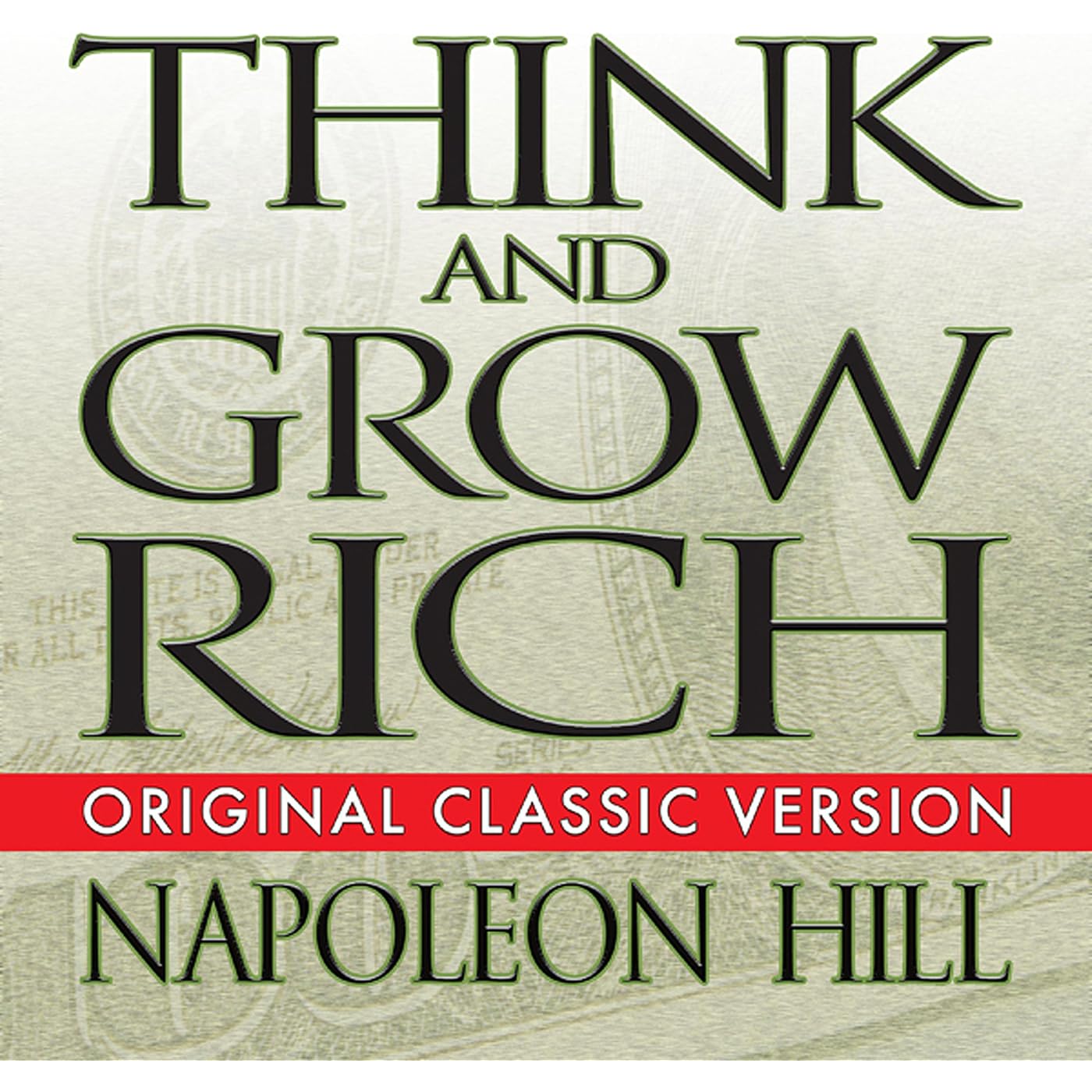
Think and Grow Rich

  • Based on 75,225 reviews
Condition: New
Checking for the best price...
$15.44 Why this price?
Save $2.93 was $18.37

Buy Now, Pay Later


As low as $3 / mo
  • – 4-month term
  • – No impact on credit to apply
  • – Instant approval decision
  • – Secure and straightforward checkout

Ready to go? Add this product to your cart and select a plan during checkout.

Payment plans are offered through our trusted finance partners Klarna, Affirm, Afterpay, Apple Pay, and PayTomorrow. No-credit-needed leasing options through Acima may also be available at checkout.

Learn more about financing & leasing here.

Free shipping on this product

This item is eligible for return within 30 days of receipt

To qualify for a full refund, items must be returned in their original, unused condition. If an item is returned in a used, damaged, or materially different state, you may be granted a partial refund.

To initiate a return, please visit our Returns Center.

View our full returns policy here.


Availability: 20 left in stock
Fulfilled by Amazon

Arrives Jul 3 – Jul 7
Order within 14 hours and 4 minutes
Available payment plans shown during checkout

Protection Plan Protect Your Purchase
Checking for protection plans...

Description

Think and Grow Rich is the number-one inspirational and motivational classic for individuals who are interested in furthering their lives and reaching their goals by learning from important figures in history. The text read in this audiobook is the original 1937 edition written by Napoleon Hill and inspired by Andrew Carnegie, and while it has often been reproduced, no updated version has ever been able to compete with the original. It has been used as a roadmap to achievement by countless individuals. The 13 Steps to Riches described in this audiobook offer the shortest dependable philosophy of individual achievement ever presented for the benefit of the man or woman who is searching for a definite goal in life. It comes directly from the experiences of hundreds of America's most successful men.Hill interviewed 504 people, including Ford, Wrigley, Wanamaker, Eastman, Rockefeller, Edison, Woolworth, Darrow, Burbank, Morgan, Firestone, and three United States presidents. The process of conducting these interviews required an investment of 20 years of Napoleon Hill's life.This audiobook will guide many to success, and has sold millions of printed copies for nearly three quarters of a century. Yes, one can gather from the title that the starting place for wealth is in a person's thoughts - and this title is the source for most of today's motivational speakers. So why not go back to the original source? Read more

Frequently asked questions

If you place your order now, the estimated arrival date for this product is: Jul 3 – Jul 7

Yes, absolutely! You may return this product for a full refund within 30 days of receiving it.

To initiate a return, please visit our Returns Center.

View our full returns policy here.

  • Klarna Financing
  • Affirm Pay in 4
  • Affirm Financing
  • Afterpay Financing
  • PayTomorrow Financing
  • Financing through Apple Pay
Leasing options through Acima may also be available during checkout.

Learn more about financing & leasing here.

Top Amazon Reviews


  • great read
Opens your mind to understand logics of success and self awareness. It builds your mind so that you can build fortune. Great read especially if you’re in your prime and looking to bridge the gap between your future and present.
Reviewed in the United States on June 2, 2026 by Romario Rearrie

  • Well worth my time
On many levels, I enjoyed and learned very much from the reading of this book. Despite the book's age, there are many relevant lessons that apply today just as much as when the book was written. There are many applicable lessons to be learned from Think and Grow Rich. I loved the style of writing from the era, and even certain words that are not commonly used as much these days. There is a good chance that I will be reading this again one day. I am particularly pleased that I read the unedited original version. I can't fathom someone who would want to read the newer "politically correct version." Part of the learning benefit from this book comes from reading it as it was originally intended, so as to compare the great and profound ways that we have changed as a society and as people on so many levels. In contrast, there are ways of humanity that have endured consistently with the human experience overall. This book is not without aspects that I disagree with though, one for instance has Napoleon stating a most preposterous reason for why men become bald: "Baldheaded men, for example, are bald for no other reason than their fear of criticism. Heads become bald because of the tight fitting bands of hats which cut off the circulation from the roots of the hair." Despite such a silly statement, I appreciated reading it for the main reason that he, as we all do in our respective era, have imperfections that we cannot help. This era no doubt predated the discovery that male pattern baldness is in fact genetic. He goes on to say that men also lose their hair because their hats are "too tight." A passage shortly after boasts a huge stereotype about women by saying: "But it must not be supposed that women are free from the fear of criticism. If any woman claims to be superior to man with reference to this fear, ask her to walk down the street wearing a hat of the vintage of 1890." I am certainly not offended by this, but in fact appreciated reading it in the unedited version because we get a real sense of where people and society were at in this day. On one hand, many women of today still care very much about fashion, on the other, some would be repulsed by what here is a massive generalization, as if women only would care about fashion and nothing else. Furthermore that women evidently couldn't be imagined as fearing criticism of things more commonly known to men in the day like differing politics, or equality in the workplace etc. just as a few examples. It's obvious that Napoleon intended to be speaking predominantly to men with this book even though the lessons are surely potentially relevant and empowering to women for all the same reasons that they are good for men. It's also for sure that some women will not be able to get through this book because of it, but as I said, such social distinctions and observations are riveting for me to realize, and I would suggest that enlightened women read it and appreciate it for the same reasons. Despite these two silly aspects that stood out like sore thumbs, I really did get very much profound meaning out of this reading. It is certainly catered more to men than women, and the sexism is readily apparent in this way. However, this is not a reason not to read this book. It could be seen as a reason to read it indeed because I get a strong sense that we have progressed as a society. This philosophy book of success shouldn't merely be about success, but we should also be able to measure our own progress as a society by reflecting upon some of the obviously sillier things that are written here, of which there are few to be sure. I otherwise loved so much of the writing. There were many inspirational stories and ideas about how to succeed that are as valid today as they were in 1936. I'm not going to summarize the whole book, except to reiterate once more that there are many insightful and powerful life lessons within that can help both men and women succeed. If I thought this book were boring or inherently for the most part dogmatic, I would not be able to finish it. It easily sparked and kept my interest which made it easy to get through. No problem. It was well worth the money. I wouldn't spend a penny on the edited version. 4.5 Stars might be just about right, but nonetheless, this was different, special and memorable for me to read. ... show more
Reviewed in the United States on February 4, 2014 by VoyageAmazon

  • EVERYONE should read this book.
Everyone in the world should read this book. Timeless advice, as always, by Napoleon Hill, one of my favorite self help authors. Man, what a book. It teaches you A LOT and everything about how to improve and grow in life as a human being, but thinking rich, not just in money, but in goals.
Reviewed in the United States on May 29, 2026 by GVG

  • What Napoleon Hill was Wrong About...
I first read this when I was like 19 or 20 years old, I'm 31 now. I've heard people say that this book kind of grows with you. I read it again and I think I actually got more out of it the first time I read it. I'll explain why later... I'll be honest, I read this book about 11 years ago and, I've done a lot of thinking (and doing) since then but I really have not grown rich. So you may want to just stop watching this now if you were hoping to hear from someone who's made a bunch of money as a result of reading Think & Grow Rich. However, where it's really ROI'd for me is in rich life experiences... I've spent years traveling around the world living in interesting places.. Having control of my time. I spent pretty close to 100% of my my time doing the things I want to do. Finding meaningful work. Finding that intersection of what I'm good at, what I'm passionate about and what people are willing to handsomely compensate me for. Having interesting relationships with a diversity of people. And it's really given me an abundance of the two things that I have always I valued most, which are... 1. An adventurous life of novelty. 2. Being a thinker. Even when I was very young I knew I wanted to be a writer, I knew I wanted to be a philosopher. With the application of the principals in this book I've accomplished that. There are some things in this book that I actually think Napoleon Hill was wrong about... Inaccurate Predictions He makes some inaccurate predictions... "Crooners and light chatter artists who now pollute the air with wisecracks and silly giggles, will go the way of all light timbers, and their places will be taken by real artists who interpret carefully planned programed which have been designed to service the minds of men, as well as provide entertainment." Napoleon Hill would be spinning in his grave if he could see how bad art has gotten; a Nicki Minaj music video, a rude comedian perform or a DJ being cheered on by hundreds of people in a nightclub just for pressing buttons on their laptop. He was obviously a capitalist but there's a couple of passages that reveals some proto-socialism actually, for example The relationship of employer and employee, or of leader and follower, in the future, will be one of mutual cooperation, based upon an equitable division of the profits of business. In the future, the relationship of employer and employee will be more like a partnership than it has been in the past. (p. 67) He also writes "in the future, business will be conducted by methods that will require no pressure. " I don't know how you would quantify how cut throat on a whole the business world is. I guess businessmen don't hire mercenaries to break employee strikes anymore and there are a whole lot more self employed people now, but I think Napoleon Hill was, like a lot of great thinkers, a bit deluded by this idea of a fair and benign business world. This is contrary to human nature. He also had an unrealistic optimism about the future of journalism, writing "New leaders will be required in the field of Journalism. Newspapers of the future, to be conducted successfully, must be divorced from “special privilege” and relieved from the subsidy of advertising. They must cease to be organs of propaganda for the interests which patronize their advertising columns. " Again he'd be spinning in his grave if he could see the nepotism that typifies the main stream media today. Psuedo-Spirituality The book is rife with psuedo-spirituality Moreover, men know that this living, pulsating, vibratory energy which permeates every atom of matter, and fills every niche of space, connects every human brain with every other human brain. What reason have men to believe that this same energy does not connect every human brain with Infinite Intelligence? (p. 146) The phrase "infinite intelligence" appears 40 times in the book faith is the only agency through which the cosmic force of Infinite Intelligence can be harnessed and used by man. (p. 20) The notion that there is this ethereal none human intelligence, that inspires invention and genius as opposed to it just being a combination of hard work, cleverness, and inherent human ability is interesting. It's an idea that great writers and thinkers have espoused for a long time, yet it is totally none falsifiable - you can't really prove or disprove it. So it's pretty wu-wu, Napoleon Hill also states... Mental telepathy is a reality. Thoughts pass from one mind to another, voluntarily, whether or not this fact is recognized by either the person releasing the thoughts, or the persons who pick up those thoughts. (p. 179) There may actually be some scientific basis for this. You might remember in the video game Rainbow 6 you could use a heartbeat sensor to detect where other people where. This is based upon a real device used by special forces, that works by detecting the electro-magnetic field that the heart gives off. Humans seem to have a keen ability to pickup what the electro-magnetic heart fields of those around us are saying. This bio-phenomenon is likely responsible for that effect where you sense the emotions of people around you without some really obvious clue. On Faith There's a lot of emphasis on faith "faith is the starting point of all accumulation of riches!" This chapter was maybe a little difficult for me because I'm not a big fan of faith, I'm an empiricist. “faith is a state of mind, and that it may be induced by self-suggestion.” Flowstates__ On Sex The most interesting chapter of the book is, I think, on sex There are other mind stimulants, some of which have been listed, but no one of them, nor all of them combined, can equal the driving power of sex. (p. 132) Among the greatest, and most powerful of these stimuli is the urge of sex. When harnessed and transmuted, this driving force is capable of lifting men into that higher sphere of thought which enables them to master the sources of worry and petty annoyance which beset their pathway on the lower plane. (p. 129) I'll say something that will perhaps be a little controversial; I think this chapter is just for men. I have no idea how sex transmutation would work for women in the way that Napoleon Hill talks about it working for men.. Maybe someone can tell me? On Love Love, Romance, and Sex are all emotions capable of driving men to heights of super achievement. Love is the emotion which serves as a safety valve, and insures balance, poise, and constructive effort. (p. 136) He talks about love quiet a bit in the book and it should be noted that the popular definition of love has changed a lot since this book was written. In the past love was a word that signified an intense emotional commitment to something greater than oneself expressed through acts of service. Now love just means like this intoxicated feeling, that you fall into and fall out of randomly, that makes you act stupid. It's this insatiable desire for someone or something that makes you irrational. It's this thing that people say to each other for our own emotional validation. I really think modern day love, does more harm than good. On Persistence "The better portion of all sales I have made, were made after people had said ‘NO’.” This reminded me of what's called The Four Times Rule which comes from a pickup artist. The rule is the you are allowed to approach someone you find attractive four times. Which is really a good rule for anything in life, if you want something persist in asking for it as many as four times. On Education He would have been totally dismayed with all the free education available today. He writes that it's important that we pay cash for our personal development "Being asked to pay, whether the student makes good grades or poor, has the effect of causing one to follow through with the course when he would otherwise drop it." He goes on to criticize the Public library system "there is one astounding weakness to this marvelous system— it is free! " Which provides an interesting commentary on a current hot button political issue - what Napolean Hill would have thought of free college? He probably would have thought it was a totally asinine notion. On Failure He lists 30 common causes of failure, there's one that really jumped out at me, which Napoleon also emphasizes Wrong selection of a mate in marriage. This a most common cause of failure. (p. 81) If you've ever read the classic book The Millionaire Next Door, in which they really exhaustively analyze the average millionaire in the United States, you know that one of the biggest factors in becoming wealthy is selection of spouse. He goes on to list another common cause of failure... Intemperance. The most damaging forms of intemperance are connected with eating, strong drink, and sexual activities. Overindulgence in any of these is fatal to success. (p. 82) It's interesting that temperance or Intemperance is a word that is almost completely forgotten by our society. When I was a younger man I seemed to attract a lot of friends who were bad hedonists, completely intemperate. They were fun to be friends with but over time I saw how self destructive their overindulgent impulsiveness was and how it put me at risk. Now I'm really repulsed by people that display intemperance. Invisible Counselors This is something pretty cool that can be added to your meditation practice... Every night, over a long period of years, I held an imaginary Council meeting with this group whom I called my “Invisible Counselors.” (p. 154) The procedure was this. Just before going to sleep at night, I would shut my eyes, and see, in my imagination, this group of men seated with me around my Council Table. Here I had not only an opportunity to sit among those whom I considered to be great, but I actually dominated the group, by serving as the Chairman. (pp. 154-155) I now go to my imaginary counselors with every difficult problem which confronts me and my clients. The results are often astonishing, although I do not depend entirely on this form of Counsel. (p. 159) My counselors would be Donald Trump, Stefan Molynuex (A philosopher) and Claus von Stauffenberg (the Nazi who tried to kill Hitler). Who would your invisible counselors be? On Aging? Napoleon Hill recommends that instead of being disparaging of getting older we should [express] gratitude for having reached the age of wisdom and understanding. (p. 176) I totally agree, I've really enjoyed getting older. When I was a quiet young man I had this interesting relationship with a Korean business woman, she told me something interesting; Getting older only sucks if you are stupid. If you are stupid years keep passing by and you don't advance in life, life doesn't get any better. Life actually gets worse. You become increasingly self delusional and bitter. However, if you are smart life just keeps getting better and better over time. That's totally been my experience. I said that I think I got more out of this book the first time I read it, that's because when I was younger this book gave me a lot of audacity to try things that were really far outside of the norm. It gave me the audacity to start a challenging career in sales when my peers were all starting college. It gave me the audacity to quiet my comfortable job in corporate America and start a business. Where I see a lot of value in this book is in what I will call temporal self auditing. This book contains at least a couple of lengthy questionnaires that really force you to face yourself, look at inner beliefs, outer behaviors and your position in life. This allows you to audit yourself and in the future you can look back and see how your beliefs and behaviors have changed. I've done this over the years and interestingly what you really see is that over longer periods of time your beliefs and deep desires do really manifest in the world. ... show more
Reviewed in the United States on July 20, 2016 by Jonathan Roseland

  • Great book to expand your beliefs
I was just visiting this book recently again, and I always learn something new from reading a chapter or two. This book has done wonders for me over the last decade; the ideas and philosophies I have learned have truly helped me change my life for the better.
Reviewed in the United States on June 9, 2026 by muhammad

  • A book which doesn't go out of print!
This is a very unusual book. When I first encountered it as a young man, I hastily filed it in the category of "get-rich-quick" books, which I despised. Revisiting it decades later forces me to admit that there must be something to this book. For one thing, glance through the reviews here. There are so many positive reviews which say "This book worked for me," and the negative reviewers basically say, "I read it and I think it's junk" or "I read it and nothing happened." Negative reviews which just say "I read the book" strike me as nearly self-contradictory, because you cannot read this book without realizing that the author himself says, many times, that just "reading" --- processing it through your rational brain --- will accomplish precisely nothing. The book is a blueprint for action, and if you don't take the action yourself, nothing will happen. Still, I know a lot of people who have grown rich without doing any of the advanced practices recommended here. But I have to admit, those people had a lot of the qualities which this book seeks to develop: setting goals, concentrating, and --- perhaps above all --- being persistent and never quitting. Another thing strikes me as curious at the age of 62: I have three brothers, and all four of us have reached the goals we set as children. The goals were very, very different, but it reminds me of the old saying, "Beware of the dreams of your youth, because they just might come true." So there is a lot of valuable stuff in this book. You don't have to make wealth your goal. One of the keys may lie in the question, "What is the meaning of life?" It's a question which needs to be answered, individually, by everyone who does not want to simply drift through life. Once you know your own answer, you may have formulated a Desire (as Hill would say). It should be pointed out, also, that this is NOT a get-rich-quick book. If anything, it is a get-rich-slowly book. And, after all, if you do want to accumulate a few million bucks, don't you think you had better have a definite desire, accompanied by a real-life plan, as well as complete concentration on that plan, and complete tenacity/perseverance? After all, you're going up against competition which may well have all of these! As Napoleon Hill points out, what is truly fanatastic is people who think that this is all going to happen through luck. What's even worse, if it does happen through luck (e.g. winning a lottery): well, how many people hold on to that money and go on to become truly wealthy? Isn't it less than one percent? And how many people win a lottery and subsequently turn up broke again? In sum, I really have only one serious question about the book and its recommended methods, and that is, "Can you fake it?" That is to say, can you take a whim that occurred to you a week ago (say, to become a superb chef) and actually talk yourself into trying to make it happen --- if it is not, in fact, your key goal in life? I don't know, but I strongly suspect that the answer is "No." You'd get tired of chasing your phony goal very quickly indeed, and then you could say that you tried the book's methods, and they failed. So --- before buying this book, do try to figure out what you most want out of life. If it is a great pile of money, you could hardly go wrong here. I think the book could also help in attaining other goals, but the title is not accidental. --- one additional thought --- I have worked as an English teacher for a decade or more, and have been immersed for most of my life in the struggle to learn foreign languages. It is only now that I suspect that the language teacher's focus on repetition is designed to drive the language into the student's "unconscious mind." We understand very little about the human mind, but this struck me as interesting: you speak and hear a foreign language just as you speak and hear your own language --- through some part of your mind which is most certainly not the "conscious mind." Thinking about that, I came to suspect that the idea of auto-suggestion, REPEATED day after day after day, might indeed have some merit. ... show more
Reviewed in the United States on February 9, 2009 by Geoff Puterbaugh

  • You've read 'Think and Grow Rich." Are you RICH now??
Back in '95, I had the good fortune to find myself in an internship for a copier company. The job was a sales position, and the whole department swore by "Self Help" tapes and CD's. I was instantly hooked on them, and started a collection of my own. At the time, I purchased a two-tape audio version of Think and Grow Rich and couldn't get enough of it. It wasn't until last year that I purchased the book, which I am now reading for the second time. For fun, I decided to read some reviews AFTER I had already listened to/read the material, and I was particularly interested in one review that mentioned a conference where the speaker asked "Who has read TGR?" The reviewer stated that 20 or so raised their hands. The next question the speaker asked was "Who's rich?" Supposedly, all their hands went down. The reviewer then stated "If you've read this book and you are NOT rich, please write a review." Well, I am not "rich" in terms of monetary value, so I guess that qualifies me. Let me first start by saying that in Tony Robbins' great CD program, Personal Power II, one of the first things he says is "It blows my mind how many people purchase tape programs like this AND NEVER USE THEM." Ahh! So my question to this above-mentioned reviewer is, how many of those 20 people that read the book ACTUALLY USED THE MATERIAL?? People seem to think that if you buy these types of books or CD programs, you automatically become "rich" just because you read the information. Got news for ya, it doesn't work that way. It is also worth mentioning that Hill specifically says that there are many characteristics that being "RICH" can imply...and he specifically states that MONEY is LAST on the list. So I say to this reviewer, that I do consider myself RICH because I have good family, good health, a good job, and good friends. And that's just for starters! Now I know everyone is thinking "big deal...what about MONEY?" OK, let me first tell you about my first experience after starting on my long road of "Self Help" materials. After listening to TGR the audio tapes, I decided right then and there that I wanted to make exactly $30,000 in my first year out of college...I graduated in '96, and remember that I listened to the audio tapes in '95. I thought about this each and every day...whether on purpose, or just casually, it doesn't really mater...the point is, I had NO OTHER OUTCOME in my mind. I WAS GOING TO MAKE $30,000 (which by the way was a good starting salary back then.) This went on for months, and I was actually excited about the idea, and couldn't wait to make this money THAT I KNEW I was going to make. I used all the principles described by Hill for my remaining months at college. I KNEW WHAT I WANTED, DEVELOPED A PLAN, AND EXECUTED THE PLAN. Throw in a few prayers here and there and you've got the gist of what Hill explains. In late spring I began interviewing when a recruiter for an insurance firm came to interview possible candidates for one of two sales positions. He went to several colleges and interviewed over 100 people. I was offered the job...which I accepted...which paid me, EXACTLY $30,000 as my starting salary. Coincidence? Or was it the result of the principles I used as described by Hill until they were brought to fruition? I can tell you what I believe, but it doesn't matter...it will not be BELIEVABLE until you prove it to yourself. Now here we are, 12 years later, and I'm getting even more from the book. I have a great job, and a superb plan for the future. I am once again using the principles described in his book (which obviously are in greater detail than the tapes) and I am on my way. So..."Am I RICH?" In monetary terms, I say to that "Not yet." Am I RICH in other aspects of my life? I say ABSOLUTELY because I've used the principles outlined in this book. I've gotten in better shape, I've strengthened my relationships with my friends and family, I purchased my own house, I have ZERO DEBT (except for my mortgage of course), and things couldn't be better for me AT THIS TIME. Bottom line, it all comes down to how you USE THE MATERIAL. If you read it once and say "Where's my money?" you'll be disappointed. If you read it AND USE IT you WILL ACHIEVE RESULTS to the degree in which you put the principles to work. It really is that simple. Read this book, use what's in it, and you will better your life. Will you be a millionaire because of it? Perhaps...Perhaps not. It's all up to you. ... show more
Reviewed in the United States on March 5, 2008 by User in PA

  • very good knowledge
It says in the beginning you might get the point on the first page or on the last. I feel like I understood on the first and would have been satisfied with a book summary.
Reviewed in the United States on April 26, 2026 by Ryan Manning

Can't find a product?

Find it on Amazon first, then paste the link below.
Checking for best price...