
Search  for anything...

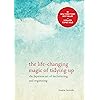
The Life-Changing Magic of Tidying Up: The Japanese Art of Decluttering and Organizing

  • Based on 59,593 reviews
Condition: Used - Good
Checking for the best price...
$5.67 Why this price?
Save $13.33 was $19.00

Buy Now, Pay Later


As low as $1 / mo
  • – 4-month term
  • – No impact on credit to apply
  • – Instant approval decision
  • – Secure and straightforward checkout

Ready to go? Add this product to your cart and select a plan during checkout.

Payment plans are offered through our trusted finance partners Klarna, Affirm, Afterpay, Zip, Apple Pay, and Google Pay. No-credit-needed leasing options through Acima may also be available at checkout.

Learn more about financing & leasing here.

Free shipping on this product

FREE 30-day refund/replacement

To qualify for a full refund, items must be returned in their original, unused condition. If an item is returned in a used, damaged, or materially different state, you may be granted a partial refund.

To initiate a return, please visit our Returns Center.

View our full returns policy here.


Availability: In Stock.
Fulfilled by GREENWORLD BOOKS

Arrives Jul 26 – Jul 28
Order within 13 hours and 54 minutes
Available payment plans shown during checkout

Protection Plan Protect Your Purchase
Checking for protection plans...

Description

1 NEW YORK TIMES BESTSELLER • The book that sparked a revolution and inspired the hit Netflix series Tidying Up with Marie Kondo: the original guide to decluttering your home once and for all. ONE OF THE MOST INFLUENTIAL BOOKS OF THE DECADE—CNN Despite constant efforts to declutter your home, do papers still accumulate like snowdrifts and clothes pile up like a tangled mess of noodles? Japanese cleaning consultant Marie Kondo takes tidying to a whole new level, promising that if you properly simplify and organize your home once, you’ll never have to do it again. Most methods advocate a room-by-room or little-by-little approach, which doom you to pick away at your piles of stuff forever. The KonMari Method, with its revolutionary category-by-category system, leads to lasting results. In fact, none of Kondo’s clients have lapsed (and she still has a three-month waiting list). With detailed guidance for determining which items in your house “spark joy” (and which don’t), this international bestseller will help you clear your clutter and enjoy the unique magic of a tidy home—and the calm, motivated mindset it can inspire. Read more

Publisher ‏ : ‎ Ten Speed Press


Publication date ‏ : ‎ October 14, 2014


Edition ‏ : ‎ First Edition


Language ‏ : ‎ English


Print length ‏ : ‎ 224 pages


ISBN-10 ‏ : ‎ 1607747308


ISBN-13 ‏ : ‎ 07


Item Weight ‏ : ‎ 2.31 pounds


Reading age ‏ : ‎ 16 years and up


Dimensions ‏ : ‎ 5.13 x 0.89 x 7.25 inches


Frequently asked questions

If you place your order now, the estimated arrival date for this product is: Jul 26 – Jul 28

Yes, absolutely! You may return this product for a full refund within 30 days of receiving it.

To initiate a return, please visit our Returns Center.

View our full returns policy here.

  • Klarna Financing
  • Affirm Pay in 4
  • Affirm Financing
  • Afterpay Financing
  • Zip Pay in 4
  • Financing through Apple Pay
  • Financing through Google Pay
Leasing options through Acima may also be available during checkout.

Learn more about financing & leasing here.

Top Amazon Reviews


  • Tidying: How it can also promote social justice change
Format: Hardcover
This amazing book by MARIe KONdo (see where Konmari came from?): The Life-Changing Magic of Tidying. Okay. The title seems a bit, uh, presumptuous, egotistical, dare say – altruistic. You may ask, “This book on keeping my house tidy will change my IMG_9508life?” We see what looks like hyperbole from other Asian-looking books. Perhaps those with Buddhas and golden temples may also scream (ever so quietly) life-changing claims, such as “Breathing, a life-changing perspective.” But, alas, this blog isn’t to criticize golden Buddhas, as breathing, er, is a life saving quality to embrace. Yet, good ole Marie Kondo, in her sweet and quiet – and somewhat extreme way – did change my life. We have all heard it before, “If you haven’t worn it for six months throw it out,” and we toss out certain items, but then the sentiment kicks in and we realize that we only wore it twice so it still has some life left in it. Even though it doesn’t quite fit right today maybe someday it will look on us how it looked in our mind’s eye when we saw it. That is not the Konmari approach, though. Her approach is just a slight paradigm shift. “Does this spark joy? If it does, keep it. If not, throw it out.” (page 47) This approach, although simple, is empowering and frees us from sentiment or allows us to embrace sentiment. Either, yes or no. I’m telling you, my four-year-old daughter had the easiest time with this approach as she doesn’t have as much nostalgia as us adults. HIMG_7673er ‘Yes’ or ‘No’ was quick and fast. I had more sentiment to her stuff than she did and actually kept some stuff she said ‘no’ to (grimace – that’s the mom in me). And she actually likes to keep her stuff tidy (well, as tidy as a kid can keep things) after this experience. But the Konmari Method isn’t just the simple prescription of the question of joy. There is actually a formula. A way to ultimately and practically change your life. You have to do it in one go, or one set time. It took me three days to do it the first time. And I only have a 750 sq. ft. apartment, but I went through every nook and cranny. I have spoken to others who have read the book and tried the approach, but tried to split up the time. Maybe the kitchen one day and a month later the bedroom, but then kind of trailed off. Marie knows what she is talking about as she very strictly says to do it altogether. There’s a reason for this. It’s like (well, it actually is) doing a cleanse and doing it over a couple of days is much more beneficial for us and realistic for us to complete. If we take a weekend and schedule it, then we are actually scheduling rather than getting around to it ‘one day’. Yes, it will take some time, but afterwards cleaning your house on a regular basis is much easier and just keeping it tidy is easier. Plus, you save time in the long run as you know where everything is and where everything goes. Okay, saying all this, if you don’t keep it up, your house can start to go back to crazy land. That’s what happened to me as I became intensely busy and after several months I had to re-set. But this time it only took me six hours to Konmari (yes, I am using it as a verb) my house AND do major deep cleaning. Now, everything – even my files – are all nice and organized. I think every quarter I may need to do this, but at this time I also bagged up more stuff (as did Bella – we did have a yard sale, as well to share our former treasures with others and to have a lesson in the costs of goods), and it is just a regular process that will become easier and easier. (see my vlog and blog for video and pictures! [...]) There is also an order to this Method. Marie gives you a breakdown of which room to tidy and in which order. She even gives you a technique on folding clothes, hanging them up in the closet, and storing them. There are ways to use boxes so your stuff doesn’t scatter in drawers and ways to arrange your vegetables in your refrigerator so you see them and eat them. The only thing missing is that I don’t feel like she really goes into depth for kitchen storage and cabinets like she does for clothing. Maybe it’s because Japanese have way cuter, hIMG_7675igh-tech appliances compared to our American clunky ones, or that they have way smaller kitchens so just can’t store as much. Also, I don’t feel like she wrote very much about tidying with children, but that’s probably because she doesn’t have kids. That might be a great second book. Just saying. But, I still do love this book and it did make a very real impact! So, how did this change my life? Well, simply being able to relax more in my house and to feel organized is huge. I primarily work from home so I require a tidy space. Also, this has changed my perspective on consuming, especially clothes. I don’t shop a lot anyway, as it is super hard to shop when you have a little one, but I do only shop at places where I know they have quality products. For clothes, I shop at Etcetera (the prices and styles are awesome and I know the owner and want to support her), and at Stilettos (they have good quality clothes and carry limited amounts). I only buy what fits amazingly and what is comfortable. After listening to Andrew Morgan on the Rich Roll podcast, I would also like to start looking at more ‘fair trade’ clothing stores online. I am veering away from quantity to quality and understand now that having fewer clothes, but those that actually fit right and don’t fall apart, is better than having a bunch of clothes that you can’t find in the closet. But, I would like to really examine where products originate from. Has the process for making them been caught up in the system of slave labor and sweat shops? I am so looking forward to watching The True Cost by Andrew Morgan and have it in my Netflix queue for the next movie I watch. I really believe that tidying is life-changing when done right, as it relates to environmental and Eco-friendly ways of living. It may sound strange, but when you are asking the question, “Does this item I am about to buy spark joy?” you really start thinking about many things: Is it comfortable? Does it have a purpose? Will it last? Do I actually like it? Will it be used? How was it made? Will it benefit others if I buy it? The fewer things you have and the fewer things you purchase, you ultimately have more respect for them and simultaneously demand more service from them. So that is how it has changed my life. With the American consumer industry – we IMG_7741just buy and throw away and buy more. Things are cheap so it’s okay if they fall apart, right? No, not at all. Things still cost money and that money is your time. For me, I learned how I was disrespecting myself and others by buying indiscriminately, and then crying about my credit cards (because all those $3.49 trinkets and $.99 bulls*** adds up pretty quickly). What tidying your house can do for you, can somehow lead to social justice empowerment in the strangest, yet most logical way. I know some of you just want to be able to see your bed and don’t want a social agenda. I get that. But, we all care about where our money goes and relish that moment of clarity when our house is in order. I’m just saying – you can get that and more. ... show more
Reviewed in the United States on July 8, 2016 by Erica Sand

  • This is a great tip. Luckily my wife and I ended up ...
Format: Hardcover
I found the ideas in Marie Kondo's book transformational. My wife and I have felt for quite some time a weight in our lives and until recently realized that it was all the “stuff” that was around us. We keep a fairly neat house for having a youngster but we have accumulated a lot over the years. It is true that many articles and books on de-cluttering talk about baby steps; get rid of one item at a time. The problem with that method is that you NEVER finish AND you can never possibly keep up with the amount of “stuff” that is flowing into your house and life One VERY important tip Marie shares is that after you are done gathering up all the things you are donating and throwing away don’t tell or show anyone! They will just end up either talking you out of getting rid of some of the stuff or taking it and cluttering up their own lives. This is a great tip. Luckily my wife and I ended up following that tip but we resisted at first. A few times we deviated from it and decided to start finding individual homes for some of the stuff. That quickly became a full time job as people who said they wanted something could not take it when we offered it and asked us to hold on to it for them. Even when we had some family over for dinner and offered them some of the stuff, they would pick out a few things and then promptly forget it when they left. So yet again we were holding on to the things for them and burdened by them. Do yourself a favor…collect the stuff and give it to one single charity and move on with your life! It is simpler and you are more apt to give things away as they come rather than making it a full time distribution job. Another benefit we found by getting rid of a lot of the stuff in our house is you also get rid of the memories. At first you might think this is a bad thing but it is not. Almost everything you have has a memory behind it. The piece of furniture in the living room which was your grandmothers has a memory attached to it. The extra calculator in the drawer that your uncle gave you has a memory attached to it. Perhaps that memory is not a good one. Maybe each time you use that calculator you are reminded of your uncle and how he was often rude to you. What about the coat that is not your style that you keep simply because your mother-in-law bought it for you and you feel obligated to keep – memory. As we walk through our house and by all these items consciously or unconsciously these memories and thoughts bombard us. Freeing yourself from some of these memories can be very powerful. It is your life and you should live it how you see fit and never feel obligated to keep stuff just to avoid hurting feelings. The gift givers will get over the fact that you got rid of some of their stuff but you my friend have to live there so do yourself a favor and free yourself up a little. I can tell you this works as my wife and I struggled with this very thing. Most people did not realize or pay any attention to the fact that we got rid of some of the things they gave us. A few people acted like they were disappointed but that lasted a microsecond in the grand scheme of things and they are still friends with us:-) Use other tools as well to simplify your life. After you get rid of the “stuff” you might find the book Unsubscribe: A Story About One Man’s Profound Discovery helpful. It is a short book about a guy who starts “Unsubscribing” to not only the stuff in his life but perhaps equally as important the obligations in his life. He finds he is not living the life he wants to and never has time to do the things he wants to do. By making an easy shift he starts to Unsubscribe to some of the obligations. He becomes happier and has more time to do what he wants to. It is another great tool and has a great message with lots of good examples. That stuff works as well! My wife and I are now looking at our life subscriptions and unsubscribing to many things. Also another very good resource is the documentary Minimalism: A documentary About Import Things. That really gets you thinking about how we value “stuff.” I gave Marie’s book 5 stars as it is a very practical book that leads to a simpler and more organized life. My wife and I have more work to do but so far have not looked back at anything we have gotten rid of! Our house feels much calmer and we can find the things we need and use now! Also it is interesting because our 3 year old seems calmer. My wife was the one that brought it to my attention. Maybe it is a coincidence I can’t say for sure. Either way he has embraced the new de-cluttered life! Best wishes and breathe easier my friends! ... show more
Reviewed in the United States on January 4, 2017 by PTdash

  • Ignore the Method, cull for useful tips
Format: Kindle
I've read several books on decluttering in recent months The first one is the most popular one: the best seller The Life-Changing Magic of Tidying Up. As the book’s title makes clear, its main idea is that tidying up your home will change your life. As author Marie Kondo puts it: …when you put your house in order, you put your affairs and your past in order, too. As a result, you can see quite clearly what you need in life and what you don’t, and what you should and shouldn’t do…once you have experienced what it’s like to have a truly ordered house, you’ll feel your whole world brighten. Never again will you revert to clutter. This is what I call the magic of tidying. If this “magic” sounds to you more like a self-help approach (tidy up your house, tidy up your life), then join the club. Indeed, the author describes her book as “a guide to acquiring the right mind-set for creating order and becoming a tidy person.” She further asserts that the only way to acquire the right mind-set is to acquire the “right technique” — in this case, her method, which she calls the KonMari method. So, here’s some quick advice for getting value from the book: ignore the method (unless you’re really into that sort of thing); instead, cull the book for specific tips and advice that resonate with you. I found that the book has a number of good tips and advice for me, for example: It’s especially useful to recognize that we can needlessly hold on to things which have outlived their purpose, and it’s not hard to imagine how getting rid of them will help someone move on in some way. I liked the notion of identifying objects that have completed their role in your life, and saying thank you and letting them go with gratitude. The letting go part matches my experience of finding gratitude from my own decluttering efforts; I’ve found it works for me particularly well with getting rid of books which have completed their role in my life. Focusing on choosing what we want to keep rather than what we want to get rid of is another useful insight. Mementos and other items of sentimental value require a lot of emotional effort, so it is best to start a decluttering project with some other type of item. Although the notion of collecting everything in each category at one time is a stupid strategy in my experience, I could see the value of using this as an occasional strategy for certain types of items. Paying a little more mindful attention to how we treat our things and our relationship with them is also good advice, although Tidying Up goes a little overboard at times by attributing almost mystical qualities to things, for example asserting that they “share the desire to be of use to you” [Kindle location 2076] These and other specific tips and advice made Tidying Up worth the read. The KonMari method itself is a different matter. Kondo’s prescriptive, insistent approach made me suspicious and skeptical right off the bat, and it quickly got worse. Unsubstantiated assertions like “most people would prefer to live in a clean and tidy space” and “anyone who experiences this process, no matter who they are, will vow never to revert to clutter again” were grating rather than encouraging or inspiring. Kondo has an annoying habit of posing a rhetorical question when she wants to elicit agreement, for instance: “Don’t you think it is unnatural for us to possess things that don’t bring us joy or things that we don’t really need?” (Um, no — actually, it’s all too natural…) The particulars of the KonMari method were even more unappealing: “sort by category, not by location;” “Tidy up in one shot, rather than little by little.” Following the correct order of categories is even more important: clothes, then books, papers, komono (“miscellany”), then things of sentimental value. She also recommends dividing clothing into specific subcategories (tops, bottoms, “clothes that should be hung,” socks, etc.) “to increase efficiency.” Are you thinking what I’m thinking yet? That’s right — OCD. At first I felt a little uncharitable and judgmental for thinking that, but then Tidying Up gets even worse — prescriptions for how to arrange your clothes by color, how to store them in shoeboxes (vertical storage = good; horizontal storage = bad), and for goodness sakes don’t roll your socks into a ball! Besides the OCD overtones of the KonMari method itself, the book contains several shortcomings and inconsistencies which diminish its value. The most annoying one pertains to how Tidying Up treats things themselves. At times, Kondo takes a mystical, almost ceremonial approach to getting rid of things, for instance when she exhorts us to “make your parting a ceremony to launch them on a new journey.” This viewpoint is inconsistent with how things are treated at other places in the book: as garbage to be gotten rid of if it fails to bring joy to you. She advises against “dumping things indiscriminately” [1989] but also asserts that “the moment you start focusing on how to choose what to throw away, you have actually veered significantly off course” [495]. Sorry, but if you simply throw something away, it becomes trash, not some mystical energy form. Thus the KonMari method precludes the notion of being thoughtful about the decision process; instead, it encourages thoughtlessness about the discarding process and is thus irresponsible. Using “joy” as the nearly singular criterion for keeping something also seems very naive. I will never find joy from my carbon monoxide detector, but I certainly find purpose in it. While the method appears to allow for keeping things based on need, it’s not at all clear how this happens; it’s as if she believes her method itself will enable its users to magically realize what they need and discard everything else. In part, this is because Tidying Up also focuses almost exclusively on the discard or outflow side of things. Kondo asserts that the KonMari method will eventually lead to what she calls the “just-right click point,” after which satisfaction “envelops your whole being,” “you’ll find that the amount you own never increases,” and your clutter problems will be solved forever. Conversely, Tidying Up seems to assume that we are incapable of curbing our desires; for instance, if we only clean up one area or a little at a time, it will have no effect: “Tidy a little a day and you’ll be tidying forever,” and “within a few days you notice that your room is becoming cluttered again.” Very little of this matches my own experience. Maybe some people need this level of direction, but all in all, Tidying Up is far too prescriptive and overbearing for me, which is fine since I’m apparently not the target audience, which appears to be single women living in small apartments. Kondo admits that her book isn’t for everyone — unless, of course, you happen to read it: "…there are many people in the world who really don’t care if they can’t put their house in order. Such people, however, would never pick up this book. You, on the other hand, have been led by fate to read it, and that means you probably have a strong desire to change your current situation, to reset your life, to improve your lifestyle, to gain happiness, to shine." Such lofty ambitions make more sense toward the end of the book when Kondo discloses the origins of her tidy tendencies: as a painfully shy girl who discovered her true calling (though she didn’t realize it until later in adulthood) when her elementary school teacher asked the class who wanted to be responsible for organizing and tidying the classroom, and she was the only one who raised her hand. Even as Kondo discovered that tidying was her professional destiny, she seems to remain oblivious that other people will have their own paths, even those who decide to read her book. Read Tidying Up as a culling exercise, and you too will likely find many good and helpful tips. Maybe the KonMari method will also connect you with your inner light; as for me, it is far too obsessive, compulsive, and ultimately disordered… ... show more
Reviewed in the United States on November 27, 2015 by Ideaphoriana

  • Single Best Book Ever on Bringing Order to Your Home...& Life
Format: Kindle
A Japanese who uses the westernized name of Marie Kondo produced an energetically written (=inspiring) book on how to declutter. She espouses a very simple way to do it and in Japan is universally known. As importantly, she sees a well-organized house as bringing substantial tranquility and simplicity to one's life. I couldn't agree more. In fact, I hired someone to assist with doing the "categories" she instructs the reader with which to begin so that I could get through the process faster. 13 full garbage bags later (=donation, disposal, gifting), I'd reduced my three-bedroom apartment's contents by about 50%. ... show more
Reviewed in the United States on May 30, 2026 by James L.R.

  • Shoes and Bags: Comfort and Utility as Joy! Update 5/31/16
Format: Kindle
I've recently started the process after reading the book. I'm enthusiastic and surprised that it really does help to talk to the things you own. I got a sense of appreciation for the things around me in a way I never have before. I started with shoes and bags, so far. I decided the shoes were easiest because I have some foot problem and there were lots of shoes I won't wear again. None of them spark joy, and many spark pain! The ones that do spark joy are my new unfashionable shoes. They spark joy because of the way my feet feel in them. There were a few in-betweens and I think I sorted them reasonably well. Like one pair that didn't cause pain and I could wear briefly for dressier occasions, though they weren't that comfortable. Something said to keep them. Not joy, but utility. I don't need to dress up a lot, but when I do, finding shoes that look appropriate was hard enough before. The thing to note here is that it's not the look of the shoes that spark joy. I did need to try some on in order to see how they felt. If they didn't spark pain, and did spark comfort that's my criterion. Comfort=joy. The bags were similar in that function had to be considered. There are some things I now carry nearly every day (for my profession) that are clunky, like a small computer, so again, it was function that also had to be tested. There were some that clearly did not spark joy. That was easy. There were some that I thought did spark joy, but when I tried putting in the stuff I usually carry, they did not fit, so the idea of trying to cram things in and the zipper not closing, etc. did not spark joy. What I'm saying is that I had to test each one and see if it still sparked joy with things in it. Also, how did they look with the things in them that I usually carry? Did they still spark joy? My point here is that all this was much more work than just holding them in my hands and seeing if they sparked joy. It was not just whether I liked the look of them (the ones I donated looked more fashionable than the shoes I kept). I'm glad I did it, though, because for the first time I have a very clear picture of my shoes and purses and how they work for me. The astonishing thing is that I have never had this clarity before! This clarity is what sparks joy for me. The next major group of clothing will be pants. This is difficult because my clear goal is to lose weight, about 10-15 lb, for health reasons, and so some things that fit me now will not fit me in a few months, and vice versa. I don't like shopping for clothes, so getting rid of things that once fit does not make sense. But how well did they once fit? Unknown. I'm just going for things that spark joy now (fitting well is one criterion) and things that would spark joy if they did fit in a smaller size. Again, there are some clothes I never liked and this will be easy, but there are gray areas and hopefully I'll end up with two sets of clothes that spark joy. For me joy is comfort and utility. I tend to wear "uniforms" for work. Not actual uniforms but a certain look that I have in various colors. I have uniforms for casual wear, too, jeans and t-shirts. What sparks joy about that is comfort and ease. High fashion does not spark joy, but I do like certain colors, textures, and fabrics and don't like others. Just beginning to consider this helps me think about my kind of joy. Maybe some of this will help others who wonder about process. That's how it's working for me, anyhow. And I'm happy with it so far. The books will likely be more of a challenge. I'm a book lover! If you can guess from this review that I'd be a person who doesn't like to dress up but would rather sit around and read, you'd be right. I got the Kindle version, and read it on my small computer. I like that because it's always handy. I carry it everywhere in my bag :). Adding: 5/31/16 I'm working on books, but still have more to go. I decided not to obsess over the fact that I am not getting rid of many books. I may go through them again, but for right now, I'm just enjoying that I'm getting rid of some that I clearly don't want or need. I am customizing the process for myself. I do have some books that are mainly practical, like how to fix plumbing. Does this spark joy? Not at all. But the idea of not having to pay a plumber to do things I can do myself, like replace the mechanism in the toilet, is practical. Unlike some books that I love and read repeatedly, or novels that I haven't read yet, but will enjoy when I get to them. I did go through my kitchen recently, and got rid of a bunch of outdated food (like flour, cornmeal, mixes, canned goods). I'll still go thru the kitchen again later to look at pots/pans/dishes, etc, but this was great! It was prompted by a suggestion by my doctor to make some dietary changes. What I realized is that my health is more important than frugality. The idea of staying healthy definitely sparks joy. I went about it in the ways I learned from this book, by pulling everything out of the cupboard, then going through it and looking to see whether it was expired or too old to keep, as well as whether it was healthy for me, per my Dr. I donate to the food pantry if it's still good but something I shouldn't eat. This way there's more room to put the things that I can eat. Oh, and more about clothes. I do a lot of stuff that is messy, hard on clothes, like gardening and some crafts. I kept quite a few things that will be used for this. At least enough for a week. If I get gardening clothes dirty, I need to be able to put on clean ones for the next day's gardening. I don't want to ruin the clothes that do spark joy because my gardening clothes are in the laundry. I am finding my own modifications as I go. If I see something that doesn't spark joy, and I know it won't, no matter the category, I just get rid of it. This will make that category easier when the time comes. I'm still thrilled with the process, though it's hard to find time to do it, eventually it will be done. The things I've completed, like clothes, shoes, bags, help me stay on track when I have the time, and remind me that I can succeed where I've failed before. ... show more
Reviewed in the United States on March 30, 2016 by K Medlar

  • She wants me to what?! She wants me to what?!
Format: Hardcover
I know a secret. If you have too much stuff and it’s bugging you then get rid of it. All of it. Well, nearly all of it. Save a few things but only the things you absolutely love, the things that spark joy within your being (you’ll know it when you feel it, says the author) and don’t bring more things into the house unless you love and/or need them. Don’t think you can do that? Well, never mind then. This author wants you to be absolutely ruthless with your possessions and do it in one fell swoop. Don’t dilly-dally and put certain unpleasant things off. Absolutely do not waste money buying “storage solutions”. Just get rid of your stuff and you won’t have to store it or dust it or leave it there to feel bad for itself. Now, none of this is a bad thing (though the last might be a wee bit kooky) and honestly I’m all for it. I had way too much crap lying about and it was driving me crazy. Broken crap, ugly crap, gifted crap, crap that had been there so long it was invisible to me. But this book has a problem and it is a BIG one that I’m betting many of you here on this site may take issue with as well. Step #2, you see, is books. BOOKS! Step freaking two is BOOKS. As you can probably easily imagine, I am stuck here on step #2 because, well, it’s a call to action to rid myself of my precious books! I’ve been collecting books since I was twelve years old. I have a lot of books but I’m afraid I may love them all. #1 was clothes, shoes, accessories and that was a breeze. Who needs clothes taking up space that could hold a few books? This was easy, thought I. My closet was done in an hour or so. Everything culled, sorted and color coded and folded all nice and tidy-like. I could blow through this, thought I. A zen and clutter-free life was within my grasp. I had this. Then step #2 happened and I was instructed to rid myself of all of the books I have loved before (but may not love again) and all of the books I have not read yet. Uh oh. I was told to remove my TBR pile(s) from my life. Forever. And almost always. She’ll allow you to re-buy digitally if you are pining away and dying of sadness for it. I was instructed to touch each one and see if it sparked that apparently not-so-elusive feeling of joy within me. Trouble is they all kind of did. I suppose I am broken. I tried folks, I truly did. I took pictures and even posted them online in an attempt to humiliate myself into following through. I even went so far as removing a gigantor bookshelf, stocked three piles deep, floor-to-ceiling, from my room as well as an armoire I no longer needed. I have to admit my room looks and feels calms and free and spacious. The bookshelf now neatly resides in my basement. I pulled off all of the books and starting sorting them but it made me incredibly sad to think about tossing them out of my house where they might potentially end up in a trash/recycle bin (according to the author everything has feelings so how could I allow this? Better they be a little lonesome on my shelf than DEAD, right?!). Instead of tossing them into bags, I started arranging them by color (which she wants you to do with clothes) and then I put all but a dozen or so back up on the shelves. They look happy and pretty and they brighten the back wall of the basement. I have decided that I am keeping them. They are my one and only vice and I work hard. They are not clutter. I think I shall pretend that step 2 was nothing but a fever dream. After I was revived with sniffing salts I got back to business. So next comes all of the other stuff which I can easily part ways with; the paper, the stuff no one ever eats, the gadgets (my days of bread baking are over), the broken things that we’ve been thinking we’ll fix someday, the mementos, pictures and all the other useless crapola that has been residing in the basement since we moved in a million years ago. I’ve removed countless bags of trash and several car loads of “stuff” and hauled them to Goodwill and I miss none of it. It is so much easier to clean my house now. I haven’t followed this plan as written, it’s difficult when you live with several other people, so we still have some bins and crud to get to but now I'm inspired to keep at it. This book will give you some unique tools and I do recommend it if you skip step two or perhaps save it for last, if you’re anything like me. She has a nifty way of folding clothes that helped me fit everything into a few drawers and will keep me in check if I decide I need more yoga pants. You really do see just how much of each clothing category you own when you pile them all on the bed/floor and separate them into their own little categories. She doesn’t declutter by room but by category. This stops you from getting stuck (on pictures or mementos which are left for the end) and forces you to deal with an entire category and actually finish the job so you never have to do it again. She also tells you to start with a clear vision of your end result. That bit of advice has helped me tremendously. The author clearly has an obsession with tidying. She does not deny this. Apparently, she’s been this way since she was a wee, strange child and goes into great detail at the beginning of book about her childhood hobby of “tidying”. This makes the start a bit of a slog. I found some of her beliefs a little quirky and I will not be emptying my bag out each night so my stuff can “breathe” only to put everything back in come morning (what the?!) but if you can overlook some of the odd things she says, you’ll more than likely find something here to help you out. ... show more
Reviewed in the United States on September 25, 2015 Reviewed in the United States on September 25, 2015 by Laurie

  • Changed my life.
Format: Hardcover
Changed my life for the better. I lived in a home that was cluttered and the thought of tidying and cleaning overwhelmed me to the point of anxiety and inactivity. Then I read this book. Now my home is a breeze to clean up, and it is a stress-free place of relaxation. The first two chapters, you think this woman is crazy, and this method is only for rich people who can afford to replace things. Not so. Finish the book. Read every last word. Her philosophy doesn't truly make itself known until the last few chapters. Even then, you have to start implementing her system, exactly as she says, to really start to understand the power of discarding items. Gone are the days that I can't find a pen or nail clippers, or my hairbrush or my keys - I always know where they are. And the closets and drawers are no longer stuffed. When I open up a drawer, I can see everything in it at a glance, and it truly does spark joy. Even if you are already tidy or aren't interested in making any changes, this book is an enjoyable read. It has a narrative flow that reads like a conversation. You can almost hear the author's voice, and her personality shines through. A few take aways that made it easier for me to adjust: I am both practical and sentimental, so I have 2 problems when it comes to discarding. If I find myself saying, "Well, it doesn't spark joy, but it is useful for blah blah blah," I will immediately stop and say, "But do I want to keep it?" NOT "Do I want to discard it?" No, I would ask myself, "Do I want to keep this?" I found myself discarding a lot more. The same goes for sentimental things, for example, "This was given to me by my grandmother who died when I was eleven, and it reminds me of her, but it doesn't spark joy per say." This type of feeling happened with many items. I asked myself, "But do I want to keep it?" A few items were still, "Yes, absolutely," but many more were, "Actually, no I don't want to keep this." I would then, as per the book, thank the item for its purpose in my life, then I would say goodbye to it, and get rid of it. It sounds silly but I was able to part with so much more, allowing our 1200 sq feet able to breathe easier. For storage, you can look up videos of Marie Kondo folding clothes. It takes time to get the knack of vertical folding, but I will never go back to the old method. After a few months, folding this way became quicker and easier than the old methods of folding, and the clothes seemed to remember between laundering. The last thing to keep in mind about storage, which I missed the first time around implementing her book: Things should be easy to put away. Don't worry about the ease of getting the item out of storage. Worry that it is super easy to put away. Some storage methods make it easy to find and get the item in question, but are never put away again because the method takes time. Example. Earrings: I had a ton of little hanging cards I could put my stud or post earrings through, and display on a pretty jewelry stand. Made it super easy to find the pair I wanted, I would take the earrings off the card, put the card in a little decorative bowl, then put the earrings on. But at the end of the day, when I was tired, the earrings ended up in the bowl with the cards, instead of back on the cards. I threw out all the cards, because I realized they weren't sparking joy, and now use a method that makes it easy to put the earrings away. (Google post earring storage and you'll find the method that works for you). So yes. This book changed my life. ... show more
Reviewed in the United States on June 13, 2018 by ERF

  • Beyond Stuff: a Collector & Sentimentalist’s POV
Format: Hardcover
I’ll admit: I left this book on my shelf for years before actually reading it because I didn’t see what could be so profound about “cleaning my room.” I’m not a hoarder and I already came from a family of neat freaks so I was skeptical of how much it could improve my life. Upon reading the book, I can understand why people reject it: it tells them to detach from the things they had tied their self worth and identity to for years or maybe even a lifetime. However: this book is not just about touching every item and keeping whatever makes you feel the warm and fuzzies. Whoever thinks so is oversimplifying, close minded, or doesn’t like the truths the book reveals about themselves. This book is actually about the PSYCHOLOGY of clutter, attachment, and decision making. If the book was as simple as “touch everything and keep only the happy stuff” then why is it longer than a page? By explaining why you hold onto stuff or feel confused and torn about letting things go, the book enlightens you to make better choices and confronts the logic behind your own reasonings. It’s an invitation to take deeper looks inside your own psyche and reflect. This book trains your mind to better filter between what you really want VS what you’ve been reluctant to let go of AND WHY. By practicing on your things, you become better at using this skill on other areas of your life beyond your home. For example: I’ve been collecting books for 28 years. This is the one precious category I’ve never thrown away or donated before. I never even let friends borrow my books despite promises to return them. After the Magic of Tidying Up, I donated thousands of books. Now, I only have books that I would reread throughout my life. Not only did this decision help narrow my focus onto my most precious and valuable books, but I also realized I had kept a lot of my old collection out of pride and greed moreso than love and usefulness. I DID NOT limit myself to only 30 books as recommended, but a) no one said you have to follow this book perfectly and b) having 100 books is better than the original 1000-2000 I would have to dig through to find what I’m looking for. BEYOND MATERIAL THINGS: After completing this process with my physical things, it was easier for me to end toxic relationships and delete 1500 “friends” from facebook because I had so much practice with my personal items that this trained my brain muscle to do it as a subconscious habit. (Were ALL of them REALLY my friends anyway? What is your definition of a friend VS acquaintance?) I’ve also never thrown away photos before but I did it because of this book (yup, even baby pics). Not only did it a) help me reconnect with my past and see my family from a different perspective but it also b) helped me to get real with how the past actually was VS my idealized version of it. I also became faster at getting ready because: although I have less clothes now, I can get dressed blindfolded and guarantee I’ll look amazing in whatever I wear (less decision fatigue and more quality). If you’re worried about “repeating outfits,” who are you really dressing for: yourself or the approval of others? I also have so much space in my house and never have to clean up before guests arrive because it’s always ready. I also quit my job and started completelyyyy different careers, etc etc. I could go on. Overall: My life is more elevated, elegant, and intentional. My home is simpler, cleaner, fresher, and newer (we even replaced a bunch of big ticket appliances like fridge and dishwasher). Bottom Line: If you’re a collector or a sentimentalist, you don’t have to get rid of the things you TRULY love and cherish. Even if you’re not interested in decluttering your home or life, this book is worth a read as insight into your psyche and reflection on human behavior. I gave it a 4 star rating instead of 5 because there are some categories she didn’t address. ... show more
Reviewed in the United States on April 24, 2020 by sarahjkim

Can't find a product?

Find it on Amazon first, then paste the link below.
Checking for best price...