
Search  for anything...

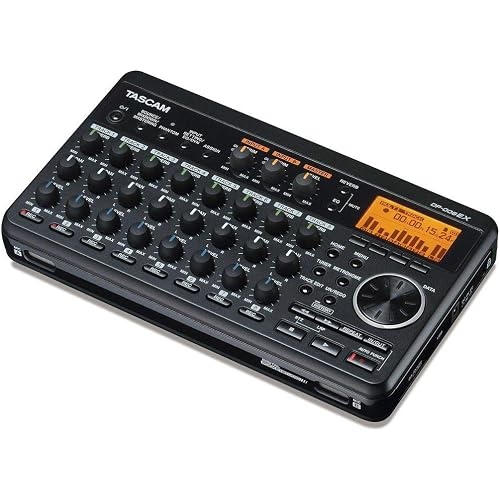
Tascam, 4 AD Converter, usb2.0, Black, DR-40

  • Based on 1,601 reviews
Condition: New
Checking for the best price...
$349.99 Why this price?

Buy Now, Pay Later


As low as / mo
  • – Up to 36-month term if approved
  • – No impact on credit to apply
  • – Instant approval decision
  • – Secure and straightforward checkout

Ready to go? Add this product to your cart and select a plan during checkout.

Payment plans are offered through our trusted finance partners Klarna, Affirm, Afterpay, Zip, Apple Pay, and Google Pay. No-credit-needed leasing options through Acima may also be available at checkout.

Learn more about financing & leasing here.

Free shipping on this product

FREE 30-day refund/replacement

To qualify for a full refund, items must be returned in their original, unused condition. If an item is returned in a used, damaged, or materially different state, you may be granted a partial refund.

To initiate a return, please visit our Returns Center.

View our full returns policy here.


Availability: Only 1 left in stock, order soon!
Fulfilled by Amazon

Arrives Sunday, Aug 16
Order within 23 hours and 57 minutes
Available payment plans shown during checkout

Protection Plan Protect Your Purchase
Checking for protection plans...

Features

  • Discontinued Model Replaced by New & Improved DR-40X
  • Switchable microphone position from X-Y to a-b. Os - Windows XP, Windows Vista, Windows 7, Windows 8
  • 4-Track recording - Record the built-in microphones and mic inputs at the same time
  • Dual recording captures a safety track to prevent distorted takes
  • Up to 96Hz/24-bit resolution. Sampling frequency: 44. 1K/48K HZ

Description

Tascam incredible DR-40 lets you take true 4-track recording on the go! This impressively affordable 4-track recorder gives you all of the tools you need to capture audio anywhere in any environment. Want to record live music? Plug the main feed from the board right into the DR-40 and use the built-in microphones to capture the room. Want to record audio for video? Just plug your shotgun microphone into an input and enable Phantom power. Dual mode Recording, automatic level adjustment, and a built-in limiter all ensure that your recordings will come out sounding great. And the Tascam DR-40 includes great practice and Studio-style recording tools, such as a built-in tuner and reverb, making it an amazing songwriting tool too.

Compatible Devices: Devices with USB 2.0 ports


Brand: Tascam


Hardware Interface: USB


Microphone Form Factor: Built-In


Format: WAV


Headphones Jack: 3.5 millimeters


Number of Batteries: 3 AAA batteries required. (included)


Product Dimensions: 3.5"D x 5.5"W x 8"H


Memory Storage Capacity: 2 GB


Item Weight: 0.21 Kilograms


Compatible Devices: Devices with USB 2.0 ports


Hardware Interface: USB


Microphone Form Factor: Built-In


Format: WAV


Headphones Jack: 3.5 millimeters


Number of Batteries: 3 AAA batteries required. (included)


Memory Storage Capacity: 2 GB


Screen Size: 40 Inches


Battery Average Life: 15 Hours


Digital Recording Time: 120 minutes


Microphone Operation Mode: Stereo


Item Dimensions D x W x H: 3.5"D x 5.5"W x 8"H


Item Weight: 0.21 Kilograms


Brand: Tascam


Model Number: DR-40


Global Trade Identification Number: 83


Manufacturer: Tascam


UPC: 043774027583 989898818631


Mfr Part Number: DR-40


Item Type Name: AD Converter


Warranty Description: Parts, 365 days.


Frequently asked questions

If you place your order now, the estimated arrival date for this product is: Sunday, Aug 16

Yes, absolutely! You may return this product for a full refund within 30 days of receiving it.

To initiate a return, please visit our Returns Center.

View our full returns policy here.

  • Klarna Financing
  • Affirm Pay in 4
  • Affirm Financing
  • Afterpay Financing
  • Zip Pay in 4
  • Financing through Apple Pay
  • Financing through Google Pay
Leasing options through Acima may also be available during checkout.

Learn more about financing & leasing here.

Top Amazon Reviews


  • Voice Over: A Newbie Review
I bought the DR-40 a few months ago, and just got down to using it these past few weeks. My expectations were high based on the reviews I've read, and I am happy to report that my expectations been exceeded. But first, a caveat: I am using the DR-40 in a controlled environment (more on that later) and not out and about, so my review will focus on this as a studio microphone set-up. I am also not a sound professional. I was a film major back in college, so I know a bit about sound production and technique, but by no means does my career revolve around it. If I had to label, I'd say I was an amateur enthusiast. I have the three AAs installed (they come with the unit), but am running with the USB connected (USB bus power) to my laptop. I purchased a sturdy little table top tripod to pop the unit on, and that has proven to be a wise purchase. I can position the Tascam so that it is pointing directly at my mouth, no matter how I am sitting, and the stand also keeps vibrations down. Since the Tascam is very sensitive to any movement or vibration, isolation is important. You cannot handhold the unit by its case and expect not to pick up rustling; you have to mount it on something if you want to carry it about. Learning the button layout and features is fairly straightforward. The interface and buttons labels aren't the clearest in the world; there is a shallow learning curve. But once you get them down, things are easy and make sense. With a thirty second glance at the manual I was up and recording. Hit the 'Record' button to go into standby mode (it blinks red) and hit it again to begin recording (steady red). Pretty easy. I was able to upgrade the firmware with no problem. When recording, it took me a couple of tries to get the levels right. And to be honest, they still aren't right. I'm yacking into the DR-40 relatively close, and the levels on the screen look good, but when I import the sound into Audition (yeah, I know) the levels are mediocre. I'm also getting some clipping on hard P sounds, even though I am not that close to the mics and the level monitor doesn't indicate clipping. These are small problems, and I'm happy to attribute them to user error at present. I'm also fairly certain an external mic would mitigate these problems. But again, I'm confidant I can solve them with a little experimenting. As for the sound, I'm very pleased. I've been recording short phrases for a iOS game I'm making. The first try was ok. The second try better. The third try, excellent. I was able to get a full, balanced sound out of the unit. And even after having bumped up the levels in post, there was very little noise in the signal. Listening to playback through a pair of Grado PS1000's was like listening to me talking to me. It sounded live, so much so that it startled me the first time. My setup is a bit funky: I currently live in a hotel, and it is tough to get a quiet spot. Even 25 floors up, the Tascam picks up road noise. It is very sensitive. I've been locking myself in a closet, AC off, with a heavy quilt over myself and the Tascam. Even under these less-than-optimal conditions, the sound is stellar. Importing sounds into the laptop is easy if you have a card reader. My laptop does, so it is as simple as popping the SD card out of the DR-40 and into the card reader. The card shows up as a volume on the desktop, and the individual sound files are a drag and drop away. The unit comes with a 2GB card, and I upped it to 8GB just to be safe. I didn't need to worry. A 3-4 minute file at default settings saved as a WAV comes out to be around 50MB. Based on how impressed I am so far, and realizing I've uncovered a small percentage of capability and potential, I can enthusiastically recommend the Tascam DR-40. I'm giving it five stars based on the price and quality. Fifteen years ago I used a Tascam professional DAT field recorder that cost 1KUS , and I think the DR-40 gives it a run for its money. ... show more
Reviewed in the United States on February 14, 2013 by J. Clarkson

  • Get rid of the laptop!
I am easily irritated by sound chipsets in laptops these days: they are an afterthought, always plagued with noise and high latency. Plug in a high-Z microphone, and they are barely useful for Skyping or other low-datarate realtime communication. But even for a hobbyist or amateur musician who wants to get started recording themselves, or parents who want to record their kids' band concerts? Laptop A/D converters are barely up to even that task! Enter the TASCAM DR-40. This little gadget gives me exactly what I need. I used to play around with 4-track tape recorders as a kid, and let me tell you, this is exactly the toy that picks up that heritage of letting the kids play around and learn, but also has the quality for serious work even by pros. This is the very cheapest device you will find that offers balanced XLR inputs, A/D conversion circuitry designed for low noise, and high-res, pro-level digital formats (96khz/24bit). As other reviewers have mentioned, there's a bit of handling noise from the internal microphones, but that's to be expected; that's why the pros use those elastic suspensions for even their $10,000 large-diaphragm condensers. Either a tripod for this device or an external microphone on a stand will eliminate that handling noise and makes the user the hero of the high school performance. The overdub mode and mixdown functions bring back those old four-track recorder functions we used to play around with so many years ago, but I think this device will have more longevity. Unlike modern laptops with horrible sound hardware, this does not require a special line-lump power supply that can get lost or broken; it does not have a laptop monitor hinge that will wear out and break; there is no reason why, twenty years from now, my kids, once grown, shouldn't be able to dig this out of my gear closet, remember how much fun they had singing along with Adele into it, dust it off, pop in fresh batteries, and do it again, just like they do today. (Good luck finding cassette tapes to use with those old four-tracks!) Of course, twenty years from now, the kids might also find that it's still plugged into the mixer and being used every day to record practice tracks or performances. For more advanced editing than simple mixdown, it couldn't get any easier. This recorder mounts as a USB bulk storage device, so I plug it into any computer's USB port, drag and drop the .wav files onto the local hard drive, and then I can do professional-quality effects, mixing, and mastering with free software downloads like Audacity, or import into a full-featured DAW. My recommendation is, if you are any sort of musician, performer, hobbyist, parent, or gear junkie, you will be pleasantly surprised with how versatile this recorder can be and how high quality its recordings are. Toss this in with your gear, and you will quickly find that you don't need to lug the laptop and associated cables along any more, nor waste time trying to clean up horrible recordings made through its microphone jack. ... show more
Reviewed in the United States on February 22, 2013 by Ha P. Customer

  • solid handheld digital audio recorder
Wonderful little toy. I bought it less for any serious or specific purpose, and more as an experiment for getting into soundscape recording, or possibly for recording interviews with people. For any of these purposes, so far it has worked well. Of course, I have no doubt that one COULD use it professionally (such as with an SLR, or an external audio rig), I'm just not a pro myself. In Japan, I used it alongside a plugin separate USB battery (which I rubber banded to the recorder), and this worked just fine. It also was handy to attach it to a tiny little tripod, which doubled as a grip. Battery life with AA's was pretty good, but I can't recall how many hours they lasted. It wasn't an issue, even with a few hours of use over several days. Plus, AA's are easy to find everywhere. The unit is a bit "plasticky", which is a bit of a letdown for its price, but the quality of the audio it records (from the built-in mics) is excellent to my ears. I've done no digital manipulation, nor have I connected separate microphones, although eventually I'll do both. I keep it in a case to protect it. I've never dropped it outright. I'm doubtful it would survive a waist-high fall onto concrete, but most electronics won't. For now, with a muff over the built-ins, it records clear audio in a variety of situations. I recorded some street festivals in Japan with remarkable results. It does very well with voice reproduction, sounds pretty life-like. I'm sure it'll do even better when paired with a quality external microphone. This unit was an excellent price, and produces exactly the results I expected, without a lot of hassle. ... show more
Reviewed in the United States on October 3, 2018 by Arick P. Sabin

  • Cheap, but good
I just got through putting this thing through it's paces. *Internal Mics: For the price, the internal mics are fantastic. There is a lot of handling noise, and that is the result of the cheap, hard plastic body. The H4n is definitely sturdier. The mics look like solid metal, but they're cheap plastic as well. All that said, they pick up warm, rich sound, especially for the price point. *Build quality: It feels like a cheap plastic toy. The H4n is much sturdier, but then the H4n is more expensive. The buttons on the Tascam feel pretty sturdy, though. Internal Preamps: Yeah, if you're a newbie to sound recording like me, you may not even know what that means. Basically, it's the device(s) inside the recorder that boosts the electric signal coming into the recorder from an outside source, like a microphone. The Preamps on this are really weak. I tried using my Sony EOS-44b Lavalier mic (pro grade lapel mic), and there was a lot of hissing noise, even with the Gain turned down (but then I didn't get a good signal that way). I then tried a Sennheiser EW112PG3A Wireless Kit. The sound was great with this set up, but the Sennheiser is delivers a more powerful signal. So, higher power mics are going to be fine on the Tascam, but low power mics won't. *Learning Curve: 5 minutes. Seriously. It's really easy to learn if you just click around and try combinations of buttons. I only had to refer to the handbook for one thing. That said, in the age of smart phone touch screens, the LCD setup on this seems like something from the stone age. Again... the price point on this was really low for sound equipment. All in all, I just don't think there's anything else out there that's even close to this price point that will deliver better results. Get the right gear to go with it, but it works like a champ. ... show more
Reviewed in the United States on January 7, 2012 by Renee Bollin

  • A Great 4-track Handheld Recorder
At the first time when ordering the DR-40, I was little bit influenced by Zoom H4n reviews, hence I was skeptical thinking to the DR40 performance quality. How ever after testing it many times, either the built in condenser microphones or using external AT897-Audio Technica shotgun condenser mic, both of them return excellent recording sounds. All these functions; Stereo-dual-4 Tracks and Overdub modes are put into the device to meet various field recording requirement. For an instance, the '4 Tracks' mode with the built-in mic turned on, the AT897 connected as an external mic and mixed them with built-in Hall#1 re-verb digital effects,the output mixed sound is so amazing. The digital effects function loaded into DR-40 produces great mixed sound quality which I think not too far from those tracks recorded in a recording studio . The 4-tracks mode gives the best blends and full coverage of all inputs source specifically could be arranged by setting the mixing level. Another impressive screen view at DR-40 is the visualization of 'parametric knobs' which is simulating the professional audio mixer console for mixing and panning the sources. For people who interested on ATH 897 boom mic, the TASCAM DR-40 is a perfect combination for field recording, i.e. to record an interview with a person in the middle of crowds and surrounded by ambient noise. As my brief testing result, the input mic gain setting, if used with the AT879, probably can be increased 20-25% relative to the level of DR-40 built-in mic in order to get a balanced recorded sound. I had noticed from Zoom H4n users feedback saying that the AT897 mic seems did not perform greatly when used with their recorder. For instances, the sensitivity level of Zoom H4n did not giving enough gain to AT897, while increasing the gain level will promotes the hiss and background noises. Also they were complaining the equalization frequencies not significantly improves the sound quality. ******** updated on June, 2, 2015****** From my evaluation to this far, the DR-40 and AT879 are a perfect match and works excellently with no noticeable issue. Another indirect & untold feature yet found, the DR-40 also can be used as the audio tape to MP3 converter device, by manually wired the music tracks from a tape player to be digitized/ recorded on selected digital audio format, which I had tested using TEAC-W890 cassette tape deck to MP3 format. The result, amazingly, the DR-40 has produces a very good quality/ fidelity of sounds after the recording process, which I noticed somehow the internal circuitry had removed the hiss noises/ unwanted distortion automatically while the same event it did not affecting the original audio tracks clarity. Superb! I would highly recommended this recorder. ... show more
Reviewed in the United States on January 18, 2014 by Ztronics901.Jr

  • Meets or exceeds expectations
I also researched and considered other models and prices of similar recorders from TASCAM, Zoom, Roland/Edirol before settling on the TASCAM DR-40. I have been recording music from direct stereo outputs from my virtual pipe organ (live outs are 9 independent channels, but they mixed down to two outs for direct recording). Previously, I used an older model TASCAM Model 2488 PortaStudio. It did the job, but it is large and bulky next to an already huge virtual pipe organ console, and it is heavy to move between my upstairs editing "studio." It was more expensive than the DR-40 (though it was loaned by a relative who had given up the indie band business), older technology, and frankly had many more channels and editing capabilities than I needed, plus the whole recording and editing process was a steep learning curve, many-step, complicated process. For free, I shouldn't complain, but it was an important learning experience. Note that I am a physics teacher and also had several years' experience in radio broadcasting and in a high end government acoustic research lab. I should also mention I first thought the included SD card was not installed since it was not visible, but I eventually found the slot is hidden by a removable cover (needed a small tool to pry it open and no tether on it to prevent loss). The SD card was there all right. The cover and necessity of removal is not in the documentation. I ordered a 32G HD card to go with this (it also can be used with my compact HD video camera) but have not formatted it for either device since the included card meets my needs. I record an hour or less, transfer it to iMac and delete the files on the DR-40 to reuse the space. Yes, it does eat batteries. I have learned to power the unit down between takes during preparation and rehearsals to save battery energy since it boots up very quickly. Bottom line: this high quality, compact, portable relatively inexpensive device more than meets my needs and expectations. A professional might want or need to spend more money for higher quality and features, but I have no quibble with this one for my purposes. It is fairly simple to operate and requires fewer steps and less time to get music onto my iMac and iTunes than older methods. By the way, TASCAM is a well-respected, old (used to be TEAC) maker of consumer, prosumer and professional recording gear. Bonus: I got a $15 end of year rebate from TEAC. Got the check in less than four weeks. Had to destroy the original carton to send in bar code. Understand why, but I would like to have saved the box. Update: 14 July 2013 I see this is a very popular item for good reason. I put the 32Gig card in and formatted. Now I save raw files on the card after transferring to iMac as capacity is huge. TASCAM has published a free firmware update on their site which you should probably install. I found the auto file numbering got reset after the update, but it was not a big deal to me. I also decided to risk trying to power the device from one of the several compact Apple 5VDC USB power supplies I have and it works fine, no noise introduced, so as another reviewer advised, don't waste money on TASCAM's external brick. This was useful when I was transcribing hour long live concerts made in the 1960's from a refurbed TEAC reel to reel tape deck to the DR-40. This turned out to be a better workflow than my previous method of going from the tape deck to the iMac directly. I have more control and believe the TASCAM A/D converters are superior to the iMac's. Still delighted with this recorder. ... show more
Reviewed in the United States on December 29, 2012 by John Kenderdine

  • Excellent recorder at an affordable price Excellent recorder at an affordable price
I've had a Tascam DR-05 recorder for many years and it has been a workhorse for my low-budget professional video projects. These included recording music recitals, microphone audio for film production, concert audio and recording voice-overs for my many videos. I still have the DR-05 and it still works well, but it has one big failing: The DR-05 has only a microphone-level input and can't record line-level signals. That caused me some grief a couple of times when I used an attenuator to knock down line-level signals to mic-level for the DR-05 to record. Sometimes the results were fine but a few times they were not. Enter the Tascam DR-40. I got it at a great price and the DR-40 records at both line-level and mic-level, which means I will not need to use an external attenuator. It also means that I don't have to knock a signal down (with an attenuator) just to amplify it for recording. The result is that it makes better line-level recordings than the DR-05. So far, I like everything about the DR-40. It's small enough to fit in a pocket, but big enough to have two XLR connectors. It will take both balanced (XLR) and unbalanced (1/4-inch) connectors -- both line-level and mic-level. It has a convenient input-level control on the side. The display is big enough to easily see. The record quality is excellent -- yes, you can get 24-bit, 192 kHz sampling in other recorders, but I can't hear the difference between those devices and the DR-40 (which does 24-bit, 96 kHz sampling). The Tascam DR-40 can record four channels, but I have not used it to record more than two. I've used the DR-40's built-in mics only a couple of times, but the sound seems pretty good through them. The unit takes 3 AA batteries and runs for many hours. And I like that the DR-40 uses a full-size SD card, unlike the Tascam DR-05's microSD card. (I hate the thought that I might not have a micro-SD adapter when I need one.) April 4, 2020 edit: I've since used the DR-40 to record a couple dozen concerts, connected to the house mixer to get clean audio. And the audio has been great. If you search on "garnet rogers annandale arts", you will find a song called "Small Victory" recorded by Canadian folksinger Garnet Rogers. I recorded that video, using the Tascam DR-40 to capture the audio directly from the house mixer. It sounds great! (Good song, too!) So far, the Tascam DR-40 is the perfect recorder for my usage: small, yet powerful and easy to use. And very clean. I recommend the Tascam DR-40. ... show more
Reviewed in the United States on December 24, 2018 Reviewed in the United States on December 24, 2018 by MED-REK

  • Buyer Beware of this taSCAM!!! The audio quality is just plain wrong.
I have looked at multiple youtube videos on this product from the manufacturers website as well as independent research. Listen, don't believe the hype. The sound quality was soo bad that I thought it was my ignorance so I have also put substantial amounts of time into learning the product thinking that I may not be adjusting something correctly. I also do not like when the advertisements or bandwagon people involved in the hype talk emphasize all of the convenient features that it has like a tuner or prerecording. Listen, I don't care about a tuner when the recordings are low quality. The key reasons that people pay for audio equipment is high sound fidelity and low noise. Emphasis on any other feature is a diversion from the main focus. Get the audio right first, then add cute little features. About the mics: The frequency response of the built in mics is mediocre. The sounds of the recording come out sounding thin in comparison to studio condenser mics. The recording is high detailed, but just sounds thin. Remember, this is a dedicated audio device. I guess the designers think that for $150 they should be allowed to sell you something that is only a little better than a $30 recorder because it is one of their lower cost recorders or because of all of it's cute automatic switching features. They probably want to convince the customer that they need to empty their pockets to get a decent sound from a recorder so you will have to buy one of their higher end products. But that's not the bad part. See the next section below for the bad part. About the amplification section: The bad part is that the recordings are very noisy. Whether you turn the "internal" mic volume all the way down or all the way up, there is very substantial gray/white noise that comes out in the resulting recording. The gray/white noise gets worse as you turn the "input level" up from 0 to 90 indicating that the noise comes from the amplifiers while the mic volume is still relatively low. There is no way that you should hear high volume noise in the recordings or earphones when turn the mic preamps all the way down or up and are using their built in mics that they chose to use in their audio design. Even a total novice can hear that this is just plain wrong. Remember, this is supposed to be a dedicated audio device and in fact a lot of cellphones (which are multi-functional) produce better audio. As a test, I loaded and played an mp3 file from the DR-40 in my earphones and the sound was clear, so this tells me there is something wrong with the input amplification section of the device. So it makes a great mp3 player, but that's not what you buy for. This is all due to poor quality mic amplifiers and/or circuit topologies in design. What's even worse than that is the false advertisement that reports a signal to noise ratio of 92dB (for external mics). The only way that you could get that S/N ratio is if you held it in front of a car horn and honked. So you would have to be at the threshold of the SPL limit to get a difference of 92dB from signal to noise. When people listen to your recordings they are not going care about the brand name equipment, they only care about the sound. It doesn't matter whether you recorded it with a taSCAM or trashCAN; as long as it sounds good, that's all that matters. So don't pay these people just because of their company name. They need to produce good products, not just get paid off of their brand name. This isn't the fashion industry it's technology. Therefore, do not buy this recorder if you plan on recording meetings or interviews or anything less than screaming volume (you will hear a lot of gray/white hiss noise) and keep in mind that the built in mics will only produce mediocre fidelity as compared with studio condenser mics as a reference. If this was a defective unit and I confirm good performance from a non-defective unit, I will be more than happy to change my review to indicate the true performance of the product. Advice for the company: Don't sell people something that isn't worth having just to get some amount of money from people. If you can't produce something that is worth having at a lower price that's fine but don't sell them junk just to get something out of them. As a final note, the action of the push buttons feels shallow and hard to push. They are low quality stiff popples. It is apparent that the company puts a lot of work into the appearance of the product as it looks more high tech than it actually is. Go to their website and see how impressive the advertisement looks for this product. They are more about cosmetics than they should be and dress up the product to make the sale happen. Buyer beware of false advertisements!!! ... show more
Reviewed in the United States on May 4, 2017 by Whistle Blower

Can't find a product?

Find it on Amazon first, then paste the link below.
Checking for best price...