
Search  for anything...
Couldn't find selected product
NA

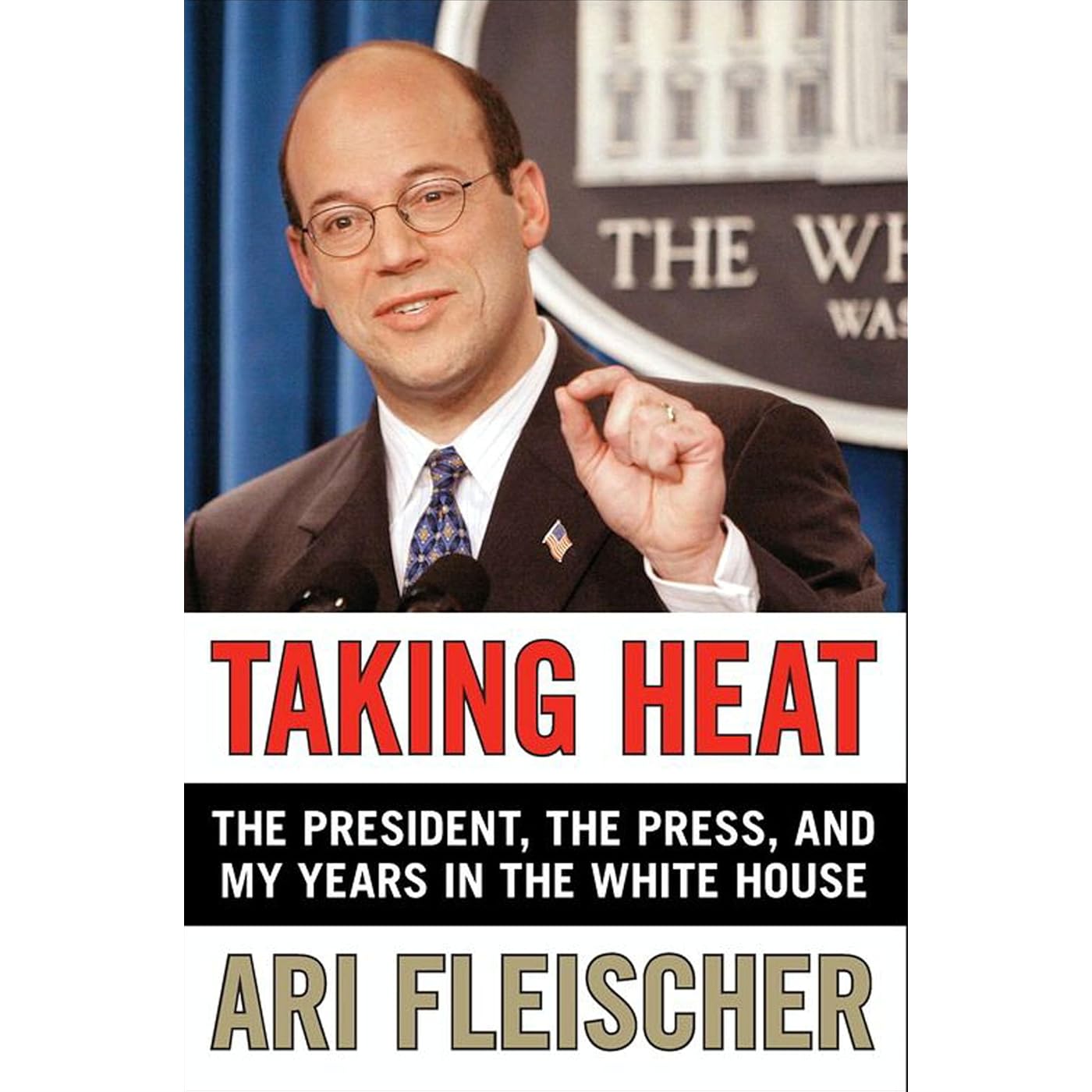
Taking Heat: The President, the Press, and My Years in the White House

  • Based on 46 reviews
Condition: New
Checking for the best price...
$9.99 Why this price?
Save $19.00 was $28.99

Buy Now, Pay Later


As low as $2 / mo
  • – 4-month term
  • – No impact on credit
  • – Instant approval decision
  • – Secure and straightforward checkout

Ready to go? Add this product to your cart and select a plan during checkout.

Payment plans are offered through our trusted finance partners Klarna, Affirm, Afterpay, Apple Pay, and PayTomorrow. No-credit-needed leasing options through Acima may also be available at checkout.

Learn more about financing & leasing here.

Free shipping on this product

This item is eligible for return within 30 days of receipt

To qualify for a full refund, items must be returned in their original, unused condition. If an item is returned in a used, damaged, or materially different state, you may be granted a partial refund.

To initiate a return, please visit our Returns Center.

View our full returns policy here.


Availability: In Stock.
Fulfilled by Amazon

Arrives Monday, Mar 2
Order within 15 hours and 32 seconds
Available payment plans shown during checkout

Protection Plan Protect Your Purchase
Checking for protection plans...

Description

The early years of the twenty-first century were a tumultuous time in America. The country faced a hotly contested presidential election, the largest terrorist attack in the nation's history, and the early stages of war. Through it all, President George W. Bush surrounded himself with a handful of close advisers. During this time the man beside the President was Ari Fleischer, his press secretary and one of his most trusted confidants. In this role, Fleisher was present for every decision and became an eyewitness to history.In this riveting account, Fleischer goes behind the scenes as he recalls his experiences in the West Wing. Through the ups and downs of this time, he took the heat, fielded the questions, and brought the President's message into living rooms around the world.In Taking Heat, Fleischer, for the first time, gives his perspective on:The 2000 election, from the recounts to the transition to powerSeptember 11, 2001, its aftermath, and the anthrax scareThe pressure-filled buildup to the war in Iraq and the President's thoughts as the war beganLife in the White House, from learning to adjust to the pace of the West Wing and his early briefings to his relationship with the pressThe White House press corps, who they are, and how they report the newsThe factors that led to his decision to leave Washington behind.This is the story of the men and women of the White House press corps and the cornerstones of democracy: freedom of speech and the freedom of the press. Fleischer presents an in- depth, insider's view on the Washington political arena from a perspective few have seen.Fleischer writes of his belief that the press has a bias in Washington. It's not a question of partisanship or press-driven ideology. Instead, it's a focus on conflict, particularly if it's a conflict they can attach to the President. It's the nature of the White House press corps, regardless of who's in power. The members of the White House press corps are masters at being devil's advocate, able to take with passion the opposite side of whatever issue the President supports. Fleischer's job was to calmly field their questions, no matter how pointed.Taking Heat is an introspective exploration of the top political events in the first half of the Bush administration, as well as the candid observations of a professional who stood in the bright lights of the world stage. Read more

Publisher ‏ : ‎ HarperCollins e-books (October 13, 2009)


Publication date ‏ : ‎ October 13, 2009


Language ‏ : ‎ English


File size ‏ : ‎ 2913 KB


Text-to-Speech ‏ : ‎ Enabled


Screen Reader ‏ : ‎ Supported


Enhanced typesetting ‏ : ‎ Enabled


X-Ray ‏ : ‎ Not Enabled


Word Wise ‏ : ‎ Enabled


Frequently asked questions

If you place your order now, the estimated arrival date for this product is: Monday, Mar 2

Yes, absolutely! You may return this product for a full refund within 30 days of receiving it.

To initiate a return, please visit our Returns Center.

View our full returns policy here.

  • Klarna Financing
  • Affirm Pay in 4
  • Affirm Financing
  • Afterpay Financing
  • PayTomorrow Financing
  • Financing through Apple Pay
Leasing options through Acima may also be available during checkout.

Learn more about financing & leasing here.

Top Amazon Reviews


  • Fleischer and the media
Getting a look behind the scenes from one of the top media relations professionals in the country is a real treat. Fleischer's experience in dealing with a high-profile supervisor (President Bush) on one side and some of the most aggressive and sometimes partisan press on the other is a great read.
Reviewed in the United States on August 16, 2005 by P. Moore

  • Well Thought Out Insiders View
I see this book as having two quite different subjects. Most of this book is on how the Presidency works under George W. And the result has to be considered pretty good. President Bush seems to have a very definite set of ideas, and to be marching towards their implementation. You don't really know what's going on in the Government until the books from insiders start coming out, and this is a good one. Mr. Fleischer is an admirer of President Bush, and it shows. The second major subject of this book is the national press. They get, Mr. Fleischer says, a thousand facts right every day. But he says the press's first and most pressing bias is in favor of conflict and fighting. This is what gets the headlines. Having Mr. A contradict what Ms. B said gets the headlines, and we outsiders here the conflict and not necessarily what's really happening. The next thing he comments on is the so called liberal bias of the press. He asks: Clinton allowed family planning broups that advocate abortion to receive Federal funds; the press reported he "delivered on his campaign promise." Bush reversed this action; the press reported he "did something to quickly please the right flank in his party." Why didn't they say Bush "delivered on his campaign promise?" Right-wing and conservative are standard ways the press describes Republicans, why aren't the Democrats described as left-wing or liberals? Debates about abortion are called debates about "abortion rights." Debates about guns are described as debates about "gun control", not "gun rights." The "religious right" is a press term, why is there no discussion of the "religious left?" ... show more
Reviewed in the United States on March 3, 2005 by John Matlock

  • Interesting look inside the Bush White House but beware
Ari provides an interesting book in his autobiography as President Bush's White House Press Secretary. I always hate to review books like this because they are so politically charged and ideologues on either side tend to get in a huff over what you say. I will endeavor to keep this as neutral as possible. This book sets out to accomplish many objectives but only hits half of them. First and foremost it is one of the best looks at the role of the press secretary and the sheer stress the job has on a person. Whether you like or hate President Bush there is no one who can deny that the role of press secretary is a hard job especially under a tight lipped and secretive white House. Andy Card's goal as chief of staff was to keep leaks to a minimum which frustrates the press leaving their only source of information the press secretary. When the press secretary is instructed not to discuss military matters it becomes even more adversarial. One of the interesting things learned from the book is what viewpoint the Press Secretary is supposed to have. I found it fascinating that he is only there to represent the views of the president and that does not necessarily have to be the wishes of the branches of government that report to the president. One of the other objectives was to provide a critical narrative of the press and give insight into the White House Press Crops. I found his look at the White House Press fascinating and he really does put you inside the room of the toughest reporters in the United States. He illustrates well his points about the adversarial nature of the press and the desire of the press to create conflict which leads to stories. Many times the same questions are asked over and over hoping for a slip that the Press Secretary cannot afford to give. One of the angles that I think he does handle poorly is the bias of the press. While there are voluminous studies to show that the press is slanted right Ari seems to not acknowledge that all media is biased in one direction or another. The White House press does not give passes to any president. People today do not trust the news they get from the press and rightly so due to the biases that are present be they Fox News or MSNBC. While he highlights the point of on the liberal media it is done far better by Benard Goldberg in his book Bias. Finally Ari tries to make a defense of President Bush and his policies/leadership style. Some of his book seems to be aimed at knocking down the arguments in the Price of Loyalty. While this is another viewpoint again the truth probably lies in the middle. Some of his defenses of trying to shift blame to the press for starting up the Iraq war are fairly ludicrous. Ari does not sit in on any of the national security briefings and the president preferred himself to comment on those matters leaving Ari in a hard position to comment on them after the fact. One of the things he does refute well that many agree with is the loyalty that Bush shows to those who are loyal to him. There is a clear look that Bush's leadership style does work within his White House and he is respected by the staff. Ari also seems to take it upon himself to set the record straight and show the country that Bush did not think of the war in Iraq in a vacuum that many other people including the press also had the same idea along the way. He is largely successful in this although he glosses over one of the critical mistakes. The landing on the USS Lincoln with the banner Mission Accomplished was one of the great errors in the press of fighting the war and it is skipped over here. I think Ari is right in saying that the press views any war that is long as a quagmire and Vietnam and any war where we win quickly is Desert Storm and must be over in a week. There is a lack of reality by the press which filters to the country. Overall an excellent book and very well done. Ari provides unique insight into the Bush White House and while it is biased it does not make it useless. He raises critical questions that require issues to be reexamined and while he is loathe to critize his former boss for the things he did wrong we still see a good look at Bush the man and the President. ... show more
Reviewed in the United States on February 14, 2008 by Lehigh History Student

Can't find a product?

Find it on Amazon first, then paste the link below.
Checking for best price...