




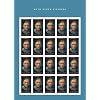
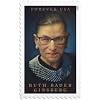
United States Postal Service Sheet of 20 First Class Postage Stamps for Ruth Bader Ginsburg




Buy Now, Pay Later
- – 4-month term
- – No impact on credit to apply
- – Instant approval decision
- – Secure and straightforward checkout
Ready to go? Add this product to your cart and select a plan during checkout.
Payment plans are offered through our trusted finance partners Klarna, Affirm, Afterpay, Zip, Apple Pay, and Google Pay. No-credit-needed leasing options through Acima may also be available at checkout.
Learn more about financing & leasing here.
Selected Option
FREE 30-day refund/replacement
To qualify for a full refund, items must be returned in their original, unused condition. If an item is returned in a used, damaged, or materially different state, you may be granted a partial refund.
To initiate a return, please visit our Returns Center.
View our full returns policy here.
Recently Viewed





Size: 20 Stamps
Features
- Honor an icon of American culture with the Ruth Bader Ginsburg stamp.
- Served as the 107th Supreme Court Justice of the United States.
- The stamp shows Ginsburg in her black judges robe with a white collar.
- She began her career as an activist lawyer fighting gender discrimination.
- She went on to become a judge who was unafraid to disagree with her colleagues.
- Ginsburg gained a reputation as a respected voice for equal justice.
- The Ruth Bader Ginsburg stamp is being issued as a Forever stamp in panes of 20.
- This Forever stamp is always equal in value to the current First-Class Mail one-ounce price.
Description
With this stamp, the U.S. Postal Service honors Ruth Bader Ginsburg (1933–2020), the 107th Supreme Court Justice of the United States. After beginning her career as an activist lawyer fighting gender discrimination, Ginsburg became a respected jurist whose important opinions advancing gender equality and strong dissents on socially controversial rulings expressed her passionate advocacy of equal justice under law and made her an icon of American culture. The stamp art is an oil painting of Ginsburg showing her facing the viewer in her black judicial robe and an intricate white collar. In 1956, after graduating Ginsburg studied at Harvard Law School, where she was one of only nine women in her class. Despite encountering blatant sexism, she landed a prestigious position with the Harvard Law Review. She completed her legal education at Columbia University in 1959. Her search for a job began with difficulty, as big law firms at the time were disinclined to hire a Jewish woman with a child, but a federal judge was persuaded to offer her a clerkship. In 1963, Ginsburg accepted a teaching position at Rutgers Law School. She soon became an expert on anti-discrimination and equal protection law and became a trailblazer in the field. In 1971, under the auspices of the American Civil Liberties Union (ACLU), Ginsburg took the lead in writing the appellant brief in a case contesting a statute giving men precedence over women in administering the estates of the deceased in Idaho. Ginsburg’s brief convinced a unanimous Supreme Court to reverse a previous decision by the Idaho Supreme Court and strike down a state law that discriminated on the basis of sex. In 1972, Ginsburg began teaching at Columbia Law School, where she was hired as the school's first female tenured law professor. She also co- founded and co-directed the Women's Rights Project at the ACLU and played a key role in equal protection cases. Often representing male plaintiffs to demonstrate how discrimination could harm men as well as women, Ginsburg was involved in dozens of cases that went before the Supreme Court. She argued six of them personally, and won five of those cases. By 1980, Ginsburg was determined to bring about change from the other side of the bench. In April of that year, she was nominated by President Carter to the U.S. Court of Appeals for the D.C. Circuit. During her 13 years on the court, she gained a reputation for intellectual rigor, collegiality, and moderation. On June 14, 1993, President Clinton nominated Ginsburg to serve as a justice on the Supreme Court of the United States. Ginsburg’s first years on the court were characterized by focused opinions, moderate dissents, and active questioning of attorneys during oral arguments. Although in the majority for several key cases, she took on the role of chief dissenter as the court became more conservative in the early 2000s. After a 2007 decision upholding a federal partial-birth abortion ban, she took the unusual step of reading her dissent aloud from the bench, a practice she continued with greater frequency during her second decade on the court. As a result of her dissents, Ginsburg became even more widely known as a defender of equal justice. Ginsburg’s multifaceted legacy includes the legal and social changes she helped to bring about; the example she set of tenacity and perseverance in the service of meaningful work; the inspiring passion that she brought to her dissents; and the countless people, young and old, men and women, who view her as a role model for their own lives.
Manufacturer: USPS
Brand: United States Postal Service
Item Weight: 0.176 ounces
Product Dimensions: 8.25 x 5.94 x 0.05 inches
Item model number: 5821
Number of Items: 20
Size: 20 Stamps
Manufacturer Part Number: 483304
Date First Available: December 26, 2023
Frequently asked questions
To initiate a return, please visit our Returns Center.
View our full returns policy here.
- Klarna Financing
- Affirm Pay in 4
- Affirm Financing
- Afterpay Financing
- Zip Pay in 4
- Financing through Apple Pay
- Financing through Google Pay
Learn more about financing & leasing here.


