

Search  for anything...

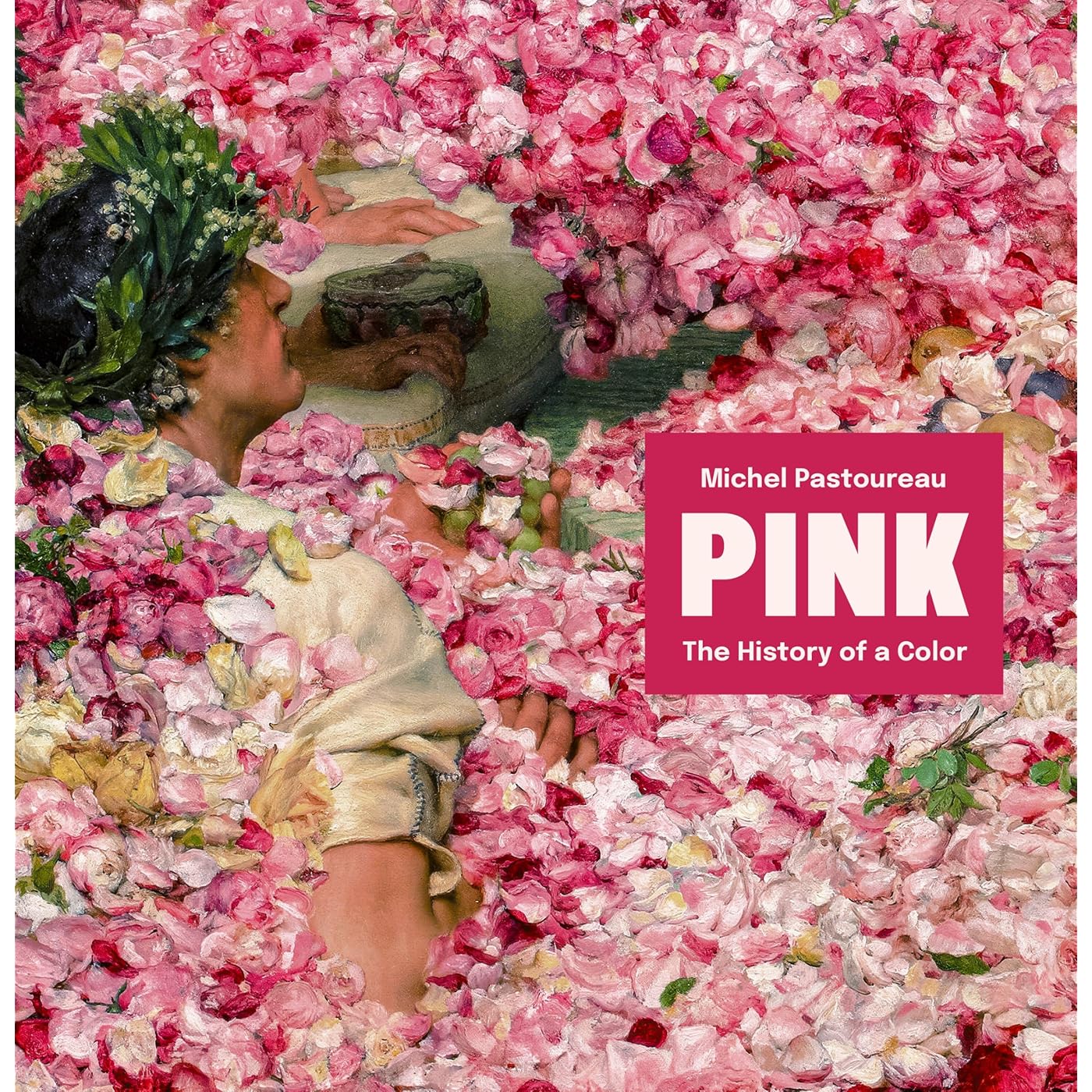
Pink: The History of a Color

  • Based on 26 reviews
Condition: New
Checking for the best price...
$18.47 Why this price?
Save $21.48 was $39.95

Buy Now, Pay Later


As low as $4 / mo
  • – 4-month term
  • – No impact on credit to apply
  • – Instant approval decision
  • – Secure and straightforward checkout

Ready to go? Add this product to your cart and select a plan during checkout.

Payment plans are offered through our trusted finance partners Klarna, Affirm, Afterpay, Zip, Apple Pay, and Google Pay. No-credit-needed leasing options through Acima may also be available at checkout.

Learn more about financing & leasing here.

Free shipping on this product

FREE 30-day refund/replacement

To qualify for a full refund, items must be returned in their original, unused condition. If an item is returned in a used, damaged, or materially different state, you may be granted a partial refund.

To initiate a return, please visit our Returns Center.

View our full returns policy here.


Availability: Only 4 left in stock, order soon!
Fulfilled by Amazon

Arrives Oct 22 – Oct 27
Order within 22 hours and 3 minutes
Available payment plans shown during checkout

Protection Plan Protect Your Purchase
Checking for protection plans...

Description

From the acclaimed author of Blue and other color histories, the beautifully illustrated story of pink, from the first ancient pigments to Barbie Pink has such powerful associations today that it’s hard to imagine the color could ever have meant anything different. But it’s only since the introduction of the Barbie doll in 1959 that pink has become decisively feminized. Indeed, in the eighteenth century, pink was frequently masculine, and the color has signified many things beyond gender over the course of its long history—from the prim to the vulgar, and from the romantic to the eccentric. In this richly illustrated book, Michel Pastoureau, a celebrated authority on the history of colors, presents a fascinating visual, social, and cultural history of pink in the West, from antiquity to today. Pink pigments first appear in ancient Macedonian paintings, but it was not until the eighteenth century that vivid, saturated pinks were developed for dyeing and painting. At the same time, a popular new flower—the pink rose—finally gave the color a standard name, and pink, assuming a place in everyday life, began to acquire its own symbolism, distinct from that of red, yellow, or white. Bringing the story up to the twentieth and twenty-first centuries, Pink describes how the color, both adored and detested, became associated with many other things, from softness and pleasure to nudity and sex. Illustrated throughout with a wealth of captivating images, Pink is an entertaining and enlightening account of the evolving role and significance of the color in art, fashion, literature, religion, science, and everyday life across the millennia. Read more

Publisher ‏ : ‎ Princeton University Press


Publication date ‏ : ‎ February 11, 2025


Language ‏ : ‎ English


Print length ‏ : ‎ 192 pages


ISBN-10 ‏ : ‎ 0691266263


ISBN-13 ‏ : ‎ 68


Item Weight ‏ : ‎ 2.59 pounds


Dimensions ‏ : ‎ 9.29 x 0.79 x 9.37 inches


Part of series ‏ : ‎ The History of a Color


Best Sellers Rank: #113,245 in Books (See Top 100 in Books) #70 in Philosophy Aesthetics #161 in Graphic Design Color Use #501 in Art History (Books)


Frequently asked questions

If you place your order now, the estimated arrival date for this product is: Oct 22 – Oct 27

Yes, absolutely! You may return this product for a full refund within 30 days of receiving it.

To initiate a return, please visit our Returns Center.

View our full returns policy here.

  • Klarna Financing
  • Affirm Pay in 4
  • Affirm Financing
  • Afterpay Financing
  • Zip Pay in 4
  • Financing through Apple Pay
  • Financing through Google Pay
Leasing options through Acima may also be available during checkout.

Learn more about financing & leasing here.

Top Amazon Reviews


  • A Great Book On My Favorite Color: Pink
Format: Hardcover
My seventh book in the series of volumes by the author. Great retrospective in historical data, plenty of images. Love all the color books. Very informative!
Reviewed in the United States on March 25, 2026 by Chocolate Lover

  • most pleasing to the eye
Format: Hardcover
intellectual essays on color values
Reviewed in the United States on October 18, 2025 by James E. Johnson

  • This book is part of a series about colors.
Format: Hardcover
I have this series. It's illustrated with art work where a subject color is dominant. It's a lovely series.
Reviewed in the United States on April 16, 2025 by Ellen

  • Accurate, insightful and beautiful
Format: Hardcover
To the reviewer about Picasso’s rose period who adores shouting: two truths can be true at once: the painting of Les Demoiselles d'Avignonis a harbinger of his rose period AND (sorry about the shouting to make my point) occurred during the later portion of Picasso’s rose period overlapping into the African period. As we develop, we overlap the things we learn. Depending on your source, the rose period ended in ‘06 and african period began in ‘07. Multiple website states ‘1907 as the beginning African period. Wiki states 1906. Based on the African, pink and cubist tones of the painting, it’s rather a developmental overlap. “Based largely on intuition rather than direct observation, Picasso's Rose Period marks the beginning of the artist's stylistic experiments with primitivism; influenced by pre-Roman Iberian sculpture, Oceanic and African art. This led to Picasso's African Period in 1907, culminating in the Proto-Cubist Les Demoiselles d'Avignon, regarded as a masterpiece.” Regardless, It’s a beautiful book; thank you for gifting this to educated and uneducated readers. If it isn’t beautiful or useful it has no need in your home: this book is both. ... show more
Reviewed in the United States on June 21, 2026 by rainman

  • The author doesn't know his art history
Format: Hardcover
The author has gotten his art history wrong, perhaps for his own self-serving purpose or perhaps he just doesn't know much about art history. He refers to Picasso's Rose Period as his "Pink Period" (WRONG!) and claims it began in 1905 and ended it 1907 (WRONG!) and says Picasso's famous 1907 painting "Les Demoiselles d'Avignon" was part of the Rose Period (WRONG)! Picasso's actual Rose Period (1905-1906) was known for its warm, optimistic palette of pinks, oranges, and earthy tones and focused on circus performers, harlequins, and acrobats. The "Demoiselles" painting, while it does include the color pink, is widely considered a proto-Cubist work that emerged at the beginning of Picasso's African Period. I'm writing this review because if the author can speak with such authority and get his facts so very wrong, I can't trust other assertions in his book are true. ... show more
Reviewed in the United States on March 21, 2026 by WonToo3

Can't find a product?

Find it on Amazon first, then paste the link below.
Checking for best price...