
Search  for anything...
NA

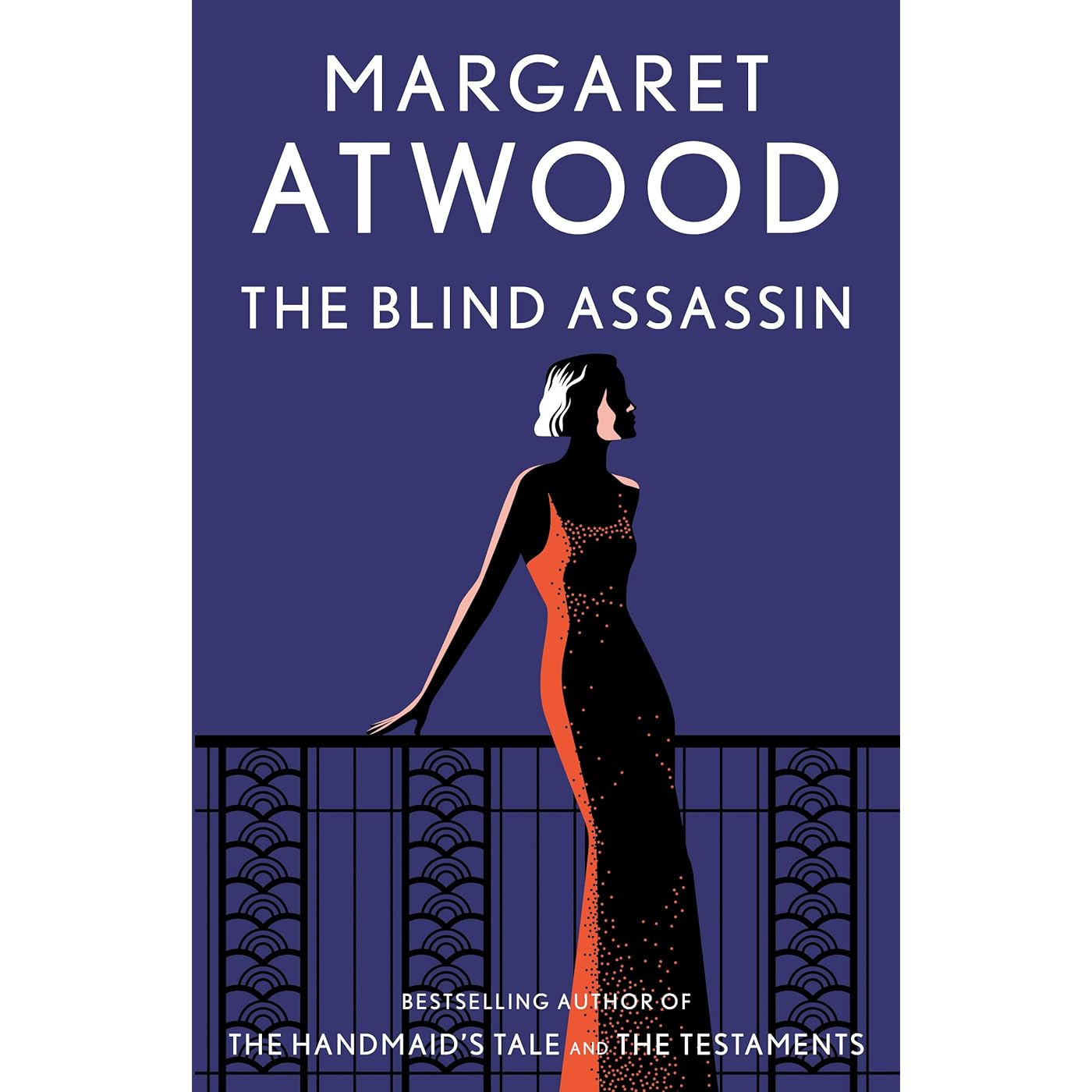
The Blind Assassin: Booker Prize Winner: A Novel

  • Based on 0 reviews
Condition: New
Checking for the best price...
$6.99 Why this price?
Save $12.01 was $19.00

Buy Now, Pay Later


As low as $1 / mo
  • – 4-month term
  • – No impact on credit to apply
  • – Instant approval decision
  • – Secure and straightforward checkout

Ready to go? Add this product to your cart and select a plan during checkout.

Payment plans are offered through our trusted finance partners Klarna, Affirm, Afterpay, Apple Pay, and PayTomorrow. No-credit-needed leasing options through Acima may also be available at checkout.

Learn more about financing & leasing here.

Free shipping on this product

This item is eligible for return within 30 days of receipt

To qualify for a full refund, items must be returned in their original, unused condition. If an item is returned in a used, damaged, or materially different state, you may be granted a partial refund.

To initiate a return, please visit our Returns Center.

View our full returns policy here.


Availability: 20 left in stock
Fulfilled by Random House LLC

Arrives within 30 days
Order within 11 hours and 57 minutes
Available payment plans shown during checkout

Protection Plan Protect Your Purchase
Checking for protection plans...

Description

WINNER OF THE BOOKER PRIZE • The bestselling author of The Handmaid's Tale and The Testamentsweaves together strands of gothic suspense, romance, and science fiction into one utterly spellbinding narrative, beginning with the mysterious death of a young woman named Laura Chase in 1945. Decades later, Laura’s sister Iris recounts her memories of their childhood, and of the dramatic deaths that have punctuated their wealthy, eccentric family’s history. Intertwined with Iris’s account are chapters from the scandalous novel that made Laura famous, in which two illicit lovers amuse each other by spinning a tale of a blind killer on a distant planet. These richly layered stories- within-stories gradually illuminate the secrets that have long haunted the Chase family, coming together in a brilliant and astonishing final twist. Read more

Publisher ‏ : ‎ Vintage


Accessibility ‏ : ‎ Learn more


Publication date ‏ : ‎ December 18, 2007


Language ‏ : ‎ English


File size ‏ : ‎ 1.7 MB


Screen Reader ‏ : ‎ Supported


Enhanced typesetting ‏ : ‎ Enabled


X-Ray ‏ : ‎ Enabled


Word Wise ‏ : ‎ Enabled


Frequently asked questions

If you place your order now, the estimated arrival date for this product is: within 30 days

Yes, absolutely! You may return this product for a full refund within 30 days of receiving it.

To initiate a return, please visit our Returns Center.

View our full returns policy here.

  • Klarna Financing
  • Affirm Pay in 4
  • Affirm Financing
  • Afterpay Financing
  • PayTomorrow Financing
  • Financing through Apple Pay
Leasing options through Acima may also be available during checkout.

Learn more about financing & leasing here.

Top Amazon Reviews


  • Densely Written... Story within a Story... One of my All Time Favorites!
Format: Paperback
Cut to the Chase: A novel within a novel with little stories nested in between, this is an intricately woven tale about two sisters’ loves and lives, spanning over six decades. There are three distinct sections to this novel: a series of flashbacks by an octogenarian who initially claims she’s unsure who she is or why she’s cataloguing all of this, a series of local newspaper articles detailing the social events, political ambitions, and deaths of some of the more prominent characters, and a novel (also titled The Blind Assassin) that switches between detailing a love affair between a wanted man and a socialite and a fantastical science fiction story about an ancient destroyed world where virgins are still sacrificed and the woven blankets are measured by how many children lost their sight weaving them. If I had to be picky, I would say that yes, some of the twists are a little predictable, but overall, this is, in my opinion, Atwood at her best — it’s thoroughly well-written, crafted, thoughtful, provocative, and masterful. Rereading it now, almost a decade later, it is still my favorite work by her. Greater Detail: Our two main protagonists are Laura Chase and Iris Chase Griffen, the wealthy daughters of Captain Chase, an alcoholic war veteran who runs a button factory more by moral principles than economic realities. They’re more or less raised by a loyal servant named Reenie after their mother passes away (complications from childbirth), with their father slowly running the business into the ground, and neither of them really trained for life outside of their sprawling estate. Though the tone with which they interact with one another is often quite pitiless, these are both strong, engaging characters, struggling to make sense of the world around them. We begin with Laura’s death: though it is officially ruled an accident, witnesses say she drives off the cliff on purpose, and one of the leading threads of the story is for us to find out how we got to such a pivotal point. We learn that Iris had a novel by Laura published posthumously, and that this book ended up being quite scandalous (for the time period). Detailing an illicit love affair between a socialite and a science fiction pulp writer, it’s something that her sister Iris notes (in the present) would hardly turn heads now, but at the time, was racy and divisive enough to inspire hate mail and censorship, as well as memorial awards decades later. Further, the book had personal ramifications for the characters in sometimes surprising ways, triggering a suicide and other reveals. Some of the parts with Iris in the present feel a little slower relative to the pacing and urgency with which the characters interact in the novel-within-a-novel setting, but overall, it’s nicely juxtaposed throughout, and though these are women who have survived a series of tragedies, sometimes by judging themselves and others quite mercilessly, you feel for them both — the way they’ve purposefully and accidentally influenced, loved, protected and hurt each other, sometimes with the best of intentions, sometimes with no awareness whatsoever. I read and loved it a decade ago, when it first came out, and though I’ve since read almost everything (from poetry to her novels) by Atwood, this remains my favorite — its plot feels the most ambitious, and the relationships and characters detailed, sharp and unforgettable. Comparisons to Other Books and Authors: One of the things I’ve loved about both Atwood and Kurt Vonnegut is that they tend to tread and blend the lines between science fiction and what’s more traditionally considered literary fiction. The novel-in-a-novel part of this are the free-form, grammar-be-damned styles that Vonngeut, or perhaps Junot Diaz in The Brief Wondrous Life of Oscar Wao, might use. This has been balanced wonderfully by the more lethargic present-time ruminations, and the generational tension and stories mired in decades of familial history is similar to Empire Falls by Richard Russo. I still think it’s Atwood’s most successfully ambitious and balanced work, with protagonists more deserving of empathy than our lead in Alias Grace and technically far more well crafted than Atwood’s The Handmaid’s Tale. c booknosh.com reviews ... show more
Reviewed in the United States on February 20, 2013 by booknosh

  • A melancholy tale that reads like a Greek tragedy
Format: Kindle
First, I think The Blind Assassin is a masterpiece, a beautifully written chronicle of family decline and personal tragedy. The narrator, Iris Chase, takes us from her grandfather's ascension into industrial age wealth through the death of two of three sons in World War I, leaving the third son, her father, shattered and disillusioned This leads to the near abandonment of his two daughters, Iris and her enigmatic younger sister, Laura, to the care of their housekeeper. Iris, now in in her elder years and sickly, is recording the family's past in a memoir/confessional to her estranged granddaughter. She writes movingly of her current life and the trials of old age, her family history, and her disastrous marriage of convenience, but most of all, she gradually reveals the truth about the defining moment of her life--the death of Laura (no spoiler here--the first line of the book is: "Ten days after the war ended, my sister Laura drove a car off a bridge.") This is a slow, melancholy tale that reads almost like a Greek tragedy. The characterization is rich and the author creates a somber mood that pervades throughout. But Ms. Atwood doesn't make it easy for the reader. There are plots within plots, novels within novel within novels, some of whose narrators are left intentionally vague to conceal the twist at the end. While there were times when the changing point of view was jarring, the overall effect was compelling. Still, as I was reading, I felt the paradox of plowing through a novel I was thoroughly enjoying. I wondered if the editor of a less famous author might have taken her aside and said: your writing is wonderful, my dear, but you're spoiling the story. I fully appreciate that we live in the age of text messaging and Twitter, and that attention spans are at an all-time low. The fashion of the day is less detail, not more. But beautifully written prose can still captivate an audience when used in an appropriate way. And that's where my problem lies. Is each word, phrase, sentence and paragraph beautifully written? Yes. Are they all appropriate for the mood of the story? Absolutely. Are they all necessary? Not so much.Pace is part of a writer's craft as well. And the level of detail in this book spoils the story. The blind assassin is a wonderful novel, but takes time and patience to get through. I could have lived with at least a hundred pages less of it. ... show more
Reviewed in the United States on October 29, 2013 by DaveL

  • A stand-out, even among Atwood's impressive oeuvre
Format: Paperback
I have read lots of novels, and Atwood’s The Blind Assassin is not quite like anything I’ve ever read. I also have a whole stack of novels that I was planning to read after finishing this one, but to move on to something else right away seems wrong somehow. This is the kind of novel that stays with you and that needs to simmer. I have been left with a strong impression, but I’m not sure how to even articulate what that is. There is so much going on in this novel, and for me, that’s a good thing. Some people enjoy genre fiction – mystery, sci-fi, romance, etc. – with its reliable conventions, while others are always searching for a piece of literature that’s unique. If you fall into the latter group, I highly recommend this novel. As most reviews of the novel mention, this is a layered narrative that engages and plays with multiple literary genres. Ultimately, though, The Blind Assassin is a family drama told (mostly) by Iris Chase Griffen. The details of this drama, but even more so the style in which Atwood chooses to have Iris relay the story of her family, make this an exceptional and thought-provoking read (though sometimes, purposely, evasive even in the purported act of revealing). Stories about relationships between sisters are nothing new and the domestic drama has long been associated with female authors, often to their detriment. Here, though, Atwood elevates this story of the rise and fall of a once (briefly) powerful Canadian family by setting it against a backdrop of international conflict (World Wars I and II) and placing it parallel to a fictional, campy story of intergalactic conflict. What could be one woman’s quiet, calmly recalled family memoir becomes epic, and not just because she grew up in a house named Avilion with stained glass images of Tristan and Isolde. Within the campy science fiction story (the story within the story of Chase’s Blind Assassin) on the planet Zycron is where we meet the novel’s namesake, the blind assassin, but he is more important to the novel as a symbol of both the lack of vision and perspective that often handicaps our more central characters and the unintended ways in which they cause pain to even those closest to them as a result of that lack of vision, than he is a character in his own right. The Blind Assassin is also the title of Laura Chase’s only novel, published posthumously in 1947. I haven’t quite figured it out yet, but I think that disappearance of the blind assassin character from the Zycron story when the male writer publishes it (within the novel The Blind Assassin by Laura Chase, within the novel The Blind Assassin by Margaret Atwood) is key. At this point, somewhere nestled in the middle of Atwood’s novel, the female lover in Chase’s novel begins to take control of a story that had been told almost exclusively to her by her male lover. The woman decides that the blind assassin will run away with the sacrificial virgin whom he is supposed to kill before going on to wreak even greater havoc on the corrupt civilization that was set to execute this virgin. The woman never seemed thrilled about the idea of sacrificing the young girls to begin with, and now she saves this young woman’s life and wants to give her some version of a happy ending. The woman and her lover talk about where the story could go from there, and the male writer attempts to work the kinks his lover has thrown into the story into the narrative in a way that makes sense to him. Eventually, when the woman finds the published story (after her lover has been sent off in Europe to fight in a war), she realizes that her part of the story has been cut. The lovers do not escape. There is no happy ending. This, of course, corresponds to some details of the story of the Chase sisters, but I don’t want to give too much away here. This episode makes me wonder about Iris Chase’s vision at the end of the novel, as she concludes her life story and that of her family. Although she seems clear-minded and rid of the illusions that clouded her perspective as a young woman, Atwood plants enough doubt in the reader’s mind throughout the novel about blind spots and narrative reliability and the distortion of memories that we just can’t know for sure. Once you get far enough into Atwood’s novel to figure out who the man and woman in Chase’s novel are meant to correspond to, you have to wonder what the relationship between these two characters was like from the man’s perspective (whose we only get through multiple filters), how much of the woman’s version is clouded by what eventually happens in their lives, by the passage of time. I suspect I will continue to think about this novel and may eventually want to revisit it so that I can better understand why this novel resonates so much with me. For now, I recommend it as a rich, unique meditation on not just family, romantic love, loss, and history, but on the act of storytelling itself. ... show more
Reviewed in the United States on July 14, 2015 by K. Jacobi

  • Hard to follow
Format: Audiobook
I love this author but I found this book very hard to follow.
Reviewed in the United States on May 22, 2026 by J. Miller

  • Who was the blind assassin?
Format: Paperback
(Review adapted from my blog:[...]) THE BLIND ASSASSIN by Margaret Atwood was the last book I started in 2012 and the first I finished in 2013. The author has the kind of multifaceted talent that makes you sigh with equal parts delight and despair. She manages to weave meaning and wisdom and heartbreak into every lyrical sentence. THE BLIND ASSASSIN is a story of what happens to two sisters when their prominent family turns derelict during the Great Depression. A family arranged according to the patriarchal values of wealth and power above all else, leaving love somewhere below the surface, somewhere they can never quite find. By the end of the book, all of the characters have been killed off, victims of betrayal, war and suicide. Except for Iris, the narrator, who is now an old woman and determined to leave behind the scandalous truth for her estranged granddaughter, Sabrina, to decipher. At first, I wasn't sure what was going on, since this novel contains a somewhat convoluted web of stories and places. But this is part of its beauty, I believe. You have to pay attention to detail to understand exactly where you are, which setting you've stepped into. And then, at some point, you have to let go and allow your subconscious brain to connect all of the dots by itself, melting the metaphors into something cohesive for your conscious understanding. One of my favorite themes: you don't have to live according to the history of your ancestors, you can be a blank slate. People with unknown parentage have no choice about this matter, and though it is challenging to not know where you come from, it is also a gift. It is freedom to create your past and therefore your future. Of course, the only character in the book who got close to it was an orphan of unknown ancestry, Alex Thomas, and hopefully Sabrina, the family's last chance at redemption. What if the rest of us were also free from the constraints of our history? We could be anything. While I waited for the story to seduce and draw me closer, which it did in a big way, the hypnotic prose kept the pages turning. Something dark lurked under the edges, around the corners. You knew it from the first line: "Ten days after the war ended, my sister Laura drove a car off a bridge." Some of my other favorites, since this novel does beg to be quoted: "Was that the beginning, that evening? It's hard to know. Beginnings are sudden, but also insidious. They creep up on you sideways, they keep to the shadows, they lurk unrecognized. Then, later, they spring." "You want the truth, of course. You want me to put two and two together. But two and two doesn't necessarily get you the truth. Two and two equals a voice outside the window. Two and two equals the wind. The living bird is not its labeled bones." "She imagines him imagining her. This is her salvation. In spirit she walks the city, traces its labyrinths, its dingy mazes: each assignation, each rendezvous, each door and stair and bed. What he said, what she said, what they did, what they did then. Even the times they argued, fought, parted, agonized, rejoined. How they'd loved to cut themselves on each other, taste their own blood. We were ruinous together, she thinks. But how else can we live, these days, except in the midst of ruin?" "How could I have been so ignorant? she thinks. So stupid, so unseeing, so given over to carelessness. But without such ignorance, such carelessness, how could we live? If you knew what was going to happen, if you knew everything that was going to happen next--if you knew in advance the consequences of your own actions--you'd be doomed. You'd be as ruined as God. You'd be a stone. You'd never eat or drink or laugh or get out of bed in the morning. You'd never love anyone, ever again. You'd never dare to." "But thoughtless ingratitude is the armour of the young; without it, how would they ever get through life? The old wish the young well, but they wish them ill also: they would like to eat them up, and absorb their vitality, and remain immortal themselves. Without the protection of surliness and levity, all children would be crushed by the past - the past of others, loaded on their shoulders. Selfishness is their saving grace." I give it five stars. Thanks to the Tipsy Lit Book Club for inspiring me to pick up this fine piece of literature. (For the record, I think the real blind assassin was power. But if I had to choose a character, it would be Winifred.) ... show more
Reviewed in the United States on January 8, 2013 by Lucy Miller Robinson

  • 4.5 Stars
Format: Kindle
I can't put my finger on why but I really enjoyed this. This book is really 3 stories in one: Iris, the protagonist, who's writing the story of her life and she approaches death; an unnamed man and woman who are secretly lovers; and the story the man and woman tell each other about an alien world and the beings who inhabit it. Iris's way of describing her surroundings and her feelings is harsh and unapologetic. She paints an honest and unforgiving picture of not just her world, but the world in general. Her observations and opinions are often bleak, cutting, and unapologetic. As a girl and as a married young woman, she comes across (and often purposely portrays herself) as simple, unintelligent, and pliant. But on the inside she's fierce, restless, and desperate to live her own life, not the one that she's been forced into. After finishing the book and finding out the answers to the mysteries surrounding the major characters, I would definitely read this again. I think I would enjoy this story in a different way, knowing what I know now. ... show more
Reviewed in the United States on March 18, 2025 by Jennifer

  • Atwood
Format: Paperback
Loved it.. Atwood is great
Reviewed in the United States on April 16, 2026 by Shelley St.George

  • Margaret Atwood is a literary gift.
Format: Paperback
I had only read The Handmaid's Tale by Atwood before diving into this one, and my wonderment and respect at her artistry with the first one has now been sealed with The Blind Assassin. It has a spectacular ending, the kind of crescendo where all the intertwining themes suddenly resonate in phase, and intellectual clarity coincides with emotional devastation. It started slow for me, and I wondered about why it would be necessary to dwell so long into the origin of the Chase fortune and the long descriptions of the Canadian village of Port Ticonderoga. But it turns out that the politics of war and the economics of class and labor are the coal that stokes the fire that eventually consumes. What kept me going were the four interwoven stories: the crumbling independence of elderly Iris and her alienation from her daughter and granddaughter, the historical intrigues and scandals of the younger Chase and Griffen families, the illicit affair in seedy hotels between a captivated woman and a ne'er-do-well as described in Laura's lauded work, and the pulp science-fiction romance composed on the fly by the mystery man. Each of them is treated with their own surprises and nuances. The pulp fiction about Xenor is redeemed from its tatty and pandering cliches by an exquisitely romantic inspiration about a blind assassin and his muted lover. The affair between the mysterious woman and man is edged with flashes of cruelty and complaint, along with the longing and the urgency. The manipulations of image and power between the Chases and Griffens are straight out of F. Scott Fitzgerald. And the richness of detail and perspective from Iris's having to wrestle with the mundane make her real and sympathetic, even though she has done some inexcusable things. All of these have something to do with the first push of the pawn in the novel, Laura's suicide by driving her sister Iris' car off a bridge at the age of 25. And in the end, we are left with the unexplicated redemption of Iris's granddaughter, whose presence in the book is nothing more than a mention or two, but for whom this whole tale is told. Throughout it all is Atwood's amazing craft with prose, and her habit of delivering a lasting punch in passing in the last two lines of a paragraph every now and again, where you stop reading for a few seconds and say to yourself, "Oh, isn't that exactly the way it is?" She has such a gift with verbal jazz that sometimes she finds the perfect words and sometimes she knows the perfect words but chooses other ones just for the sake of the missed beat or the tonal dissonance. ... show more
Reviewed in the United States on May 28, 2013 by P. Draper

Can't find a product?

Find it on Amazon first, then paste the link below.
Checking for best price...