
Search  for anything...

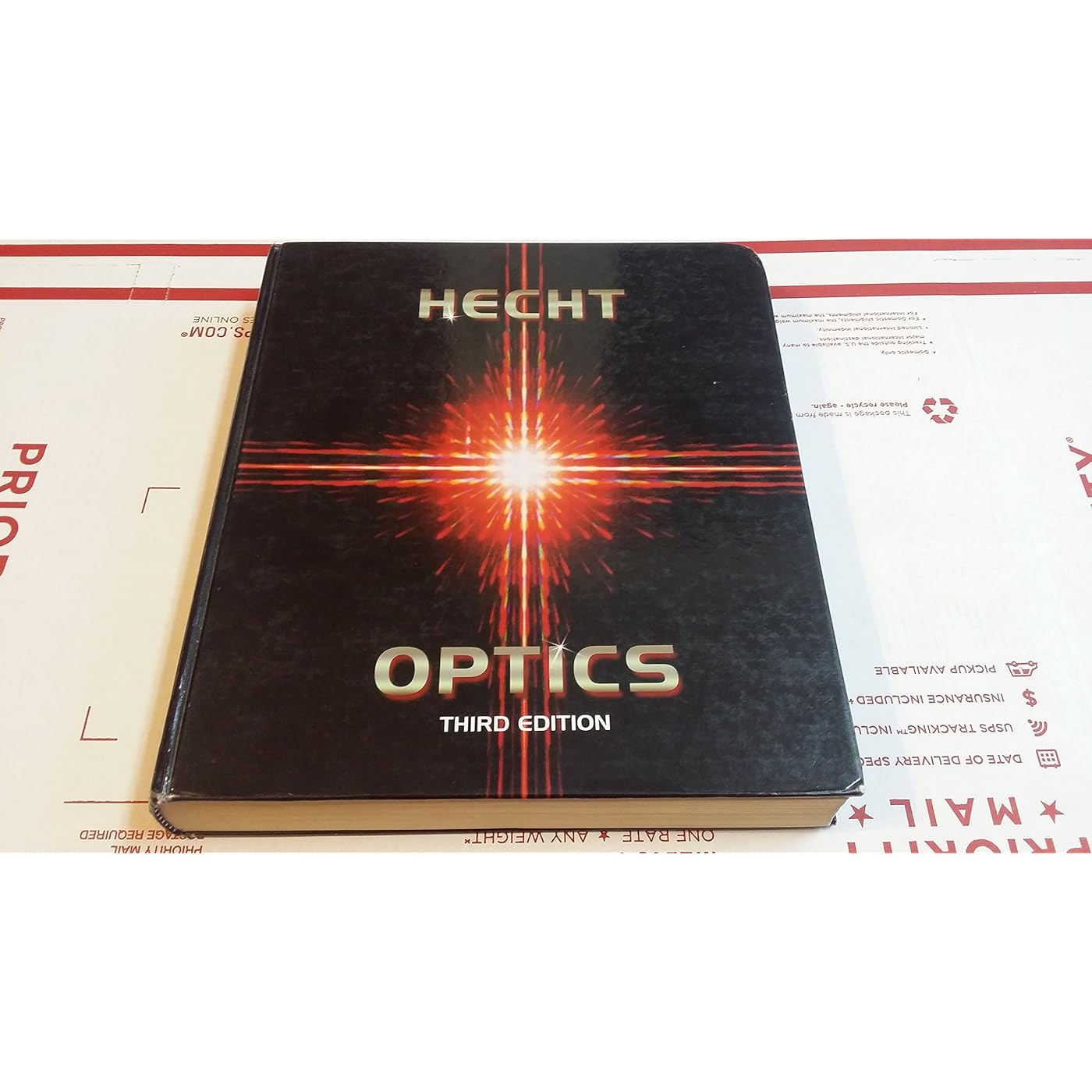
Optics

  • Based on 16 reviews
Condition: Used - Very Good
Checking for the best price...

Buy Now, Pay Later


As low as $5 / mo
  • – 4-month term
  • – No impact on credit to apply
  • – Instant approval decision
  • – Secure and straightforward checkout

Ready to go? Add this product to your cart and select a plan during checkout.

Payment plans are offered through our trusted finance partners Klarna, Affirm, Afterpay, Zip, Apple Pay, and Google Pay. No-credit-needed leasing options through Acima may also be available at checkout.

Learn more about financing & leasing here.

Free shipping on this product

This item is eligible for return within 30 days of receipt

To qualify for a full refund, items must be returned in their original, unused condition. If an item is returned in a used, damaged, or materially different state, you may be granted a partial refund.

To initiate a return, please visit our Returns Center.

View our full returns policy here.


Availability: Only 1 left in stock, order soon!
Fulfilled by Vogman

Arrives Monday, Aug 31
Order within 5 hours and 7 minutes
Available payment plans shown during checkout

Protection Plan Protect Your Purchase
Checking for protection plans...

Description

This textbook covers wave motion, electromagnetic theory, propagation of light, geometrical optics, superimposition of waves, polarization, interference, diffraction, fourier optics, lasers and more. DLC: Optics. Read more

Publisher ‏ : ‎ Addison-Wesley


Publication date ‏ : ‎ January 1, 1997


Edition ‏ : ‎ Subsequent


Language ‏ : ‎ English


Print length ‏ : ‎ 694 pages


ISBN-10 ‏ : ‎ 0201838877


ISBN-13 ‏ : ‎ 79


Item Weight ‏ : ‎ 2.9 pounds


Dimensions ‏ : ‎ 8.75 x 1.25 x 9.75 inches


Best Sellers Rank: #2,679,092 in Books (See Top 100 in Books) #485 in Physics of Light (Books) #1,013 in Optics for Physics #48,527 in Science & Mathematics


Frequently asked questions

If you place your order now, the estimated arrival date for this product is: Monday, Aug 31

Yes, absolutely! You may return this product for a full refund within 30 days of receiving it.

To initiate a return, please visit our Returns Center.

View our full returns policy here.

  • Klarna Financing
  • Affirm Pay in 4
  • Affirm Financing
  • Afterpay Financing
  • Zip Pay in 4
  • Financing through Apple Pay
  • Financing through Google Pay
Leasing options through Acima may also be available during checkout.

Learn more about financing & leasing here.

Top Amazon Reviews


  • Wonderful
Format: Hardcover
As an introductory book teaching classical (and some modern) optics, this wonderful book is difficult to beat. It prepares you remarkably well for any direction in optics you then want to set off in. The explanations are mostly crystal-clear, crafted with great care. Lots of words and diagrams, not too much math, but enough math to facilitate useful calculations. An excellent under-graduate text, to my mind, the best available today. ... show more
Reviewed in the United States on October 1, 2007 by R. G. W. Brown

  • Great reference
Format: Hardcover
Been looking around awhile for this one. Newer editions start in three figures, and as a high school physics teacher needing a reference text for my students, it didn't hardly seem worth that. Book was in great condition and has been a great reference text.
Reviewed in the United States on December 9, 2012 by Matthew Perkins

  • Good for intuition, but uneven mathematically
Format: Hardcover
Hecht did a great job of giving you visually appealing (as is only appropriate for an Optics text!) descriptions of optical phenomena. I've been frustrated by other texts which do extensive mathematical derivations without telling you what the math is supposed to describe. On the other hand, Hecht does not give many example problems, and sometimes he entirely breezes over the math behind certain phenomena, and while I appreciate the clarity of his qualitative descriptions, I feel pretty crippled if I cannot mathematically characterize the optical systems I'm studying. On the other hand, sometimes he goes overboard with some pretty confusing math, like the math behind the Cornu spiral. This graph is used to help figure out the spacing of Fresnel diffraction lines, but Hecht layers on some very confusing electromagnetic wave theory on top of the basic function, and I had a hard time trying to understand what he was describing. This is still a great beginning's text, but it should be bulked up a bit with more solved problems and mathematical examples, and some things like the Cornu Spiral should be wholly reworked. ... show more
Reviewed in the United States on October 29, 2001 by Gerald J. Nora

  • The most vile optics textbook available
Format: Hardcover
I loathed this book when I was an undergraduate student, more so than any textbook I've ever encountered before or since. And what do you know? Reading it again, sixteen years later, I loathe it just as much. This was the book that instilled in me a hatred of everything and anything to do with optics, a hatred that persists to this day. It is the very fact that I hate optics so much that had me reading this book again. I figured that if I was to try to learn optics again, this time in a more pleasant fashion, perhaps the best way to start was to return to where it all began, to go over Hecht & Zajac again to see what they say, evaluate it in the light of my older, more knowledgeable me, and remember essentially the points they cover for comparison when I read a better (ie any other whatsoever) text. Just what is it that makes this book so very bad? Any textbook can have convoluted physical explanations that make no sense. Likewise any textbook can include plodding mathematical explanations that get so worn down explaining basic and trivial points that by the time you reach their end you've forgotten what the goal was. Any textbook author can devote no time whatsoever to such pedagogical basics as making sure the material is ordered so that everything builds on what came before, and that a thorough overview is presented before the details are covered, of just what we are about to do and why. Of course H&Z cover these basics with aplomb, but they manage to include two far more vicious pathologies. The first, usually only found in quantum mechanics books, is the historical pathology; they are so in love with the history of optics that they are unwilling to ever explain anything in modern (which usually means maxwellian) terms when they could explain it in some alternative fashion involving some historical picture from 1820 or 1840 or whatever. The result is that instead of a coherent description of optics as maxwell's equations followed by a long sequence of teasing out the consequences of the equations, we see a constant hodge-podge of different theoretical models throughout the book, each appropriate to its particular problem and little else. Don't get me wrong; I like history as much as (probably rather more so) than the next physicist, but I want a textbook on optics to teach me the optics; I'll learn the history from my history of optics textbook. We don't teach mechanics or heat or EM this way (for the most part) and for good reason. The second H&Z pathology is specific to their text alone, and it is that they cannot get it through their thick skulls that they are writing a general optics textbook, not a (very poor) reference manual, not an experimentalist's handbook. The text is littered with bizarre asides about how to view the issue just discussed in some variant fashion, the point of which, to anyone who is not an expert, is completely mystifying; it would be cruel of me to say so, but I'll do it anyway --- these inclusions seem very much to come across as a form of insecure boasting, a way of saying, "you think you're better than me? you think so? well what do you know about xyz's paper in 1963? do you know how to modify the theory of geometrical optics so as to give results just like standard diffraction theory? no --- I thought so." If you can, in any way whatsoever, avoid this book. Read anything else at all to learn about optics. ... show more
Reviewed in the United States on October 24, 2004 by Maynard Handley

  • Precisely as advertised!
Format: Hardcover
Text was in excellent condition with no marginal scribbles, highlighting, etc., and very reasonably priced.
Reviewed in the United States on September 1, 2019 by JBK

  • Good explanation of the physics of light
Format: Hardcover
Simply from the title and the description of this book, I believe it is hard to judge who the target audience is. I think if you are looking for an optics textbook at the high school or university freshmen level, you will be much better off reading a General Physics textbook. On the other hand, if you want a graduate text at the level of Born and Wolf, you will definitely be disappointed with the qualitative descriptions of many topics in Hecht. Overall, Hecht focuses on explaining the physics of light rather than the practical design of optical systems. As such, this book is targeted at undergraduate physics students, probably for junior and senior students who are more matured to appreciate the various aspects of light. I believe most physics students have learnt optics in some way. At a first sight, it seems like the book is talking about the same thing on geometrical and physical optics. It turns out that optics has more depth than I thought. For example, how light interact with the atoms in a material and how it affects light propagation, a deeper look of the Huygens principle, how atoms in an object emit light and the corresponding issue of spatial and temporal coherence. These topics are typically shoved under the carpet in general physics courses. The author has clearly thought out these issues, and I really enjoy his explanations throughout the book. The book is wrapped up by an introduction of Fourier optics, which links previous chapters together and opens up many possible applications of optics. Overall, I like this book. Quite often, I find that the book feels like a big block of words. I believe the underlying reason is that many topics are indeed quite complex, but instead of writing pages of formula, a more qualitative description is adopted for undergraduates. As a result, the book feels a bit too wordy. From the students' point of view, they might find it hard to revise their tests and exams using this book. The style of the book is like pages of text interlaced with a couple formula, and there are no examples. But still, Hecht is certainly a good read if you want to understand the physics of light. ... show more
Reviewed in the United States on March 13, 2016 by L

  • Just as described
Format: Hardcover
Just as described, it has some wear-out on the binding, but the interior is good. Perfect price for a second-hand and still fair condition book. by the way, Optics by Hecht is a great book for me! Very clear physical pictures and helps me lot on my PhD qualified exams!
Reviewed in the United States on September 9, 2008 by X. Xu

  • We are recommending this book for UVM
Format: Hardcover
I am recommending that the University of Vermont library purchase copies of this text in the 3rd edition. I am also recommending that it be used as the optics text for our undergraduate curriculum. In grad school,I used the 2nd edition and found it to be perfect in its mixture of theory, historical background and cool experiments to try -- like the Poisson dot. Although I am in astrophysics research now, I occasionally go back to the section on Fresnel diffraction and the Cornu spiral to dig out insight for use in quantum field theory and path integrals! ... show more
Reviewed in the United States on December 2, 1999 by Dr. Thomas J. Brueckner

Can't find a product?

Find it on Amazon first, then paste the link below.
Checking for best price...