
Prime Big Deals are live! View Deals
Search  for anything...

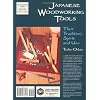
Japanese Woodworking Tools: Their Tradition, Spirit and Use

  • Based on 455 reviews
Condition: New
Checking for the best price...
$20.82 Why this price?
Prime Big Deal · 28% off was $28.95

Buy Now, Pay Later


As low as $5 / mo
  • – 4-month term
  • – No impact on credit to apply
  • – Instant approval decision
  • – Secure and straightforward checkout

Ready to go? Add this product to your cart and select a plan during checkout.

Payment plans are offered through our trusted finance partners Klarna, Affirm, Afterpay, Zip, Apple Pay, and Google Pay. No-credit-needed leasing options through Acima may also be available at checkout.

Learn more about financing & leasing here.

Selected Option

Free shipping on this product

FREE 30-day refund/replacement

To qualify for a full refund, items must be returned in their original, unused condition. If an item is returned in a used, damaged, or materially different state, you may be granted a partial refund.

To initiate a return, please visit our Returns Center.

View our full returns policy here.


Availability: In Stock.
Fulfilled by Amazon

Arrives Friday, Oct 9
Order within 15 hours and 38 minutes
Available payment plans shown during checkout

Protection Plan Protect Your Purchase
Checking for protection plans...

Format: Paperback


Description

The classic work on the tools and spirit of the Japanese master craftsman. In Japan, a woodworker spends years learning to use his tools with great speed and skill. Only after he has proved his mastery can he proudly call himself a shokunin, a master craftsman. Japanese Woodworking Tools brings the traditions and training of the shokunin to the Western world. Calling on his own apprenticeship as a tategu-shi (sliding-door maker), and on 40 years of woodworking experience, Toshio Odate here offers a complete guide to Japanese tools: thin saws that cut on the pull stroke, laminated chisels with hollowed backs, marking tools, waterstones, axes, hammers, and almost 50 different planes. Odate shows shows how each tool works, how it should be cared for and how it is meant to be used. He also shares stories and reminiscences that help bring home the traditions and spirit associated with each tool. Whether you're a curious beginner or an adventurous professional, Japanese Woodworking Tools will show you a whole new world of exciting craftsmanship. Read more

Publisher ‏ : ‎ Linden Publishing


Publication date ‏ : ‎ January 1, 1998


Edition ‏ : ‎ Reprint


Language ‏ : ‎ English


Print length ‏ : ‎ 189 pages


ISBN-10 ‏ : ‎ 0941936465


ISBN-13 ‏ : ‎ 60


Item Weight ‏ : ‎ 1.7 pounds


Dimensions ‏ : ‎ 8.5 x 0.8 x 11 inches


Best Sellers Rank: #75,104 in Books (See Top 100 in Books) #6 in Woodworking Tools (Books) #34 in Carpentry #45 in Woodworking Projects (Books)


Frequently asked questions

If you place your order now, the estimated arrival date for this product is: Friday, Oct 9

Yes, absolutely! You may return this product for a full refund within 30 days of receiving it.

To initiate a return, please visit our Returns Center.

View our full returns policy here.

  • Klarna Financing
  • Affirm Pay in 4
  • Affirm Financing
  • Afterpay Financing
  • Zip Pay in 4
  • Financing through Apple Pay
  • Financing through Google Pay
Leasing options through Acima may also be available during checkout.

Learn more about financing & leasing here.

Top Amazon Reviews


  • Great book on the topic of Japanese woodworking tools
Format: Paperback
Gem of a book. Odate the author pours a lifetime of knowledge into this book about a rather arcane topic--traditional Japanese woodworking tools. But he goes farther than just discussing the types of tools and their applications, but offers many personal anecdotes about his journey as a shokunin from his days as an apprentice (circa WW2 and its aftermath). Odate tries to convey to the English-reader the traditional Japanese craftsman's sense of obligation to himself, to his tools, to the smiths who pour their skill into forging the tools, to his master, to his craft, to his work, and to his community. Without this understanding, the proper reverence and care for the tools is not possible. It's deeply Japanese, but also universal to any craftsman anywhere who learned his craft the hard way, finds honor in his work and takes pride in his skill, and has cherished tools whose value cannot be measured with money. The black and white photos leave a lot to be desired as others have pointed out, but that's a very minor complaint. The simple line work illustrations are beautiful, the writing is engaging and insightful, and the organization is intuitive, and there's a wealth of information provided. Not that there's many English language books available on the topic to choose from, but this is a must have for folks interested in Japanese woodworking. Keep in mind this isn't a book about building boats or tansu cabinetry or timber joinery for temples or kites--there's other books on those topics and Odate himself has another book about building Shoji screens, his specialty. For any complaints that this book doesn't discuss Japanese joinery or residential framing, that's not a fair criticism of the book which really does explicitly focus on Japanese tools and their care. ... show more
Reviewed in the United States on August 15, 2025 by Matthew Sutton

  • Great Book
Format: Paperback
This is an excellent introduction to Japanese tools. I really love this book. This is really about Shokunin, craftsmen or artisan in the literal sense. More correctly, a Shokunin means not only having technical skill but implies an attitude and social consciousness. The qualities are encompassed in the word but are seldom written. "The Shokunin demonstrates knowledge of tools and skill with them, the ability to create beauty and the capacity to work with incredible speed. The value of an object is dependent on a subtle combination of skill and speed; this is what the apprentices master and collegues teach, and this is what the Shokunin believes. One without the other is not Shokunin." "The Shokunin has a social obligation to work his best for the general welfare of the people. This obligation is both spiritual and material, in that no matter what it is, if society requires it, the Shokunin's responsibility is to fulfill the requirement." Prior to moving to the US, the author was a Shokunin and was raised in a family who passed the art to him. The passionate description of their relationship with their tools, and the proper care is really inspiring. So this is more than just a book about the different tools and their use and care. Odate's passion and reverence for this art is felt on every page. If you are interested in Japanese architecture or are a craftsman, I highly recommend it. ... show more
Reviewed in the United States on June 3, 2009 by Ronin

  • This book is about a way of life
Format: Paperback
This book is much more than a owner's manual for Japanese tools. The author, Toshio Odate, grew up with a father that was a woodworker and he apprenticed with his father. The author shares many of his experiences; the unique methods of teaching are really quite different than American methods. For example, as an apprentice, there is no formal instruction--the apprentice must learn by observing the master while the apprentice is working--and woe be upon any apprentice that takes his attention away from his work. How one 'learns' in this situation is beyond me but apparently it works. A couple of other examples: Odate-san left some stones freeze one evening during the winter which cracked them. That warranted a substantial beating. Odate-san saved his extra money for a year and purchased a quality hand plane which is master promptly confiscated and he never saw it again. Apparently, because Odate-san was stil an apprentice, he was not worthy of quality tools and would never be allowed to see this tool, which he saved for for over a year, again. I can't comprehend why breaking Odate-san's heart was a good way to teach him woodworking skills, but he seems to be over the hurt inflicted by that episode. And now he is a master woodworker that is reaping substantial royalties from the books he wrote. So, that system seems to work. The author provides many details regarding the use of Japanese tools. There really isn't much else you need to know. Also, the drawings are very good but a few more photos (in color) would be nice. The section regarding sharpening could be expanded with some additional information and techniques, such as hollow grinding, the use of sandpaper and the benefits of synthetic stones. ... show more
Reviewed in the United States on July 9, 2006 by David C. Brayton

  • Awesome book!
Format: Paperback
Whether you have decades of experience or haven’t even seen a tool in real life, I recommend this book. I have over 12 years in the construction industry and now teach construction classes. This book is about the author’s life as a carpenter and the tools he used or were used when he was working. It talks about how to use them, how to care for them and how to respect them. It’s a great read and I think you would enjoy it! ... show more
Reviewed in the United States on October 17, 2022 by Alexander Lichter

  • I enjoyed reading this book
Format: Paperback
I enjoyed reading this book. It is a great reference guide and very comprehensive. The only reason I rate this as a 4 not a 5 is I would have really liked more detail about Tohio Odate's story. I found the most gripping parts of the book to be the narrative portions and I think there were too few of them. If he published a book called "My Life" I would be standing in a queue to buy it as he is a compelling storyteller. ... show more
Reviewed in the United States on January 26, 2018 by Kindle Customer

  • great book, fast shipping
Format: Paperback
great book, fast shipping
Reviewed in the United States on December 14, 2024 by Dennis Lanska

  • Great book for the beginner/novice getting interested in Japanese joinery and woodworking.
Format: Paperback
Just getting into woodworking and specifically Japanese style woodworking. Wanted a nice book on the types of tools commonly used by Japanese carpenters, and this I feel is one of the books you need if you are interested. It has a pretty good description of the tools and what they are used for. The pictures are a bit dated, but they do a good job for the novice or beginner. For me, any information is greatly appreciated, this book is great. ... show more
Reviewed in the United States on September 4, 2017 by JVSGUSCASD

  • For those of us who are not fortunate enough.
Format: Hardcover
Everyone has accalades for this writing, It is along the lines of philosophy, spirit, and tradition. Craftsmanship and artistry as well as guidance are something I have sought for 6 years now. Even offered to be a gopher for other woodworkers I have admired. "Norm" has taught us how to use "Power Tools". He has shared woodworking techniques, the New Yankee way. Sam Maloof teaches us his love of wood. Some of the masters we revere have demonstrated the "way they got there". It is a step by step process. Odatesan guides us through the mentoring process in the tradition of the writer, with pictures, and stories. I can't get the master to guide me from the outside, so I am fortunate to have this book to guide me from the inside. The "spirit of wood" is a personal journey. This book is helping me through mine. Glad I found it. ... show more
Reviewed in the United States on June 22, 2007 by Thomas( Doc Savage 45)

Can't find a product?

Find it on Amazon first, then paste the link below.
Checking for best price...