




Search  for anything...

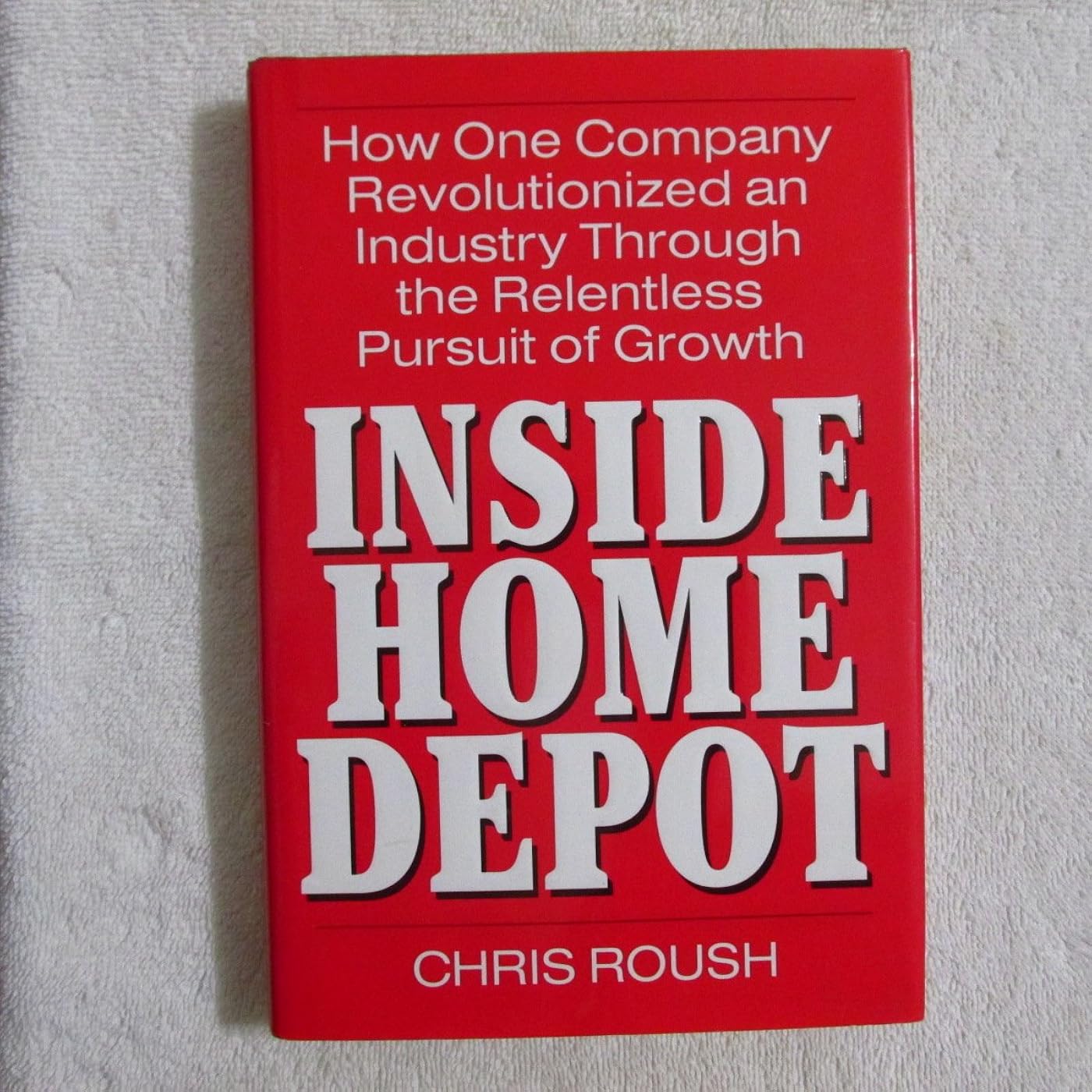
Inside Home Depot

  • Based on 10 reviews
Condition: Used - Very Good
Checking for the best price...
$8.86 Why this price?
Save $48.14 was $57.00

Buy Now, Pay Later


As low as $2 / mo
  • – 4-month term
  • – No impact on credit to apply
  • – Instant approval decision
  • – Secure and straightforward checkout

Ready to go? Add this product to your cart and select a plan during checkout.

Payment plans are offered through our trusted finance partners Klarna, Affirm, Afterpay, Apple Pay, and PayTomorrow. No-credit-needed leasing options through Acima may also be available at checkout.

Learn more about financing & leasing here.

Free shipping on this product

This item is eligible for return within 30 days of receipt

To qualify for a full refund, items must be returned in their original, unused condition. If an item is returned in a used, damaged, or materially different state, you may be granted a partial refund.

To initiate a return, please visit our Returns Center.

View our full returns policy here.


Availability: Only 1 left in stock, order soon!
Fulfilled by ThriftBooks-Phoenix

Arrives Saturday, Jun 20
Order within 20 hours and 41 minutes
Available payment plans shown during checkout

Protection Plan Protect Your Purchase
Checking for protection plans...

Description

"Reads like a novel, yet serves as a how-to guide for creating a customer culture and marketing strategies that wow Wall Street...I recommend this book as priority reading for all retail executives." Kurt Barnard, President, Barnard Retail Trend Report and Barnard's Retail Consulting Group. Admirers, competitors, industry and Wall Street analysts alike are intrigued with the question of what makes Home Depot so special. What, exactly, does this giant do that so clearly distinguishes it from the competition? How does Home Depot culture and customer service work? And, most importantly, what lessons can every business learn from the Home Depot example? INSIDE HOME DEPOT takes you behind the scenes to discover the secrets of success of this retail giant how, in just twenty years, Home Depot has not only changed the way hardware is sold, Home Depot has also elevated the superstore concept to a new level of success, inspiring both admiration and fear in the retail community. Relying on inside access to Home Depot's training programs, interviews with key employees both past and present, and meticulous investigative journalism, Pulitzer Prize nominated journalist Chris Roush presents the first uncensored book about how this company has become so successful, and isolates the practical lessons that readers can apply to any industry. Read more

Publisher ‏ : ‎ McGraw-Hill


Publication date ‏ : ‎ February 1, 1999


Edition ‏ : ‎ 1st


Language ‏ : ‎ English


Print length ‏ : ‎ 266 pages


ISBN-10 ‏ : ‎ 0071340955


ISBN-13 ‏ : ‎ 53


Item Weight ‏ : ‎ 1.35 pounds


Dimensions ‏ : ‎ 6.2 x 1.26 x 8.9 inches


Best Sellers Rank: #1,327,576 in Books (See Top 100 in Books) #7,665 in Industries (Books)


Frequently asked questions

If you place your order now, the estimated arrival date for this product is: Saturday, Jun 20

Yes, absolutely! You may return this product for a full refund within 30 days of receiving it.

To initiate a return, please visit our Returns Center.

View our full returns policy here.

  • Klarna Financing
  • Affirm Pay in 4
  • Affirm Financing
  • Afterpay Financing
  • PayTomorrow Financing
  • Financing through Apple Pay
Leasing options through Acima may also be available during checkout.

Learn more about financing & leasing here.

Top Amazon Reviews


  • Fascinating, uncensored look at Home Depot
Format: Hardcover
First-time author and Pulitzer Prize-nominated journalist Chris Roush of Bloomberg News in Atlanta writes of how one company revolutionized an industry through the relentless pursuit of growth. "Inside Home Depot" is an unauthorized, behind-the-scenes look at the most successful retailer to come along since Wal-Mart. A Wal-Mart executive even admits in Roush's book that "Home Depot is the best-managed retail company in America, ours included." The company's founder, Arthur Blank and Bernie Marcus, say that values like respect among all people, excellent customer service, and giving back to the community have made Home Depot successful. With nearly $90 billion in sales in 1998, Home Depot has become one of the world's biggest retailers in less than 20 years by focusing on customer service, treating employees like family, and relentless pursuit of growth. I learned everything I ever wanted to know about Home Depot -- and more. Roush takes the reader through Home Depot's "boot camp" training class for new employees. Instead of greeting customers with "Hi, how are you doing?" they are told to meet customers with the greeting of "What are you building today?" The book makes interesting reading for the Home Depot shooper who is awed by the success of this innovative store. And for up-and-coming businesses, there are lessons for success that can be learned from the Home Depot example. Home Depot author Chris Roush became an expert on the inside operations of Home Depot while a reporter for The Atlanta Journal-Constitution where he also covered Coca-Cola and Home Depot, as well as the entire retail industry. In 1993, his reporting on consumer issues won him a Pulitzer Prize nomination while he was at The Tampa Tribune. He was nominated for the Livingston Award by The Atlanta Journal-Constitution for his reporting on the business scene. Roush also worked for Business Week and The Sarasota Herald-Tribune. -- Ed Williams Department of Journalism Auburn University Auburn, Ala. ... show more
Reviewed in the United States on March 19, 1999 by edwilliams4

  • Well written and not a complete apologia
Format: Hardcover
I have no idea if people are still searching for this book, given that it's pretty old. But I enjoyed it. I have read several books in the "How XX Company has been successful" genre, and this was one of the more well done ones. He comes from a journalism background, so the writing is very clear, crisp, and concise. You can also tell throughout the book that he has interviewed and consulted many sources, which is a strength. You never get the sense that you are getting a single person (or party's) slant on things. I think the early parts of the book are stronger than later parts in terms of homing in on broad themes -- one of which being the connection between the company's culture of training to its success. Some of the later parts of the book lapse into list-making in terms of just dryly describing random initiatives of the company that aren't as critical the Big Story of how Home Depot got to where it is. Overall, an interesting and well-written read. ... show more
Reviewed in the United States on September 15, 2017 by David L. Sherzer

  • Inside Home Depot
Format: Hardcover
This book should be required reading for all High School seniors...It would be nice to see pictures of Bernie Marcus and Arthur Blank in the hall ways. They are two great American business heroes.................
Reviewed in the United States on September 6, 2011 by Anthony A. Vitolo

  • Blatant pandering to the folks at Home Depot
Format: Hardcover
Mr. Roush's "uncensored" book might as well have been written by Mr.'s Marcus and Blank, the founders of Home Depot. Uncensored and unbiased books do not have a segment at the end of each chapter that recaps how Home Depot is an example for all of us. Granted, Home Depot has been successful, but this is a 266 page advertisement. It is obvious that Mr. Roush's journalistic judgment is clouded when he addresses the allegations of discrimination against women and when he discusses how Home Depot rolls into a small community and puts small Mom and Pop operations out of business. He had the opportunity to critically analyze Home Depots "good ole boy" network - and he didn't. And, when he's done, he all but says that the small hardware store owner deserves to be put out of business. Save yourself the cost of this book. The Sunday paper Home Depot advertisements are just as insightful and unbiased - and are a lot cheaper. ... show more
Reviewed in the United States on April 30, 1999 by J. Strupek

  • Disappointment
Format: Hardcover
This book is a disappointment. The author tends to drag out his writing, which makes you want to skim parts of the book. The book needs to be peppier. It's not near as interesting as Built From Stratch by Bernie Marcus and Arthur Blank (1999) wrote about founding and running Home Depot. If you want to read an entertaining and more insightful book and spend your leisure hours more enjoyably read Built From Stratch. ... show more
Reviewed in the United States on December 26, 2006 by Bookworm

  • Does not tell the real story
Format: Hardcover
Home Depot is a place now where desperate employees come after being laid off from good jobs, are paid poverty-level wages, poorly trained and thrown out onto the sales floor to bear the brunt of customer heat. It is a company of metrics where if the employee does not measure up to the metrics,even if providing tremendous service to its customers, that employee is penalized. It is a company where employees are charged $9.25 for a copy of their W-2 and where the smallest deviations from the work schedule result in a demerit system which can end in termination of the employee. It is an environment where if an employee is given too much work in the time allotted they are blamed and when trying to defend themselves asked "what is the maximum effective range of an excuse?" it is no longer a company encouraging employee free-thinking or innovation and does not appear to share original values of the founders of the business who retired wealth yand without worry. ... show more
Reviewed in the United States on February 24, 2005 by Whipping Boy

  • Okay as a rough draft, but needs a lot more work.
Format: Hardcover
This is a reasonably good book but sort of skirts around the Big Point in the Home Depot story. The Big Point is not that HD 'revolutionized an industry', but rather that it is one of the chief players in the creation and growth of that industry. The do-it-yourself phenomenon is nothing new in the world. Farmers and homeowners and small businesses have been expanding their buildings and fixing their plumbing for centuries. What Home Depot and its imitators have done is to institutionalize the servicing of the do-it-yourself class and in so doing, enabled it to grow exponentially. Do-it-yourselfing was not an industry 30 years ago. It was just something ambitious or cash-strapped people did because they couldn't afford to hire the companies who did that sort of work. It was hard because they had to pay retail and they had to go to twenty different retailers to get supplies. When Home Depot put everything under one roof and gave everything the lowest possible price, the floodgates were opened and all the pent-up demand fueled the Depot's stunning rise. Chris Roush has all the facts essentially right, but his writing is deficient. The subtitle claims HD 'revolutionized an industry through the relentless pursuit of growth'. But then, what company does not relentlessly pursue growth? Does the CEO of Sears tell his managers, 'Okay, people, we've had a pretty good quarter so far, so we don't have to try to grow any more for awhile.' No. Every company relentlessly pursues growth. That's what it means to be a company in business to make money. What separates HD from the Sears-Roebucks of this world is the growth strategy in general, and pricing strategy in particular. Sears puts on their products the highest price possible short of making customers walk out of the store in outrage. Home Depot sets its prices at the lowest possible point where they can still make a profit. What separate HD from retailers like K-Mart is quality. You can find low prices in a K-Mart, but all too often you find out a week or a month later why the prices were cheap: the merchandise was cheap. Home Depot sells top quality stuff as cheaply as they can while still making a profit. Roush goes on and on about HD's customer service, but really doesn't come right out and say what is meant by customer service. Is it having a clerk hovering over you every moment like in the department stores of old? Is it having a fawning senior citizen foisting microwaveable tidbits on you like in a Safeway or greeting you at the entrance to a WalMart? No, Home Depot customer service is something useful. It's having someone with a brain within shouting distance at all times, someone in lumber who knows the difference between MDF and CDX, someone in tools who knows a collet from a mandrel. You might have to get them off a forklift or off their cell phone, but when you do, odds are they'll know what they are talking about and where it is. Just the other day I asked a woman where to find dielectric unions. She told me, without hesitation, 'Aisle 5, on the left, halfway to the back'. And that's exactly where they were. I've had that same experience many times in Home Depot. But that's not the way it works in Builder's Square or Home Base. To make this a better book in future editions, Roush ought to get a firmer grasp of who his readership is. Who the hell wants to read 'Management Lessons' at the end of every chapter? Is this a textbook or a real book? Why not let Cliff Notes do a simplistic summary in a separate volume? Is this a work of history or an infomercial? If it's the former, then drop cheerleader chapter titles like 'Customer Service is Job No. 1'. Find an editor who can weed out all the flabby writing. Someone, for instance, should have told Roush that he used the meaningless filler phrase 'to be sure' over a dozen times. Someone should have pointed out shoddy sentences like this one on page 192: 'In Europe, Inglis received a green light in 1994 to enter Europe'. Maybe Roush, with his on-again/off-again journalistic objectivity, can't always to distinguish right from wrong or good from bad. He doles out a lot of treacle about Home Depot's owners helping the victims of the Oklahoma bombing, and trying to forge peace in the Middle East, and being good corporate citizens in a variety of ways-- then writes the following sentence about a government that publicly murdered thousands of its own citizens in 1989 and keeps millions more in concentration camps to this day: 'Having the Chinese government as a partner was also appealing' (p.201). I would guess that a capitalist like Marcus or Blank would find a partner like the government of China about as appealing as genital herpes, and that's why there are no Home Depots in China. Of course, maybe that will change. Lots of American companies did good business in Iran in the Seventies and Germany in the Thirties. ... show more
Reviewed in the United States on May 6, 1999 by Timothy Ritter

Can't find a product?

Find it on Amazon first, then paste the link below.
Checking for best price...