

Search  for anything...

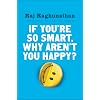
If You're So Smart, Why Aren't You Happy?

  • Based on 347 reviews
Condition: New
Checking for the best price...
$17.07 Why this price?
Save $10.93 was $28.00

Buy Now, Pay Later


As low as $4 / mo
  • – 4-month term
  • – No impact on credit to apply
  • – Instant approval decision
  • – Secure and straightforward checkout

Ready to go? Add this product to your cart and select a plan during checkout.

Payment plans are offered through our trusted finance partners Klarna, Affirm, Afterpay, Zip, Apple Pay, and Google Pay. No-credit-needed leasing options through Acima may also be available at checkout.

Learn more about financing & leasing here.

Free shipping on this product

FREE 30-day refund/replacement

To qualify for a full refund, items must be returned in their original, unused condition. If an item is returned in a used, damaged, or materially different state, you may be granted a partial refund.

To initiate a return, please visit our Returns Center.

View our full returns policy here.


Availability: Only 1 left in stock, order soon!
Fulfilled by Amazon

Arrives Sunday, Oct 11
Order within 11 hours and 42 minutes
Available payment plans shown during checkout

Protection Plan Protect Your Purchase
Checking for protection plans...

Description

The first book by the creator of COURSERA®'s most popular online course in 2015, "A Life of Happiness and Fulfillment" Could the same traits that drive your career success also be keeping you from being happier? Fifteen years after getting his MBA, Raj Raghunathan spent some time with his old classmates. He noticed that though they’d all done well, there didn’t appear to be much correlation between their academic success and career success. What Raj found even more curious was the even smaller correlation between career success and what he calls life success. The greater the career success, the more unhappy, out of shape, harried and distracted his friends were. If intelligence helps with decision-making, smart people should naturally make better life choices. So why are so many of the smartest, brightest, most successful people profoundly unhappy? Raj set out to find an answer to this problem, and extensively researched happiness not just of students and business people, but also stay-at-home-parents, lawyers, and artists, among others. If You’re So Smart, Why Aren’t You Happy? takes readers on a fun and meaningful tour of the best research available on how some of the very determinants of success may also come to deflate happiness. Raghunathan explores the seven most common inclinations that successful people need to overcome, and the seven habits they should adopt instead. Among his surprising findings... ·The correlation between wealth and happiness is much smaller than you'd expect it to be ·Generosity is not only a key to happiness, but a determining factor of long term success ·Appreciating uncertainty, rather than seeking full control of outcomes, is necessary for happiness If You’re So Smart, Why Aren’t You Happy? will give you a powerful new perspective on your work, personal goals and relationships, whether you’re already successful or just starting out. Read more

Publisher ‏ : ‎ Portfolio


Publication date ‏ : ‎ April 26, 2016


Edition ‏ : ‎ Illustrated


Language ‏ : ‎ English


Print length ‏ : ‎ 352 pages


ISBN-10 ‏ : ‎ 1101980737


ISBN-13 ‏ : ‎ 36


Item Weight ‏ : ‎ 1.19 pounds


Dimensions ‏ : ‎ 6.2 x 1 x 9.3 inches


Best Sellers Rank: #555,968 in Books (See Top 100 in Books) #2,674 in Business Motivation & Self-Improvement (Books) #2,687 in Motivational Management & Leadership #4,408 in Personal Finance (Books)


Frequently asked questions

If you place your order now, the estimated arrival date for this product is: Sunday, Oct 11

Yes, absolutely! You may return this product for a full refund within 30 days of receiving it.

To initiate a return, please visit our Returns Center.

View our full returns policy here.

  • Klarna Financing
  • Affirm Pay in 4
  • Affirm Financing
  • Afterpay Financing
  • Zip Pay in 4
  • Financing through Apple Pay
  • Financing through Google Pay
Leasing options through Acima may also be available during checkout.

Learn more about financing & leasing here.

Top Amazon Reviews


  • Finally! A road map to happiness!
Format: Hardcover
This is one of the best books I've ever read. I am an intellectual type, and a romantic type, and have long been searching - intuitively and instinctively - for what brings me the most happiness. What path? What attitude? Is there a specific religion that will resonate with me? I have followed Joseph Campbell, mythology, several religious teachings, the makers of great art, fine literature, comedy, adventure, and money. I have really and honestly tried for four decades to sooth myself and find happiness. By the way, I am a reasonably happy person. I have found certain strong clues on the way to my quest for happiness. For example, Grandfather Vanderhoff in the movie classic "You Can't Take It With You" is an excellent example of a happy man. Watching that movie connects me to the spirit of happiness. Also, Joseph Campbell tells us to 'follow our bliss' as advice for life to lead us to happiness. Both of these leaders: Grandfather Vanderhoff (fictional) and Joseph Campbell (real) have helped shine a light on how to be brave and value happiness above money. However, they have not really answered the difficult nitty-gritty questions about how to do that. This book, "If You're So Smart, Why Aren't You Happy?" answers the nitty-gritty questions about how to value happiness above money, above superiority, above control, and above all the other temptations in our culture and in our own pre-wiring that subtly pull us away from happiness. Raj has pointed out what the problem is. I'm not saying he has answered all questions for all mankind regarding happiness. But I can honestly say he has, in my opinion, pointed more accurately and more clearly and specifically to what makes us happy than any other writer I have read, ancient or modern. Raj's book is a true treasure. When determining a book's worthiness, I often ask myself, "If I were stranded on a deserted island and could only have ten books to read for the rest of my life, would this be one of them?" I guess you can imagine what the answer is regarding Raj's book. Yes. In fact, I actually continue to read the book again after reading it once. Raj urges us to do the exercises in the book that bring happiness, not just to read the book. And I think this is key to the book's value. It doesn't just point out what causes happiness by saying it (even though that alone is astounding!), but he gives us exercises we can do regularly to train ourselves to value happiness and kind of get in the habit of making happiness-producing choices. So the first time I read the book, I simply absorbed the information and made notes and was astounded. The second time I'm reading the book, I'm taking the time to learn the exercises and to practice them. I can honestly say, even from reading the book once, and even moreso from my second time through with doing some exercises, I am a happier person. I have learned, with relative accuracy, what it is that makes me happy and what it is that doesn't. And I am CONSCIOUSLY AWARE of that, not just kind of intuitively familiar. In other words, I can accurately state, in sensible words, what things make me happy and unhappy. And that is thanks to Raj. Here are some of the things that make me happy: *Moving towards something that excites me, taking steps towards some exciting goal, big or small. *Remembering to value something for how much I like it and enjoy it, irregardless of its monetary price set by others *Avoiding materialistic signs/billboards, and places where materialism is glamourized *Remembering to control myself internally, and avoiding attempts to control what is around me too much in others *Having a positive attitude about humanity, and having some faith in people, and avoiding thoughts that people are wretches and life sucks *Doing giving and kind acts: like buying ice cream for my coworkers, or buying a gift spontaneously for someone I love *Placing trust in others which they can easily prove they are worthy of, and avoiding thoughts that people can't be trusted *Placing boundaries on my habits of giving to others and on helping others so that I am helpful, but smart in how I do it, so it is not straining to me. All of these things I learned from Raj's book. And by the way, the summary of how to live an 'abundance-minded life' rather than a scarcity-minded life towards the last part of the book is wonderful. He tackles the tough issue of how to actually live a trust-filled, positivity-filled life in a world which doesn't always support that notion. So Raj is no dreamer. He has his feet on the ground and actually gives us real answers of how to apply happiness principles to an imperfect world. And one more thing, I love that he uses scientific experiments to back his theories. This is truly special. Otherwise this would just be another philosophical book that sounds good, but which may or may not be true. Raj can show you, through siting actual scientific studies, that his thoughts about happiness are true. ... show more
Reviewed in the United States on October 19, 2016 by Firecat Hat

  • Many powerful insights that will indeed help YOU become happier!!
Format: Hardcover
What a neat title for a book! Raj Raghunathan, a professor of business at the University of Texas at Austin, has a somewhat unusual take on what he is supposed to do. I have met hundreds of business school professors and had weighty discussions on teaching. A few don’t particularly care about teaching and view it as a necessary evil for their faculty position. Most want to do a good job of communicating the intricacies of their particular discipline to students. A smaller number would really like to get their students excited about the ideas they share and get them to delve deeper. Raj is one of the few, a very few, who views his job as helping his students lead happier, more fulfilling lives. He discovered that business schools do a pretty poor job of this. So do most other educational institutions. He began to offer a course on happiness. It was soon oversubscribed and his teaching ratings soared. Many let him know that The Happiness Course was the most meaningful part of their business school education. This started Raj on what has now become a life work: What are the determinants of a fulfilling and happy life and how can one achieve this? Go back to when you were a young kid. Can you remember being filled with joy for no particular reason and being entranced for hours watching ants in a hive or butterflies flitting or rain pattering on the ground? When is the last time you felt like that? Why do we seem to lose our capacity to be happy as we grow older and can we do something about this? The answer is a resounding yes. The reason we are not happy as we scurry around building our businesses or advancing our careers is that we are diverted into making false tradeoffs. He illustrates this with “The Genie question.” Suppose a Genie were to appear before you and give you three wishes, what would you pick? Most would ask for vast wealth, stupendous success and fulfilling relationships. And why is this? Because we think that these will make us happy. So why not ask for happiness directly? Virtually no one asks the genie for this. The reason is insidious. We get distracted by subsidiary goals. We also devalue happiness in pursuit of intermediate objectives that appear more tempting. The Happiness Paradox explains why business school students universally choose high paying jobs in finance over lesser paying ones in say manufacturing even though they freely admit that they would actually have a life in the latter as opposed to being chained to their desks in the former. The book has many insights that are blindingly obvious after they have been explained to you. For example, pursuing happiness actually makes you unhappy. This is because when you are fixated on happiness, you evaluate how happy you are. And invariably you are less happy than you would like to be so you actually become unhappy about unhappiness. The way out of this trap? Make happiness a priority but don’t chase it. Do activities that you like and are good at. Let happiness ensue. It’s similar to trying to fall asleep. If you are focused on making it happen, you are guaranteed to spend hours tossing and turning. Instead, calm your mind, turn off electronic interlopers read an enlightening book and you are in slumber land. The last chapter makes the case that the quest – not obsession – for personal happiness is actually a win-win-win-win solution. Your happiness level goes up, your chances of success improve, you feel fulfilled by altruism at the personal level and meaningful productivity goes up on a societal level. Now that is a consummation devoutly to be wished. The book ties into a website that gives you many exercises and additional resources. Full disclosure – Raj took my course when I was teaching at Columbia Business School and is now a valued friend. ... show more
Reviewed in the United States on April 26, 2016 by Srikumar S. Rao

  • A good book. Could have been better and easier to ...
Format: Kindle
A good book. Could have been better and easier to read if there were not too many tests given to the readers and not too many experiments described to illustrate the points made.
Reviewed in the United States on July 5, 2016 by Chandrahas Dayal

  • Good read. Need real practice to see results.
Format: Kindle
Easy to relate, at time feel it's "dumb" as in the advice is very common. However, how smart we are if we aren't able to practice what makes us happy?
Reviewed in the United States on January 31, 2017 by Yoong Sin

  • A Psychologist's Take On If You're So Smart, Why Aren't You Happy?
Format: Hardcover
How many of us have thought at one time or another that we don't have, and maybe can never obtain, what it takes to be happy? We aren't rich enough, good-looking enough, talented enough, or disciplined enough? Or, we plan to turn our attention to becoming happier "when we get time"? Or we, and also our parents, never seem to be really happy, and that's just something "in our genes" that we have to live with? Prof Raj, as he is called, dispels these myths and more in his concise book. He does this in two ways: First, he maps out what is known about the science of happiness. Let me reassure you that this is an eye-opening and heartening journey in itself, but it's probably not why you are considering buying the book! Second, and most important, Prof Raj gives you the tools you need to become a happier person. I must admit I was really skeptical on this second point. I'm a psychologist and I've read (or used on clients) just about every technique in the psychological playbook. I can assure you that Prof Raj does not just rehash psychotherapeutic interventions, or worse, pop psychology suggestions, in this outstanding book. The roadmap he gives to becoming happier is his own, stemming from his research and experience, not just some warmed-over solutions. I'm sure the question on your mind is this: hey, if you're a psychologist already, did this book actually make YOU happier? The answer is yes, it did! Two caveats, though: Prof Raj gives a number of self-tests in the book so you can see exactly where you stand on the concepts he's discussing. It's necessary to actually take those self-tests yourself, not just go with a preconceived notion about yourself that might be wrong. And when Prof Raj discusses the exercises he recommends, don't just skip going and doing them on the website, thinking "I get this without doing the exercise," and turn to the next chapter. I can assure you that actually spending time completing the questionnaires and doing all the exercises is the key to becoming happier. It's all within your reach. One final comment: how many of us have finished a self-help book and promised ourselves we will stick with the new insights we learned, only to discover a month or two later that we are no longer practicing those great new mental habits we learned about? SPOILER ALERT: Prof Raj has a chapter at the end of the book where he guides you on how to make your new learning permanent, in just a few minutes of personal reflection each day. Having finished Prof Raj's program over nine months ago, I can tell you that I still follow his prescription of daily reminders and that has made all the difference. Happy learning! ... show more
Reviewed in the United States on May 3, 2016 by Carol Atwood

  • What Does It Take To Lead a Happy & Fulfilling Life?!
Format: Hardcover
Raj Raghunathan answers the question that I, along with many others ponder: What does it take to lead a happy & fulfilling life? If you are already 100% happy, this book isn't for you. If you feel you have the opportunity to be happier on a daily basis and don't understand what is preventing you from achieving this happiness - this is a great read. This is a spot I often find myself: I have everything I can conceivable want and some days I feel like Superman and other days it's a challenge to get out of bed. What gives? There are essentially 3 things that make us happy: 1) Great social relationships 2) A sense of purpose (doing something meaningful) 3) A positive attitude toward life - a sense of being in control While this sounds as simple as 1-2-3 on a day-to-day basis many of us fail to achieve this. Raj dives into why we need these items and most importantly how do we achieve them on a daily basis. How do we feel like Superwoman or Superman every day? It turns out we need a plan and Dr. Raghunathan gives us the blue print. The reason to read this book is best summed up by Dr. Raghunathan himself: I hope you'll find that your happiness levels improve because of this book. And not just that; I hope you'll discover something else that I find to be one of the most gratifying aspects of seeking a life of happiness and fulfillment: the things that lead to happiness and fulfillment are the things that make us not just better-more kind and compassionate-but also more successful. That is, the recipe for happiness is also a "win-win-win" recipe, a topic that I will revisit in the concluding chapter. Digital Leader: 5 Simple Keys to Success and Influence What Happens in Vegas Stays on YouTube ... show more
Reviewed in the United States on September 7, 2016 by Erik Qualman

  • Carpe Librum! Seize the book....
Format: Hardcover
Whether you have taken Dr. Raj's wildly popular Coursera course (A Life of Happiness and Fulfillment) or not, this is a must-have book for anyone interested in the science of happiness, positive psychology, social psychology, behavioral economics, or just plain living your life with the most positive footprint possible. This book is an excellent agglomeration of wisdom, wit, and science - marrying ageless tried and true methods of achieving happiness with modern research in all of the fields mentioned above. It is a toolbox that provides what you need to peel away negative parts of your mindset and give you a fresh outlook on life so that you can move closer to being the best you, for YOU. With such a glaringly positive review, you might say, what is this guy's (my) angle? Why is he so excited and so "five-star" in his review? What does he have to gain? The answer: nothing. I am a student/graduate of Dr.Raj's Coursera course and I have seen the power of this information and the changes that digesting the information and partaking in the exercises can make. Thus, I am compelled to enthusiastically share them with anyone who will listen. Final note: will this book change your life overnight? No, only you can change your life! What the book does is plant some very hearty seeds - it is up to you to fertilize and cultivate them. And when they grow, you grow, and I think that is pretty powerful and amazing. Invest in you - buy the book, seek out Dr. Raj's Coursera course, Google him and go to his website....I don't see any room for disappointment. Be well! Be happy! And keep vibrating, folks! Carpe Librum! Kevin ... show more
Reviewed in the United States on April 26, 2016 by GOTT

  • Here's the truth of the matter: this book isn't so much about happiness as it is about perspective.
Format: Kindle
Intuitively, we know how to make ourselves happy in the moment. We accumulate accolades to define our self worth, we look for people to make our lives more exciting, we eat candies for a sugar rush. "If you're so smart, why aren't you happy?" is about much more than just momentary joy. If you're looking for something to spice up your life for a day or two, a wave of the wand so to speak, you'd find more luck at Trip Advisor or some Buzzfeed listicle about things to do on a rainy day. This book is about how to seek long term life satisfaction, and to gain the most out of it, you have to put the most into it. You have to be willing to challenge parts of yourself that you might not like to look at too closely; you have to be willing to open yourself up to the possibility that some of the ideas and beliefs you held to be integral to the way you view the world...may be hurting you. Keep an open mind, try things out, and see where they take you--but if you don't, you'll find no value in this read. This book teaches you how to readjust the glasses you put on when you look at the world, gives you a gentle tap of a reminder to some of the basics of life that feel like kindergarten. It reminds you of what's really important, and it does that by way of hard facts, research, anecdotes, and a dollop of charm. 11/10, highly recommend. ... show more
Reviewed in the United States on July 10, 2016 by Rhea

Can't find a product?

Find it on Amazon first, then paste the link below.
Checking for best price...