
Search  for anything...

SVBONY MK105 Maksutov-Cassegrain Telescope, Dispersion-Free Imaging, 105mm Catadioptric Telescopes,160mm Dovetail Plate Catadioptric OTA, High-Reverse Electrolyte Coating for Planet Visual Photography

  • Based on 38 reviews
Condition: New
Checking for the best price...
$279.99 Why this price?
Save $119.96 was $399.95

Buy Now, Pay Later


As low as $46.67 / mo
  • – 6-month term
  • – No impact on credit to apply
  • – Instant approval decision
  • – Secure and straightforward checkout

Ready to go? Add this product to your cart and select a plan during checkout.

Payment plans are offered through our trusted finance partners Klarna, Affirm, Afterpay, Zip, Apple Pay, and Google Pay. No-credit-needed leasing options through Acima may also be available at checkout.

Learn more about financing & leasing here.

Selected Option

Free shipping on this product

FREE 30-day refund/replacement

To qualify for a full refund, items must be returned in their original, unused condition. If an item is returned in a used, damaged, or materially different state, you may be granted a partial refund.

To initiate a return, please visit our Returns Center.

View our full returns policy here.


Availability: Only 7 left in stock, order soon!
Fulfilled by Amazon

Arrives Friday, Aug 7
Order within 15 hours and 12 minutes
Available payment plans shown during checkout

Protection Plan Protect Your Purchase
Checking for protection plans...

Size: 105mm Aperture


Features

  • SVBONY MK105 is a catadioptric telescope with a 105mm aperture, a 1365mm focal length, a native focal ratio of f/13, and a maximum magnification of 210x
  • Dispersion-Free Imaging; MK105 Maksutov-Cassegrain telescope uses a reflective optical system, imaging free from chromatic aberration and dispersion
  • 99.99% Reflectivity; The primary mirror features a multi-layer precision aluminum coating, while the secondary mirror employs a high-reflectivity electroplated coating, achieving up to 99.99% reflectivity to significantly enhance imaging contrast
  • Double Star-Seeking Bases;SVBONY MK105 Telescope features one built-in and one exposed dovetail slot, along with a 160mm 75 dovetail plate, making it easy for you to connect more telescope accessories
  • Specifications; Net Weight: 2.19kg/4.83lb; Diameter: 119mm; Barrel Body Length: 377mm; Interface: 1.25"; Adapter Thread: M42x0.75, suitable for T-rings
  • Tapered Extinction Tube Design; Reduce stray light and significantly improve extinction efficiency

Brand: SVBONY


Model Name: FF9382A


Optical Tube Length: 377 Millimeters


Eye Piece Lens Description: Plossl


Objective Lens Diameter: 105 Millimeters


Telescope Mount Description: Equatorial Mount


Product Dimensions: 15.74"D x 7.87"W x 3.93"H


Focus Type: Manual Focus


Power Source: Catadioptric Telescope


Finderscope: NO


Eye Piece Lens Description: Plossl


Mount: Equatorial Mount


Focus Type: Manual Focus


Power Source: Catadioptric Telescope


Finderscope: NO


Compatible Devices: Equatorial Mount, Standard 1.25-inch Eyepiece Holder


Coating: High-reverse electrolyte coating


Focal Length Description: 1365 millimeters


Field Of View: 1.32 Degrees


Zoom Ratio: 12


Additional Features: no chromatic aberration


Optical-Tube Length: 377 Millimeters


Objective Lens Diameter: 105 Millimeters


Item Dimensions D x W x H: 15.74"D x 7.87"W x 3.93"H


Item Weight: 3 Kilograms


Exit Pupil Diameter: 0.08 Millimeters


Brand: SVBONY


Model Name: FF9382A


Manufacturer: SVBONY


Manufacturer Part Number: FCAF9382A


Model Number: FCAF9382A


Built-In Media: 1X Maksutov-Cassegrain OTA


Frequently asked questions

If you place your order now, the estimated arrival date for this product is: Friday, Aug 7

Yes, absolutely! You may return this product for a full refund within 30 days of receiving it.

To initiate a return, please visit our Returns Center.

View our full returns policy here.

  • Klarna Financing
  • Affirm Pay in 4
  • Affirm Financing
  • Afterpay Financing
  • Zip Pay in 4
  • Financing through Apple Pay
  • Financing through Google Pay
Leasing options through Acima may also be available during checkout.

Learn more about financing & leasing here.

Top Amazon Reviews


  • An excellent scope no qualifier needed An excellent scope no qualifier needed
Size: 127mm Aperture
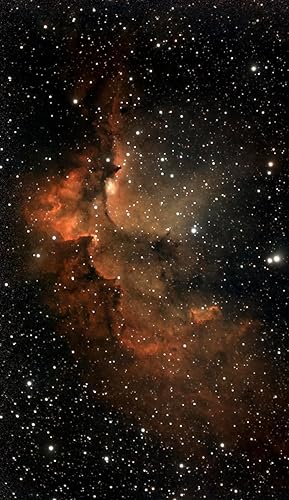
This is a review of the MK127. I was going to wait to do some photographic tests with the scope before writing a review, but I have an import *customs and tariff note* - on Saturday morning I got a message from Amazon that my shipment was on hold and I needed to contact DHL. DHL customer support was closed until Monday. On Monday morning I contacted DHL and all was well. The shipper had paid the duty. The scope arrived Monday afternoon, 4 days early. I unpacked the scope. The build quality was top notch - very metal and very sturdy. It felt heavy compared to my C5 so I weighed it. It weighed 6.6 pounds. I checked my C5; it actually weighed 5 pounds. I got a 5 pound weight to check the scale - 5 pounds exactly. I used a high power flashlight to peer into the scope. A little dust on the inside of the corrector, but quite clean. There was one small dust spec on the primary mirror otherwise clean. I measured the central obstruction - 1.5” working out to 30% CC. Very good. It was late in the day so I put on a good quality 45 degree erecting finder, aimed at a bird feeder 50 yards away, and inserted a 25mm Plossl eyepiece. I examined a female cardinal. Feather details with subtle shading differences were clear and sharp. I was optimistic about the night. I put on the reducer and took some shots with my 4/3 mirrorless camera. The pictures looked good edge to edge. I removed the camera and added my T to 1.25” adapter (I will use that with my 715C and my 585C cameras.) I tried a star diagonal and an eyepiece. It would not come to focus. I’m not surprised but a bit disappointed because on occasion I do use a corrector/reducer with my C5 visually to get a wider field. When darkness fell I used an artificial star at 60 yards to check the collimation and do a star test. The collimation was perfect. I used a little masking tape to hold on the tri-Bhatinov mask that I use with my C5 to verify that. I was prepared for what to expect with a star test by the excellent web site on telescope optics by Vladimir Sacek. He explains that the 6th order spherical aberration can be canceled with the 4th order spherical aberration for objects in focus with a Maksutov design. This leads to the inside and outside focus patterns to look different even in a diffraction limited scope. Bearing that in mind the star test was very good. Finally it was dark enough to see stars. I went directly to Izar in Bootes, a tough double. The main star is magnitude 2.5 and the second star is only 4.8, and they are close - only 2.85 arc seconds. In a small scope the first diffraction ring of the main star can cross the dimmer star. I could split the stars at 120 power. The split was very clear at 240 power. Next I check epsilon Lyra (the double double.) At 60 power I can separate epsilon 2, but I’m not sure with epsilon 1. At 120 power both pairs are cleanly split. Everything is crisp and clear. It is now 10 PM August 4th (for those that want to figure out the exact moon phase.) Seeing is good, but the moon is still a little low. The view of the moon is great with no color fringing. I then went right to 240 power on Plato. I could make out 3 light looking craters on Plato’s floor. This is excellent performance. I continued my visual test at 2:30 AM. The transparency has turned pretty bad with all the stars looking dim. The seeing was above average so I went to Saturn. It was dimmer than it should be because of the high thin clouds which aren’t all that thin. The planet, rings and 3 moons are clear and sharp at 120 power. I moved to 240 power and everything is still clear and very sharp. I stepped up to 300 power and still very sharp. The view was a bit dim at 300x because of the high clouds, but very pleasant. I can’t wait for a better night. I switched to Neptune. Nice color but dim again because of the sky so I didn’t bother to increase magnification and look for Triton. Lastly I moved to the Double Cluster in Persius. It almost fits in the view. The stars looked good edge to edge. It was not the fantastic view I usually get because the transparency is so bad, but the stars are sharp. Visually, I can’t imagine a 5 inch scope of any kind that could beat this one to the point where my eyes could see the difference. It is definitely a keeper. Edit Sept. 5, 2025 I finally got a chance to shoot a deep sky object with the MK127. The target was the Wizard Nebula using the included focal reducer making the F-ratio 7.7. The guide scope was 40mm, the camera was a 585C bringing the total weight of the scope and everything to 8.2 pounds. I shot 240 thirty second RGB subs with a wideband (UHC) filter and got 231 without any star trails or satellite trails. The final stacked image showed some non-round stars in the far left extreme bottom and top, but I checked the subs and some had perfectly round stars at these extremes so I think it was a slight guiding problem and there were probably a few subs that should have been rejected. All in all I was very happy with the result. Edit Sept 28, 2025 Traveling overseas I brought the MK127 and my travel mount, an AZ-GTi. In equatorial mode I shot the Helix Nebula. Guiding was sketchy. I shot 15 second subs to avoid visible field rotation. I only got about 1 good exposure out of every 8. The result is a stack of only 55 exposures. I probably shouldn't have posted the picture except I get such a kick out of how versatile this scope is. Edit November 23 Still traveling overseas I got an EQ base and a counterweight kit for my AZ-GTi mount and I reshot the Helix Nebula. I used 30 second exposures and I was able to get 76 good subs out of 142. I updated the photo. ... show more
Reviewed in the United States on August 5, 2025 Reviewed in the United States on August 5, 2025 by MPB

  • Svbony quality. 105MK and 127MK Svbony quality. 105MK and 127MK
Size: 105mm Aperture
This svbony 105 maksutov with a celestron x-cel lx 5mm eyepiece which gives 272x magnification, very good for the Moon and can give a fairly clear image of Saturn despite quite a bit of light pollution. Obviously you need to lower the magnification to a comfortable 120 to 150 to maintain vivid color in planetary. Considering it's only 105mm aperture, it shows quite a noticeable difference compared to a startravel 120, thanks to the absence of chromatic aberration. Photos taken with the phone on the eyepiece and slightly fixed with the basic program. It also shows a very sharp image with binoviewers during daylight. Updated: In high light pollution Parts used: svbony 18mm ultra flat field svbony 15mm swa svbony 6mm red svbony 30mm spl split double stars. Algieba Mizar Zeta Aquarii Neptune identifiable as a small blue dot with 30mm. With higher magnification the bluish tone was lost. Moon with binoviewers, recommended. And it was excellent in live view on the Moon and Jupiter. The mount used was a SW AZ GTI and an SV 305 camera. Update July 2/2025 for 127MK At the moment, I can only say that the quality of this 127MK is excellent. Everything is smooth, even its metal cover. It's magnetic and very easy to remove or keep in place. I hope to conduct a test and comparison soon, as well as evaluate the collimation process if necessary. I also hope to have the time and weather to add good photos with the svbony 705C. Comparison of the SV48P 102mm Achromatic and the Mak 127. July 8, 2025 First of all, the Mak arrived perfectly collimated. With the moon practically full, the SV 48P, using the SV231 and Moon filters at the same time, and the SV 135 zoom lens, showed good image quality at different magnifications. At the same time, and after both telescopes had acclimated outdoors, the Mak 127 showed a more pleasant image and better details for my eye, although the brightness was very similar at similar magnifications. An ED or apochromatic refractor would probably have been a better competitor, although I don't think by much. After a few hours and without the moon, and knowing what to expect from the refractor (see review on SV48), I simply switched the BinoViewers to the Mak 127. 150x. Brighter and more colorful view of the planet. 180x. More pleasant and sharp view. 225x. The view is still clear and very similar to 180x, only larger, obviously. For me, around 200x is where Saturn starts to become a pleasure to observe. 300x. A forced but sustainable view. The best view of Saturn I've ever experienced was at 400x with Binoviewers on a 200mm Dobsonian. Color and detail. I could almost touch it. The one I got today with the Mak 127 was the second best. Conclusion for now: The best grab-and-go telescope for viewing planets for me is the Mak 127. Although I haven't experimented with the reducer yet, which could make the Mak the most versatile and easy-to-use telescope on my SW AZ-GTI mount. ... show more
Reviewed in the United States on June 15, 2023 Reviewed in the United States on June 15, 2023 by CI

  • A good budget mak A good budget mak
Size: 105mm Aperture
Quality construction, all metal parts and focus knob is super smooth. Paint finish on the tube is nice. I have it paired with a sky watcher AZ Gte mount and so far it has been impressive. My only complaint is that there appears to be dust or specks of mirror finish between the objective lenses. I tried to take a picture to show that the dust is inside, not outside, you can see the reflection of the outer lens with the dust behind it. I don’t know if it affects viewing but it doesn’t look good from the front. ... show more
Reviewed in the United States on December 21, 2023 Reviewed in the United States on December 21, 2023 by Johnny

  • Excellent portable telescope.
Size: 105mm Aperture
This is a wonderful, portable, and easy to use telescope. Very well made and easy to mount on a vixen style mount or photo tripod. The scope weighs under 5 pounds and requires an appropriately stable situation. The image quality is excellent. Packaging is very good. Remember that this is an optical tube only..no eyepieces, finder, 45°adapter, or mount. ... show more
Reviewed in the United States on June 12, 2026 by Jim Stanis

  • Great Mak, hidden cost
Size: 127mm Aperture
Great 127 mm Maksotov. Sharp images, course and fine focus are a great plus. I have a 127mm Celestron mak, but wanted this for the ability to use a focal reducer for imaging. couldn't resist the low price but be warned, I had to pay an extra $25 to DHL prior to delivery.
Reviewed in the United States on April 10, 2026 by Bill M

  • Very good scope would recommend.
Size: 127mm Aperture
This is my second telescope and it has held up very well. Good views of Jupiter, the moon, stars, and decent views of other planets like Saturn. Have had little luck in viewing nebula and other non planetary objects but this scope is not designed for those observations. My scope came perfectly aligned and ready to go. ... show more
Reviewed in the United States on April 22, 2026 by Ryan

  • Nice telescope but…
Size: 105mm Aperture
I have owned this telescope for almost three months now. This is my second unit. The first one was out of collimation and impossible to collimate. I have collimated Maksutovs before. This one had some optical components alignment problems. It was sent back and two weeks later the second one arrived. As soon as it was removed from the box I heard a rattle. It was coming from a loose meniscus lens. The retaining ring had been left too far out. This could not be from transportation alone. I placed the telescope upright with the meniscus looking up, tapped on the sides to make sure that it was in its place on the cell and tightened the retaining ring just enough for a snug fit. Everything seemed alright. On first light I did a star test and again this unit was also out of collimation. This time I was able to properly collimated using a star at high power. After collimation an analysis of the in and out of focus star images showed no astigmatism or pinched optics but it was definitely showing more spherical aberration than it should. The in focus star image revealed a good Airy disc surrounded by a bright first diffraction ring but also secondary diffraction rings that were brighter than they should. In other words too much defocused light around the star indicating spherical aberration. Another reviewer placed defocused star images that show the problem. The planet Jupiter showed the atmospheric bands but I noticed a lack of crisp focus. This was under excellent seeing conditions with Jupiter at a high altitude in the sky. I live at 18 degrees north latitude. I carried on observations of Jupiter as long as I could until it was too low in the western sky. In all the observations the lack of crisp focus was there. On the moon the telescope did a good job but there was this lack of crisp focus that you expect in a Maksutov design, a telescope for the planets and moon. On double stars the optics were more forgiving but that fuzzy unfocused light was there. I own other Maksutovs that are more or less similar to this one in terms of cost and performance. Usually I can push them to a bit higher magnification than what is recommended and definition on extended objects like the planets and moon holds quite well. On the MK105 definition degraded rapidly when nearing the maximum recommended magnification of 200x with premium orthoscopic eyepieces. Regarding the telescope overall construction, it is excellent with a good solid metal structure and a very smooth focuser devoid of image shift. This is a big plus. Collimation screws are easily accessible and covered with a plastic plug. The meniscus lens dust cover is adequate but should fit more firmly. The dovetail is good enough for most mounts and the two finder or accessory mounts are very nice. For deep sky objects in which low power is usually utilized, the MK105 performs well but at f/14 this is a telescope primarily for planetary and lunar observations and imaging. With just a little more spherical aberration correction this telescope would be a champ among other 100-105mm Maks. This is my second sample of the MK105 but I am not the only one that has noticed the spherical aberration. I wrote SvBony about this and they mentioned passing this information to their optical technicians. All of my other SvBony products have shown superb quality. This is their first Maksutov design. I am sure that they will resolve this problem if they have not done so already. I have been in this hobby for 58 years and know my way around most types of telescopes. ... show more
Reviewed in the United States on March 16, 2024 by Maria Laffitte

  • Easy to use for astrophotography Easy to use for astrophotography
Size: 105mm Aperture
Very nice scope really well built and easy to use for astrophotography
Reviewed in the United States on May 26, 2026 Reviewed in the United States on May 26, 2026 by Stephen M collins

Can't find a product?

Find it on Amazon first, then paste the link below.
Checking for best price...