
Search  for anything...

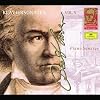
Complete Beethoven Edition, Vol. 5: The 32 Piano Sonatas

  • Based on 11 reviews
Condition: Used - Good
Checking for the best price...

Buy Now, Pay Later


As low as $8.47 / mo
  • – 6-month term
  • – No impact on credit to apply
  • – Instant approval decision
  • – Secure and straightforward checkout

Ready to go? Add this product to your cart and select a plan during checkout.

Payment plans are offered through our trusted finance partners Klarna, Affirm, Afterpay, Zip, Apple Pay, and Google Pay. No-credit-needed leasing options through Acima may also be available at checkout.

Learn more about financing & leasing here.

Selected Option

Free shipping on this product

This item is eligible for return within 30 days of receipt

To qualify for a full refund, items must be returned in their original, unused condition. If an item is returned in a used, damaged, or materially different state, you may be granted a partial refund.

To initiate a return, please visit our Returns Center.

View our full returns policy here.


Availability: Only 1 left in stock, order soon!
Fulfilled by the_book_community

Arrives Aug 29 – Sep 3
Order within 23 hours and 29 minutes
Available payment plans shown during checkout

Protection Plan Protect Your Purchase
Checking for protection plans...

Format: Beethoven: The Piano Sonatas (Complete Beethoven Edition Vol.5)


Description

Product description This item is ready to ship Wilhelm Kempff was the premier German pianist of the postwar period, so it's no surprise that he was considered one of the supreme interpreters of Beethoven. He recorded complete sets of the sonatas and concertos twice, and just about all the rest of the chamber music with piano as well. A classicist by nature, his approach to Beethoven was clear and poised rather than impulsive, but never lacking in sheer power or virtuosity when necessary. His last cycle of Beethoven sonatas is rightly regarded as his musical testament. Even if the mono recordings offered a few more exciting moments in a couple of works, you can't go wrong here--there isn't dud in the lot. --David Hurwitz

Product Dimensions ‏ : ‎ 5.59 x 5.12 x 2.28 inches; 1.06 pounds


Manufacturer ‏ : ‎ Uni/Deutsche Grammophon


Date First Available ‏ : ‎ December 9, 2006


Label ‏ : ‎ Uni/Deutsche Grammophon


Number of discs ‏ : ‎ 1


Best Sellers Rank: #118,766 in CDs & Vinyl (See Top 100 in CDs & Vinyl) #380 in Classical Sonatinas #3,359 in Chamber Music (CDs & Vinyl)


#380 in Classical Sonatinas:


#3,359 in Chamber Music (CDs & Vinyl):


Customer Reviews: 4.4 4.4 out of 5 stars (11)


Frequently asked questions

If you place your order now, the estimated arrival date for this product is: Aug 29 – Sep 3

Yes, absolutely! You may return this product for a full refund within 30 days of receiving it.

To initiate a return, please visit our Returns Center.

View our full returns policy here.

  • Klarna Financing
  • Affirm Pay in 4
  • Affirm Financing
  • Afterpay Financing
  • Zip Pay in 4
  • Financing through Apple Pay
  • Financing through Google Pay
Leasing options through Acima may also be available during checkout.

Learn more about financing & leasing here.

Top Amazon Reviews


  • Wilhelm Kempff Plays the Beethoven Piano Sonatas
Beethoven's "Daybook" includes the following famous entry: "The starry heavens above; the moral law within -- Kant!" Beethoven was alluding to Kant's statement in the "Critique of Practical Reason" of the two things that filled him with awe. But, in a simple way, Beethoven's statement could be read to show two related ways of understanding his music: the first as heroic, heaven-storming and outward directed and the second as inward, reflective, and meditative. Some of Beethoven's music can be seen as occupying one or the other end of the polarity while much of the music somehow occupies both ends. The same holds true as a rough approach to the interpretation of Beethoven's music -- including the 32 piano sonatas. Some performers emphasize the dramatic, rugged and virtuosic characteristics of the music. Other performers emphasize the music's inward, introspective qualities. The great German pianist Wilhelm Kempff's classic recording of the complete piano sonatas is clearly within the latter approach. Kempff (1895 -- 1991) recorded the complete Beethoven sonata-cycle twice, the first in the 1950's and the second in the 1960's. The latter version was reissued on eight CDs by Deutsche Gramophonne as part of its 87-CD Complete Beethoven Edition. I had the original version on LP and purchased the CD set when LPs became obsolete. I recently had the opportunity to relisten to Kempff's performances in their entirety. Kempff's readings of the sonatas are highly personal and introspective. His tempos tend to be slow and fluid, the pedal is used a great deal, phrasing is highly legato, and the volume is subdued and restrained. This is a metaphysical thoughtful reading of Beethoven which probes within. It is a moving and convincing way of rendering the sonatas; and I came away from my experience with a renewed devotion to this music. I have attempted about half of the sonatas myself over the years on the piano. Beethoven's sonatas date from his youthful days in Bonn before his 1792 move to Vienna (the two sonatas of opus 49) to about 1822 (opus 111). Thus they occupied him for almost the entirety of his creative life. In listening to this complete set, the listener can follow Beethoven's development essentially chronologically and learn more first-hand about the sonatas than can be gained from reading many studies. Separate from a chronological approach, listeners interested in a complete set of the sonatas will probably have some familiarity with some of the better-known named sonatas, such as the "Pathetique", opus 13, the "Moonlight", opus 27 no. 2, the "Waldstein" opus 53 or the "Appassionata" opus 57. After falling in love with some of these works, many listeners will want to explore the entire set of 32 sonatas. Kempff brings his own personal, introspective readings to each of these familiar works. He does best, I think, with the rondo finale of the "Waldstein", with the "Moonlight" and with the two final movements of the "Tempest" sonata, opus 31 no. 2. His readings of these works on the whole will offer fresh insight into these great sonatas. I think the greatest attraction of this set is the opportunity it affords to explore some of Beethoven's less frequently performed works. Again, Kempff is at his best in works of an introspective character. Thus, those coming to the sonata cycle for the first time will enjoy his performances of the opus 26 sonata, of opus 78, 79, and 81a ("Les Adieux) of opus 90, and of opus 101, 109, and 110. Opus 90, 101, and 109 are among my favorites of the cycle, and Kempff plays them soulfully and beautifully. There is yet another group of sonatas that are still less well-known but receive excellent readings on this set. This group includes two early sonatas, opus 2 no 3 and opus 7, the opus 22 sonata, opus 27 no. 1 (the companion to the more famous "Moonlight"),opus 31 no. 3, the enigmatic opus 54, and, of course, the "Hammerklavier" sonata and the final sonata, opus 111. Each listeners choices and favorites among the 32 will vary and change with time and repeated hearings. This collection is an excellent introduction to all of them. There are many recordings of the set of 32 sonatas and many approaches to the interpretation of Beethoven. I have lived with my set of Kempff for a long time and still am moved and inspired by his playing of this inexhaustible music. Listeners wanting to get to know this great body of work will find much to cherish in these performances by Wilhelm Kempff. Robin Friedman ... show more
Reviewed in the United States on August 16, 2005 by robin friedman

  • Dollar for Dollar, the Best Beethoven Sonatas on CD
Beethoven's piano sonatas were one of humanity's great achievements. They have been recorded by many pianists including Artur Schnabel, Alfred Brendel, Richard Goode, and John O'Connor--and nearly every pianist of note has recorded at least a few of the most popular sonatas. What makes the Kempff set work best for me is the lack of a dogmatic, cookie cutter approach to the music. Kempff approaches each piece as a masterwork in its own right. The tempos are more sensible than those adopted by most other pianists, particularly in the slower movements. For example, in the Hammerklavier Sonata, most pianists cannot resist the urge to play the Adagio almost as a Largo--ignoring the fact that such a tempo would have made the movement incomprehensible on a piano of Beethoven's time--which had a quick tonal decay. Speaking of tone, Kempff has an especially beautiful sound--a product of his 19th century training. The phrasing is more flexible than today's "red light, green light" stop and go approach, and Kempff, unlike so many of today's pianists, never lets musical point making get in the way of the big picture, structually. Although Kempff was getting along in years when these recordings were made--the 1960s--he is fully up to the technical hurdles these sonatas contain. The only disappointment on this set is in the "Appassionata" Sonata, where Kempff's clear headed approach does not suit this rage filled piece. For that particular piece, it's best to go with Richter's RCA recording. On the whole, this is the best set of Beethoven Sonatas currently available on CD--and it's at bargain price! ... show more
Reviewed in the United States on March 16, 2001 by Hank Drake

  • A great set, but...
the mono set is clearly preferable, both as to performance and sound. All the attributes ascribed to the stereo set are present in even greater abundance in the mono set from the early 50s and the sound is more natural and warm than here. Problem is, it is difficult to find now. But do seek it out. This stereo set is probably still a "5" on an absolute scale, but the earlier set is just that much better. ... show more
Reviewed in the United States on May 18, 2000 by "s_molman"

  • The Definitive Beethoven Sonatas
Kempff recorded the complete cycle of Beethoven sonatas no fewer than three times. This, his last, is quite possibly the most refined set of Beethoven sonatas as far as overall consistency and polish. Many other sets show great promise in either the most popular sonatas or else in one particular period. (Richard Goode's late sonatas, for instance, are stellar, but some of the earlier works come across as dry and pedantic). From the Haydn-esque op. 2, to the Sonate Pathétique, the thunderous Hammerklavier and intense opp. 109, 110 and 111, all of the sonatas are executed with extreme clarity, authority and thoughtfulness. (Actually, the clarity is one of my few complaints in this set as occasionally passages feel a little detached, but rarely). Even the two "easy" sonatas of op. 49 are excellent; intermediate student pieces no longer. Some of the slow movements are taken a little faster than I would prefer, although there is hardly ever a sense of urgency. Kempff's dynamic range and large capacity for every imaginable articulation is also exploited to its very finest. There is no clearer Waldstein available, period. Even the so-called "warhorses" like the Moonlight are not tiresome in this set; some other recordings sound like the pianist has played them too many times and is sick to death of it, but you will never feel that here. For freshness and detail in all of these monuments of the piano sonata, this is the set to have. ... show more
Reviewed in the United States on May 11, 2000 by Thomas B Dawkins

Can't find a product?

Find it on Amazon first, then paste the link below.
Checking for best price...