
Search  for anything...

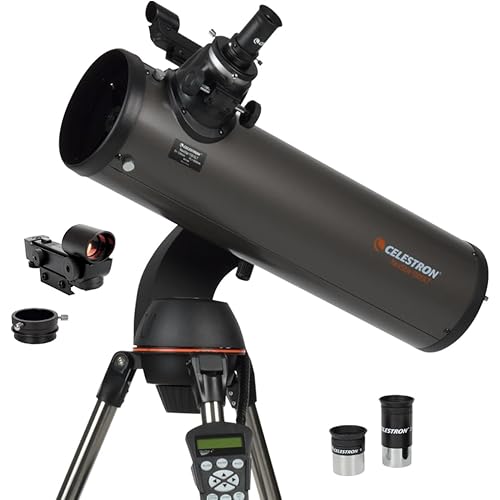
Celestron - StarSense AutoAlign Telescope Accessory, Black & SkyPortal WiFi Module - Control Your Celestron Computerized Telescope via Smartphone & Aux Port Splitter, Black (93919)

  • Based on 0 reviews
Condition: New
Checking for the best price...
$651.60 Why this price?
Save $1.30 was $652.90

Buy Now, Pay Later


As low as / mo
  • – Up to 36-month term if approved
  • – No impact on credit
  • – Instant approval decision
  • – Secure and straightforward checkout

Ready to go? Add this product to your cart and select a plan during checkout.

Payment plans are offered through our trusted finance partners Klarna, Affirm, Afterpay, Apple Pay, and PayTomorrow. No-credit-needed leasing options through Acima may also be available at checkout.

Learn more about financing & leasing here.

Free shipping on this product

Returnable until Jan 31, 2026

To qualify for a full refund, items must be returned in their original, unused condition. If an item is returned in a used, damaged, or materially different state, you may be granted a partial refund.

To initiate a return, please visit our Returns Center.

View our full returns policy here.


Availability: In Stock.
Fulfilled by Amazon

Arrives Monday, Feb 16
Order within 9 hours and 10 minutes
Available payment plans shown during checkout

Protection Plan Protect Your Purchase
Checking for protection plans...

Features

  • Product 1: LEVEL-UP YOUR CELESTRON TELESCOPE WITH STARSENSE AUTOMATIC ALIGNMENT TECHNOLOGY: StarSense AutoAlign attaches to your Celestron computerized telecsope and automatically aligns the GoTo system in about 3 minutes with no user input needed.
  • Product 1: GREAT FOR BEGINNERS: Astronomy newbies can let the telescope align itself without the need to identify or locate a single star in the sky. Spend less time aligning and more time having fun!
  • Product 1: ADVANCED MOUNT MODELING: Advanced observers and astroimagers will love using StarSense AutoAlign to align on numerous stars across the sky for extremely precise GoTo pointing accuracy.
  • Product 2: WIRELESS TELESCOPE CONTROL: Align and control your telescope using your smartphone or tablet with Celestrons free SkyPortal app for iOS and Android.
  • Product 2: 100,000 plus CELESTIAL OBJECT DATABASE: Tap any celestial object you see in the sky to identify it instantly. Tap again and your telescope slews to that object, centering it perfectly in the eyepiece.
  • Product 2: SKY TOUR FEATURE: SkyPortal automatically generates a list of all the best stars, galaxies and nebulae currently visible based on your exact time and location.
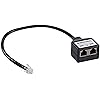
  • Product 3: Create an extra auxiliary port on your Celestron computerized mount with this AUX Port Splitter
  • Product 3: Two auxiliary ports are required to use accessories like the Celestron StarSense Auto Align on telescopes with only one built-in AUX port
  • Product 3: Adapter has two 6-pin auxiliary outputs and one 6-pin input

Description

Celestron - StarSense AutoAlign Telescope Accessory - Automatically Aligns Your Celestron Computerized Telescope to the Night Sky in Less Than 3 Minutes - Advanced Mount Modeling, Black Compatible : Advanced VX , Astro Fi , CG-5 (with CG-5 Aux. splitter) , CGE , CGE Pro , CGEM II , CGEM, CGEM DX , CGX-L , CPC , CPC DX , NexStar Evolution , NexStar GT (2015 models and newer with Aux. splitter) , NexStar SE Series , NexStar SLT , SkyProdigy , . Not Compatible : NexStar i Series Ultima 2000 , NexStar GPS , Early generation GoTo mounts (such as Compustar) etc. Celestron - SkyPortal WiFi Module - Control Your Celestron Computerized Telescope via Smartphone - Telescope Wi-Fi Accessory Celestron's SkyPortal WiFi Module turns your smartphone or tablet into your own personal planetarium and observatory. Simply plug the WiFi module into your telescope’s hand control or AUX port and connect to its wireless signal with your device. Instantly, your device becomes a wireless hand control for your telescope, guiding you through the alignment process and slewing to any celestial object with a simple tap. As SkyPortal WiFi Module slews your telescope to an object, you can listen to hundreds of included audio descriptions on your device, which explain the history, mythology, and key features of the most popular celestial objects. Not sure what to observe? Select Tonight’s Best in the search menu and the SkyPortal app will display a list of the best objects to view based on your exact time and location. There’s no need to input GPS coordinates or set the time and date—SkyPortal WiFi takes this information directly from your device. SkyPortal WiFi Module makes a great gift for telescope users of all ages and skill levels, from kids to advanced users. Take your family on a guided tour of the universe with SkyPortal WiFi! Abou the Celestron SkyPortal App Celestron’s SkyPortal WiFi Module works with our full featured planetarium app, SkyPortal. Available free on the Apple App Store and Google Play, SkyPortal is your key to the universe—with or without SkyPortal WiFi Module. Developed in collaboration with the experts at SkySafari, SkyPortal offers an intuitive user interface with a robust database of more than 100,000 celestial objects. You can even plan your observing session before you set up your telescope. Find out when transits and other notable celestial events will occur—up to 100 years into the future. Compatibility Information SkyPortal WiFi Module is compatible with the following Celestron mounts: Advanced VX | Astro Fi | CG-5 (with CG-5 Aux. splitter) | CGE | CGE Pro | CGEM | CGEM DX | CGEM II | CGX | CGX-L | CPC | CPC Deluxe HD | LCM | NexStar Evolution | NexStar GT (2015 models and newer with Aux. splitter) | NexStar SE Series | NexStar SLT | SkyProdigy SkyPortal WiFi Module is NOT compatible with the following Celestron mounts: NexStar i Series | NexStar GPS | Ultima 2000 | Early generation GoTo mounts (such as Compustar). Celestron Aux Port Splitter, Black (93919) You can easily add a second auxiliary port to your Celestron mount with the Celestron AUX Port Splitter. This parallel adapter plugs into the AUX or hand controller port of your computerized telescope and splits it into two, allowing you to connect the Celestron StarSense AutoAlign, or another peripheral device, to your telescope and still keep the hand controller plugged in.

Brand: Celestron


Model Name: StarSense AutoAlign


Eye Piece Lens Description: Celestron eyepiece lens with 6-pin auxiliary output


Focus Type: Manual Focus


Power Source: [SAME]


Finderscope: Reflex


Compatible Devices: Smartphone, Tablet


Lens Coating Description: [Descriptive Lens Coating]


Zoom Ratio: 50


Manufacturer: Celestron


Date First Available: July 19, 2023


Manufacturer: Celestron


Frequently asked questions

If you place your order now, the estimated arrival date for this product is: Monday, Feb 16

Yes, absolutely! You may return this product for a full refund within 30 days of receiving it.

To initiate a return, please visit our Returns Center.

View our full returns policy here.

  • Klarna Financing
  • Affirm Pay in 4
  • Affirm Financing
  • Afterpay Financing
  • PayTomorrow Financing
  • Financing through Apple Pay
Leasing options through Acima may also be available during checkout.

Learn more about financing & leasing here.

Top Amazon Reviews


  • Amazing device!
Style: telescopes
I apologize for the length of this review, but I thought the details might be helpful for folks interested in this awesome little gadget. My Celestron StarSense arrived last week, and I’ve had a couple of chances to try it out. I’ve used the device exactly twice, but I think my experience may provide some useful information to others who are thinking of purchasing this device. My focus is on astrophotography and my rig is 100% portable on a tripod, so alignment is a frequent chore. I held off buying the device because I had read that it had severe issues integrating with Celestron’s native polar alignment process, ASPA (All-Star Polar Alignment). Once those issues were corrected by Celestron and I read a positive review of the device in Sky and Telescope, I went ahead and bought it. So far, I’m very glad I did. After unboxing, I immediately updated the firmware on the StarSense camera and the included hand controller. Be sure to do this – as I mentioned, Celestron fixed some major problems with the software since the release of the device, and you’ll want to be sure to capture these. Be sure you have the appropriate cables and adapters ready for this. Once the firmware was updated, I attached the SS camera to my scope. I have a non-Celestron OTA, but a Celestron Advanced VX mount. This was one point of annoyance with Celestron. They provide two mounting methods – a super-solid one for Celestron OTAs, and a not-so solid one for everyone else. I was mounting to a dovetail plate, and it was annoying that I couldn’t use the more solid method just because Celestron had made the mounting holes too narrow. If they had just provided a couple of holes at the standard mounting sizes they could have given folks a lot more options. Left with the secondary mounting method, I was glad I had an extra mounting base available, because Celestron doesn’t provide one with the unit (they assume you’re replacing your finderscope with the SS camera). I sacrificed my mounted laser pointer in favor of the SS camera and continued. If you have a single finder\guider and no other mounting base available when the unit arrives, you’ll be waiting for Amazon to deliver before you can use the unit. After setting up outside and doing a rough polar alignment with a polar scope, I turned on the mount with the new HC and SS camera attached. The first thing the HC does is search for the SS camera, which it found with no problem. At startup, the HC gets a little “bossy” – there doesn’t seem to be a way to start up without going through the SSA (StarSense AutoAlign) process before doing anything else. I’m used to entering the Date\Time and location, but that didn’t seem to be an option at startup. You can press the Menu button to add those details, but I didn't know that at the time. I let the SSA do its thing, and it slewed to four different sections of the sky. I was in my side yard, where the house and trees block much of the horizon, and light pollution is fairly severe. I had also neglected to turn a bright flood light attached to my roof off, just to keep things interesting. I started quite early, and I could only see 5-10 stars visually. I noticed that the HC was reporting that it was finding dozens of stars in areas of the sky where I still couldn’t see any. After a couple of minutes, the SSA wrapped up and reported success. At this point, I was 90% certain that the device hadn’t actually done anything – it was just a little too quick and easy. I told the HC to find Albireo. There it was – off center, but within the FOV of my 20mm eyepiece. Not bad. I told it to find Antares in the south. There it was. Whoa. At this point, Celestron has you resolve the error between the SS camera and your telescope by performing a centering procedure. This is done in the HC’s software and doesn’t involve adjusting the camera physically, which was a relief – I think I’ve had enough “dance of the thumbscrews” for one lifetime. The HC has a process for this that involves centering the star in your eyepiece and then confirming that it is centered with the HC. This was simple enough, but the (printed) instruction manual actually has a mistake in it about the steps in the process. It's a good idea to just download the (corrected) online manual if you buy this device. After the centering procedure, the HC tells you that you will need to repeat the SSA process. At this point it was a little unclear whether it expected me to simply run the process again or actually reset my mount to the alignment marks and start over. Thankfully, the former seemed to work just fine. Now, I had done all of this before entering the date, time or my current location. It seemed wrong to move on to polar alignment without entering that data, but then again – does the HC need to know the time or location if it knows the positions of all of the stars, especially if you’re not targeting solar system objects? The HC certainly didn’t seem concerned about it – I had to go menu surfing to even find where to enter the date\time\location – I was never prompted for the information. I went ahead and entered the info and the HC told me to perform SSA again, which I did. The polar alignment process was simple. ASPA normally has two steps – the first where you center a star using the direction buttons on the HC, then the second when you’re asked to center the same star using the mount’s ALT and AZ alignment knobs. With SSA, the first step is done automatically and the user is left with the ALT and AZ adjustments. After the centering\calibration process and ASPA, any stars or objects I selected were perfectly centered in the reticle eyepiece. I spent some time selecting objects near the four points of the compass and just being amazed when they all came up dead center. I started guiding and did some test shots using the CCD – I had perfect pinpoint stars for 12 minute exposures. That night I took 14 12-minute exposures of the Pelican Nebula and had some of the sharpest, roundest stars I’ve ever imaged. Long story short - ASPA was very easy and very accurate. On the second night out, I was just doing a rough alignment so I could take pictures of the moon with my bigger scope. I simply took the device off my refractor and put it onto my SCT, put the OTA on the mount, hooked it up, turned it on and let it align. I started even earlier that night, with only a few stars visible to these middle-aged eyes. No re-centering or fine-tuning, no entry of date or location, no polar alignment. A couple of minutes later, the SSA was done and the GOTO put the moon in the FOV of my 20mm eyepiece on the first try – this is with a 10” SCT – the FOV was less than a moon-width. I also tried several stars and they were all close to center, despite a different OTA and not performing a new centering\calibration procedure. The bottom line: this device exceeded expectations on its first two nights out. I’d say if you have a portable setup this is a no-brainer purchase. Pros: Easy setup (other than the firmware update); easier telescope alignment; simplified ASPA; more accurate polar alignment (at least in my experience). Works in twilight, so you can start your alignment earlier. Works despite trees and\or buildings obstructing large parts of the sky. Fast. Cons: Mounting brackets aren’t all that they could be (see above). Finder mount base not included. New HC has small-print display by default – can be hard to read especially from a distance. ... show more
Reviewed in the United States on August 27, 2015 by anthony_1138

  • This is a great technology, but it suffers from insufficient troubleshooting documentation
Style: telescopes
This is a great technology. I attached it to a Celestron 9.25" NexStar Evolution. It works very well. However, Celestron WiFi doesn't. When I tried to set up StarSense using Celestron WiFi and the SkyPortal app on iPhone (not iPad), the StarSense alignment process would align, then lose connectivity, then need to be aligned, then lose connectivity, then freeze. I have been reading several online forums for amateur astronomy, and the Celestron WiFi combined with the SkyPortal app freezing the phone is a common problem. Some users have wireless providers that use "smart" WiFi apps to bounce back and forth between WiFi and Cellular Data, shutting off WiFi on disconnect, and thereby "improving" battery life. These apps appear to conflict with SkyPortal and Celestron WiFi. I have no such app, but I did have tethering enabled, and this probably does pretty much the same thing to SkyPortal as the smart WiFi apps. I'll give it a try again with tethering disabled, but after 5 weekends of trying to get Celestron WiFi to work with SkyPortal (I also tried with SkySafari 5 Pro, where I can save and restore all kinds of settings, but SkySafari 5 Pro is just as bad as SkyPortal with respect to losing connectivity and freezing) I am pretty fed up with SkyPortal. None of this compatibility information is available from the Sky Safari folks, who are contracted by Celestron, nor is it available from Celestron. You have to go out and dig it up yourself. Celestron should have a better knowledge base, along with better unit testing and quality assurance. I know they aren't software developers, and they don't charge for SkyPortal, but I also can't charge them for all of the time I spent trying to get SkyPortal to work with StarSense. Take a lesson from Apple: to sell your hardware, you need easy-to-use software that actually works. I have found the StarSense hand controller much easier to use than SkyPortal. StarSense will do alignment provided it can find enough stars. I have never tried to align on solar system objects, and I don't even know if that is possible with StarSense. You will still need to calibrate StarSense after you've aligned it, which essentially tells StarSense how misaligned the camera is with respect to the telescope aperture. In theory, you should be able to remove the camera from the telescope and replace it without recalibration. I have never been able to affix the camera to the telescope so that recalibration can be skipped. It only takes a few seconds, but afterward, you have to align again. With the hand set, this is about a 5 minute process: align, calibrate, align. With the SkyPortal app, you may never complete this process. If StarSense can't find enough stars, use the NexStar controller together with geolocation information, sky maps, and a star finder. I know you can solar system align NexStar, because I do that in my front and back yard several nights a month using the moon or a planet, and I can even align on the sun when I have a white light solar filter attached. StarSense just gets lost in my light polluted neighborhood, with a very busy airport located 6 miles to the south putting all kinds of lights in the evening sky. I'm not sure I would recommend this item for beginning astronomers. For one thing, it costs about as much as a kid's (really nice) starter scope. For another, learning how to read and use a sky chart - and compass - is not a bad thing. It's also a good thing to know how to align your telescope to a finder scope, and how to use the finder scope to point at objects in the sky. Since StarSense gets the information it needs directly from the telescope hardware, you also don't need to know what kind of mount you have, which means that you don't know all that you can do with your telescope. Lastly, if something doesn't go right in the connection, alignment, and calibration of StarSense, you should be able to swear very loudly, remove the StarSense camera and controller, attach the NexStar controller, cycle power on the scope, and then align it yourself. ... show more
Reviewed in the United States on October 25, 2017 by Bill Allen

Can't find a product?

Find it on Amazon first, then paste the link below.
Checking for best price...