
Search  for anything...

Celestron – Origin Intelligent Home Observatory – All-in-one Astroimaging and Stargazing Smart Telescope – 6-inch RASA Telescope – Fully-Automated GoTo Mount – User-Friendly – iOS/Android Compatible

  • Based on 30 reviews
Condition: New
Checking for the best price...
$4,299.00 Why this price?
Labor Day Deal · 21% off was $5,428.00

Buy Now, Pay Later


As low as / mo
  • – Up to 36-month term if approved
  • – No impact on credit to apply
  • – Instant approval decision
  • – Secure and straightforward checkout

Ready to go? Add this product to your cart and select a plan during checkout.

Payment plans are offered through our trusted finance partners Klarna, Affirm, Afterpay, Zip, Apple Pay, and Google Pay. No-credit-needed leasing options through Acima may also be available at checkout.

Learn more about financing & leasing here.

Free shipping on this product

30-day refund/replacement

To qualify for a full refund, items must be returned in their original, unused condition. If an item is returned in a used, damaged, or materially different state, you may be granted a partial refund.

To initiate a return, please visit our Returns Center.

View our full returns policy here.


Availability: 20 left in stock
Fulfilled by Focus Camera LLC

Arrives Monday, Sep 14
Order within 5 hours and 54 minutes
Available payment plans shown during checkout

Protection Plan Protect Your Purchase
Checking for protection plans...

Features

  • STARGAZING AND ASTROIMAGING REDEFINED: Celestron Origin is an intelligent, all-in-one home observatory that captures stunning views of celestial objects and delivers them to your phone or tablet.
  • REVOLUTIONARY RASA OPTICAL TECHNOLOGY: Patented 6 RASA optical design places Origin in a class by itself. With its large aperture and fast f/2.2 focal ratio, you get unparalleled image brightness and clarity with less exposure time.
  • AI-POWERED ASTROPHOTOGRAPHY: As Origin captures data, built-in AI algorithms automatically stack and process every frame in real-time. Galaxies and nebulae instantly come to lifesharp, detailed, and in brilliant colorall with no user intervention.
  • AUTOMATED SETUP WITH STARSENSE: Once the telescope is assembled, connect to the Origin app and youll be ready to observe in two minutes. Using patented StarSense technology, Origin scans the sky, autonomously focuses, and aligns itself.
  • INTUITIVE APP INTERFACE: The user-friendly Celestron Origin app for iOS and Android offers a simple yet powerful planetarium interface, making it easy to navigate the sky and control the system.

Description

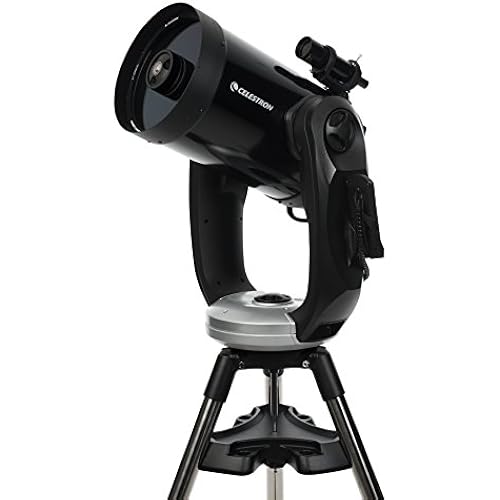
Celestron Origin stands at the forefront of a new era in amateur astronomy, blending stargazing and astrophotography into a single, user-friendly experience. This intelligent, all-in-one home observatory takes the complexity out of traditional telescopes, transforming your backyard into a gateway to the stars. Packed with cutting-edge technology, Celestron Origin captures the beauty of celestial objects and brings them to life on your phone or tablet. With the patented Rowe-Ackermann Schmidt Astrograph (RASA) at its core, Celestron Origin boasts an ultra-fast f/2.2 system and a wide field of view. To take full advantage of the RASA optics, Celestron placed a Sony IMX178 color CMOS sensor on the front cell. The Origin has built-in AI algorithms that automatically stack and process every frame in real time resulting in breathtaking display of celestial objects, rich with color and detail. Setup is effortless. Thanks to StarSense technology, the fully automated initialization procedure is complete in under two minutes. Origin focuses itself, scans the night sky, autonomously aligns itself by matching star patterns overhead to its internal database. The Origin app for iOS and Android offers an intuitive planetarium interface that simplifies navigation through the night sky. Once you’ve chosen a target, Origin slews to it and centers it precisely in the field of view. On the app, switch to the camera view and press Start Imaging to begin capturing 10-second exposures. Origin supports multiple users, allowing streaming, smart TV connectivity, and the instant sharing of your images. If that wasn’t enough, Origin’s mount contains a built-in LiFePO4 battery and integrated WiFi so you can use it anywhere—even without an external WiFi connection. Additionally, Origin features a smart dew prevention system, a filter drawer for 1.25” and 2” filters, and more. Portable and versatile, Celestron Origin redefines the astronomical experience.

Brand: Celestron


Model Name: Origin Intelligent Home Observatory


Optical Tube Length: 24.5 inches


Eye Piece Lens Description: wide_field


Objective Lens Diameter: 15.2 centimeters


Telescope Mount Description: GoTo Mount


Product Dimensions: 24"D x 26"W x 48"H


Focus Type: manual-and-auto


Power Source: AC & Battery


Finderscope: Reflex


Eye Piece Lens Description: wide_field


Mount: GoTo Mount


Focus Type: manual-and-auto


Power Source: AC & Battery


Finderscope: Reflex


Compatible Devices: Smartphone, Tablet


Number of Batteries: 1 Lithium Ion batteries required. (included)


Coating: StarBright XLT


Focal Length Description: 13.2 inches


Field Of View: 1.02 degrees


Additional Features: Real-time streaming, RASA optical design, AI-powered astrophotography, and autonomous initialization


Optical-Tube Length: 24.5 inches


Objective Lens Diameter: 15.2 centimeters


Item Dimensions D x W x H: 24"D x 26"W x 48"H


Item Weight: 42 pounds


Exit Pupil Diameter: 2.73 inches


Brand: Celestron


Model Name: Origin Intelligent Home Observatory


Manufacturer: Celestron


UPC: 050234120999


Number of Items: 1


Model Number: 12099


Manufacturer Part Number: 12099


Frequently asked questions

If you place your order now, the estimated arrival date for this product is: Monday, Sep 14

Yes, absolutely! You may return this product for a full refund within 30 days of receiving it.

To initiate a return, please visit our Returns Center.

View our full returns policy here.

  • Klarna Financing
  • Affirm Pay in 4
  • Affirm Financing
  • Afterpay Financing
  • Zip Pay in 4
  • Financing through Apple Pay
  • Financing through Google Pay
Leasing options through Acima may also be available during checkout.

Learn more about financing & leasing here.

Top Amazon Reviews


  • A time-saving, GAME CHANGER!
I've been engaged in astrophotography for a little over a decade. I've got the big rigs (C14, C8, ED 120, ED 80, 8inch Dob, solar telescope, Maksutov, etc...) and I love all of them! However, my biggest problem has been twofold: 1. A lack of time due to running my own business in the construction field. and 2. Geographically, I live in a bit of a hole meaning I can only get a rough polar alignment with my German equatorial mounts and can't reliably use a guide scope. In other words, I'm limited where I live to about 20-90 second exposures on any of my rigs (depending on scope, weight, etc..) with my DSLR. While that has served me well, it's laborious (my C14 and CGX mount with counterweights is around 225 lbs) and VERY time-consuming (all the exposures, dark calibration frames, processing, not to mention breaking everything down). As such, I've kinda neglected deepsky imaging for the past couple of years and focused more on planetary/solar/lunar as it's much quicker. All of that said, I've imaged more deep sky targets in the past two weeks than I have in the past 5 years!!! Being at F2.2, this optical system (the RASA scope) is photographically very fast. If my math is correct, I'd gather roughly the same amount of light with this system in a 10 second exposure (the default here mostly due to the Alt-Az mount) as I would with an over 4 minute exposure on one of my F10 or F11 systems. Not only is it 25 times faster photographically than some of my other systems (think about the time saved!!!), it's on-board CPU and AI processing auto-stacks and processes the images! Naturally, you can put the raws on a jump drive and process yourself (I did some quick phone post process with what the Origin gave me in my attached pics, but nothing fancy), but I think I'm going to see what this thing can do out-of-the box default before I try to add any to it as it's quite staggering. Given my years and frustrations with the hobby/endeavor, I'd say the 4k price tag, while steep for many, is well worth every bit of currency! Add to the fact that Celestron built this thing with upgrades in mind (software, EQ mount, new camera), and this thing just keeps on giving. I wouldn't say, despite some marketing, that this thing is for complete astronomy beginners. By no means. If you have never operated a telescope and know nothing about the night sky, I'd say buy some binoculars, a star chart, and spend the next 6 months to a year becoming familiar with our place in the cosmos. However, if you know a bit about astronomy but little to nothing about astrophotography, this thing will probably be a breeze for you especially if you're even a little tech savvy and/or have photography experience (like with photoshop, light room, etc...). Perhaps a total beginner would have success with it, but I'm not ready to make that claim across the board. However, if you've spent WAAAAAYYYYYYY too much time like me (time you have in little supply) pursuing deepsky objects and want something quick, intuitive, and, most of all, FUN!!!!, this thing is for you. I absolutely love it and it's made me fall in love with astrophotography all over again!!! ... show more
Reviewed in the United States on April 24, 2025 by John W. Harris III

  • Magnificent!
I am a very young astronomer who developed an interest in astronomy just last year. At first, I was pressuring my parents to buy a pair of Celestron Binoculars. After further research, I decided to buy a $470 SkyWatcher Virtuoso GTI 150P. I LOVED looking at the moon, as well as galaxies. But after getting into astronomy, I looked at these incredible images of deep sky objects, (Especially the Eagle Nebula) wondering how people created these images. So, I put up my phone to Markarian's Chain. Instead of a colorful, highly detailed image, all I got was a low quality blur, and I couldn't even tell the difference between stars and galaxies. So I tried to find my issue. After learning the process of long exposure shots and stacking, I thought Astrophotography would be a very time consuming, hard-to-learn hobby. I wanted to be able to capture a beautiful picture of our night's sky easily in 5 minutes. So that is where smart telescopes come in. I probably looked at 1000 CloudyNights threads from other people. I love to hear other people's perspective on which telescope they prefer the most. After watching hours of videos, I was deciding between the Seestar S50 and the Celestron Origin. The Seestar and Origin are wildly different telescopes. The most obvious difference between the two was the price. The Seestar is $500 while the Origin is $4000! I thought, "Is the Origin really THAT MUCH better?" After begging my parents, I finally purchased Origin. Origin is UNMATCHED! The picture quality is incredible! Colors POP, yet aren't unrealistic! Don't even sweat about light pollution, even in bortle seven skies, the image quality does not lack. it is incredibly easy to take around and set up, I would recommend getting an Origin travel bag. all you have to do, is pop the stand up, put the mount on, put the optical tube on, and you're practically ready to image. No alignment needed! if you have the money, buy it! Astronomy has never been easier and more powerful! 10/10 Would DEFINITLY recommend! ... show more
Reviewed in the United States on June 3, 2025 by Elizabeth W

  • Very disappointed!!!!!
Do not waste your time or money! I wanted to love this scope. Worked twice and then started giving me critical error alerts! No explanation, no solutions. Full of glitches. No fun at all. Very frustrating. I feel it has been a huge waste of time and money
Reviewed in the United States on September 18, 2025 by Bonnell Stone

  • Great even for experienced astrophotographers!
I've been pursuing the madness referred to as astrophotography for well over a decade. In that time I've gotten fairly good at harnessing the myriad variables that go into achieving success in this deep, complicated pursuit. My motivation for giving the Celestron Origin a try was the thought that it might make the process faster to get from inception to result (and hopefully with less wear and tear on my approaching-elderly body). So, as an experienced astrophotographer, I'm delighted to report that the Origin system has exceeded my expectations, both for operating convenience and for quality of results! Just in terms of the time-required-to-set-up for a session, the Origin is a dream come true. My traditional system can easily take an hour to roll out, set up, and align the scope and its mount to prepare for imaging. With the Origin system, it takes mere minutes to be ready for an imaging session! The Origin automates many of the subsystems required for advanced imaging, but it also provides manual overrides enabling an experienced user to intervene in any of the automated systems a situation might call for. That's a major plus! The Origin system can perform the stacking and processing of subimages automatically, but it also permits the user to offload subimages for external processing with advanced tools such as Pixinsight. That's another major plus! That said, the Origin system's automated image processing works well. I typically let the system do its thing, then perform a little post-processing in Lightroom to tweak the final results. Again: astrophotography is a very deep, very complex pursuit. The Celestron Origin system can ease the entry into that pursuit for newcomers. And even for the experienced astrophotographer, the Celestron Origin system offers many welcome quality-of-life features. I'm very happy with this system and how it fits in alongside my other astrophotography gear, and I look forward to the continuing development of the Origin system's potential by Celestron as a sophisticated tool for serious astrophotography. For example, the Origin mount is configured as an Alt-Az Mount (using Altitude and Azimuth axes of movement). Celestron says software enhancements are coming that will permit the mount to be operated on an equatorial wedge to enable one-axis tracking of objects. This will, in turn, permit longer sub-exposure times, from a current range of between 10 and 30 seconds of exposure each, to longer sub-exposures, potentially up to minutes in length each. Celestron also enabled the Origin system's camera to be upgraded by the end user, to accommodate the continued evolution of cameras and sensors. Both of these are examples of areas in which Celestron has left room in the design, both for technical improvements in Astrophotography itself, and for personal growth in skills and interests by the astrophotographer over time. We have yet to see this kind of future-proofing in the design of other 'Smart Scopes' on the market, many of which seem destined for disposal upon obsolescence. ... show more
Reviewed in the United States on November 27, 2024 by InfoSciGuy

  • It's fantastic
The Origin telescope is absolutely amazing. Prior to buying it, I've been using a 12 inch SCT for astrophotography. As someone else mentioned in a review, it typically takes at least an hour to roll the 12 inch out, level it, and polar align it before I can even start to use it. Then, with its f/10 optical system, I have to take a lot of very long exposures to accumulate what I need for image stacking, followed by hours of post processing to try to get an image that I'm happy with. With the Origin telescope all I have to do now is roll it out into my driveway, level it to within 5 degrees, turn it on, and wait while it, on its own, focuses on stars, determines where it is, and figures out how it is oriented with respect to the sky. It takes a little more than a minute from the time it is turned on to the time that it indicates that it is ready to start imaging. You tell it to center itself on something that you want to capture an image of, tell it to start, and it takes a series of pictures, stacking them internally, and continues until you tell it to stop. I'm controlling it with my Android phone and it provides an image on my phone of what it is photographing that updates with each exposure, so you can see the results of the stacking in real time. When you stop the collection, the result is downloaded to your controlling device. With its f/2.2 optics, it requires much less exposure time than my 12 inch f/10 to get the same results. It does a very good job internally, but if you want to process the images yourself, you can output the individual frames to a USB device. I collected all of the attached pictures on the first night that I used the Origin telescope, in a little more than one hour of total time. I live in a suburban area and there is a fair amount of light pollution here but the telescope still performed very well. The pictures of the galaxies were taken with the default plain glass "filter" installed and the ones of nebula were taken with the optional nebula filter. I edited the output pictures using Photoshop to produce the final results seen here, primarily through cropping and increasing contrast and color saturation. ... show more
Reviewed in the United States on December 26, 2024 by Ralph Van Eck

  • Amazing for deep space objects
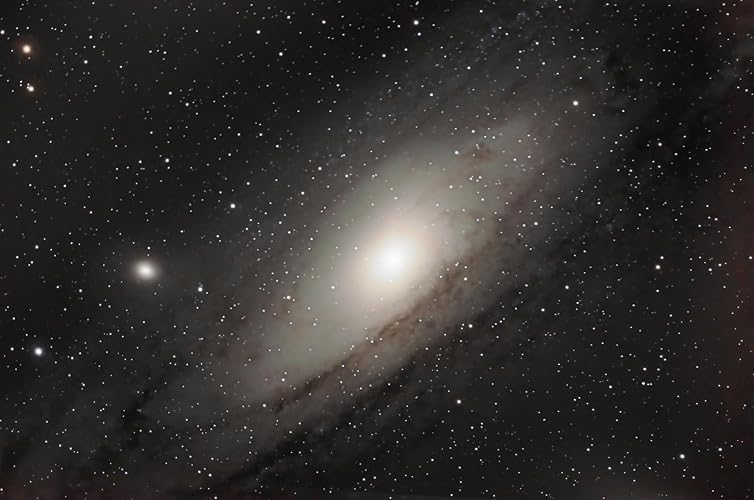
Great telescope for deep space objects like the Andromeda galaxy, even in moderately light polluted suburbs. Great app to control the action... from inside the house when it's cold outside. Just saying. Astrophotography was never so easy. First rate, top quality scope, no question. Still, this isn't for everything....NOT FOR PLANETS OR THE MOON! You really don't get the detail on those closer objects. ... show more
Reviewed in the United States on January 23, 2025 by Paul J. Scivetti

  • Great telescope with quick setup time
Quick setup and a great deep space object telescope.
Reviewed in the United States on December 22, 2025 by CoronaVIP

  • Open up your view of the heavens
Modern smart scopes are embarrassing. Take it outside on a clear night, turn it on and the telescope does the rest. I've imaged things down to magnitude 13 (really faint) and I have seen things I never thought to see. Something like a Celestron 8se is more flexible and more capable, but to capture pictures like these would take thousands of dollars and a lot of practice. The next time I get a clear night I'm going to try for NGC 4889, a galaxy almost 300 million light years away. Backyard telescopes should not be able to do that and bare in mind I'm looking from my front yard on the edge of San Jose. If you ever wanted to checkout the wonders of the night sky you need to look at modern smart scopes and the Origin is one of the best. ... show more
Reviewed in the United States on March 5, 2025 by Howard Betts

Can't find a product?

Find it on Amazon first, then paste the link below.
Checking for best price...